The Tesla Model Y remains the default benchmark for compact electric SUVs heading into 2026. Refreshed with the "Juniper" updates that debuted in late 2024, the current Model Y brings a quieter cabin, revised suspension tuning, ambient interior lighting, and a ventilated-seat option that addresses some of the most persistent owner complaints. But as the vehicle matures and more buyers approach the end of the standard warranty window, a new question is surfacing in forums and Tesla showrooms alike: does a Tesla Model Y extended service agreement make financial sense, or is the standard coverage enough?
This review covers the 2026 Model Y Long Range AWD and Performance trims end-to-end — range, charging, real-world efficiency, pricing after federal tax credits, and the ownership math that determines whether an extended service plan is a smart hedge or an unnecessary expense.
2026 Tesla Model Y: Key Specifications at a Glance
| Specification | Long Range AWD | Performance |
|---|---|---|
| EPA Estimated Range | 320 miles | 295 miles |
| Usable Battery Capacity | ~82 kWh (NMC) | ~82 kWh (NMC) |
| Drivetrain | Dual-Motor AWD | Dual-Motor AWD |
| Horsepower | ~384 hp | ~456 hp |
| 0–60 mph | 4.8 seconds | 3.5 seconds |
| Max DC Fast-Charge Rate | 250 kW | 250 kW |
| 10–80% DC Charge Time | ~27 minutes | ~27 minutes |
| Level 2 Home Charging (48A) | ~11.5 kW / ~37 mi/hr | ~11.5 kW / ~37 mi/hr |
| EPA Efficiency | 122 MPGe (28 kWh/100mi) | 111 MPGe (30 kWh/100mi) |
| Cargo Volume (rear seats up) | 30.2 cu ft | 30.2 cu ft |
| Cargo Volume (rear seats folded) | 72.1 cu ft | 72.1 cu ft |
| Rear Legroom | 41.6 inches | 41.6 inches |
| Base MSRP | $48,990 | $53,990 |
| Battery & Drive Unit Warranty | 8 years / 120,000 miles | 8 years / 120,000 miles |
| Basic Vehicle Warranty | 4 years / 50,000 miles | 4 years / 50,000 miles |
Real-World Range: What the EPA Sticker Doesn't Tell You
EPA Estimated: 320 miles
Real-World Highway (70–75 mph, moderate climate): ~265–285 miles
Real-World Cold Weather (below 32°F, highway): ~220–245 miles
Real-World City / Mixed Commute: ~295–315 miles
The 2026 Model Y Long Range carries an 82 kWh (usable) NMC (nickel-manganese-cobalt) battery pack. NMC chemistry offers higher energy density than LFP, which is why Tesla reserves it for Long Range and Performance trims — the trade-off is that NMC benefits from charge-limiting to 80–90% for daily use to maximize long-term cell health. Tesla's battery management system enforces a top and bottom buffer, so the ~82 kWh figure already represents usable capacity, not gross.
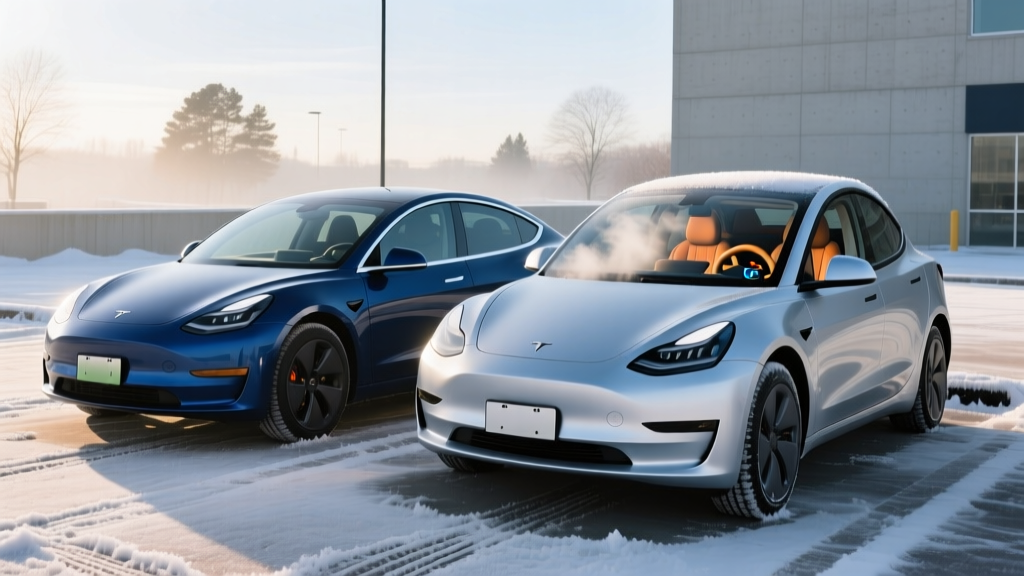
In real-world highway driving at 70–75 mph, expect to consume roughly 30–33 kWh/100mi depending on elevation changes, wind, and tire condition. That translates to 265–285 miles before the car enters its low-power reserve mode. In winter conditions, cold-soaking the battery can reduce usable range by 20–30% due to cabin heating demands and reduced cell efficiency, even with Tesla's heat pump — one of the better thermal management systems in the segment. Preconditioning the battery via scheduled departure or while navigating to a Supercharger mitigates much of the charging-speed penalty, but range loss from heating is unavoidable.
For context, fueleconomy.gov lists the Long Range AWD at 122 MPGe combined. That efficiency figure is among the best in the compact electric SUV class and is a direct result of Tesla's industry-leading drivetrain efficiency and low drag coefficient (~0.23 Cd post-refresh).
Charging Speed: Supercharger Network and Home Setup
| Charging Level | Power (kW) | Speed (miles of range per hour) | Notes |
|---|---|---|---|
| Level 1 (120V / 12A) | ~1.4 kW | ~4–5 mi/hr | Emergency / trickle only |
| Level 2 (240V / 48A, Wall Connector) | ~11.5 kW | ~37 mi/hr | Full overnight charge in ~8–9 hours |
| DC Fast Charge (Supercharger V3) | Peak 250 kW | ~162 mi in 15 min (peak) | 10–80% in ~27 min; tapers above 80% |
| DC Fast Charge (CCS adapter, non-Tesla) | Up to ~150–250 kW | Varies by station | CCS adapter included with newer deliveries |
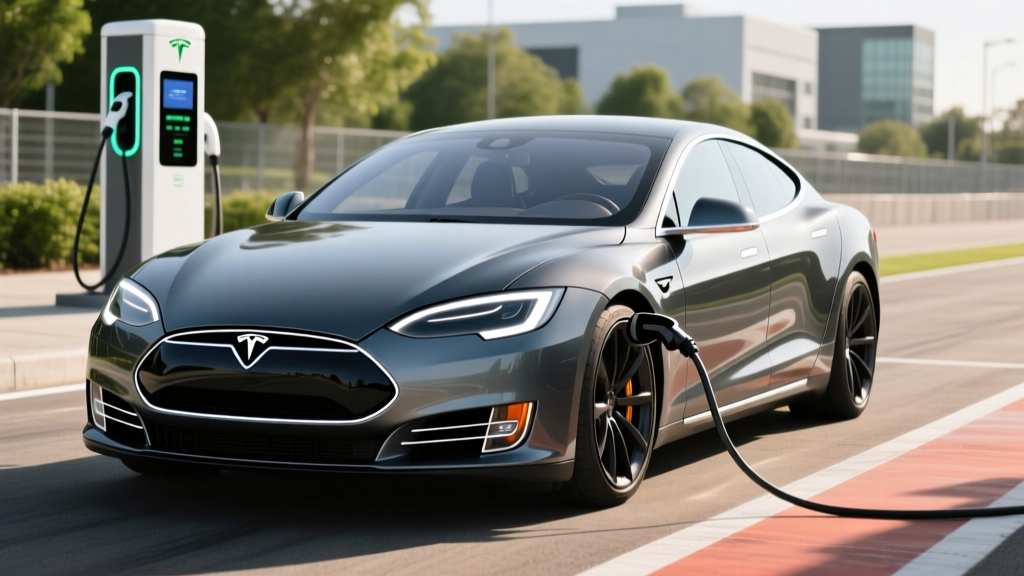
The Model Y's 250 kW peak DC fast-charge rate is no longer class-leading — competitors like the Hyundai Ioniq 5 and Kia EV6 accept up to 350 kW on 800V architectures — but Tesla's charge curve management is exceptionally well-tuned. The car sustains near-peak power from roughly 10% to 50% SoC, then progressively tapers. You'll add approximately 180 miles of range in 20 minutes at a V3 Supercharger, which remains one of the most reliable and geographically complete networks available. With Tesla opening Superchargers to NACS-equipped non-Tesla EVs, the network is busier than it was two years ago, but station density and uptime continue to lead the industry.
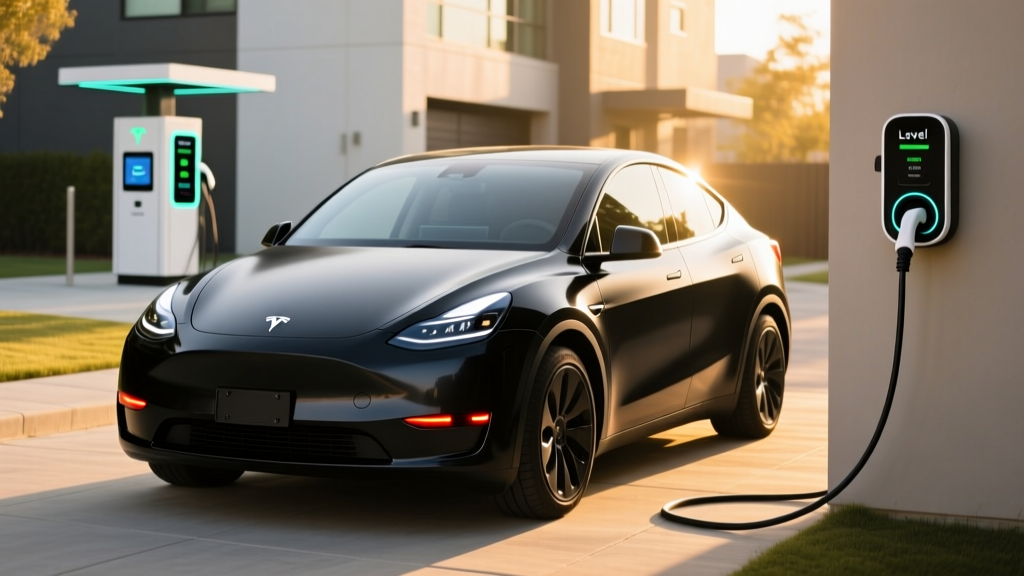
For home charging, the Tesla Wall Connector on a 60A circuit (48A continuous) delivers 11.5 kW, replenishing a depleted battery in roughly 8–9 hours. Most owners who charge nightly from 30–50% SoC will see a full top-up in 3–4 hours. If your home electrical panel is 200A with available capacity, installation typically runs $800–$1,800 depending on conduit length and local permitting. Homes requiring a panel upgrade to 200A should budget an additional $1,500–$3,000. Always consult a licensed electrician for a site-specific quote.
Pricing, Trims, and Federal Tax Credit Eligibility
| Trim | Base MSRP | As-Tested (typical options) | Est. §30D Credit | Effective Price |
|---|---|---|---|---|
| Long Range AWD | $48,990 | $50,490 (w/ paint + FSD transfer) | Up to $7,500* | ~$42,990* |
| Performance | $53,990 | $55,990 (w/ paint + wheels) | Up to $7,500* | ~$48,490* |
*Federal tax credit eligibility under IRS §30D is subject to multiple requirements. See checklist below. Credit may be applied at point of sale as of 2024+ tax years.
- MSRP Cap: SUVs must have an MSRP at or below $80,000 — both Model Y trims qualify.
- Buyer Income Cap: Modified AGI must not exceed $150,000 (single), $225,000 (head of household), or $300,000 (joint).
- Battery Sourcing: Critical minerals and battery components must meet phased-in domestic/free-trade sourcing thresholds. Verify current eligibility at IRS.gov clean vehicle list before purchase.
- Point-of-Sale Transfer: Buyers can transfer the credit to the dealer at purchase, reducing the out-of-pocket price immediately (effective for vehicles placed in service 2024+).
- Final Assembly: Must occur in North America. Model Y (Fremont, CA and Austin, TX) qualifies.
The Model Y Long Range AWD is the volume seller and the trim most buyers should target. At roughly $43,000 after the full credit, it undercuts rivals like the BMW iX and Audi Q4 e-tron on price while offering superior range and charging infrastructure access. The Performance trim's 3.5-second 0–60 time is thrilling but costs $5,000 more and sacrifices 25 miles of EPA range — a meaningful trade if you road-trip frequently.
Warranty Coverage and the Extended Service Agreement Question
This is where the Tesla Model Y extended service agreement conversation gets nuanced. Tesla's standard warranty package is straightforward:
- Basic Vehicle Limited Warranty: 4 years or 50,000 miles, whichever comes first.
- Battery and Drive Unit Warranty: 8 years or 120,000 miles (Long Range/Performance), with a guaranteed minimum 70% capacity retention over that period.
That basic warranty is shorter than what legacy automakers offer. Hyundai covers the Ioniq 5 for 5 years/60,000 miles bumper-to-bumper, and Kia goes to 5/60,000 with a 10-year/100,000-mile powertrain warranty. Tesla's 4-year/50,000-mile basic coverage means that many owners will be fully exposed on non-powertrain components — the 15.4-inch touchscreen, power-folding mirrors, HVAC compressor, electronic door handles, seat motors, and the heat pump assembly — by year five.
What the Tesla Extended Service Agreement Covers
Tesla offers its own Extended Service Agreement (ESA) that can be purchased before the basic warranty expires. Coverage tiers vary, but the comprehensive plan typically extends protection on:
- Infotainment computer (MCU) and touchscreen display
- Drive unit(s) — beyond the standard 8-year coverage in some plan tiers
- HVAC system including heat pump and cabin compressor
- Power windows, mirrors, and electronic door handles
- Suspension components (control arms, electronic dampers on Performance)
- Seat adjustment motors and heating/ventilation elements
- 12V lithium auxiliary battery
Is the Extended Service Agreement Worth It?
The cost of a Tesla ESA varies by trim, mileage at purchase, and coverage tier, but owners report pricing in the $3,000–$5,500 range for comprehensive plans purchased around the 40,000–50,000-mile mark. Here's the decision framework:
- You plan to keep the Model Y past 60,000 miles and beyond year 5.
- You lack a $2,000–$4,000 emergency fund for unexpected electronic or HVAC repairs.
- You live in a climate with extreme heat or cold, which accelerates wear on the heat pump and thermal management components.
- You want predictable ownership costs for budgeting purposes.
- You lease or plan to sell before 50,000 miles — the standard warranty covers you entirely.
- You're comfortable self-insuring and have researched third-party EV repair options in your area.
- You primarily drive locally and can tolerate a day or two without the vehicle if a non-critical component fails.
The single most expensive non-battery repair risk on the Model Y is the MCU/touchscreen assembly, which can cost $1,500–$2,500 out of warranty. The heat pump, introduced with the 2021 refresh, has shown improved reliability in later production runs, but failures still surface in owner communities at $1,200–$1,800 for replacement. The drive units and battery pack — the most expensive components — are covered for 8 years regardless, which is why the ESA value proposition centers on the "everything else" category.
Tech, Driver Assistance, and Interior
The post-Juniper Model Y interior is noticeably more refined than pre-2025 models. Acoustic glass on all four doors, additional sound deadening, and revised seat foam have reduced highway noise by a measurable margin. The 15.4-inch center touchscreen runs Tesla's latest software with a responsive interface, integrated navigation with real-time Supercharger availability, and over-the-air updates that continue to add features post-purchase.
The driver-assistance suite requires precise naming:
Tesla Autopilot (standard) and Full Self-Driving (Supervised) are SAE Level 2 driver-assistance systems. They provide adaptive cruise control, lane centering, and in FSD's case, automated lane changes and traffic-light recognition. However, the driver must remain fully engaged, hands on or near the wheel, and eyes on the road at all times. This is not autonomous driving. Only Level 4 services like Waymo operate without a human driver in defined areas.
FSD (Supervised) remains a $8,000 one-time purchase or $99/month subscription in 2026. Its capabilities have expanded, but it still requires active monitoring and occasional intervention, particularly in construction zones, unmapped areas, and adverse weather. For most buyers, the standard Autopilot (included) provides excellent highway cruise and lane-keeping without the FSD premium.
Cargo space is a Model Y strength: 30.2 cubic feet behind the rear seats expands to 72.1 cubic feet with the 60/40 split folded flat. The rear frunk adds approximately 4.1 cubic feet for charging cables or a small bag. Rear legroom at 41.6 inches is generous for the segment, though the sloping roofline cuts into headroom for passengers over 6'2".
Pros and Cons
- Best-in-class Supercharger network access
- Industry-leading drivetrain efficiency (122 MPGe LR)
- Spacious cargo area and practical hatchback design
- Strong over-the-air update cadence
- Eligible for up to $7,500 federal tax credit
- Post-refresh cabin is meaningfully quieter
- Short basic warranty (4yr/50k) vs. competitors
- 250 kW peak charge rate trails 800V rivals
- No physical instrument cluster or head-up display
- FSD cost is high relative to its Level 2 capability
- Rear visibility is limited; relies heavily on cameras
- Extended service agreement adds $3k–$5.5k to ownership cost
Who Should Buy the 2026 Tesla Model Y?
Commuters and daily drivers will find the Model Y Long Range hard to beat. With 320 miles of EPA range and 122 MPGe, a 40-mile round-trip commute requires charging only twice per week on a home Level 2 setup, and electricity cost per mile is roughly $0.04–$0.06 depending on local rates — a fraction of a comparable gas SUV.
Families benefit from the hatchback cargo versatility, strong NHTSA 5-star safety ratings, and spacious rear seat. The Model Y's flat floor and wide-opening rear doors make car-seat installation straightforward.
Road trippers get the Supercharger advantage — no other EV ecosystem matches Tesla's route-planning integration, station reliability, and geographic coverage for long-distance travel across the U.S.
Who should look elsewhere: Buyers who prioritize a traditional instrument cluster, physical buttons, or dealership-based service may prefer the Hyundai Ioniq 5 or Ford Mustang Mach-E. Those who need towing capacity beyond 3,500 lbs should look at the Rivian R1S or a full-size electric SUV.
Frequently Asked Questions
What is the real-world range of the 2026 Tesla Model Y?
The EPA rates the Long Range AWD at 320 miles. In real-world highway driving at 70–75 mph, expect 265–285 miles. In cold weather below freezing, plan for 220–245 miles. City and mixed driving closely approach the EPA figure at 295–315 miles thanks to regenerative braking and lower average speeds.
How fast does the Model Y charge at home and on the road?
On a home Level 2 Tesla Wall Connector (48A/11.5 kW), the Model Y gains approximately 37 miles of range per hour, fully charging overnight. At a V3 Supercharger, it peaks at 250 kW and charges from 10–80% in roughly 27 minutes, adding about 180 miles in a 20-minute stop.
How much does the Model Y cost after the federal tax credit?
The Long Range AWD starts at $48,990 MSRP. With the full $7,500 §30D credit (subject to income, sourcing, and assembly requirements), the effective price drops to approximately $41,490–$42,990 depending on options. Verify current eligibility on the IRS clean vehicle list before purchasing.
Does the 2026 Tesla Model Y qualify for the federal EV tax credit?
As of early 2026, the Model Y qualifies for up to $7,500 under §30D, provided the buyer meets income thresholds ($150k single / $300k joint MAGI), the MSRP is below $80,000 (it is), and battery component/critical mineral sourcing requirements are met. The credit can be transferred to Tesla at point of sale, reducing the purchase price directly. Always confirm current eligibility as sourcing rules phase in annually.
Is the Tesla Model Y worth buying over key competitors?
The Model Y wins on efficiency, Supercharger access, and cargo versatility. It loses on basic warranty length (Hyundai and Kia offer more), peak charging speed (800V rivals charge faster), and interior control philosophy (no physical buttons or instrument cluster). For buyers prioritizing lowest cost-per-mile and best charging infrastructure, it remains the segment leader. For those who value dealer service and longer warranty coverage, the Ioniq 5 or EV6 are strong alternatives.
How much does a Tesla Model Y extended service agreement cost?
Tesla's Extended Service Agreement typically costs $3,000–$5,500 depending on coverage tier, trim, and mileage at the time of purchase. It must be bought before the 4-year/50,000-mile basic warranty expires. The value depends on your ownership horizon: if you plan to keep the vehicle past 60,000 miles, the ESA hedges against costly MCU, heat pump, and electronic component repairs that fall outside the 8-year battery/drive unit warranty.