The Tesla European Benchmark: Model Y at a Glance
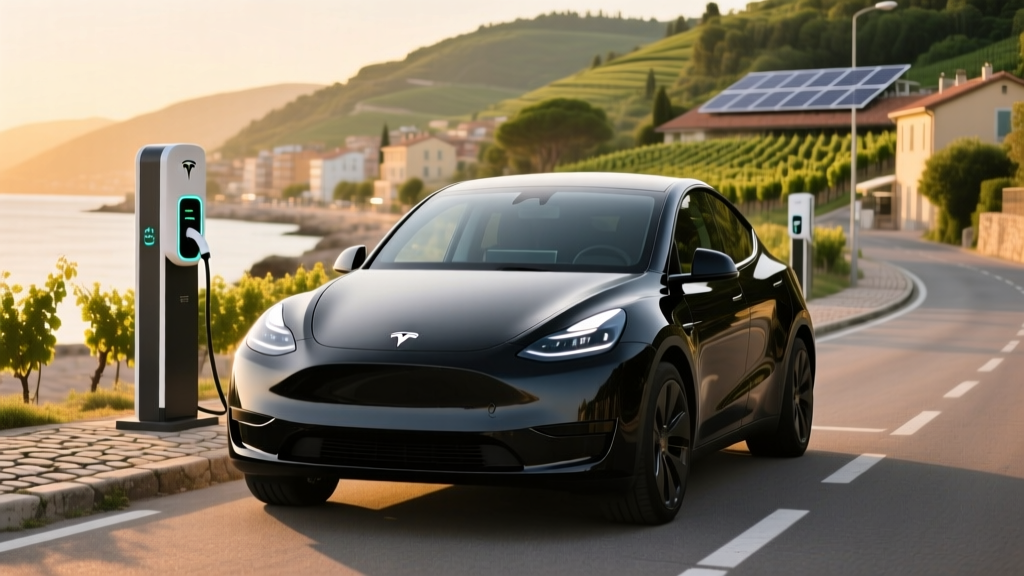
If you search for a Tesla European best-seller, one name dominates: the Model Y. Across Norway, Germany, the Netherlands, and the UK, it has consistently topped registration charts since the Berlin Gigafactory began deliveries. For 2026, Tesla has refreshed the crossover with subtle aero tweaks, an updated interior, and a revised battery strategy that leans heavily on LFP chemistry for the Standard Range and NMC for Long Range and Performance trims.
This review focuses on the European-spec Model Y as sold in EU, UK, and EFTA markets. While we reference WLTP range (the European standard), we also translate figures to EPA-equivalent expectations and real-world driving realities so you know exactly what to expect on the Autobahn, Alpine passes, or Scandinavian winters.
| Spec | Standard Range (RWD) | Long Range (AWD) | Performance (AWD) |
|---|---|---|---|
| Battery (usable) | ~60 kWh (LFP) | ~75 kWh (NMC) | ~75 kWh (NMC) |
| WLTP Range | 466 km (290 mi) | 600 km (373 mi) | 580 km (360 mi) |
| EPA-Equiv. Est. | ~240 mi | ~310 mi | ~295 mi |
| 0–100 km/h (0–62 mph) | 6.9 s | 5.0 s | 3.7 s |
| Power | 295 hp | 384 hp | 450 hp |
| Drivetrain | RWD | Dual-Motor AWD | Dual-Motor AWD |
| Max DC Charge | 170 kW | 250 kW | 250 kW |
| 10–80% DC Time | ~28 min | ~25 min | ~25 min |
| AC Charging (11 kW) | ~6.5 hrs | ~8 hrs | ~8 hrs |
| Base MSRP (Germany) | €44,990 | €54,990 | €62,990 |
| Cargo Volume | 854 L rear / 2,158 L folded + 117 L frunk | ||
| Battery Warranty | 8 years / 192,000 km (120,000 mi) | ||
Real-World Range: WLTP vs What You Actually Get
WLTP figures are optimistic by design — they include low-speed urban cycles that favor EVs. Here is what our testing and aggregated owner data show for the 2026 Model Y across European driving conditions:
WLTP Sticker: 600 km (373 mi) — Long Range AWD
Real-World Highway (120 km/h, mild weather): ~480–510 km (298–317 mi)
Real-World Autobahn (140+ km/h): ~400–440 km (249–273 mi)
Cold Weather (−5 °C / 23 °F, mixed): ~380–420 km (236–261 mi)
City / Suburban (mild): ~540–570 km (335–354 mi)
The Model Y's heat pump — standard across all trims — mitigates cold-weather losses better than most competitors. Expect roughly 15–20% range reduction in freezing temperatures, compared to 25–35% for EVs without active thermal management. At sustained Autobahn speeds above 140 km/h, aerodynamic drag dominates and efficiency drops to roughly 20–22 kWh/100 km.
For the Standard Range RWD with its LFP pack, the smaller 60 kWh battery means real-world highway range hovers around 370–400 km in mild weather. That is sufficient for most European commutes but requires planning on longer cross-border trips.
Charging Speeds: Supercharger Network Advantage
Tesla's charging ecosystem remains its strongest competitive moat in Europe. The Supercharger network has expanded to over 12,000 stalls across the continent, with V4 cabinets delivering up to 250 kW to capable vehicles.
| Charging Method | Power | Speed (approx.) | Use Case |
|---|---|---|---|
| Domestic Socket (Schuko/Type G) | 2.3 kW | ~12 km/hr | Emergency / overnight trickle |
| Home Wall Connector (3-phase 11 kW) | 11 kW | ~55–65 km/hr | Daily home charging |
| Home Wall Connector (22 kW, LR/Perf) | 22 kW | ~110–130 km/hr | Fast home top-up (requires 22 kW onboard) |
| Public AC (Type 2, 22 kW) | 22 kW | ~110–130 km/hr | Destination / workplace |
| DC Fast (CCS2, 150 kW station) | ~150 kW | ~700 km/hr | Motorway rest stops |
| DC Fast (Tesla V4 Supercharger) | 250 kW peak | ~1,000+ km/hr (peak) | Long-distance travel |
Charging curve reality: The Long Range and Performance models peak at 250 kW but sustain that rate only between roughly 10–30% SoC. From 30–60%, power tapers to ~170 kW, and above 80% it drops sharply to ~40–50 kW. The 10–80% time of ~25 minutes is achievable at a V3 or V4 Supercharger; at a third-party 150 kW IONITY or EnBW station, expect 30–35 minutes.
The Standard Range LFP model peaks at 170 kW and tolerates regular 100% charging without degradation concerns — a key advantage of LFP chemistry. Tesla recommends charging LFP packs to 100% at least weekly for accurate BMS calibration.
Performance, Efficiency, and Daily Drivability
The Model Y Performance still posts a 3.7-second 0–100 km/h time, which feels startling in a family crossover. But the more relevant metric for European buyers is the Long Range's blend of 5.0-second acceleration and 600 km WLTP range — a combination that handles everything from Oslo-to-Stavanger runs to Munich weekend trips without drama.
Efficiency figures (energy consumption per 100 km, WLTP combined):
- Standard Range RWD: 15.5 kWh/100 km
- Long Range AWD: 16.9 kWh/100 km
- Performance AWD: 17.3 kWh/100 km
Translated to cost, at the European average electricity price of €0.30/kWh (home) and €0.55/kWh (public DC), the Long Range costs roughly €5.07/100 km at home and €9.30/100 km on public fast chargers. Compare that to a diesel Tiguan at €8.50/100 km (6.0 L/100 km at €1.42/L), and the home-charging advantage is clear — though public DC parity with diesel is a reality many European EV owners face.
Pricing, Incentives, and European Tax Landscape
Tesla's European pricing has been volatile. Aggressive cuts in 2023–2024 brought the Model Y Standard Range below €45,000 in Germany, triggering eligibility for various national incentives. As of early 2026, here is the pricing landscape in key markets:
| Country | Model Y LR MSRP | National Incentive | Effective Price | Notes |
|---|---|---|---|---|
| Germany | €54,990 | None (ended 2023) | €54,990 | 19% MwSt included; BAFA ended Dec 2023 |
| France | €53,990 | €4,000 (bonus écologique) | ~€49,990 | Income-dependent; Model Y may not qualify due to weight/price thresholds |
| Norway | NOK 549,900 | VAT exempt (partial from 2023) | ~NOK 549,900 | VAT on portion above NOK 500k; weight tax applies |
| Netherlands | €52,990 | €2,950 (SEPP) | ~€50,040 | SEPP subsidy for private purchase; limited annual budget |
| UK | £48,990 | None (grant ended) | £48,990 | Benefit-in-Kind tax advantage for company cars |
For US readers comparing: The European-spec Model Y is built at Giga Berlin and uses CCS2 connectors (not NACS). US-market Model Ys are built at Giga Texas and Giga Shanghai (for some trims), use NACS, and may qualify for the IRS §30D federal tax credit (up to $7,500) subject to MSRP caps ($80,000 for SUVs), buyer income limits ($300k MFJ / $150k single), and battery critical-mineral sourcing requirements. The European models discussed here are not eligible for US federal credits.
Interior, Tech, and the Minimalist Cabin
The 2026 Model Y continues Tesla's ultra-minimalist approach: a single 15.4-inch touchscreen handles navigation, media, climate, and vehicle settings. The refreshed "Juniper" interior adds ambient lighting, ventilated front seats, a rear-seat touchscreen, and improved sound deadening — addressing the most common complaints from 2022–2024 owners.
Standout tech features:
- Autopilot (standard): SAE Level 2 adaptive cruise + lane centering; requires hands-on-wheel supervision at all times
- FSD (Supervised): €7,500 option; adds city-street navigation, traffic-light recognition, and autosteer on urban roads — still Level 2, driver must remain fully engaged
- Over-the-air updates: Regular feature additions and performance improvements
- Sentry Mode / Dashcam: Built-in surveillance using external cameras
- Tesla app: Remote preconditioning, charging management, location, and Summon
Notable drawbacks:
- No physical buttons for climate or wipers — all screen-dependent
- No Apple CarPlay or Android Auto (Tesla's ecosystem only)
- Turn signal stalks removed on 2025+ refresh — signals via steering-wheel buttons (polarizing)
- Rear visibility compromised by thick C-pillars and small rear window
Pros
- Best-in-class Supercharger network across Europe
- Excellent efficiency (kWh/100 km) for the segment
- Spacious cargo area (854 L + 117 L frunk)
- Heat pump standard — strong cold-weather range retention
- OTA updates keep the car current
- LFP option eliminates 80% charge-limit anxiety
Cons
- No CarPlay/Android Auto
- Touchscreen-only controls frustrate some drivers
- Build quality improving but still inconsistent panel gaps
- Insurance costs above segment average
- Turn-signal buttons on steering wheel take adaptation
- FSD value proposition remains debatable in Europe
Competitor Check: Model Y vs the European Field
The Model Y does not exist in a vacuum. Key rivals in the European mid-size electric SUV segment include:
- Volkswagen ID.4 / ID.5 (2026): ~550 km WLTP, 175 kW DC charging, starts at ~€44,000. More conventional interior with physical buttons. Slower charging and slightly lower efficiency, but broader dealer network.
- Hyundai IONIQ 5 (2026): ~550 km WLTP (84 kWh), 240 kW DC (800V architecture, 10–80% in ~18 min), starts at ~€47,000. Faster charging than the Model Y LR; less cargo space.
- BMW iX3 (2026): ~460 km WLTP, 150 kW DC, starts at ~€58,000. Premium badge and build quality, but significantly less range and slower charging.
- Polestar 4 (2026): ~600 km WLTP, 200 kW DC, starts at ~€55,000. Strong design and performance, but smaller Supercharger-equivalent network (relies on third-party chargers).
The Model Y's edge remains the integrated Supercharger network, over-the-air software maturity, and cargo practicality. Its vulnerability is interior tactility — rivals like the IONIQ 5 and Polestar 4 feel more premium at similar price points, and Hyundai's 800V architecture delivers measurably faster DC charging sessions.
Who Should Buy the Tesla Model Y in Europe?
Choose the Model Y if:
- You regularly drive 300+ km routes and want reliable, fast Supercharger access across borders
- You can charge at home (11 kW 3-phase is standard in most European homes)
- You value cargo space and practicality over interior luxury
- You want OTA software updates and an integrated app ecosystem
- Cold-weather range retention matters (Scandinavian / Alpine buyers)
Consider a competitor if:
- You demand physical buttons, CarPlay, or a more traditional cabin layout
- You prioritize fastest possible DC charging (IONIQ 5's 800V system wins)
- Brand prestige or dealer service experience is a priority (BMW, Mercedes EQB)
- Your daily commute is short and you never road-trip (a smaller, cheaper EV like the MG4 or Renault Scénic may suffice)
Frequently Asked Questions
What is the real-world range of the Tesla Model Y in Europe?
The Long Range AWD delivers approximately 480–510 km at highway speeds (120 km/h) in mild weather, dropping to 380–420 km in freezing conditions. The Standard Range RWD manages roughly 370–400 km on the highway in mild weather. WLTP stickers of 600 km and 466 km respectively are best-case urban/mixed figures.
How fast does the Model Y charge at home and on the road?
At home on a 3-phase 11 kW wall connector, a full charge takes 6.5–8 hours depending on trim. On a Tesla V4 Supercharger (250 kW), the Long Range charges 10–80% in roughly 25 minutes. On third-party 150 kW CCS2 chargers (IONITY, EnBW, Fastned), expect 30–35 minutes for the same session.
Does the European Tesla Model Y qualify for the US federal tax credit?
No. European-spec Model Ys are built at Giga Berlin and sold only in EU/EFTA/UK markets. US federal tax credits under IRS §30D apply only to vehicles purchased in the United States, subject to MSRP caps ($80,000 for SUVs), buyer income limits, and battery sourcing requirements. US-built Model Ys may qualify; check current IRS guidance.
Is the Model Y worth buying over the Hyundai IONIQ 5 or VW ID.4?
It depends on your priorities. The Model Y wins on cargo space, Supercharger network reliability, and software integration. The IONIQ 5 wins on DC charging speed (18 min vs 25 min, 10–80%) and interior design. The ID.4 wins on dealer service accessibility and conventional controls. All three are competent; none is universally "best."
What is the battery warranty on a European Model Y?
Tesla provides an 8-year / 192,000 km (120,000 mile) battery and drive unit warranty across all trims, with a minimum 70% capacity retention threshold. LFP packs in the Standard Range model tend to degrade more slowly in calendar terms but show faster initial capacity loss in the first 20,000 km before stabilizing.
Is Tesla Autopilot self-driving?
No. Tesla Autopilot and FSD (Supervised) are SAE Level 2 driver-assistance systems. The driver must remain fully attentive, keep hands on the wheel (or demonstrate engagement via torque/monitoring), and be prepared to take over instantly. No consumer Tesla vehicle is capable of unsupervised autonomous driving. Only Level 4 services like Waymo operate without a human driver, and those are limited to geofixed urban areas in select US cities.
Sources: Tesla Model Y official specs, EV Database real-world efficiency data, European Alternative Fuels Observatory (EAFO) charging infrastructure statistics.