Quick Verdict: Is the Tesla Model Y ESA Worth It?
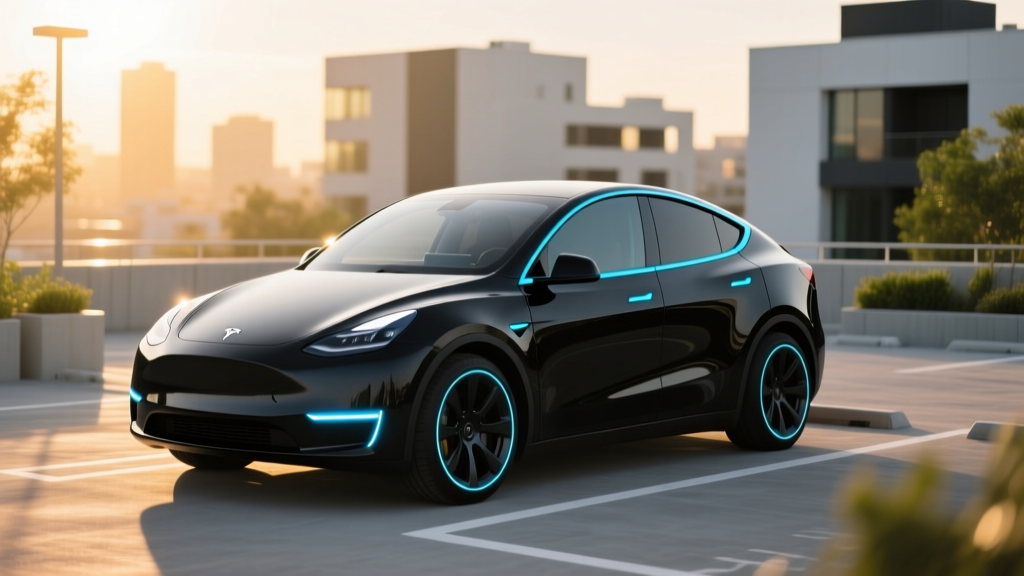
The 2026 Tesla Model Y Long Range AWD (often searched as "ESA" — referring to the Enhanced Suspension/Appearance package or the dual-motor All-Wheel-Drive architecture depending on the market) remains the benchmark electric SUV for buyers who prioritize charging infrastructure, software integration, and everyday efficiency. With an EPA-estimated 320 miles of range, access to Tesla's Supercharger network (now supplemented by NACS-equipped competitors), and a starting MSRP that positions it squarely in the premium-compact crossover segment, the Model Y continues to justify its sales dominance.
But "worth it" depends on your use case. If you need maximum cargo space, tow frequently, or want the latest interior refinements, rivals like the Hyundai Ioniq 5, Ford Mustang Mach-E, and Kia EV6 make compelling arguments. Below, we break down every number that matters — range, charging curves, tax credit math, and real ownership costs — so you can decide whether the Model Y ESA earns your money in 2026.
Range, Battery, and Efficiency
| Spec | Value |
|---|---|
| EPA Range | 320 miles |
| Battery Capacity (usable) | ~75 kWh (NMC lithium-ion) |
| Drivetrain | Dual-Motor AWD |
| 0–60 mph | 4.8 seconds |
| Horsepower | ~384 hp (combined) |
| Efficiency | 122 MPGe / 28 kWh/100 mi |
| Cargo Volume (rear seats up) | 30.2 cu ft |
| Cargo Volume (rear seats folded) | 72.0 cu ft |
| Rear Legroom | 36.5 in |
| Battery Warranty | 8 years / 120,000 miles |
| Base MSRP | $47,990 |
The Model Y Long Range AWD uses a nickel-manganese-cobalt (NMC) battery pack. NMC offers higher energy density than lithium iron phosphate (LFP), which is why it powers the Long Range and Performance trims. The trade-off: NMC batteries degrade slightly faster over time and Tesla recommends daily charging to 80% for longevity, reserving 100% for road trips.
Real-World Range Expectations
EPA Sticker: 320 miles
Highway (70–75 mph, 70°F): Expect ~265–285 miles. The Model Y's efficiency drops noticeably at sustained highway speeds due to aerodynamic drag and the lack of a multi-speed transmission.
Cold Weather (20–35°F): Plan for 210–250 miles. NMC chemistry loses efficiency in the cold, and cabin heating draws heavily from the pack. The standard heat pump helps, but preconditioning while plugged in is essential.
City/Commuter (mixed stop-and-go): 295–320+ miles. Regenerative braking shines here, often exceeding the EPA estimate in mild weather.
According to fueleconomy.gov, the 2026 Model Y Long Range AWD achieves 122 MPGe combined (127 city / 115 highway). That efficiency figure — 28 kWh per 100 miles — is among the best in its class, meaning you spend less per mile at the charger than most competing electric SUVs.
Charging Speed: DC Fast Charge and Home Level 2
| Charging Level | Max Rate | Miles Added Per Hour | Notes |
|---|---|---|---|
| Level 1 (120V) | ~1.4 kW | ~4 mi/hr | Emergency/trickle only |
| Level 2 (240V, 48A) | 11.5 kW | ~37 mi/hr | Full charge in ~8 hours |
| DC Fast Charge (V3 Supercharger) | 250 kW peak | ~175 mi in 15 min | 10–80% in ~22 minutes |
| DC Fast Charge (V4 Supercharger) | Up to 250 kW (cable-limited for Y) | Similar to V3 | Newer stalls; same peak for Model Y |
| CCS/NACS Adapter (EA, etc.) | Varies by station | Varies | Model Y uses native NACS port |
The Model Y's NACS (North American Charging Standard) port is now the industry default, with Ford, GM, Rivian, Hyundai, and others adopting it. This means the Model Y charges natively at every Tesla Supercharger — the most reliable DC fast-charging network in North America — without an adapter.
Charging curve reality: The 250 kW peak only holds between roughly 10–30% state of charge. Above 50%, the rate tapers to ~120 kW, and above 80%, it drops below 50 kW. That 10–80% time of approximately 22 minutes assumes you've preconditioned the battery (the car does this automatically when a Supercharger is set as your navigation destination). Without preconditioning — for instance, arriving at a non-Tesla DC charger via adapter — expect slower initial rates, especially in cold weather.
At home on a 48-amp Level 2 wall connector (the most common dedicated home install), you'll add about 37 miles of range per hour. An overnight charge from 20% to 80% takes roughly 5–6 hours, which suits virtually every daily-driving pattern.
Pricing, Trims, and Federal Tax Credit Eligibility
| Trim | Base MSRP | Federal §30D Credit | Effective Price (est.) |
|---|---|---|---|
| Long Range AWD | $47,990 | Up to $7,500* | ~$40,490 |
| Long Range AWD w/ ESA Package | ~$50,490 | Up to $7,500* | ~$42,990 |
| Performance AWD | $52,490 | Up to $7,500* | ~$44,990 |
*Federal EV tax credit eligibility under IRS §30D depends on buyer income, vehicle MSRP, and battery-sourcing requirements. Always verify current rules at irs.gov.
For 2026, the IRS §30D federal tax credit remains available at up to $7,500 for qualifying buyers and vehicles. Here are the key constraints:
- MSRP Cap: SUVs must have an MSRP at or below $80,000. All Model Y trims qualify.
- Income Cap: Modified adjusted gross income (MAGI) must not exceed $150,000 (single), $225,000 (head of household), or $300,000 (joint filers).
- Battery Sourcing: The $7,500 credit splits into two halves — $3,750 for critical-mineral sourcing and $3,750 for battery-component manufacturing. Tesla has worked to onshore supply chains, but the exact credit amount can shift as sourcing rules tighten. Some Model Y configurations may qualify for the full $7,500; others may receive $3,750.
- Point-of-Sale Transfer: Since 2024, buyers can transfer the credit to the dealer at purchase, reducing the upfront price rather than waiting for a tax refund.
Consult a tax professional to confirm your eligibility. State and local incentives (California's CVRP, Colorado's Innovative Motor Vehicle Credit, utility rebates) can stack on top, further reducing effective cost.
Performance, Ride, and What the ESA Package Adds
The Model Y Long Range AWD delivers 384 combined horsepower from its dual-motor setup, launching from 0–60 mph in 4.8 seconds. That's quick by any measure — quicker than a base Porsche Macan — and the instant electric torque makes highway merging effortless.
The ESA (Enhanced Suspension/Appearance) package, when available, typically includes:
- Adaptive or retuned dampers for improved ride compliance over the standard sport-tuned setup
- Unique wheel designs (often 20-inch Induction or Gemini alternatives)
- Blacked-out exterior trim or accent packages
- Interior material upgrades (varies by model year)
The standard Model Y ride is firm — Tesla prioritizes handling precision over plush comfort. The ESA package addresses one of the most common complaints from owners on rough pavement. If you commute on poorly maintained roads or frequently carry rear-seat passengers who notice every bump, the ESA upgrade is a worthwhile comfort investment.
Handling remains composed, with a low center of gravity from the floor-mounted battery pack. Steering is precise if somewhat numb — a common trait in electric vehicles with heavy front-axle loads from the motor.
Interior, Tech, and Driver Assistance
The Model Y interior is minimalist by design. A single 15.4-inch center touchscreen controls virtually every vehicle function — climate, mirrors, glovebox, and media. There is no instrument cluster; speed and navigation information appear in the upper-left corner of the main display.
Infotainment highlights:
- Tesla's proprietary OS with over-the-air updates
- Native Spotify, Apple Music, Tidal, and podcast apps
- Netflix, YouTube, and Disney+ streaming (parked only)
- Integrated navigation with real-time Supercharger routing and battery preconditioning
- No Apple CarPlay or Android Auto — a dealbreaker for some buyers
Driver assistance — Autopilot and FSD (Supervised):
SAE Automation Level: Level 2
Tesla Autopilot (standard) and Full Self-Driving (Supervised) are SAE Level 2 driver-assistance systems. The driver must remain fully engaged, hands on or near the wheel, and eyes on the road at all times. These systems are not self-driving. Level 4 driverless operation — where no human monitoring is needed — currently exists only in geofenced robotaxi services like Waymo.
Autopilot includes adaptive cruise control, lane centering, and automatic emergency braking at no extra cost. FSD (Supervised), a $8,000 add-on or $99/month subscription, adds automatic lane changes, navigate-on-autopilot for highway exits and interchanges, and city-street traffic-light and stop-sign recognition. FSD capability has improved substantially, but it still requires active supervision and occasionally makes unexpected decisions in construction zones or complex intersections.
Pros, Cons, and Who Should Buy
Pros
- Best-in-class Supercharger network access with native NACS
- 320 mi EPA range with strong real-world city efficiency
- 250 kW peak DC fast charging; 10–80% in ~22 min
- Spacious cargo area (72 cu ft max) with front trunk (frunk)
- Over-the-air updates continuously add features
- Eligible for up to $7,500 federal tax credit (check sourcing rules)
- Strong resale value relative to EV segment average
Cons
- No Apple CarPlay or Android Auto support
- Firm ride quality without ESA package; road noise at highway speeds
- FSD (Supervised) is expensive and still requires full driver attention
- Minimalist interior not to everyone's taste; no physical buttons
- Highway range drops to ~265–285 mi at sustained 70+ mph
- Cold-weather range loss of 20–30% is significant
- Insurance premiums often 15–30% higher than comparable gas SUVs
Who the Tesla Model Y ESA Suits Best
Choose the Model Y if: You want the most reliable public-charging experience available, commute 30–80 miles daily with home charging access, value software features and OTA updates, and want a practical family SUV with strong cargo versatility.
Look at competitors if: You need Apple CarPlay (Hyundai Ioniq 5, Kia EV6), want a more luxurious interior (Genesis GV70 Electrified, BMW iX), prioritize maximum towing (Ford F-150 Lightning, Rivian R1S), or need a third row (Kia EV9).
How It Compares to Key Rivals
At the ~$48,000 starting price, the Model Y Long Range AWD competes directly with:
| Model | EPA Range | Max DC kW | 10–80% Time | Base MSRP |
|---|---|---|---|---|
| Tesla Model Y LR AWD | 320 mi | 250 kW | ~22 min | $47,990 |
| Hyundai Ioniq 5 Long Range AWD | 290 mi | 350 kW | ~18 min | $49,500 |
| Ford Mustang Mach-E Extended Range AWD | 305 mi | 150 kW | ~36 min | $48,995 |
| Kia EV6 Long Range AWD | 282 mi | 350 kW | ~18 min | $49,900 |
The Model Y wins on range and Supercharger infrastructure. The Ioniq 5 and EV6 win on peak charging speed (their 800V architecture enables faster top-ups on compatible 350 kW chargers). The Mach-E lags on DC fast-charge speed but offers a more conventional interior layout with physical controls.
Ownership Costs: 5-Year Estimate
| Category | Tesla Model Y LR AWD |
|---|---|
| Purchase Price (after $7,500 credit) | ~$40,490 |
| Electricity (home + public charging) | ~$3,750 |
| Insurance (avg.) | ~$10,500 |
| Maintenance (tires, cabin filter, fluid top-offs) | ~$1,800 |
| Estimated Depreciation | ~$16,000 |
| Total Estimated 5-Year Cost | ~$72,540 |
Electricity costs assume a blended rate of $0.15/kWh at home and $0.35/kWh at public DC chargers, with 80% home charging. Insurance is the biggest variable — Tesla owners frequently report premiums 15–30% above segment averages due to repair-cost data. Get quotes before purchasing.
Frequently Asked Questions
What is the real-world range of the Tesla Model Y?
The EPA rates the 2026 Model Y Long Range AWD at 320 miles. In real-world highway driving at 70–75 mph in mild weather, expect 265–285 miles. In cold weather (below freezing), plan for 210–250 miles. City driving with regenerative braking can meet or slightly exceed the EPA figure.
How fast does the Model Y charge at home and on the road?
On a 48-amp Level 2 home charger, the Model Y adds about 37 miles of range per hour, fully replenishing overnight. On a V3 or V4 Tesla Supercharger, it peaks at 250 kW and charges from 10–80% in approximately 22 minutes, assuming the battery is preconditioned.
How much does the Model Y cost after the federal tax credit?
The Long Range AWD starts at $47,990. If you qualify for the full $7,500 §30D credit (subject to income, MSRP, and battery-sourcing requirements), the effective price drops to approximately $40,490. State incentives and utility rebates may reduce cost further. Verify eligibility at irs.gov or with a tax professional.
Does the Tesla Model Y qualify for the federal EV tax credit?
Yes, the Model Y qualifies under §30D as an SUV under the $80,000 MSRP cap. However, the buyer must meet income thresholds ($150K single / $300K joint), and the exact credit amount ($3,750 or $7,500) depends on battery-critical-mineral and component-sourcing compliance for the specific build. Tesla's US-built vehicles generally fare well, but rules evolve annually.
Is the Model Y worth it compared to the Hyundai Ioniq 5 or Kia EV6?
It depends on priorities. The Model Y offers more EPA range (320 vs. 282–290 mi), superior public-charging infrastructure via Superchargers, and more cargo space. The Ioniq 5 and EV6 charge faster on 350 kW stations (18 vs. 22 min), offer Apple CarPlay, and have more conventional interiors. If charging reliability and range are paramount, the Model Y wins. If you prefer physical controls and the fastest possible DC charging, the Korean alternatives are excellent.
What does the ESA package include, and is it worth the upgrade?
The ESA (Enhanced Suspension/Appearance) package typically retunes the damping for a more compliant ride, adds unique wheels, and may include exterior or interior accent upgrades. At roughly $2,500 above the base Long Range, it's worth it if you find the standard Model Y ride too harsh on rough roads or if you want the aesthetic differentiation. For smooth-highway commuters, the standard suspension is adequate.
What is the battery warranty on the Model Y?
Tesla covers the Model Y Long Range battery and drive unit for 8 years or 120,000 miles, whichever comes first, with a minimum 70% capacity retention guarantee over that period. This is competitive with the industry standard (Hyundai and Kia also offer 8-year/100,000-mile coverage on batteries).