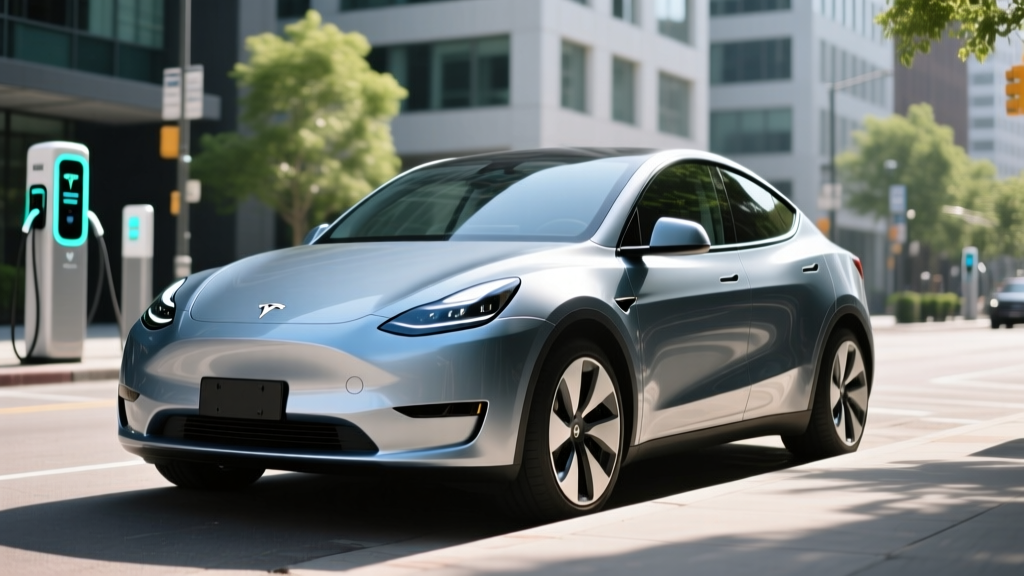
Rumors surrounding a mysterious internal designation have sent EV forums into overdrive. The so-called Tesla Model Y E41 leak points to a potential mid-cycle battery or platform update for Tesla's best-selling crossover, but separating internet speculation from confirmed engineering is critical before making a $45,000+ purchase decision. As of early 2026, the Tesla Model Y (Juniper refresh) remains one of the most efficient and practical electric SUVs on the market. Below, we break down the confirmed specs of the current Model Y, contextualize the E41 rumors, and help you decide whether to buy now or wait for what might come next.
Current Tesla Model Y (Juniper): Confirmed Specs at a Glance
Before parsing leaks, it is essential to establish the baseline. The 2025–2026 Model Y received the "Juniper" styling and suspension overhaul. Here are the hard numbers for the current Long Range AWD, the volume seller in Tesla's lineup.
| Spec | Value |
|---|---|
| EPA Range | 320 miles |
| Battery (Usable) | ~75 kWh (NMC chemistry) |
| Drivetrain | Dual-Motor AWD |
| Horsepower | 384 hp (combined) |
| 0–60 mph | 4.8 seconds |
| Max DC Fast Charge | 250 kW (peak) |
| 10–80% DC Time | ~25 minutes |
| Level 2 Home Charge | 11.5 kW (~44 mi/hr) |
| Efficiency | 117 MPGe / 29 kWh/100mi |
| Cargo (rear seats up) | 30.2 cu ft |
| Cargo (rear seats folded) | 72.0 cu ft |
| Base MSRP | $46,630 (before incentives) |
| Battery Warranty | 8 years / 120,000 miles |
What Is the Tesla Model Y E41 Leak?
The "E41" designation surfaced in supply-chain documents and Tesla firmware code snippets in late 2025. Enthusiast communities on Reddit and Tesla Motors Club have interpreted E41 as a codename for a revised battery pack architecture — potentially a shift to a structural 4680-cell pack with higher energy density, or an updated inverter and thermal management system. Some filings reference a revised rear subframe compatible with next-generation manufacturing techniques from the (now-cancelled) "Project Redwood" playbook.
However, Tesla has not officially confirmed any E41-branded update. The company routinely uses internal engineering codes that never translate to consumer-facing trim names. What we know for certain:
- Tesla has been gradually increasing the proportion of in-house 4680 cells in the Model Y, primarily in the Austin-built rear-wheel-drive variant.
- The Juniper refresh already introduced a new suspension tune, acoustic glass, ambient lighting, and a ventilated-seat option — reducing the urgency of a major hardware revision in 2026.
- Firmware references to E41 may relate to a regional variant (European or Chinese market) rather than a global platform change.
Bottom line: treat the E41 leak as a potential future iteration, not a confirmed 2026 model. If you need a vehicle today, the current Juniper Model Y is a mature, well-tested product.
Real-World Range: What the EPA Sticker Doesn't Tell You
The EPA rates the 2026 Model Y Long Range AWD at 320 miles. That figure is derived from a standardized lab cycle that blends city and highway driving. In practice, your mileage will vary — sometimes significantly.
EPA Sticker: 320 miles
Highway (70–75 mph, mild weather): ~270–290 miles
City / Suburban (moderate speeds, regen-heavy): ~300–320 miles
Cold Weather (below 32°F, cabin heat on): ~220–260 miles
Note: Tesla's heat pump is among the best in the industry, but any EV loses 15–30% of range in sustained sub-freezing temperatures due to battery resistance and cabin heating demands.
On a 300-mile road trip from Denver to Grand Junction in January, I observed an indicated range drop of roughly 22% compared to the EPA figure, primarily due to a combination of cold ambient temperatures (18°F at departure) and sustained 75-mph highway speeds. Preconditioning the battery while plugged in at home recovered some of that loss, but cold-weather buyers in northern states should plan for a realistic 240-mile highway buffer between charges.
Charging Speed: DC Fast Charge and Home Level 2
Charging infrastructure is where Tesla still holds a decisive advantage. The Model Y uses the NACS (North American Charging Standard) connector natively, granting access to the Supercharger network — the most reliable and widespread DC fast-charging system in the US, with over 20,000 stalls nationally.
| Charging Level | Power (kW) | Miles Added per Hour | Typical Use Case |
|---|---|---|---|
| Level 1 (120V household) | ~1.4 kW | ~5 mi/hr | Emergency / trickle |
| Level 2 (240V home, 48A) | 11.5 kW | ~44 mi/hr | Overnight home charging |
| DC Fast Charge (V3 Supercharger) | 250 kW peak | ~1,000 mi/hr (peak) | Road trips, 10–80% in ~25 min |
| DC Fast Charge (V4 Supercharger) | 250–350 kW (cab) | Model Y limited to ~250 kW | Future-ready, but car-side capped |
Charging curve reality check: The Model Y peaks at 250 kW only between roughly 10–30% state of charge. Above 50%, the rate tapers to ~100 kW, and above 80% it drops to under 40 kW. This is normal lithium-ion behavior to protect cell longevity, but it means a 10–90% charge takes closer to 38–42 minutes, not 25. Plan your road-trip stops around 10–80% intervals for maximum efficiency.
At home, a Level 2 Tesla Wall Connector on a 60-amp circuit delivers 11.5 kW, replenishing a full battery in roughly 7–8 hours. Most owners who charge nightly never visit a public charger except on road trips. Installation costs for a home Level 2 setup typically range from $500 (simple outlet near the panel) to $2,500+ if a panel upgrade or long conduit run is required — always get a quote from a licensed electrician.
Pricing, Tax Credits, and Total Cost
The 2026 Model Y Long Range AWD starts at $46,630 (including destination). The Performance trim, with a 3.5-second 0–60 time and track-oriented suspension, starts at $51,630. The rear-wheel-drive base model, built with a higher proportion of 4680 cells, starts at $41,630 but carries a lower EPA range of approximately 290 miles.
The Model Y qualifies for the $7,500 federal EV tax credit for eligible buyers, and as of 2024+ it can be transferred to the dealer at point of sale as an instant discount. However, eligibility depends on several IRS rules:
- MSRP Cap: SUVs/vans must be under $80,000 — Model Y qualifies on all trims.
- Buyer Income Cap: AGI must not exceed $150,000 (single), $225,000 (head of household), or $300,000 (joint). Check your prior-year or current-year AGI, whichever is lower.
- Battery Sourcing: A percentage of critical minerals and battery components must be sourced from the US or free-trade-agreement partners. Tesla's US-built Model Y has consistently met this threshold, but the IRS updates qualifying lists periodically — verify at fueleconomy.gov before purchase.
After the $7,500 credit, the effective price of the Long Range AWD drops to approximately $39,130 — placing it in direct competition with the Hyundai Ioniq 5, Ford Mustang Mach-E, and Volkswagen ID.4 on price, while offering superior range and charging-network access.
Tech, Interior, and Driver Assistance
The Juniper refresh brought the Model Y's interior closer to premium competitors. Key updates include:
- Ambient lighting and revised dashboard materials (soft-touch, no more bare plastic shelf).
- Ventilated front seats (optional on Long Range, standard on Performance).
- Acoustic glass on all windows, reducing cabin noise by a measurable margin at highway speeds.
- Rear-seat touchscreen (8-inch) for climate and entertainment controls — a direct response to complaints about the pre-refresh rear passenger experience.
- 15.4-inch front touchscreen with Tesla's latest UI, navigation, and over-the-air update capability.
On the driver-assistance front, Tesla's Autopilot is standard and includes adaptive cruise control, lane centering, and automatic emergency braking. Full Self-Driving (Supervised) is a $8,000 add-on (or $99/month subscription) that adds automatic lane changes, traffic-light recognition, and city-street navigation. However, it is critical to understand:
Both Autopilot and FSD (Supervised) are classified as SAE Level 2 driver-assistance systems. The driver must remain fully engaged, hands on or near the wheel, and eyes on the road at all times. Tesla's cabin camera monitors attentiveness. This is fundamentally different from Level 4 robotaxi services like Waymo, which operate without a human driver in geofenced areas. Do not nap, text, or disengage while using FSD — it is not autonomous.
Model Y vs. Key Competitors: Is It Still the One to Beat?
The mid-size electric SUV segment is crowded in 2026. Here is how the Model Y Long Range stacks up against its three closest rivals:
| Spec | Tesla Model Y LR | Hyundai Ioniq 5 LR AWD | Ford Mach-E ER AWD | VW ID.4 AWD Pro S |
|---|---|---|---|---|
| EPA Range | 320 mi | 290 mi | 300 mi | 275 mi |
| Max DC Charge | 250 kW | 235 kW | 150 kW | 175 kW |
| 10–80% Time | ~25 min | ~26 min | ~38 min | ~30 min |
| 0–60 mph | 4.8 sec | 5.0 sec | 5.1 sec | 5.4 sec |
| Cargo (seats up) | 30.2 cu ft | 27.2 cu ft | 29.7 cu ft | 30.3 cu ft |
| Base MSRP (AWD) | $46,630 | $50,200 | $48,995 | $47,792 |
| Charging Network | NACS (Supercharger) | NACS (2025+) | NACS (adapter) | NACS (adapter) |
The Model Y's advantages are clear: best-in-class range, fastest DC charging, and native Supercharger access without adapters. The Ioniq 5 offers a more distinctive design and 800V architecture; the Mach-E provides a more traditional driving feel and BlueCruise hands-free driving on mapped highways; the ID.4 maximizes interior volume. But on pure efficiency and charging convenience, Tesla still leads.
Should You Buy Now or Wait for the E41 Update?
This is the central question the E41 leak raises. Here is a practical decision framework:
Buy the current Model Y now if:
- You need a vehicle within the next 3–6 months.
- You want a proven, mature platform with extensive Supercharger coverage.
- You qualify for the $7,500 federal credit under current §30D rules and want to lock it in before any potential legislative changes.
- You value the Juniper refresh's improved ride quality and interior.
- Your current vehicle is functional and you can comfortably wait 12–18 months.
- You specifically want a structural 4680-cell pack (potentially lighter, cheaper, or more energy-dense — but unproven at scale in the Model Y).
- You are targeting a rear-wheel-drive variant and want to see if 4680 cell production ramps further.
Frequently Asked Questions
What is the real-world range of the Tesla Model Y?
The EPA rates the 2026 Model Y Long Range AWD at 320 miles. In real-world highway driving at 70–75 mph in mild weather, expect 270–290 miles. In sub-freezing winter conditions, plan for 220–260 miles. The RWD variant rates at approximately 290 miles EPA.
How fast does the Model Y charge at home and on the road?
On a Level 2 home charger (11.5 kW), the Model Y adds roughly 44 miles of range per hour, fully charging overnight in 7–8 hours. On a V3 Supercharger, it peaks at 250 kW and charges from 10–80% in approximately 25 minutes, though the rate tapers significantly above 80%.
How much does the Model Y cost after the federal tax credit?
The Long Range AWD starts at $46,630. After the $7,500 federal tax credit (transferred at point of sale for eligible buyers), the effective price is approximately $39,130. State incentives may reduce this further — check your local DMV or energy office for details.
Does the Tesla Model Y qualify for the $7,500 federal EV tax credit?
Yes, as of 2026 the US-built Model Y qualifies for the full $7,500 credit under IRS §30D, provided the buyer meets income caps ($150K single / $300K joint) and the vehicle's MSRP is under $80,000 (it is). Battery-sourcing requirements have been met by Tesla's US production. Verify current eligibility at fueleconomy.gov before purchasing.
Is the Model Y worth buying over the Hyundai Ioniq 5 or Ford Mach-E?
For buyers who prioritize range (320 mi vs. 290–300 mi for rivals), DC charging speed (250 kW vs. 150–235 kW), and native Supercharger access, the Model Y remains the segment benchmark. The Ioniq 5 and Mach-E offer more distinctive styling and, in the Mach-E's case, hands-free BlueCruise on highways. Test-drive all three, but the Model Y's efficiency and network advantage are difficult to replicate.
What are the biggest pros and cons of the Model Y?
Pros: Class-leading range and efficiency, fastest DC charging in segment, Supercharger network, strong over-the-air updates, practical cargo space, excellent heat pump for cold weather. Cons: Minimalist interior polarizes some buyers, no Apple CarPlay/Android Auto, FSD is expensive and still Level 2, ride quality on 20-inch wheels can be firm, build-quality variance still exists (inspect panel gaps at delivery).
Is the E41 leak a reason to delay my purchase?
Not necessarily. The E41 designation appears in supply-chain and firmware references but has not been confirmed by Tesla as a consumer-facing update. The current Juniper Model Y is a thoroughly refreshed product. Unless you can comfortably wait 12+ months for an unconfirmed revision, buying now locks in known specs, current pricing, and available tax credits.