Quick Verdict: The Best-Selling EV Still Has Quirks Worth Knowing
The Tesla Model Y remains the benchmark compact electric SUV — not because it's flawless, but because its efficiency, charging network access, and software ecosystem are difficult for rivals to match. The 2026 refresh (internally dubbed "Juniper") brings a quieter cabin, revised suspension tuning, and a cleaner interior. But a spike in Tesla Model Y door problems flagged in NHTSA complaint databases deserves attention from prospective buyers.
This review covers the 2026 Model Y Long Range AWD and Performance trims with exact EPA figures, real-world range reconciliation, charging curves, and a deep look at the electronic door-handle complaints that have surfaced over the past 18 months.
EPA sticker: 320 miles (Long Range AWD) / 295 miles (Performance, 21" wheels)
Real-world expectation: 265–285 mi sustained highway driving at 70–75 mph; 240–260 mi in sub-30°F winter conditions with cabin heat; 300+ mi achievable in mild-weather city/suburban driving with regen.
Spec Table: 2026 Tesla Model Y at a Glance
| Attribute | Long Range AWD | Performance |
|---|---|---|
| EPA Range | 320 mi | 295 mi |
| Battery (usable) | ~78 kWh, NMC | ~78 kWh, NMC |
| Efficiency | 26 kWh/100 mi (127 MPGe) | 28 kWh/100 mi (120 MPGe) |
| Peak DC Fast Charge | 250 kW | 250 kW |
| 10–80% DCFC Time | ~25 min | ~25 min |
| Level 2 Home Rate | 11.5 kW (~44 mi/hr) | 11.5 kW (~44 mi/hr) |
| 0–60 mph | 4.8 sec | 3.5 sec |
| Horsepower | 384 hp (dual motor) | 456 hp (dual motor) |
| Drivetrain | AWD dual motor | AWD dual motor |
| Cargo (rear seats up) | 30.2 cu ft | 30.2 cu ft |
| Cargo (seats folded) | 72.1 cu ft | 72.1 cu ft |
| Rear Legroom | 37.0 in | 37.0 in |
| Battery Warranty | 8 yr / 120,000 mi | 8 yr / 120,000 mi |
| Base MSRP | $48,990 | $54,990 |
Source: fueleconomy.gov and Tesla's 2026 spec sheet. Figures reflect the Juniper-refresh Long Range and Performance variants.
Tesla Model Y Door Problems: What NHTSA Data Shows
The search term "Tesla Model Y door problems NHTSA" has gained traction for a reason. Over the 2023–2025 model years, owners have filed complaints with the National Highway Traffic Safety Administration describing several recurring issues with the Model Y's electronic door system:
- Exterior door handles failing to present: The flush handles are motorized; owners report them freezing in cold weather or failing to extend after the vehicle has sat for extended periods. Some report the handle motor burning out entirely, requiring a ~$350–$500 replacement per handle outside warranty.
- Interior electronic release confusion: The Model Y uses a button-style interior release rather than a traditional mechanical pull handle. In emergency scenarios (12V battery failure, crash), occupants unfamiliar with the manual override — a small lever hidden near the window switch — have struggled to exit. NHTSA has logged complaints citing this as a safety concern, particularly for rear-seat passengers and children.
- Door latch / alignment issues: A subset of complaints describe doors that don't latch cleanly, requiring a firm slam or producing wind noise at highway speed. Tesla has addressed some of these via service bulletins and over-the-air firmware tweaks to the latch actuator timing.
- 12V battery drain linked to door module: Several owners have reported parasitic drain traced to the door-control module not entering sleep mode, resulting in a dead 12V lithium auxiliary battery and a vehicle that won't unlock via the phone key or key fob.
Context matters: With millions of Model Ys on the road globally, the absolute complaint count relative to fleet size is modest. But these are design-inherent issues — the electronic handles and button releases are feature choices, not one-off manufacturing defects. If you live in a cold climate or frequently carry passengers unfamiliar with EVs, factor this into your purchase decision.
Every Model Y occupant should know the location of the manual door-release lever before an emergency. It is positioned above the armrest near the window switches and requires lifting upward. Teach all passengers — especially children and ride-share riders — before departure.
Charging: Speed, Curve, and Real-World Stops
The 2026 Model Y retains Tesla's 250 kW peak DC fast-charge capability on V3/V4 Superchargers. While some competitors now push 350 kW on 800V architectures (Hyundai Ioniq 5, Kia EV6, Porsche Macan Electric), Tesla's sustained charge curve and Supercharger network reliability remain advantages.
| Charging Method | Power / Rate | Miles Added |
|---|---|---|
| Level 1 (120V household) | ~1.4 kW | ~4–5 mi/hr |
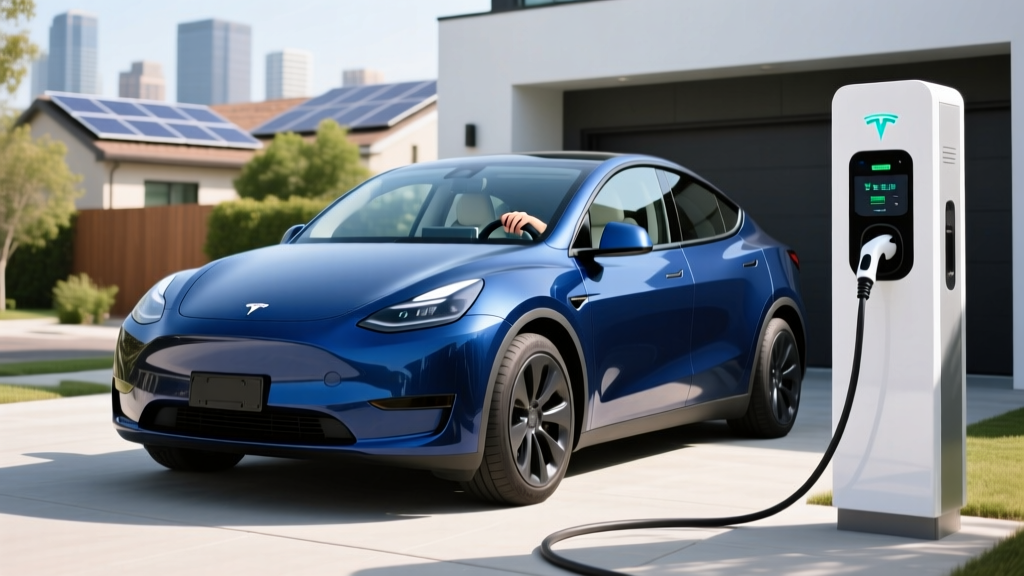
| Level 2 (240V, 48A Wall Connector) | 11.5 kW | ~44 mi/hr |
| DC Fast Charge (V3 Supercharger) | Peak 250 kW | ~175 mi in 15 min |
| DC Fast Charge (CCS adapter, non-Tesla) | Up to 150–175 kW typical | Varies by station |
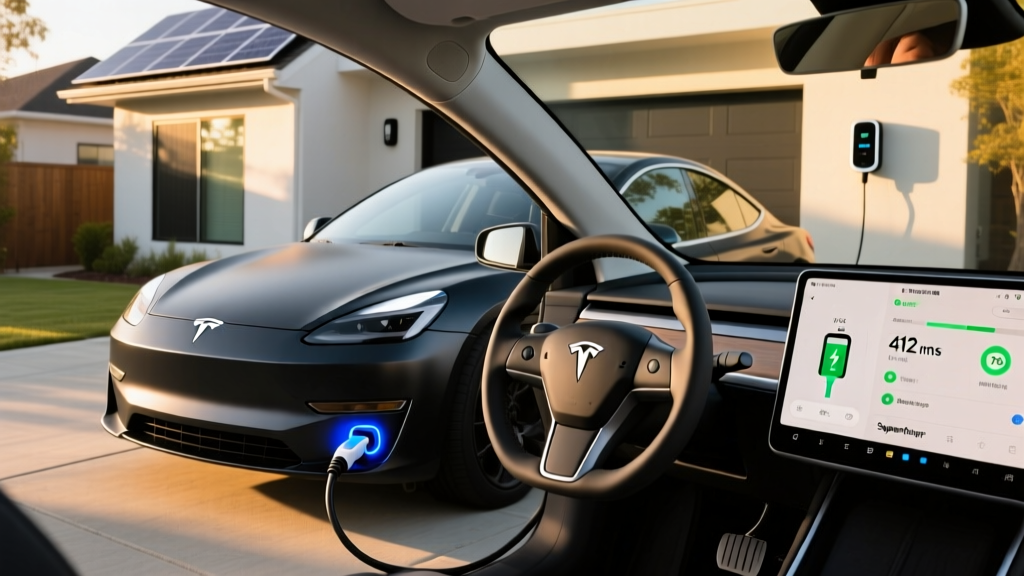
Charge-curve reality: The 250 kW peak holds roughly from 10% to 30% State of Charge. From 30–60%, expect ~150–170 kW. Above 80%, the rate tapers sharply to protect the NMC cells — charging from 80–100% can take as long as 10–80%. For road trips, plan stops at 10–80% to minimize time at the stall.
NACS advantage: The Model Y uses the native NACS (North American Charging Standard) port, granting seamless access to 25,000+ Tesla Superchargers. With Ford, GM, Rivian, and others adopting NACS for 2025–2026, Supercharger congestion at popular corridors is a growing concern — plan off-peak stops on holiday weekends.
Performance, Efficiency, and Daily Drivability
The Long Range AWD's 4.8-second 0–60 mph time is more than adequate for merging and passing. The Performance trim's 3.5-second sprint is sports-car territory, though the firmer suspension trades some ride comfort for cornering composure.
Efficiency is where the Model Y shines. At 26 kWh per 100 miles (Long Range), it extracts more range per kWh than nearly every competing electric SUV. The heat pump — standard on all 2026 trims — significantly reduces cold-weather range loss compared to resistance-heater EVs. Expect 15–20% range reduction in 20°F weather rather than the 30–40% loss seen in older EVs without heat pumps.
Towing: Rated at 3,500 lbs with the factory tow package. Real-world towing range with a loaded trailer drops to roughly 180–200 miles — plan accordingly.
Pricing, Tax Credits, and What You'll Actually Pay
| Trim | Base MSRP | Est. After §30D Credit | Destination |
|---|---|---|---|
| Long Range AWD | $48,990 | $41,490* | $1,390 |
| Performance | $54,990 | $47,490* | $1,390 |
*Credit eligibility depends on 2026 IRS §30D rules. The Model Y qualifies as an SUV under the $80,000 MSRP cap. Buyer income must not exceed $150,000 (single) / $300,000 (joint). Battery critical-mineral and component sourcing requirements must be met for the full $7,500. The credit can be transferred to the dealer as a point-of-sale discount. Verify current-year eligibility at irs.gov and confirm with your tax professional.
As-tested pricing: A Long Range AWD with Full Self-Driving (Supervised) capability ($8,000 add-on), red multi-coat paint ($2,000), and 20" Induction wheels ($2,000) lands near $62,380 before incentives. FSD remains a SAE Level 2 driver-assist system — you must remain engaged, hands on or near the wheel, eyes on the road at all times. It is not autonomous driving.
Tesla Autopilot and FSD (Supervised) are Level 2 systems. The driver is responsible for all vehicle operation. Only Level 4 services like Waymo operate without a human driver — and those are geofenced, not available in consumer vehicles.
Pros and Cons
- Class-leading efficiency (26 kWh/100 mi)
- Supercharger network: 25,000+ reliable stalls
- Spacious cargo area (72.1 cu ft seats folded)
- OTA software updates continuously add features
- Heat pump standard — better cold-weather range
- Strong resale value relative to EV segment
- Electronic door handles prone to cold-weather issues
- Interior button release confusing for passengers
- Ride quality firm, especially Performance trim
- No Apple CarPlay / Android Auto
- 250 kW DCFC peak trails 800V competitors
- Panel gap inconsistency still reported
Who Should Buy the 2026 Model Y?
Choose the Model Y if: You prioritize charging-network reliability, want maximum cargo versatility in a compact SUV footprint, commute 40–80 miles daily with home Level 2 access, and value over-the-air feature updates.
Look at competitors (Ioniq 5, EV6, Ford Mustang Mach-E, Volkswagen ID.4) if: You need 800V ultra-fast charging, prefer physical buttons and traditional door handles, want Apple CarPlay, or prioritize ride comfort over sporty handling.
Best use cases: Two-adult families with one or two children, daily commuters with home charging, road-trippers who plan around Supercharger corridors. Less ideal for buyers in extreme cold who park outdoors (door-handle freeze risk) or those who frequently carry elderly passengers unfamiliar with electronic releases.
Frequently Asked Questions
What is the real-world range of the 2026 Tesla Model Y?
The EPA rates the Long Range AWD at 320 miles. In real-world highway driving at 70–75 mph, expect 265–285 miles. In winter conditions below 30°F, plan for 240–260 miles. City driving with regenerative braking can exceed 300 miles in mild weather.
How fast does the Model Y charge at home and on the road?
On a Level 2 Tesla Wall Connector (11.5 kW / 48A), the Model Y adds roughly 44 miles of range per hour — a full charge from 10–100% takes about 8–9 hours overnight. On a V3 Supercharger (250 kW peak), 10–80% takes approximately 25 minutes, with the fastest charging occurring between 10–30% SoC.
Does the 2026 Model Y qualify for the $7,500 federal EV tax credit?
The Model Y qualifies under the §30D SUV MSRP cap of $80,000. However, buyer income limits ($150K single / $300K joint), battery critical-mineral sourcing, and North American assembly requirements all apply. The credit can be applied as a point-of-sale price reduction at the dealer. Always verify current eligibility on irs.gov before purchasing.
What are the Tesla Model Y door problems reported to NHTSA?
The most common complaints involve exterior motorized door handles failing to present (especially in freezing weather), the interior electronic button-release being unintuitive in emergencies, occasional latch-alignment issues causing wind noise, and 12V parasitic drain linked to the door-control module. These are design-inherent characteristics rather than isolated manufacturing defects.
Is the Model Y worth buying over the Hyundai Ioniq 5 or Ford Mach-E?
The Model Y wins on efficiency, Supercharger access, and cargo space. The Ioniq 5 offers 800V charging (10–80% in ~18 min on a 350 kW stall) and a more comfortable ride. The Mach-E provides a more traditional interior with physical controls. Your priority — charging speed, ride comfort, or network reliability — should drive the decision.
What is the battery warranty on the 2026 Model Y?
Tesla covers the battery and drive unit for 8 years or 120,000 miles (whichever comes first) with a minimum 70% capacity retention guarantee. If the battery degrades below 70% State of Health within that period, Tesla will repair or replace it to meet the threshold.
Sources: fueleconomy.gov (EPA range and efficiency), NHTSA.gov (complaint database), IRS.gov (§30D clean vehicle credit rules), Tesla.com 2026 Model Y specifications.