The Tesla Model Y remains the best-selling electric vehicle in the United States, and for 2026, securing a Tesla Model Y discount requires understanding a mix of manufacturer price cuts, federal tax incentives, and inventory strategies. As the EV market matures, Tesla has aggressively adjusted pricing to maintain its dominance against rivals like the Hyundai Ioniq 5 and Ford Mustang Mach-E. For buyers, this means the window to capture significant savings—both upfront and over the vehicle's lifetime—is wider than ever, provided you know where to look.
2026 Tesla Model Y Pricing and Discount Strategies
Finding a discount on a Tesla isn't like negotiating at a traditional dealership. Tesla uses a direct-to-consumer model with fixed pricing, but there are several levers to pull to lower your final cost.
| Trim Level | Base MSRP | Est. Federal Credit (§30D) | Effective Price |
|---|---|---|---|
| Long Range RWD | $44,990 | $7,500 | $37,490 |
| Long Range AWD | $47,990 | $7,500 | $40,490 |
| Performance AWD | $51,490 | $7,500 | $43,990 |
How to Maximize Your Tesla Model Y Discount
- Point-of-Sale Transfer: Under current IRS rules, you can transfer the $7,500 federal tax credit to Tesla at the time of purchase, effectively acting as an instant down payment or price reduction.
- Inventory Vehicles: Tesla frequently offers discounts on "inventory" vehicles—cars already built and sitting on lots. These can sometimes be found $1,000–$2,000 below the custom-order MSRP.
- Referral Programs: Check Tesla's current referral program; existing owners can often provide links that grant discounts on accessories or free Supercharging miles.
- End-of-Quarter Push: Tesla often incentivizes deliveries at the end of a financial quarter (March, June, September, December) to meet delivery targets.
Real-World Range and Efficiency Analysis
The 2026 Model Y Long Range AWD carries an EPA-estimated range of 320 miles. However, as with all EVs, the sticker number is a laboratory result, not a guarantee.
EPA vs. Real-World Range
EPA Estimate: 320 miles (Long Range AWD)
Real-World Highway (70 mph): Expect ~275–290 miles in mild weather.
Cold Weather Impact: In freezing temperatures (below 32°F), range can drop by 20–30%, yielding approximately 220–250 miles due to battery resistance and cabin heating demands.
Efficiency: 122 MPGe combined / 28 kWh/100mi.
The Model Y's heat pump is standard, which significantly mitigates cold-weather losses compared to older EVs using resistive heating. Still, for road trips in winter, plan your charging stops using 220 miles as your safe buffer.
Battery Chemistry and Longevity
For 2026, the Model Y Long Range and Performance trims utilize NMC (Nickel Manganese Cobalt) battery packs. These offer higher energy density than LFP (Lithium Iron Phosphate) chemistries found in some standard-range competitors, allowing for the 320-mile range in a relatively compact pack.
- Battery Capacity: ~78 kWh usable (82 kWh gross)
- Warranty: 8 years or 120,000 miles, whichever comes first, with minimum 70% retention of capacity.
- Degradation: Data from older Tesla packs suggests a typical 10-12% loss over 150,000 miles, well within the warranty threshold.
Charging Speed and Infrastructure
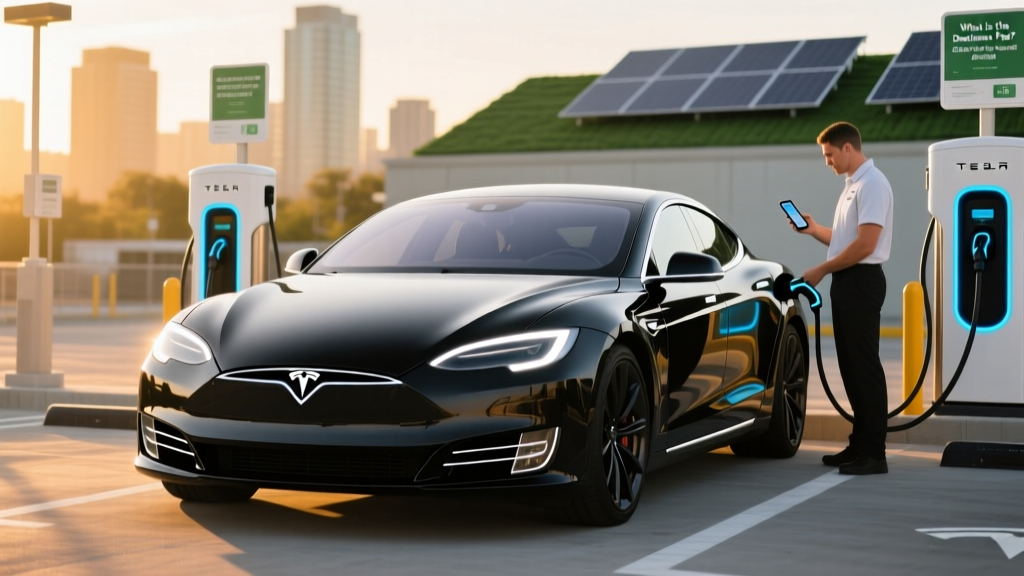
Tesla's Supercharger network remains the gold standard for reliability, and the 2026 Model Y is optimized for it. The vehicle uses the NACS (North American Charging Standard) connector natively.
| Charging Level | Power (kW) | Speed (miles/hr) | Time (10-80%) |
|---|---|---|---|
| Level 1 (120V) | 1.4 kW | 3-4 mi/hr | N/A (Days) |
| Level 2 (240V Home) | 11.5 kW | 32-38 mi/hr | ~8-9 hours |
| DC Fast (V3 Supercharger) | 250 kW (peak) | ~1,000 mi/hr (peak) | ~25 minutes |
Note on Charging Curves: The 250 kW peak is only sustained between 10% and roughly 40% State of Charge (SoC). As the battery fills, the charge rate tapers to protect cell health. A 10-80% session typically averages around 150 kW.
Performance and Driving Dynamics
The Model Y continues to offer sports-sedan acceleration in an SUV package. The dual-motor AWD system provides excellent traction and torque vectoring.
- Long Range AWD: 384 hp, 0-60 mph in 4.8 seconds.
- Performance AWD: 510 hp, 0-60 mph in 3.5 seconds.
- Drivetrain: Dual-motor all-wheel drive with regenerative braking (one-pedal driving capable).
- Towing: Rated for 3,500 lbs (braked), suitable for small campers or utility trailers.
Tech, Interior, and Cargo
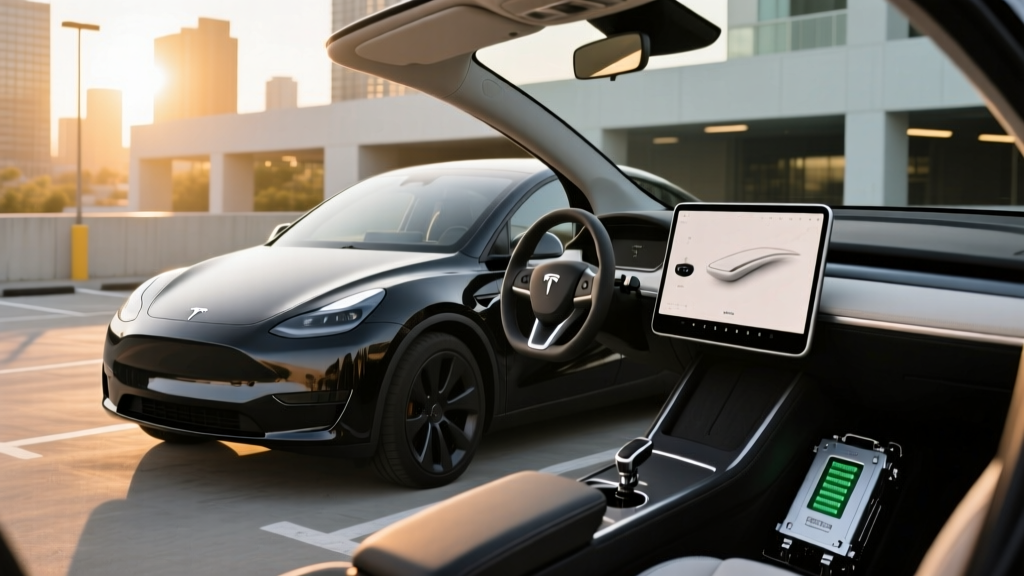
The 2026 Model Y "Juniper" refresh (introduced in 2025) brought significant interior updates, including ambient lighting, ventilated front seats, and a rear touchscreen for passengers.
- Cargo Space: 30.2 cu ft behind the second row; 72.1 cu ft with seats folded. Plus a 4.1 cu ft front trunk (frunk).
- Infotainment: 15.4-inch center touchscreen with integrated navigation, streaming, and gaming. No Apple CarPlay/Android Auto (Tesla proprietary OS).
- Driver Assist: Basic Autopilot is standard. Full Self-Driving (Supervised) is a $8,000 option or $99/mo subscription.
SAE Automation Level: Level 2
Tesla's Autopilot and FSD (Supervised) are SAE Level 2 driver-assist systems. They do not make the car "self-driving." The driver must remain fully engaged, keep hands on the wheel, and monitor the road at all times. Liability remains with the driver.
Federal Tax Credit Eligibility (§30D)
Most 2026 Model Y configurations built at the Fremont or Austin factories qualify for the full $7,500 federal tax credit, but eligibility is subject to strict IRS rules.
- MSRP Cap: The vehicle must have an MSRP under $80,000 (Model Y easily qualifies).
- Buyer Income Cap: Adjusted Gross Income (AGI) must not exceed $150,000 (single), $225,000 (head of household), or $300,000 (joint).
- Battery Sourcing: A percentage of critical minerals and battery components must be sourced from the US or free-trade partners. Tesla's US-built packs currently meet these thresholds.
- Transferability: You can transfer the credit to the dealer (Tesla) for an immediate price reduction at checkout.
Pros and Cons
Pros
- Access to the Supercharger network (most reliable in the US).
- Class-leading efficiency and real-world range.
- Over-the-air (OTA) updates that add features post-purchase.
- High resale value compared to legacy auto EVs.
- Spacious cargo area with the new Juniper interior refresh.
Cons
- No Apple CarPlay or Android Auto integration.
- FSD (Supervised) is expensive and still requires driver attention.
- Minimalist interior lacks physical buttons for climate/mirrors.
- Ride quality can be firm on larger 20-inch wheels.
Frequently Asked Questions
Is the Tesla Model Y still worth buying in 2026?
Yes. With the Juniper refresh addressing previous complaints about ride comfort and rear-seat amenities, and with pricing stabilized by the $7,500 tax credit, it remains the benchmark for the compact electric SUV segment.
Does the Model Y qualify for the $7,500 tax credit?
Yes, provided your income is within the IRS limits and you purchase a new vehicle. You can transfer this credit to Tesla at the point of sale for an immediate discount.
How much does it cost to charge a Model Y at home?
At the US average electricity rate of $0.16/kWh, a full 78 kWh charge costs about $12.50. This provides roughly 270 real-world miles, equating to about $0.046 per mile—significantly cheaper than gas.
What is the warranty on the Tesla battery?
Tesla provides an 8-year/120,000-mile warranty on the battery and drive unit, guaranteeing at least 70% capacity retention during that period.
Disclaimer: Pricing and tax credit rules are subject to change. Always verify current IRS §30D requirements and Tesla's official pricing before purchasing. Sources: EPA / fueleconomy.gov, IRS.gov.