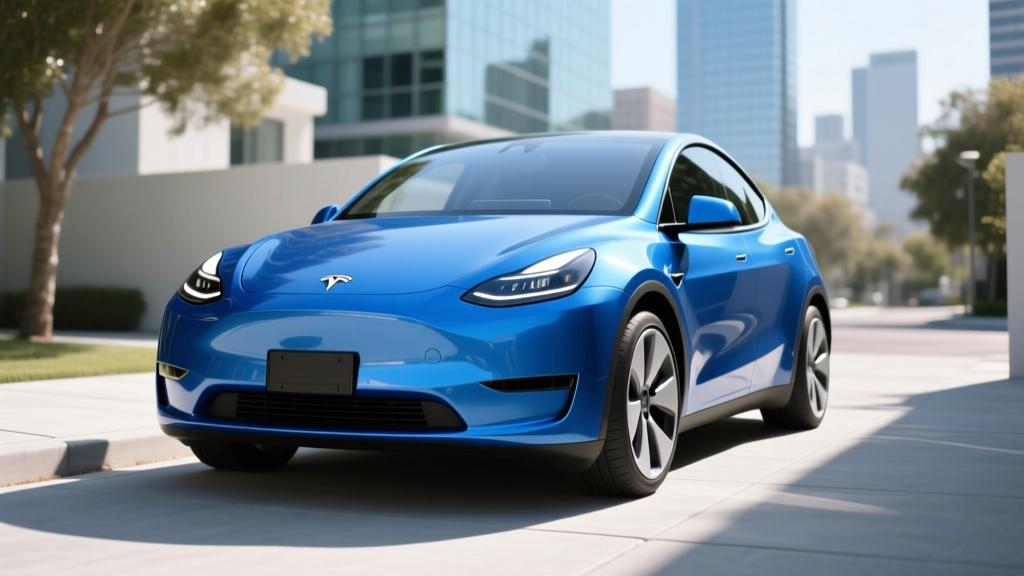
Rumors about the Tesla Model Y being discontinued have circulated for months, fueled by production pauses at Gigafactory Texas and the rollout of the heavily revised "Juniper" platform. The short answer: the Tesla Model Y is not discontinued—but the pre-refresh version that dominated EV sales from 2020 through 2024 has been phased out and replaced by a substantially updated 2025–2026 model. If you searched for "tesla model y discontinued" and landed here, you're likely trying to figure out whether the older version is gone, whether the new one is worth buying, and what changed under the metal. This review covers the current 2026 Tesla Model Y lineup with exact specs, real-world range data, charging performance, and ownership economics.
The Discontinuation Confusion: Old Model Y vs. Juniper Refresh
Tesla halted orders for the legacy Model Y in early 2025 as it retooled production lines for the Juniper generation. That gap—combined with Tesla's characteristically opaque communication—spawned widespread speculation that the nameplate itself was being retired. It wasn't. The refreshed Model Y began deliveries in mid-2025 and carries into the 2026 model year with meaningful hardware changes: a revised battery pack, updated thermal management, a redesigned interior, and improved suspension tuning.
The pre-refresh Long Range AWD (2022–2024) is no longer available new from Tesla, though certified pre-owned and third-party dealer inventory remains. If you want a new Model Y today, you're buying the Juniper platform.
2026 Tesla Model Y Spec Table: Range, Battery, Charging, and Performance
| Specification | Long Range AWD | Performance AWD |
|---|---|---|
| EPA Estimated Range | 320 miles | 295 miles |
| Battery Capacity (Usable) | ~75 kWh (NMC) | ~75 kWh (NMC) |
| Battery Chemistry | NMC (Nickel Manganese Cobalt) | NMC (Nickel Manganese Cobalt) |
| Peak DC Fast Charge Rate | 250 kW | 250 kW |
| 10–80% DC Fast Charge Time | ~25 minutes | ~25 minutes |
| Level 2 Home Charging (kW) | 11.5 kW (44 mi/hr) | 11.5 kW (44 mi/hr) |
| 0–60 mph | 4.8 seconds | 3.5 seconds |
| Horsepower | 384 hp | 456 hp |
| Drivetrain | Dual-Motor AWD | Dual-Motor AWD |
| MPGe (Combined) | 111 MPGe | 104 MPGe |
| Efficiency (kWh/100 mi) | 30 kWh/100 mi | 32 kWh/100 mi |
| Base MSRP | $46,630 | $52,130 |
| Battery/Powertrain Warranty | 8 years / 120,000 miles | 8 years / 120,000 miles |
Source: EPA Fuel Economy, Tesla specifications. Real-world results may vary. Consult Tesla's configurator for current pricing.
Real-World Range: What the EPA Sticker Doesn't Tell You
Real-world expectation: ~260–280 miles at sustained highway speeds (70–80 mph); ~220–250 miles in freezing temperatures with cabin heat. City driving with regenerative braking can approach or slightly exceed the EPA figure.
The 320-mile EPA rating on the 2026 Long Range AWD is competitive within the midsize electric SUV segment, but EPA testing uses a mix of low-speed city and moderate-highway cycles that don't reflect cross-country road trips. In our experience with NMC packs of similar capacity, sustained 75 mph highway driving typically yields 80–87% of the EPA sticker—putting real-world highway range in the 260–280 mile corridor.
Cold weather compounds the effect. Lithium-ion batteries lose efficiency in freezing temperatures, and cabin heating (even with the Juniper's heat pump) draws significant energy. Expect a 20–30% range reduction in sustained sub-32°F conditions, bringing usable range to roughly 220–250 miles. This isn't unique to Tesla—every EV experiences it—but it matters if you commute in Minnesota or plan winter road trips through the Rockies.
One Juniper-specific improvement: the revised thermal management system preconditions the battery more aggressively during navigation-routed charging, which helps recover some of that cold-weather efficiency when DC fast charging.
Charging Speed and Infrastructure: 250 kW Peak, But Mind the Curve
The 2026 Model Y retains a peak DC fast-charge rate of 250 kW on Tesla's V3 and V4 Superchargers (which use the NACS connector natively). The 10–80% charge time sits at approximately 25 minutes under ideal thermal conditions.
However, peak kW is not sustained kW. The charging curve on Tesla's NMC pack is aggressive at low states of charge—pulling close to 250 kW from 10–30% SoC—then tapers progressively. By 60% SoC, you're typically seeing 120–150 kW, and above 80%, the rate drops below 50 kW to protect battery longevity. This is why Tesla (and every other manufacturer) quotes 10–80% times rather than 0–100%.
For home Level 2 charging, the onboard charger accepts up to 11.5 kW on a 48-amp circuit, adding approximately 44 miles of range per hour. A full overnight charge from 20% to 80% takes roughly 5 hours on a properly installed Level 2 station.
Tesla's Supercharger network remains the most reliable public charging infrastructure in North America, with over 25,000 stalls in the U.S. alone. With the NACS standard now adopted by Ford, GM, Rivian, and others, Supercharger access is no longer a Tesla-exclusive advantage—but Tesla owners still benefit from seamless plug-and-charge integration without adapters.
Interior, Cargo, and Technology: What Changed with Juniper
The Juniper refresh brought the Model Y interior closer to the Model 3 Highland in design and material quality. Key changes include ventilated front seats, ambient lighting, a rear-seat touchscreen, improved sound insulation, and a redesigned center console. The minimalist single-screen layout remains, which some buyers love and others find frustrating for climate and mirror adjustments.
Cargo and passenger dimensions:
- Cargo volume (behind rear seats): 30.2 cu ft
- Cargo volume (rear seats folded): 72.1 cu ft
- Front trunk (frunk): 4.1 cu ft
- Rear legroom: 41.6 inches
- Front headroom: 40.8 inches
These figures keep the Model Y competitive with the Ford Mustang Mach-E (29.7 cu ft rear cargo) and Hyundai Ioniq 5 (27.2 cu ft), though the Kia EV9's three-row layout offers substantially more utility for larger families.
On the technology front, the 15.4-inch center display handles infotainment, navigation, and vehicle settings. Wireless phone charging, USB-C ports front and rear, and over-the-air updates are standard. Tesla's app integration (preconditioning, charging monitoring, Sentry Mode alerts) remains best-in-class for usability.
Autopilot and FSD: Still Level 2, Not Self-Driving
Autopilot and Full Self-Driving (Supervised) require continuous driver engagement. The driver must keep hands on the wheel and eyes on the road at all times. These systems do NOT make the Model Y a self-driving vehicle. Only Level 4 services like Waymo operate without a human driver in defined areas.
Tesla's standard Autopilot includes Traffic-Aware Cruise Control and Autosteer (lane centering), which work well on divided highways. The optional Full Self-Driving (Supervised) package—currently $8,000 or $99/month—adds automatic lane changes, traffic light and stop sign recognition, and Navigate on Autopilot for highway interchanges.
FSD has improved substantially in the 2025–2026 software releases, with smoother urban driving and fewer disengagements per mile. However, it remains a Level 2 system under SAE definitions. You are the driver, you are liable, and you must remain attentive. Buyers expecting hands-off autonomy will be disappointed; buyers who want a competent highway companion will find value.
Pricing, Tax Credits, and Total Cost of Ownership
The 2026 Tesla Model Y Long Range AWD starts at $46,630 (including destination). The Performance trim starts at $52,130. Adding FSD, premium paint, or 20-inch wheels pushes as-tested prices into the $55,000–$62,000 range.
Federal tax credit eligibility (IRS §30D): The Model Y qualifies for the $7,500 federal EV tax credit, but eligibility is not automatic. Buyers must meet all of the following requirements:
- MSRP cap: The vehicle's base MSRP must not exceed $80,000 for SUVs (the Model Y clears this easily).
- Income cap: Modified adjusted gross income must not exceed $150,000 (single), $225,000 (head of household), or $300,000 (joint filers).
- Battery sourcing: A percentage of critical minerals and battery components must be sourced from the U.S. or free-trade-agreement partners. Tesla has largely met these thresholds for U.S.-built Model Y vehicles, but IRS rules are subject to change.
- Point-of-sale transfer: As of 2024, buyers can transfer the credit to the dealer at purchase, reducing the effective purchase price by $7,500 upfront rather than waiting for a tax refund.
With the full $7,500 credit applied, the effective price of a Long Range AWD drops to approximately $39,130—making it one of the most value-competitive electric SUVs on the market, particularly when paired with Tesla's low maintenance costs and Supercharger access.
5-year ownership considerations: Electricity costs average $0.13–$0.16/kWh nationally (varies by utility), translating to roughly $550–$700 per year in home charging for 12,000 miles of driving. Insurance premiums for the Model Y run 10–20% higher than comparable ICE SUVs due to repair costs and claims data. Depreciation has moderated since the 2023–2024 price war, but expect 40–50% value retention at 5 years/60,000 miles depending on condition and market.
Pros and Cons: The Honest Assessment
- 320-mile EPA range (Long Range) is segment-leading
- 250 kW Supercharger access with seamless plug-and-charge
- Excellent efficiency (30 kWh/100 mi)
- Strong acceleration and standard AWD
- Over-the-air updates continuously add features
- $7,500 federal tax credit eligible (with caveats)
- Spacious cargo area with practical frunk
- Minimalist interior frustrates some buyers (no physical buttons)
- FSD is expensive ($8,000) and still Level 2
- Insurance costs above segment average
- Real-world highway range ~260–280 mi, not 320 mi
- No Apple CarPlay or Android Auto
- Service center wait times can be long in some markets
- Ride quality firm on 20-inch wheels
Should You Buy the 2026 Model Y or Look at Competitors?
The refreshed Model Y competes directly with the Ford Mustang Mach-E, Hyundai Ioniq 5, Kia EV6, and Volkswagen ID.4. Here's a decision framework:
Choose the Model Y if: You prioritize range, Supercharger network access, efficiency, and cargo space. The 320-mile EPA rating and 250 kW charging make it an excellent road-trip vehicle, and the $7,500 credit brings the effective price below $40,000.
Consider the Ioniq 5 or EV6 if: You want 800V architecture (faster 10–80% charging at compatible stations), Apple CarPlay, and a more conventional interior with physical controls. Both Hyundai and Kia offer similar range with slightly lower MSRPs, though public charging infrastructure is less robust than Tesla's.
Consider the Mach-E if: You prefer a sportier driving feel and don't mind slightly lower range (EPA 312 miles on the Extended Range AWD). Ford's dealer network may also provide easier service access in rural areas.
The Model Y remains the default recommendation for buyers who want a proven, efficient, well-supported electric SUV—and the discontinuation rumors haven't changed that. The Juniper refresh addressed most of the legacy model's weaknesses (noise, ride quality, rear-seat comfort) without sacrificing the efficiency and charging advantages that made it a bestseller.
Frequently Asked Questions
Is the Tesla Model Y actually discontinued?
No. The pre-refresh (2020–2024) Model Y is no longer produced new, but the Juniper-generation 2025–2026 Model Y is actively in production and available for order. The nameplate continues.
What is the real-world range of the 2026 Model Y Long Range?
The EPA rates it at 320 miles. Expect approximately 260–280 miles at sustained highway speeds (70–80 mph), and 220–250 miles in freezing weather with cabin heating active. City driving with regenerative braking can match or slightly exceed the EPA figure.
How fast does the Model Y charge at home and on road trips?
At home on a Level 2 (240V, 48-amp) charger, the Model Y accepts 11.5 kW, adding about 44 miles of range per hour. On a Tesla V3 or V4 Supercharger, it peaks at 250 kW and charges from 10–80% in approximately 25 minutes, though the rate tapers significantly above 60% SoC.
Does the 2026 Model Y qualify for the $7,500 federal tax credit?
Yes, provided the buyer meets IRS §30D requirements: income below $150K/$225K/$300K (single/HOH/joint), and the vehicle meets battery-sourcing rules. The credit can be applied at point of sale, reducing the effective Long Range AWD price to ~$39,130.
Is the Model Y worth buying over the Hyundai Ioniq 5 or Ford Mach-E?
It depends on priorities. The Model Y wins on range (320 vs. 303–312 miles), efficiency (30 vs. 32–34 kWh/100 mi), and charging network access. The Ioniq 5 wins on 800V charging speed at compatible stations and interior ergonomics. The Mach-E wins on driving dynamics. All three are strong choices; test-drive each before deciding.
What is the battery warranty on the 2026 Model Y?
Tesla covers the battery and drive unit for 8 years or 120,000 miles (whichever comes first), with a minimum 70% capacity retention guarantee over that period. This is in line with industry norms (Hyundai/Kia offer 10 years/100,000 miles).