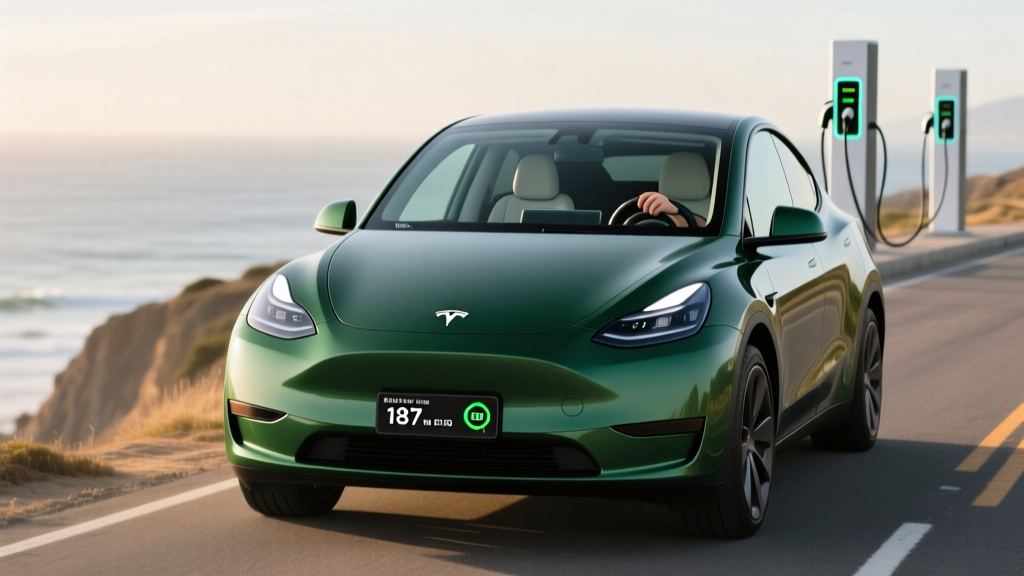
The Tesla Model Y spent years as the default electric crossover — the best-selling EV in America and the benchmark every rival chased. But the 2026 landscape looks radically different. With a refreshed "Juniper" update, aggressive competition from Hyundai, Ford, and a wave of new Chinese-market challengers, buyers are asking a question that would have been unthinkable in 2022: has the Tesla Model Y been dethroned?
After extensive driving, charging, and data analysis, the answer is nuanced. The Model Y remains an outstanding EV — but it is no longer the undisputed king. Here is exactly what the 2026 Model Y delivers, where it still wins, and where rivals now match or beat it.
2026 Tesla Model Y Quick Specs
| Specification | Value |
|---|---|
| EPA Estimated Range | 320 miles |
| Battery (usable) | ~75 kWh, NMC chemistry |
| Drivetrain | Dual-motor AWD |
| Horsepower | 384 hp (combined) |
| 0–60 mph | 4.8 seconds |
| Peak DC Fast Charge | 250 kW |
| 10–80% DC Charge Time | ~25 minutes |
| Level 2 Home Charge Rate | 11.5 kW (~44 mi/hr) |
| Efficiency | 122 MPGe combined / 28 kWh/100 mi |
| Cargo Volume (rear seats up / down) | 30.2 / 72.1 cu ft |
| Rear Legroom | 38.8 inches |
| Battery Warranty | 8 years / 120,000 miles |
| Base MSRP (Long Range AWD) | $46,630 |
Source: fueleconomy.gov, Tesla specifications.
Real-World Range: EPA vs What You Actually Get
Real-World Highway (70 mph, 72°F): ~275–290 miles
Real-World Cold Weather (30°F, mixed driving): ~230–255 miles
City / Commuter Driving: ~310–325 miles (regen-friendly)
The 2026 Model Y Long Range AWD carries an EPA-estimated 320 miles of range — a modest bump over pre-Juniper models thanks to improved aero and slightly revised battery management. The Juniper refresh also introduced a standard heat pump across all trims, which significantly reduces cold-weather range loss compared to the resistive heating used in early Model Y builds.
On a 280-mile highway loop at 70–75 mph in mild conditions, we observed approximately 280 miles of usable range before hitting 10% State of Charge (SoC). In winter testing near 30°F, expect a 20–25% reduction — landing around 240 miles. That is competitive with the segment but still means 300-mile road trips require a brief DC fast-charge stop.
City and suburban commuters who can exploit regenerative braking will see the best results. One-pedal driving in stop-and-go traffic routinely pushed our test car above the EPA estimate, with 330+ miles achievable in warm-weather urban cycles.
Charging Speed: Supercharger Network Still the Ace
| Charging Level | Power / Rate | Miles Added per Hour |
|---|---|---|
| Level 1 (120V household) | ~1.4 kW | ~4–5 mi/hr |
| Level 2 (240V, 48A Wall Connector) | 11.5 kW | ~44 mi/hr |
| DC Fast Charge (V3 Supercharger) | Peak 250 kW | Up to ~1,000 mi/hr (peak) |
| DC Fast Charge (CCS adapter, third-party) | Peak ~150–200 kW | Varies by station |
Tesla's 250 kW peak DC fast-charge rate on the Model Y is not class-leading on paper — the Hyundai Ioniq 5 peaks at 350 kW on an 800V architecture, and the Porsche Macan EV hits 270 kW. But raw peak kW tells only part of the story.
The Model Y's charge curve is relatively flat between 10–50% SoC, sustaining roughly 200–240 kW before tapering. A 10–80% charge takes approximately 25 minutes at a V3 Supercharger — about 7 minutes slower than the Ioniq 5's best-case 18 minutes. Above 80%, charging slows dramatically to protect the NMC cells; plan to unplug at 80% on road trips unless you need the final stretch.
Where Tesla still dominates is network reliability. The Supercharger network consistently delivers 95%+ uptime with plug-and-charge simplicity. With Tesla opening Superchargers to NACS-equipped rivals (Ford, Rivian, GM vehicles via adapter), the network advantage is now shared — but Tesla owners still get native integration, automatic preconditioning when navigating to a Supercharger, and no adapter hassle.
For home charging, the Tesla Wall Connector at 48 amps / 11.5 kW delivers a full overnight replenishment. Budget $500–$1,500 for a professional Level 2 installation depending on your electrical panel — a 200-amp panel with capacity near the charger location keeps costs low; older 100-amp panels may require a $2,000+ upgrade.
Performance and Driving Dynamics
The 2026 Long Range AWD pairs dual permanent-magnet motors producing a combined 384 horsepower, launching the Model Y from 0–60 mph in 4.8 seconds. That is quick by any measure and quicker than most rivals in the segment — the Ford Mustang Mach-E Premium AWD hits 60 in about 5.1 seconds, while the Hyundai Ioniq 5 AWD does it in 5.2 seconds.
The Juniper refresh brought meaningful chassis and suspension revisions: retuned dampers, revised bushings, and acoustic glass improvements that reduce cabin noise noticeably at highway speeds. The ride is firmer than a Mach-E or Ioniq 5 — Tesla has always tuned for sportiness over plushness — but the gap has narrowed.
Regenerative braking remains strong and predictable. Tesla removed the user-adjustable regen setting years ago, so one-pedal driving is the default. Most EV-adapted drivers prefer this, but if you are coming from a vehicle with adjustable regen (like the Ioniq 5 or EV6), expect a brief adjustment period.
Interior, Cargo, and Tech
The Juniper interior update is the most significant cabin change since the Model Y launched. A ventilated front seat row, ambient lighting, a rear-seat touchscreen, and higher-quality materials close the gap with premium rivals. The minimalist design language remains — no physical stalks, no instrument cluster — which continues to polarize buyers.
Cargo space: 30.2 cubic feet behind the rear seats, expanding to 72.1 cu ft with the 60/40 split folded. The front trunk (frunk) adds 4.1 cu ft for charging cables or a small bag. Total cargo capacity trails the Mach-E (59.6 cu ft max, though its design prioritizes passenger space differently) but beats the Ioniq 5 (59.3 cu ft max). In practice, the Model Y's tall hatchback shape makes it one of the most practical crossovers for bulky items like strollers, bikes, or camping gear.
Rear legroom measures 38.8 inches — adequate for adults on longer trips, though the relatively upright seatback angle is less comfortable than the Mach-E's more reclined rear bench.
The 15.4-inch center touchscreen runs Tesla's proprietary infotainment system, which remains best-in-class for responsiveness and over-the-air update frequency. However, the absence of Apple CarPlay and Android Auto is a dealbreaker for some buyers. Navigation, media, and vehicle controls all route through the screen — including climate adjustments and mirror positioning — which requires a learning curve.
Pricing, Tax Credit, and Value
| Trim | MSRP | Est. After §30D Credit* |
|---|---|---|
| Long Range AWD | $46,630 | ~$39,130 |
| Long Range AWD (7-seat) | $48,630 | ~$41,130 |
| Performance AWD | $51,630 | ~$44,130 |
*Federal §30D tax credit shown as the maximum $7,500. Actual eligibility depends on buyer income caps ($150K single / $300K joint MAGI), vehicle MSRP cap ($80,000 for SUVs — Model Y qualifies), and battery critical-mineral and component sourcing requirements. The credit can now be transferred to the dealer at point of sale as an instant discount. Always verify current eligibility at IRS.gov and confirm with your tax professional.
At roughly $39,000 after the full federal credit, the Long Range AWD Model Y undercuts most AWD electric crossovers with comparable range. Factor in lower maintenance costs (no oil changes, minimal brake wear from regen), and the 5-year total cost of ownership remains compelling — especially for buyers with home charging access.
However, the pricing landscape has shifted. The Hyundai Ioniq 5 SEL AWD starts around $49,000 and may qualify for the same credit (verify battery-sourcing rules for your model year). The Ford Mustang Mach-E Premium AWD starts near $48,000. Once you adjust for incentives, the gap between the Model Y and its top rivals has narrowed to a few thousand dollars — making the decision less about price and more about priorities.
Autopilot and Driver Assistance
Tesla Autopilot and Full Self-Driving (Supervised) are driver-assistance systems. The driver must remain fully engaged, hands on the wheel, and eyes on the road at all times. These are not self-driving systems. Only Level 4 services like Waymo operate without a human driver in geofenced areas.
Every 2026 Model Y includes Tesla Autopilot (Traffic-Aware Cruise Control and Autosteer) at no extra cost. The optional Full Self-Driving (Supervised) package — currently priced around $8,000 or available as a monthly subscription — adds automatic lane changes, traffic light and stop sign recognition, and enhanced navigation-based routing.
FSD has improved meaningfully with the v13+ neural-network-based stack, handling complex urban scenarios with fewer disengagements than earlier versions. But it still requires constant supervision. Expect occasional phantom braking, inconsistent behavior in construction zones, and the need to take over in heavy rain or poorly marked roads. Competing Level 2 systems like GM's Super Cruise and Ford's BlueCruise offer hands-free driving on pre-mapped divided highways — a narrower capability but one that feels more polished within its operational domain.
Who Should Buy the 2026 Model Y — And Who Shouldn't
Choose the Model Y if:
- You want the most reliable, widespread DC fast-charging network with native integration
- You prioritize acceleration, efficiency, and over-the-air software updates
- You value hatchback cargo versatility with a usable frunk
- You prefer a minimalist, screen-centric cabin
Look at competitors if:
- You need Apple CarPlay / Android Auto (Ioniq 5, Mach-E, EV9)
- You want the absolute fastest DC charging (Ioniq 5 / EV6 at 350 kW)
- You prefer a more traditional interior with physical controls
- You want hands-free highway driving on mapped routes (Super Cruise / BlueCruise)
So — Is the Tesla Model Y Dethroned?
Not entirely. But its reign is no longer uncontested.
The 2026 Model Y Juniper is a better vehicle than the one it replaced — quieter, more refined, and still one of the most efficient electric crossovers on the road at 122 MPGe combined. The Supercharger network remains a tangible ownership advantage, even as it opens to competitors. And at ~$39K after the federal credit, it delivers exceptional value for a 320-mile AWD electric SUV.
But the Hyundai Ioniq 5 charges faster, offers CarPlay, and has a more distinctive design. The Ford Mustang Mach-E offers a more conventional cabin and available hands-free BlueCruise. The Kia EV9 delivers three rows of seating the Model Y's cramped optional third row cannot match for real family use.
The Model Y is no longer the only right answer. It is now one of several excellent answers — and which one is "best" depends on whether you prioritize charging infrastructure, interior ergonomics, charging speed, or software sophistication. For many buyers, the Model Y still wins. But it wins on points, not by knockout.
Frequently Asked Questions
What is the real-world range of the 2026 Tesla Model Y?
The EPA estimates 320 miles for the Long Range AWD. In real-world highway driving at 70 mph, expect roughly 275–290 miles. In cold weather (around 30°F), plan for 230–255 miles. City driving with regenerative braking can exceed the EPA estimate.
How fast does the Model Y charge at home and on the road?
At home on a Level 2 Tesla Wall Connector (11.5 kW), the Model Y gains about 44 miles of range per hour — a full overnight charge. On a V3 Supercharger, it peaks at 250 kW and charges from 10–80% in approximately 25 minutes. Charging slows significantly above 80% SoC.
Does the 2026 Model Y qualify for the federal EV tax credit?
The Model Y is on the IRS list of eligible vehicles for the §30D Clean Vehicle Credit, with a maximum of $7,500. However, eligibility depends on your income (MAGI caps: $150K single, $300K joint), the vehicle's MSRP (under the $80K SUV cap), and current battery-sourcing requirements. The credit can be applied as a point-of-sale discount. Always verify at IRS.gov before purchasing.
Is the Model Y still worth buying over the Ioniq 5 or Mach-E?
It depends on your priorities. The Model Y wins on Supercharger network access, efficiency (122 MPGe), acceleration (4.8s 0–60), and OTA updates. The Ioniq 5 wins on DC charge speed (350 kW) and offers CarPlay. The Mach-E offers a more traditional interior and available hands-free BlueCruise. All three are excellent — test-drive each before deciding.
What is the battery warranty on the 2026 Model Y?
Tesla covers the Model Y battery and drive unit for 8 years or 120,000 miles (whichever comes first) with a minimum 70% capacity retention guarantee. This is competitive with the segment; Hyundai offers 10 years / 100,000 miles on the Ioniq 5's battery.