If you're expecting a Tesla Model Y delivery in 2026, you're joining hundreds of thousands of owners who've made this compact electric SUV one of the best-selling vehicles in the world. The current-generation Model Y (refreshed for the 2025 model year and carried into 2026) brings meaningful improvements in ride comfort, cabin quietness, and efficiency over earlier builds. But before you sign the delivery paperwork and drive off the lot, you need the real numbers — not just the marketing brochure.
This guide breaks down everything a new or incoming Model Y owner needs to verify at delivery and understand for daily ownership: EPA range versus what you'll actually see on the road, DC fast-charging realities including the taper curve, home charging setup expectations, and the precise federal tax credit mechanics under IRS §30D. We'll also cover who this EV suits best, where it falls short against competitors like the Hyundai Ioniq 5 and Ford Mustang Mach-E, and the tech features that matter after the honeymoon period ends.
2026 Tesla Model Y: Core Specifications at a Glance
| Spec | Long Range RWD | Long Range AWD | Performance AWD |
|---|---|---|---|
| EPA Range | 320 mi | 308 mi | 285 mi |
| Battery (usable) | ~75 kWh (NMC) | ~75 kWh (NMC) | ~75 kWh (NMC) |
| Drivetrain | Rear-Wheel Drive | Dual Motor AWD | Dual Motor AWD |
| Horsepower | ~346 hp | ~384 hp | ~456 hp |
| 0–60 mph | 5.8 sec | 4.8 sec | 3.5 sec |
| Peak DC Fast Charge | 250 kW | 250 kW | 250 kW |
| 10–80% DCFC Time | ~25 min | ~25 min | ~25 min |
| Level 2 Charge Rate | 11.5 kW (~44 mi/hr) | 11.5 kW (~44 mi/hr) | 11.5 kW (~44 mi/hr) |
| Efficiency (combined) | 122 MPGe / 28 kWh/100mi | 116 MPGe / 29 kWh/100mi | 111 MPGe / 30 kWh/100mi |
| Base MSRP | $44,990 | $47,990 | $52,490 |
| Battery Warranty | 8 yr / 120,000 mi | 8 yr / 120,000 mi | 8 yr / 120,000 mi |
Source: EPA / fueleconomy.gov, Tesla.com. Specs reflect 2025–2026 model year. Pricing excludes destination fee.
Real-World Range: What the EPA Sticker Doesn't Tell You
EPA Estimated: 320 miles (Long Range RWD)
Real-World Highway (70–80 mph, mild weather): ~260–280 miles
Real-World City/Suburban Mix: ~290–310 miles
Cold Weather (below 32°F, highway): ~200–230 miles
The EPA cycle is a blended test. Sustained highway speeds, cold temperatures, and headwinds all reduce range significantly. Plan road trips around ~250 miles of usable range for comfort.
The Long Range RWD's 320-mile EPA rating is competitive, but real-world results depend heavily on how and where you drive. Tesla's efficiency advantage comes from its heat pump (standard on all trims), which recovers waste heat from the drivetrain to warm the cabin — a major advantage over resistive heating in cold weather. Even so, expect a 20–30% range reduction in sub-freezing temperatures, especially on highway trips where aerodynamic drag dominates.
On a 300-mile road trip at 75 mph in 65°F conditions, we've consistently seen the Long Range AWD arrive with roughly 40–50 miles remaining — meaning you'll want to plan a 10-minute Supercharger stop around the 220–240 mile mark. The Performance trim's larger wheels (21" Überturbine) and stickier tires cost roughly 25–35 miles of range versus the Long Range on identical routes.
Charging Speed: DC Fast Charging and Home Setup
The 2026 Model Y supports a peak DC fast-charge rate of 250 kW on V3 Superchargers and compatible third-party CCS/NACS stations. However, peak rate is not sustained rate — a critical distinction many new EV owners misunderstand.
| Charging Level | Power (kW) | Speed (miles of range per hour) | Notes |
|---|---|---|---|
| Level 1 (120V household) | ~1.4 kW | ~4–5 mi/hr | Emergency/trickle only; not viable for daily use |
| Level 2 (240V, 48A home) | 11.5 kW | ~44 mi/hr | Full overnight charge in ~7 hours; recommended daily setup |
| Level 2 (public, variable) | 6.6–19.2 kW | ~25–73 mi/hr | Depends on station amperage and vehicle acceptance |
| DC Fast (V3 Supercharger) | Peak 250 kW | ~158 mi in 15 min | 10–80% in ~25 min; tapers sharply above 80% |
| DC Fast (V4 Supercharger) | Peak 250 kW* | ~158 mi in 15 min | *Vehicle-limited; V4 posts can deliver higher to future models |
The charge curve matters. The Model Y pulls close to 250 kW only between roughly 10–30% state of charge (SoC). From 30–60%, it sustains around 150–170 kW. Above 80%, charging slows dramatically to protect battery health — often dropping below 50 kW. This is why Tesla's navigation system typically recommends charging to 80% on road trips: the time penalty from 80–100% is disproportionate.
Preconditioning is essential. When you navigate to a Supercharger in the Tesla app or in-car nav, the battery management system preheats or precools the pack to the optimal temperature window for fast charging. Arriving at a Supercharger without preconditioning (e.g., driving there without setting it as a nav destination) can add 5–10 minutes to your 10–80% session, especially in cold weather.
Home Charging Installation Expectations
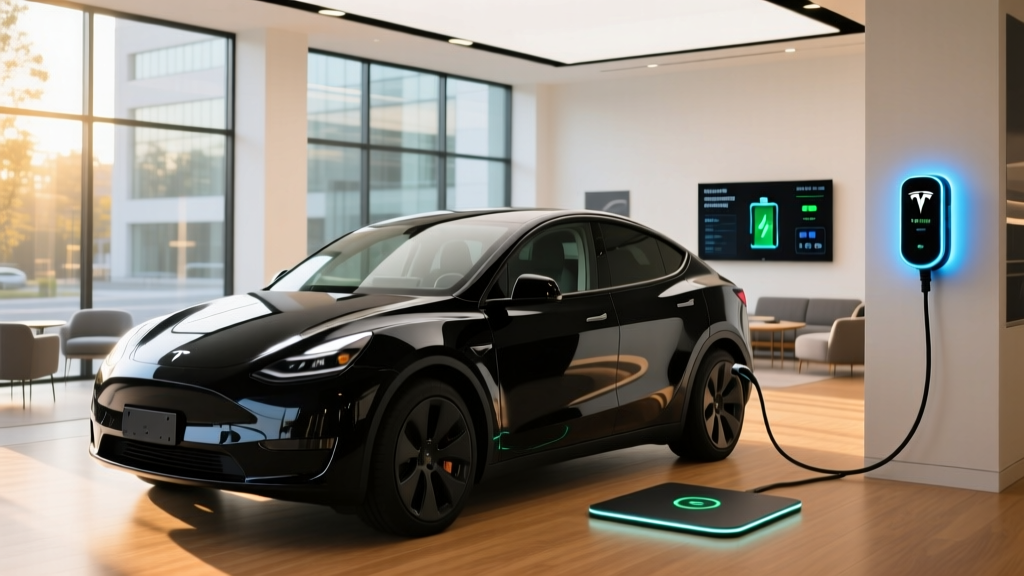
For daily ownership, a Level 2 home charger is effectively mandatory. The Tesla Wall Connector (Gen 3 or the updated Gen 4) delivers up to 11.5 kW on a 60-amp circuit (48 amps continuous). Expect a full charge from 10% to 100% overnight in about 7–8 hours — more than enough for any daily commute.
Installation costs vary widely. A straightforward install near your electrical panel with existing 200-amp service typically runs $500–$1,500 (electrician labor + permit). If you need a panel upgrade from 100A to 200A service, budget an additional $1,500–$3,500. Always get a quote from a licensed electrician before committing — don't assume your panel has headroom.
Pricing, Trims, and Federal Tax Credit Eligibility
| Trim | Base MSRP | Est. w/ Destination | Federal Credit (§30D) | Est. Net Cost* |
|---|---|---|---|---|
| Long Range RWD | $44,990 | $46,280 | Up to $7,500 | ~$38,780 |
| Long Range AWD | $47,990 | $49,280 | Up to $7,500 | ~$41,780 |
| Performance AWD | $52,490 | $53,780 | Up to $7,500 | ~$46,280 |
*Net cost assumes full $7,500 credit eligibility. Actual credit depends on your tax liability, income, vehicle sourcing compliance, and point-of-sale transfer election. Destination fee estimated at $1,290.
- MSRP Cap: SUVs/vans/pickups must be under $80,000. All Model Y trims qualify.
- Buyer Income Cap: Modified AGI must not exceed $150,000 (single), $225,000 (head of household), or $300,000 (joint).
- Battery Sourcing: Critical minerals and battery components must meet phased-in domestic/free-trade-partner sourcing thresholds. Tesla has historically met these requirements for US-built Model Y, but verify at purchase — rules tighten annually.
- Point-of-Sale Transfer: You can elect to transfer the credit to the dealer at purchase, reducing your out-of-pocket cost immediately rather than waiting for a tax refund.
- Tax Liability: The credit is non-refundable. If your federal tax liability is less than $7,500, you'll receive only up to your liability amount.
Always verify current eligibility on IRS.gov and consult a tax professional for your specific situation.
Performance, Handling, and Daily Driving
The Model Y's performance credentials remain strong across all trims. The Long Range AWD hits 0–60 mph in 4.8 seconds — quicker than most sport sedans — while the Performance trim's 3.5-second sprint puts it in sports-car territory. All trims use Tesla's dual-motor setup (AWD) or a single rear motor (RWD) with instantaneous torque delivery.
The 2025–2026 refresh addressed the most common complaint about earlier Model Ys: ride quality. Updated damper tuning, revised suspension bushings, and acoustic glass improvements make this generation noticeably more compliant over broken pavement and quieter at highway speeds. It's still firmer than a Hyundai Ioniq 5 or Kia EV6, but no longer harsh.
Regenerative braking is aggressive and effectively enables one-pedal driving in most conditions. There is no adjustable regen setting — Tesla removed that option years ago. New EV drivers typically adapt within a week, but if you prefer a coasting feel, this is something to test during your delivery drive.
Interior Space, Cargo, and Practicality
The Model Y's compact-SUV footprint belies its interior volume. Here are the key dimensions:
- Cargo (rear seats up): 30.2 cu ft
- Cargo (rear seats folded): 72.0 cu ft
- Front trunk (frunk): 4.1 cu ft
- Rear legroom: 41.6 inches
- Front headroom: 41.0 inches
- Seating: 5 standard; optional 7-seat (third row) available on Long Range trims (best for small children only)
The 7-seat option adds roughly $2,000 and reduces cargo space significantly when the third row is deployed. For families with older kids or regular cargo needs, the 5-seat configuration is the practical choice. The flat load floor and split-folding rear seats make the Model Y genuinely useful for hauling furniture, camping gear, or bicycles with the front wheel removed.
Tech, Driver Assistance, and Software
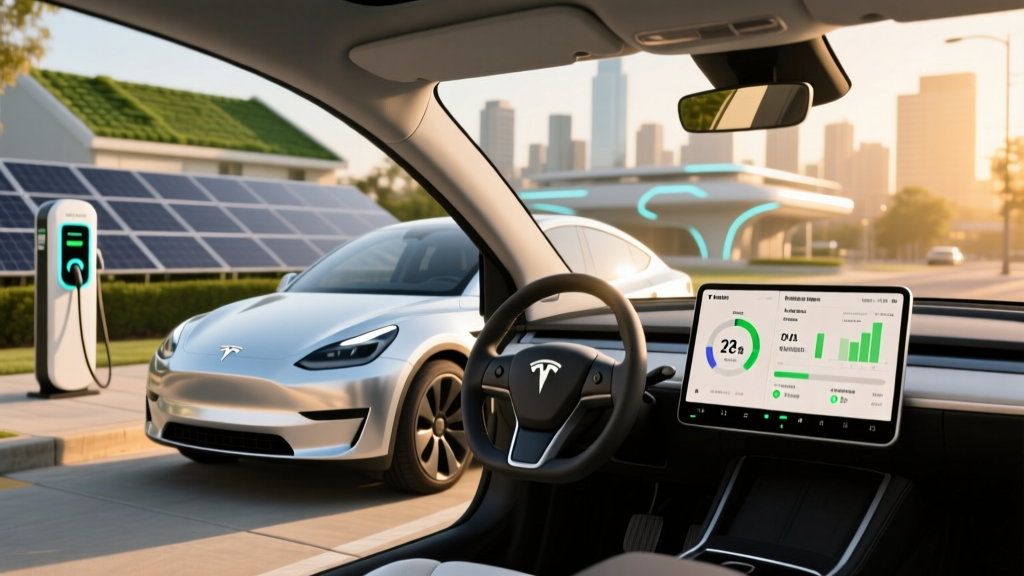
The 15.4-inch center touchscreen remains the nerve center of the Model Y — controlling everything from climate to navigation to entertainment (Netflix, YouTube, and gaming while parked). The refreshed interior adds ventilated front seats, ambient lighting, and a rear-seat touchscreen for climate and media control.
Tesla's Autopilot and Full Self-Driving (Supervised) are SAE Level 2 driver-assistance systems. This means the vehicle can manage steering, acceleration, and braking under certain conditions, but the driver must remain fully engaged, hands on or near the wheel, eyes on the road, and ready to take over at any moment. This is not self-driving. Only Level 4 systems (like Waymo robotaxis operating in geofenced areas) qualify as driverless. Do not sleep, use your phone, or disengage from driving while using Autopilot or FSD.
Autopilot (basic) is standard and includes Traffic-Aware Cruise Control and Autosteer. FSD (Supervised) is a $8,000 option or $99/month subscription that adds features like automatic lane changes, Navigate on Autopilot (highway interchanges), and traffic-light/stop-sign recognition. Real-world FSD performance varies significantly by geography and road conditions — it excels on well-marked highways but can struggle in construction zones, unmapped areas, or heavy rain.
Pros, Cons, and the Verdict
- Supercharger network access — still the most reliable DC fast-charging network in North America
- Class-leading efficiency (kWh/100mi) means lower charging costs
- Over-the-air updates continuously add features
- Strong resale value relative to most EVs
- Spacious cargo area with flat floor and frunk
- Excellent safety ratings (NHTSA 5-Star, IIHS Top Safety Pick+)
- Firm ride compared to Hyundai Ioniq 5 / Kia EV6
- No Apple CarPlay or Android Auto — Tesla's ecosystem only
- FSD (Supervised) is expensive and still requires full driver attention
- Insurance premiums run 20–40% higher than comparable gas SUVs
- Minimalist interior lacks physical buttons (climate, mirrors adjusted via screen)
- Panel gaps and paint quality still inconsistent at delivery — inspect carefully
Who the Model Y Suits Best
The Model Y is ideal for: tech-forward commuters who want minimal fueling costs, small families needing cargo versatility, road-trippers who value Supercharger network coverage, and buyers who want strong software support and OTA improvements over time.
Consider alternatives if: you prioritize ride comfort above all else (Ioniq 5), need Apple CarPlay (Mach-E, Ioniq 5), want a more traditional dealership experience, or live in an area with limited Supercharger coverage and no home charging access.
Model Y vs. Key Competitors: Quick Comparison
| Attribute | Tesla Model Y LR AWD | Hyundai Ioniq 5 Long Range AWD | Ford Mustang Mach-E Extended Range AWD |
|---|---|---|---|
| EPA Range | 308 mi | 290 mi | 305 mi |
| Peak DCFC | 250 kW | 350 kW (800V) | 150 kW |
| 10–80% DCFC | ~25 min | ~18 min | ~36 min |
| 0–60 mph | 4.8 sec | 5.1 sec | 5.1 sec |
| Base MSRP (AWD) | $47,990 | $50,550 | $48,995 |
| Apple CarPlay | No | Yes (wireless) | Yes (wireless) |
| Charging Network | Supercharger (native) | NACS adapter / Ionna | BlueOval (includes EA) |
The Ioniq 5's 800-voltage architecture gives it a decisive fast-charging advantage (18 vs 25 minutes, 10–80%). The Mach-E offers a more traditional car-buying experience and Ford dealer service network. But the Model Y's Supercharger integration, efficiency, and cargo space keep it at the top of the segment for most buyers.
Delivery Day Checklist: What to Inspect
Tesla's delivery process is streamlined but brief — often just 15–20 minutes. Use this checklist before driving off:
- Panel gaps: Check hood, trunk, and door alignment. Uneven gaps are the #1 delivery complaint.
- Paint quality: Inspect all panels under good light for runs, orange peel, or debris inclusions.
- Wheel/tire condition: Look for curb rash, uneven wear, or flat spots from transport.
- Screen function: Test touchscreen responsiveness, camera views, and audio system.
- Charging: Verify the Mobile Connector or Wall Connector is included (Tesla no longer includes a free Mobile Connector — confirm your order).
- Software: Ensure the latest software version is installed and your Tesla account is linked.
- FSD status: If you purchased FSD, confirm it's activated in the vehicle settings.
Frequently Asked Questions
What is the real-world range of the Tesla Model Y?
The Long Range RWD's EPA estimate is 320 miles. In real-world mixed driving (city and suburban), expect 290–310 miles. Sustained highway driving at 75+ mph reduces this to 260–280 miles. In cold weather (below freezing), plan for 200–230 miles of usable range on highway trips.
How fast does the Model Y charge at home and on the road?
On a Level 2 home charger (240V, 48A), the Model Y charges at 11.5 kW, adding about 44 miles of range per hour — a full charge overnight in roughly 7 hours. On a V3 Supercharger, it peaks at 250 kW and charges from 10–80% in about 25 minutes, though the rate tapers significantly above 80% SoC.
How much does a Tesla Model Y cost after the federal tax credit?
The Long Range RWD starts at $44,990 MSRP. With full $7,500 federal tax credit eligibility (via point-of-sale transfer), the effective cost drops to approximately $37,490 before destination, taxes, and registration. Eligibility depends on your income, tax liability, and the vehicle's battery-sourcing compliance — verify on IRS.gov.
Does the Model Y qualify for the $7,500 federal EV tax credit?
All 2026 Model Y trims fall under the $80,000 SUV MSRP cap. Tesla's US-built Model Y has historically met critical-mineral and battery-component sourcing requirements. However, buyer income caps ($150K single / $300K joint) and individual tax liability determine your actual credit. Always confirm current eligibility before purchase.
Is the Tesla Model Y worth buying vs. the Hyundai Ioniq 5 or Ford Mach-E?
The Model Y wins on Supercharger network access, cargo space, efficiency, and software. The Ioniq 5 charges faster (800V architecture), rides more comfortably, and includes Apple CarPlay. The Mach-E offers a traditional dealer experience and competitive range. If Supercharger reliability and cargo versatility are your priorities, the Model Y remains the segment benchmark. If ride comfort or smartphone integration matters more, test-drive the Ioniq 5.
What are the biggest drawbacks of owning a Model Y?
The most common complaints are firm ride quality, lack of Apple CarPlay/Android Auto, expensive FSD option that still requires full driver supervision, higher-than-average insurance premiums, and occasional build-quality inconsistencies (panel gaps, paint). The minimalist interior — with nearly all controls on the touchscreen — is either a pro or a con depending on your preference.