Quick Verdict: Is the 2026 Model Y Still the Deal to Beat?
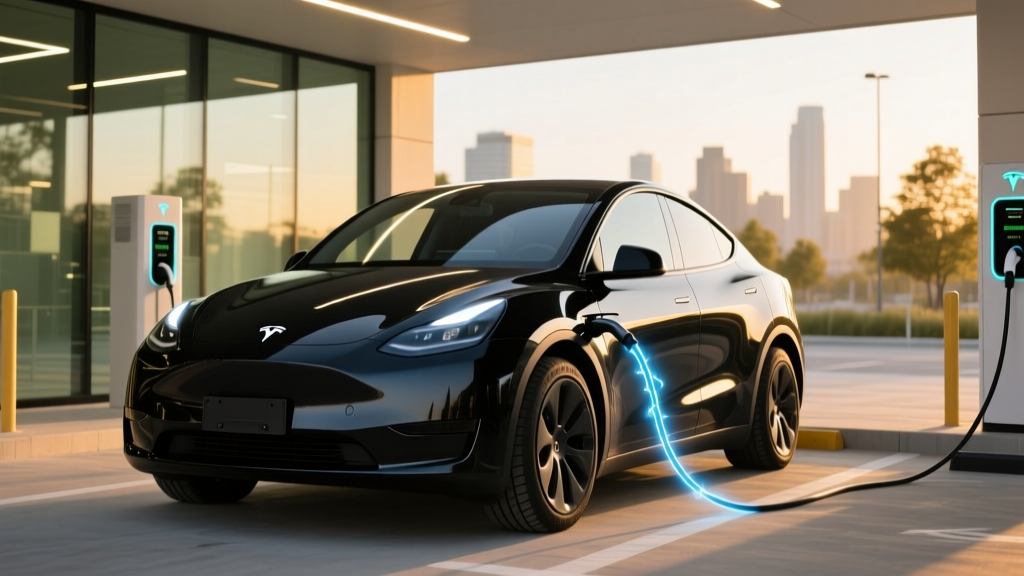
The 2026 Tesla Model Y remains the benchmark compact electric SUV against which every rival is measured. With an EPA-estimated 320 miles of range on the Long Range AWD trim, a 250 kW peak DC fast-charge rate, and access to the world's largest fast-charging network, it delivers a practical ownership proposition that's hard to dismiss. But "deals" in the EV world aren't just about sticker price — they're about total cost of ownership, tax credit eligibility, and whether the numbers on paper hold up in the driveway. This profile breaks down every figure you need to evaluate a Model Y purchase in 2026.
EPA Estimated: 320 miles (Long Range AWD) / 300 miles (Performance)
Real-World Expectation: ~265–285 miles at sustained 70 mph highway speeds; ~240–260 miles in freezing temperatures (below 32°F). City driving with regenerative braking recovers closer to the EPA sticker. Plan road trips around ~250-mile legs for a comfortable buffer.
2026 Model Y Specs at a Glance
| Spec | Long Range AWD | Performance |
|---|---|---|
| EPA Range | 320 mi | 300 mi |
| Battery (usable) | ~78 kWh (NMC) | ~78 kWh (NMC) |
| Drivetrain | Dual-Motor AWD | Dual-Motor AWD |
| Horsepower | 384 hp | 456 hp |
| 0–60 mph | 4.8 sec | 3.5 sec |
| MPGe (combined) | 111 MPGe | 102 MPGe |
| Efficiency | 28 kWh/100mi | 30 kWh/100mi |
| Peak DC Charge | 250 kW | 250 kW |
| 10–80% DC Time | ~25 min | ~25 min |
| Base MSRP | $48,990 | $52,990 |
Sources: EPA Fuel Economy, Tesla press materials. Specs reflect 2026 model year as published.
Charging: How Fast Can the Model Y Actually Replenish?
Understanding the difference between kW (power, or the rate of energy flow) and kWh (energy, or the battery's total capacity) is essential here. The Model Y's ~78 kWh battery stores the energy; the charger's kW rating determines how quickly that energy transfers.
| Charging Level | Power | Miles Added | Use Case |
|---|---|---|---|
| Level 1 (120V) | ~1.4 kW | ~3–4 mi/hr | Emergency/trickle |
| Level 2 (240V, 48A) | 11.5 kW | ~37 mi/hr | Home overnight |
| DC Fast (V3 Supercharger) | 250 kW peak | ~200 mi in 15 min | Road trips |
Real-world DC charging nuance: The 250 kW peak rate only holds between roughly 10–30% state of charge. Above 50%, the charge curve tapers significantly — expect ~100 kW by 70% and ~45 kW above 85%. This is why Tesla quotes 10–80% in ~25 minutes, not 0–100%. Always precondition the battery via the car's navigation-routed charging for maximum charge speed on arrival.
At home on a Wall Connector (48 amps, 240V), a full overnight session from 20% to 80% takes roughly 4–5 hours — more than adequate for daily driving. If your electrical panel only supports a 40-amp circuit, expect ~30 mi/hr at 9.6 kW.
Pricing, Trims & Finding Actual Model Y Deals
Tesla doesn't use traditional dealer incentives or negotiated pricing — the MSRP on Tesla.com is what you pay. However, "deals" on the Model Y in 2026 come from three sources: federal tax credit eligibility, Tesla's periodic referral/inventory discounts, and state-level rebates.
| Trim | Base MSRP | Max §30D Credit | Effective Price* |
|---|---|---|---|
| Long Range AWD | $48,990 | Up to $7,500 | ~$41,490 |
| Performance | $52,990 | Up to $7,500 | ~$45,490 |
*Effective price assumes full §30D credit eligibility. Actual credit may be $3,750 or $0 depending on battery sourcing, buyer income, and point-of-sale transfer. See eligibility checklist below.
Federal Tax Credit Eligibility Checklist (IRS §30D — 2026 Rules)
- MSRP Cap: SUVs/vans must be ≤$80,000 — all Model Y trims qualify. (IRS §30D)
- Buyer Income Cap: AGI ≤$150,000 (single), ≤$225,000 (head of household), ≤$300,000 (joint).
- Critical Minerals Requirement ($3,750): A percentage of battery minerals must be sourced from the U.S. or FTA partners — this threshold increases annually and may reduce or eliminate this half of the credit for some build dates.
- Battery Components Requirement ($3,750): A percentage of battery components must be manufactured or assembled in North America — also tightening yearly.
- Point-of-Sale Transfer: Eligible buyers can transfer the credit to Tesla at purchase, reducing the upfront cost rather than waiting for tax filing.
- Final Assembly: Must occur in North America — Model Y (Fremont/Austin) qualifies.
Critical caveat: Battery sourcing requirements tighten each year under the Inflation Reduction Act. A Model Y that qualified for the full $7,500 in 2024 may qualify for only $3,750 or $0 in 2026 depending on its specific battery cell supply chain. Always verify the exact VIN's credit on fueleconomy.gov before ordering.
Performance & Driving Dynamics
The Long Range AWD's 384 hp and 4.8-second 0–60 time deliver brisk merging and passing performance without the aggressive calibration of the Performance trim. The Performance variant's 456 hp and 3.5-second sprint put it in sports-car territory, though at the cost of ~20 miles of EPA range and a firmer ride.
Both trims feature Tesla's dual-motor all-wheel-drive system with independent front and rear motors. The heat pump (standard since 2021) significantly reduces cold-weather range loss compared to resistive heating — expect roughly 15–20% range reduction at 20°F rather than the 30–40% seen in older EVs without heat pumps.
Regenerative braking is strong enough for near one-pedal driving in most conditions, though Tesla removed the user-adjustable regen setting several model years ago. The adaptive cruise and lane-centering (standard Autopilot) provide competent SAE Level 2 driver assistance — hands must remain on the wheel and eyes on the road at all times. Full Self-Driving (Supervised) remains a Level 2 system despite its name.
Interior, Cargo & Daily Practicality
The Model Y's hatchback crossover form factor is its secret weapon for family duty:
- Cargo (rear seats up): 30.2 cu ft
- Cargo (rear seats folded): 72.1 cu ft
- Front trunk (frunk): 4.1 cu ft — useful for charging cables or a small bag
- Rear legroom: 41.6 inches
- Front headroom: 41.0 inches
- Seating: 5-passenger standard; optional 7-seat (third row best for children only)
The 15.4-inch center touchscreen handles all vehicle controls — there are no physical buttons for climate, mirrors, or glovebox. This minimalist approach divides buyers: some appreciate the clean aesthetic, others find touchscreen-dependent adjustments distracting while driving. The 2026 model continues with the redesigned Juniper interior including ambient lighting, ventilated front seats, and power-folding second row.
Battery, Warranty & Long-Term Ownership
The Model Y Long Range and Performance use an NMC (nickel manganese cobalt) lithium-ion battery pack with ~78 kWh usable capacity. NMC chemistry offers higher energy density than LFP (lithium iron phosphate), which is why it's used in the longer-range trims — but it's more sensitive to sustained 100% state of charge. Tesla recommends daily charging to 80–90% for NMC packs and only charging to 100% before long trips.
| Coverage | Term |
|---|---|
| Basic Vehicle | 4 years / 50,000 miles |
| Battery & Drive Unit | 8 years / 120,000 miles |
| Battery Capacity Retention | ≥70% during warranty period |
Degradation reality: Tesla's own impact reports and third-party fleet data (e.g., Recurrent Auto) show NMC Model Y packs typically retain ~90% capacity at 100,000 miles under normal use. A full out-of-warranty battery replacement runs approximately $12,000–$16,000 at Tesla Service Centers — a cost worth factoring into 10-year ownership projections.
Model Y vs. Key Competitors: Where the Deals Stack Up
The compact electric SUV segment is crowded in 2026. Here's how the Model Y compares on the metrics that matter:
- Hyundai Ioniq 5: 310 mi range, 350 kW charging (10–80% in ~18 min), ~$46,000 base. Faster charging but slightly less range and a smaller Supercharger-equivalent network.
- Ford Mustang Mach-E: 320 mi (Extended Range), 150 kW peak DC, ~$45,000 base. Competitive range but slower charging and no NACS connector without adapter.
- Kia EV6: 310 mi range, 350 kW charging, ~$44,000 base. Shares Ioniq 5's E-GMP platform with excellent charge speed.
The Model Y's advantage isn't any single spec — it's the Supercharger network (20,000+ stalls in North America), Tesla's software ecosystem, and strong resale value. Competitors often beat it on charging speed and interior material quality, but none match the integrated charging-travel experience. As other automakers gain NACS access to Superchargers through 2025–2026, this moat narrows.
✅ Pros
- 320-mile EPA range covers most daily and road-trip needs
- Supercharger network reliability is unmatched
- Strong efficiency (28 kWh/100mi) keeps charging costs low
- Hatchback cargo versatility with 72 cu ft max
- Over-the-air updates continuously add features
- Heat pump minimizes cold-weather range loss
❌ Cons
- 250 kW peak DC charge rate trails Hyundai/Kia's 350 kW
- All-screen controls can frustrate traditional car buyers
- Ride quality is firm, especially on 20-inch wheels
- No Apple CarPlay / Android Auto support
- NMC battery requires 80–90% daily charge discipline
- Insurance premiums run 15–30% above segment average
Who Should Buy the 2026 Model Y?
Best for: Families needing a versatile daily driver with road-trip capability; tech-forward commuters with home Level 2 charging; buyers who prioritize charging infrastructure confidence over luxury interior materials.
Look elsewhere if: You want the fastest possible DC charging (Ioniq 5/EV6), prefer physical buttons and Apple CarPlay (Mach-E, Ioniq 5), need a sub-$40,000 entry price (consider the RWD trim or competitors), or live in an area where Tesla Service Center access is limited.
Frequently Asked Questions
What is the real-world range of the 2026 Tesla Model Y?
The EPA rates the Long Range AWD at 320 miles. In real-world highway driving at 70–75 mph, expect 265–285 miles before needing to charge. In sub-freezing conditions, that drops to roughly 240–260 miles even with the heat pump running. City driving with frequent regenerative braking returns figures closer to the EPA estimate.
How fast does the Model Y charge at home and on road trips?
At home on a 48-amp Level 2 Wall Connector (11.5 kW), you'll add about 37 miles of range per hour — a full overnight session easily covers daily needs. On a V3 Supercharger (250 kW DC), the 10–80% session takes about 25 minutes, though the charge curve tapers significantly above 50% SoC. Plan for ~30-minute stops including walk-around time on road trips.
Does the 2026 Model Y qualify for the $7,500 federal EV tax credit?
It can, but eligibility depends on three moving targets under IRS §30D: your adjusted gross income (must be under the caps listed above), the specific battery's critical-mineral and component sourcing (which changes by build date), and the vehicle's MSRP (all Model Y trims are under the $80,000 SUV cap). Always verify the specific VIN on fueleconomy.gov before ordering — some Model Y builds may qualify for $3,750 or $0 depending on battery supply chain timing.
How much does a Model Y actually cost after incentives?
The Long Range AWD starts at $48,990. With the full $7,500 federal credit applied at point of sale, the effective price drops to ~$41,490. Add destination fees ($1,390), state registration, and any applicable state rebates (e.g., California's CVRP, Colorado's $5,000 credit) for your final out-of-pocket. Consult a tax professional for your specific situation.
Is the Model Y worth buying over the Ioniq 5 or Mach-E?
The Model Y wins on charging infrastructure confidence and software integration. The Ioniq 5 and EV6 win on DC charge speed (350 kW vs. 250 kW) and interior design. The Mach-E offers a more traditional driving feel and Apple CarPlay. If reliable road-trip charging is your top priority, the Model Y's Supercharger advantage remains meaningful — though it's shrinking as competitors gain NACS access.
What's the biggest risk of buying a Model Y in 2026?
The two most-cited ownership friction points are insurance cost (averaging $2,200–$2,800/year depending on state and driving record — get a quote before ordering) and service center wait times in regions with high Tesla density but limited service bays. Body repair after collision can also take weeks due to parts availability. Factor these into your total cost of ownership alongside the purchase price.