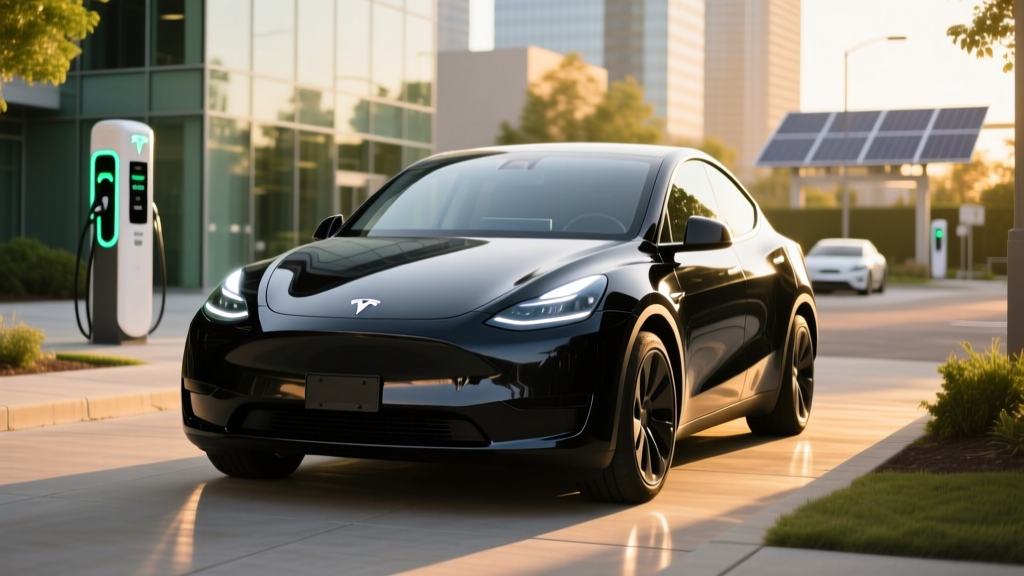
The Tesla Model Y remains the best-selling electric vehicle in the United States for good reason: it delivers a compelling mix of range, cargo utility, charging infrastructure access, and software integration that no competitor has fully matched. But as the 2026 model year arrives with refreshed styling, updated battery chemistry options, and a shifting federal tax credit landscape, the question every buyer should ask is whether the Tesla customer value proposition still holds up against a growing field of rivals like the Hyundai Ioniq 5, Ford Mustang Mach-E, and Chevrolet Equinox EV.
This review breaks down the 2026 Model Y with exact numbers — EPA range, battery capacity, charging curves, pricing by trim, and total cost of ownership — so you can decide if it's the right electrified vehicle for your needs.
2026 Tesla Model Y: Key Specifications at a Glance
| Spec | Long Range RWD | Long Range AWD | Performance AWD |
|---|---|---|---|
| EPA Range | 320 mi | 308 mi | 277 mi |
| Battery (usable) | ~75 kWh (LFP) | ~75 kWh (NMC) | ~75 kWh (NMC) |
| Drivetrain | Rear-Wheel Drive | Dual-Motor AWD | Dual-Motor AWD |
| Horsepower | 295 hp | 384 hp | 456 hp |
| 0–60 mph | 6.5 sec | 4.8 sec | 3.5 sec |
| Peak DC Fast Charge | 170 kW | 250 kW | 250 kW |
| 10–80% DCFC Time | ~32 min | ~25 min | ~25 min |
| Level 2 Home Charge | 11.5 kW (~44 mi/hr) | 11.5 kW (~44 mi/hr) | 11.5 kW (~44 mi/hr) |
| Efficiency (MPGe) | 123 MPGe combined | 117 MPGe combined | 111 MPGe combined |
| Efficiency (kWh/100mi) | 27 kWh | 29 kWh | 30 kWh |
| Cargo (rear seats up) | 30.2 cu ft | 30.2 cu ft | 30.2 cu ft |
| Cargo (rear seats folded) | 72.1 cu ft | 72.1 cu ft | 72.1 cu ft |
| Rear Legroom | 41.6 in | 41.6 in | 41.6 in |
| Towing Capacity | 3,500 lb | 3,500 lb | 3,500 lb |
| Base MSRP | $44,990 | $47,990 | $52,490 |
Source: fueleconomy.gov and Tesla specifications. Real-world results may vary.
Range and Efficiency: What the EPA Number Doesn't Tell You
The Long Range RWD Model Y carries an EPA estimate of 320 miles. In real-world driving, expect:
- City/suburban mixed driving: ~295–310 miles (regen braking recovers energy)
- Sustained highway (70–75 mph): ~255–275 miles (aerodynamic drag dominates)
- Cold weather (below 32°F): ~220–250 miles (battery resistance + cabin heating)
The heat pump standard on all 2026 Model Y trims mitigates cold-weather losses better than resistive heating, but physics still applies — plan for a 15–25% range reduction in winter conditions.
The Model Y Long Range RWD achieves 123 MPGe combined (27 kWh per 100 miles), making it one of the most efficient electric SUVs on the market. That efficiency translates directly into lower charging costs — at the national average of $0.16/kWh, a full charge costs roughly $12 at home, or about $0.04 per mile. Compare that to a comparable gas SUV at 25 MPG and $3.40/gallon, which costs $0.136 per mile.
The LFP (lithium iron phosphate) battery in the RWD trim is worth noting: it's heavier and slightly less energy-dense than NMC, but offers a longer cycle life and can be charged to 100% daily without degradation concerns. Tesla recommends periodic 100% charges for LFP to maintain accurate state-of-charge calibration. The AWD and Performance trims use NMC chemistry, which Tesla recommends keeping between 20–80% for daily use.
Charging Speed: DC Fast Charging and Home Setup
Charging speed is where the Model Y's value proposition extends beyond the vehicle itself — Tesla's Supercharger network remains the most reliable and widespread DC fast-charging infrastructure in North America, with over 6,500 stalls in the U.S. as of early 2026.
| Charging Level | Power | Miles Added per Hour | Notes |
|---|---|---|---|
| Level 1 (120V household) | ~1.4 kW | ~5 mi/hr | Emergency/trickle only |
| Level 2 (240V home) | 11.5 kW | ~44 mi/hr | Full charge overnight (~7–8 hrs) |
| DC Fast (RWD LFP) | Peak 170 kW | ~650 mi/hr (peak) | 10–80% in ~32 min |
| DC Fast (AWD/Perf NMC) | Peak 250 kW | ~1,000 mi/hr (peak) | 10–80% in ~25 min |
Charging curve reality: The 250 kW peak on AWD and Performance trims is not sustained. The Model Y charges at peak rate roughly from 10–30% state of charge, then tapers progressively. Expect ~150 kW average from 30–50%, dropping to ~60 kW by 70%, and ~25 kW above 85%. This taper is why the 10–80% metric matters more than peak kW alone.
For home Level 2 charging, Tesla's Wall Connector ($420) is a solid 48-amp unit, but the Model Y's onboard charger is limited to 11.5 kW regardless of the charger's capacity. You'll need a 60-amp circuit (requiring a licensed electrician) to deliver the full 48 amps continuously. Home installation typically runs $800–$2,000 depending on panel proximity and whether a service upgrade is needed.
The 2026 Model Y ships with the NACS (North American Charging Standard) connector natively. With adapters, CCS1 chargers on Electrify America and other networks are accessible, though Tesla's own Superchargers remain the most seamless plug-and-charge experience.
Performance, Ride, and Daily Livability
Even the base RWD Model Y hits 60 mph in 6.5 seconds — quick by any crossover standard. The Long Range AWD drops that to 4.8 seconds with 384 hp and dual-motor torque distribution that provides confident all-weather traction. The Performance trim's 3.5-second sprint is sports-car territory, though the stiffer suspension tuning trades some ride comfort for cornering composure.
One-pedal driving via regenerative braking (adjustable in settings) makes stop-and-go commuting nearly effortless. The steering is precise but numb — a common Tesla trait — and the ride quality on the 2026 refresh has improved with revised damper tuning, though it still transmits more road imperfections than the Hyundai Ioniq 5's softer setup.
Interior space is a genuine strength. With 30.2 cubic feet behind the second row and 72.1 cubic feet with seats folded, the Model Y swallows more cargo than most compact SUVs. The rear legroom of 41.6 inches accommodates adults comfortably, and the optional third row (very small, best for children under 5'2") adds flexibility for families willing to sacrifice some cargo floor space.
Pricing, Trims, and Federal Tax Credit Eligibility
| Trim | Base MSRP | Destination | As-Tested (typical) | Est. After §30D Credit |
|---|---|---|---|---|
| Long Range RWD | $44,990 | $1,390 | $46,380 | ~$38,880* |
| Long Range AWD | $47,990 | $1,390 | $49,380 | ~$41,880* |
| Performance AWD | $52,490 | $1,390 | $53,880 | ~$46,380* |
*Assumes full $7,500 federal tax credit eligibility. Actual credit varies based on buyer income, battery sourcing, and point-of-sale transfer availability.
- MSRP cap: SUVs must be ≤$80,000 (all Model Y trims qualify)
- Buyer income cap: AGI ≤$150,000 single / ≤$300,000 joint
- Battery sourcing: Critical minerals and battery components must meet phased-in domestic/Fta-partner thresholds — check Tesla's current compliance status on IRS.gov
- Point-of-sale transfer: Eligible buyers can apply the credit as a down-payment reduction at purchase rather than waiting for tax filing
- Assembly: Model Y is assembled at Giga Texas (Fremont for some trims) — North American final assembly requirement met
Always verify eligibility with a tax professional before purchase. Sourcing rules tighten annually and specific trim/battery configurations may vary.
When equipped with common options — $1,000 for a premium paint color, $1,500 for 20-inch wheels, $2,000 for a tow hitch — a Long Range AWD can approach $53,000 before credits. Full Self-Driving (Supervised) adds $8,000 but remains a Level 2 driver-assist system requiring constant driver engagement, not autonomous driving.
Tech, Driver Assistance, and Software Ecosystem
The 2026 Model Y retains Tesla's signature 15.4-inch center touchscreen running Tesla's proprietary infotainment OS. There's no Apple CarPlay or Android Auto — Tesla's ecosystem is self-contained, offering navigation, streaming (Netflix, YouTube while parked), Spotify, and over-the-air updates that regularly add features post-purchase.
Standard Autopilot includes adaptive cruise control, lane-centering, and automatic emergency braking — competent Level 2 driver assistance for highway use. The optional Enhanced Autopilot ($6,000) adds auto lane-change, autosteer on city streets, and smart summon. Full Self-Driving (Supervised) at $8,000 attempts to navigate complex urban environments but requires hands on the wheel and eyes on the road at all times.
All Tesla driver-assist features, including FSD (Supervised), are SAE Level 2. The driver is always responsible for vehicle control. Tesla's system monitors steering-wheel torque and cabin camera attention. This is not "self-driving" — that term applies only to Level 4 services like Waymo operating in geofenced areas with no driver needed. Treat FSD as an advanced cruise-and-steering assist, not a replacement for your attention.
Notable tech advantages include the Tesla app's remote preconditioning (warming or cooling the cabin and battery before departure), Sentry Mode dashcam surveillance while parked, and the Supercharger network's automatic billing on plug-in — no app-swiping or RFID cards needed at Tesla stalls.
Ownership Costs, Warranty, and Long-Term Value
Tesla's warranty covers the battery and drive unit for 8 years or 120,000 miles (Long Range/Performance) or 8 years/100,000 miles (RWD), whichever comes first, with a minimum 70% capacity retention threshold. The basic vehicle limited warranty is 4 years/50,000 miles — competitive but not class-leading (Hyundai offers 5yr/60,000mi basic, 10yr/100,000mi powertrain).
Insurance costs remain a consideration: the Model Y typically insures 15–30% higher than comparable gas crossovers due to repair costs and aluminum-intensive construction. Get quotes before purchasing — premiums vary widely by state, age, and driving record.
Depreciation is another factor. Tesla's frequent price adjustments and the expanding EV market have softened Model Y resale values compared to 2022–2023 peaks. Expect roughly 45–55% value retention at 3 years/36,000 miles, depending on condition and market conditions.
Total 5-year cost of ownership (purchase price, electricity, insurance, maintenance, depreciation) typically lands $5,000–$10,000 below a comparably equipped gas SUV like the BMW X3 or Audi Q5, driven primarily by fuel and maintenance savings — EVs have no oil changes, fewer brake replacements (thanks to regen), and simpler drivetrains.
How the Model Y Stacks Up Against Competitors
✓ Pros
- Class-leading Supercharger network access (6,500+ U.S. stalls)
- Best-in-class cargo volume (72.1 cu ft)
- Excellent efficiency (27–30 kWh/100mi)
- Strong over-the-air update cadence
- LFP battery option for daily 100% charging
- Competitive 10–80% DC fast-charge times
- Strong towing capacity for the segment (3,500 lb)
✗ Cons
- No Apple CarPlay or Android Auto
- FSD ($8,000) remains Level 2, not autonomous
- Insurance premiums 15–30% above segment average
- Ride quality still firmer than some rivals
- Touchscreen-only controls (no physical buttons/climate knobs)
- Third-row seat is tiny and compromises cargo
- Service center availability varies by region
- Choose the Model Y if: You want the most reliable public charging network, need maximum cargo space, prioritize software features and OTA updates, and value efficiency above all else in an electric SUV.
- Consider the Hyundai Ioniq 5 if: You want 800V ultra-fast charging (10–80% in ~18 min at 350 kW), a softer ride, CarPlay/Android Auto, and a longer basic warranty.
- Consider the Ford Mustang Mach-E if: You prefer a more engaging driving feel, want BlueCruise hands-off highway driving (on approved roads), and value traditional dealer service access.
- Consider the Chevrolet Equinox EV if: Budget is the primary driver — its lower starting price and 319-mile range offer strong value, though with slower DC charging and less cargo room.
Frequently Asked Questions
What is the real-world range of the 2026 Tesla Model Y?
The EPA rates the Long Range RWD at 320 miles. In real-world highway driving at 70–75 mph, expect 255–275 miles. In cold weather below freezing, plan for 220–250 miles. City driving with regenerative braking gets closest to the EPA number, typically 295–310 miles.
How fast does the Model Y charge at home and on the road?
At home on a 240V Level 2 charger (11.5 kW), the Model Y adds roughly 44 miles of range per hour, achieving a full charge in 7–8 hours. On DC fast charging, the AWD and Performance trims peak at 250 kW and charge from 10–80% in approximately 25 minutes. The RWD LFP trim peaks at 170 kW with a 10–80% time of about 32 minutes.
How much does the 2026 Model Y cost after the federal tax credit?
The Long Range RWD starts at $46,380 (including destination) and can drop to approximately $38,880 if you qualify for the full $7,500 §30D credit. The Long Range AWD lands around $41,880 after credit, and the Performance around $46,380. Eligibility depends on your adjusted gross income, the vehicle's battery sourcing compliance, and MSRP caps. Always check IRS.gov for the current qualified manufacturer list and consult a tax professional.
Does the Tesla Model Y qualify for the federal EV tax credit in 2026?
As of early 2026, the Model Y assembled at Giga Texas meets the North American final assembly requirement, and its MSRP falls well under the $80,000 SUV cap. However, battery critical-mineral and component sourcing requirements tighten each year. Tesla's eligibility status can change based on battery supplier shifts. Verify the specific trim and build date on the IRS qualified vehicles list before purchasing.
Is the Model Y worth buying vs. the Hyundai Ioniq 5 or Ford Mach-E?
The Model Y wins on cargo space, efficiency, and charging-network reliability. The Ioniq 5 wins on peak DC charging speed (350 kW capable on 800V architecture), ride comfort, and infotainment flexibility (CarPlay/Android Auto). The Mach-E wins on driving dynamics and hands-off BlueCruise highway capability. Your best choice depends on which of these priorities matters most to your daily driving pattern.
What's the biggest drawback of owning a Tesla Model Y?
The three most common ownership friction points are: higher-than-average insurance premiums (get quotes first), reliance on touchscreen-only controls for climate and mirrors (no physical knobs), and service center wait times that can stretch to several weeks in less-populated regions. The lack of Apple CarPlay also frustrates buyers deeply invested in Apple or Google ecosystems.
Sources: EPA fueleconomy.gov, IRS §30D qualified vehicles, Tesla Model Y specifications, IIHS safety ratings.