Why Tesla Model Y Curb Weight Matters for EV Buyers
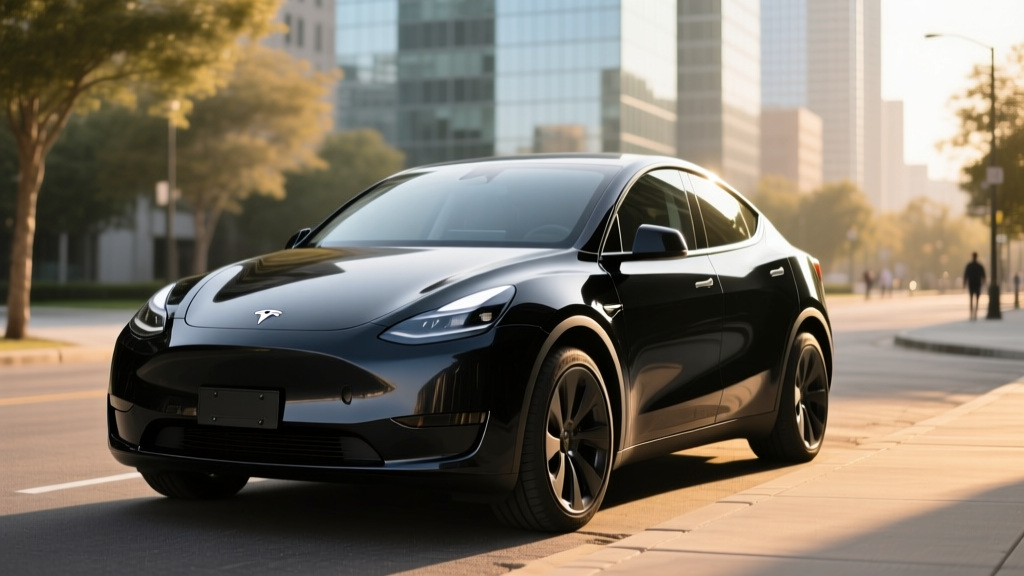
When shoppers compare electric SUVs, curb weight rarely tops the checklist — but it should. The Tesla Model Y curb weight sits between 4,330 lbs (RWD) and 4,464 lbs (Long Range AWD), and that mass directly shapes everything from real-world range and tire wear to regenerative braking behavior and handling feel. For a vehicle that routinely carries families and cargo across state lines, understanding how weight interacts with efficiency is the difference between confident ownership and chronic range miscalculation.
The 2026 Model Y "Juniper" refresh brought subtle weight changes alongside updated suspension tuning, a revised heat pump, and improved aerodynamics. Below, we break down every spec that matters — range, charging, performance, pricing, and tax-credit eligibility — through the lens of what this SUV actually weighs and how that weight behaves on the road.
2026 Tesla Model Y Curb Weight by Trim
| Trim | Curb Weight | Drivetrain | 0–60 mph | Top Speed |
|---|---|---|---|---|
| Long Range RWD | 4,330 lbs (1,964 kg) | Rear-Wheel Drive | 5.5 sec | 125 mph |
| Long Range AWD | 4,464 lbs (2,025 kg) | Dual-Motor AWD | 4.6 sec | 125 mph |
| Performance AWD | 4,464 lbs (2,025 kg) | Dual-Motor AWD | 3.5 sec | 155 mph |
The 134-lb spread between the lightest RWD and heaviest AWD trims comes from the front induction motor, associated power electronics, and the half-shaft hardware. That extra mass is modest by EV standards — for comparison, the Ford Mustang Mach-E Extended Range AWD tips scales at roughly 4,800 lbs, and the Hyundai Ioniq 5 AWD sits around 4,600 lbs. Tesla's structural battery pack and gigacast rear underbody keep the Model Y comparatively lean for its class.
Range, Efficiency & the Weight Penalty
- Long Range AWD: EPA 320 miles — expect ~270–290 mi at sustained 75 mph highway speeds; ~230–250 mi in sub-30°F winter conditions.
- Long Range RWD: EPA 320 miles — similar highway/cold-weather reductions apply.
- Performance AWD: EPA 285 miles — expect ~240–260 mi highway; ~200–220 mi in deep cold.
The EPA sticker is a blended city/highway cycle. Highway driving at 75+ mph increases aerodynamic drag and reduces regen opportunities, cutting range 10–15%. Cold weather adds battery-heating overhead and cabin HVAC load, shaving another 15–25% depending on severity.
Efficiency for the Long Range AWD lands at 119 MPGe combined (28 kWh/100 mi) per fueleconomy.gov. The RWD trim matches this figure, while the Performance trim drops to roughly 111 MPGe (30 kWh/100 mi). That 2 kWh/100 mi gap between Long Range and Performance isn't just powertrain tuning — it's the cost of wider 21-inch wheels, stickier tires, and more aggressive acceleration mapping fighting against 4,464 lbs of mass.
Weight also amplifies the cold-weather penalty. Heavier vehicles require more energy to accelerate from stoplights, and the Model Y's mass means the battery must work harder to maintain cabin heat and pack temperature simultaneously. Owners in northern climates should budget at least 20% off EPA range for January commutes, regardless of trim.
Battery Chemistry, Capacity & Longevity
The 2026 Model Y Long Range uses a ~75 kWh usable NMC (nickel manganese cobalt) battery pack, while the standard-range configurations in prior years used LFP (lithium iron phosphate) chemistry. For 2026, Tesla has consolidated most global Model Y production around NMC for Long Range and Performance trims to maximize energy density and keep curb weight in check.
| Attribute | NMC (Long Range / Performance) | LFP (if available, base trims) |
|---|---|---|
| Energy Density | Higher — lighter pack for same kWh | Lower — adds curb weight |
| Charge to 100% Daily? | No — Tesla recommends 80% daily | Yes — can charge to 100% regularly |
| Cold-Weather Performance | Better low-temp output | More sluggish below freezing |
| Cycle Life | ~1,500–2,000 cycles to 80% SoH | ~3,000+ cycles to 80% SoH |
| Cobalt Content | Yes — supply-chain sensitivity | Zero cobalt |
Tesla's battery and drive unit warranty covers 8 years / 120,000 miles (Long Range and Performance) with a minimum 70% capacity retention threshold. The basic vehicle limited warranty runs 4 years / 50,000 miles. These terms are competitive with Hyundai/Kia's 10-year battery warranty but fall short of the lifetime coverage some legacy brands now offer on electrified powertrains.
Charging Speed: DC Fast & Home Level 2
Charging speed is where the Model Y's weight-management strategy pays dividends. A lighter pack with high C-rate capability can accept power aggressively without overheating.
| Charging Method | Peak Rate | 10–80% Time | Miles Added per Hour |
|---|---|---|---|
| DC Fast Charge (V4 Supercharger) | 250 kW peak | ~22 minutes | ~200+ mi in 15 min |
| DC Fast Charge (CCS adapter, 3rd-party) | Up to 250 kW (site-dependent) | ~22–27 minutes | Varies by network |
| Level 2 Home (Tesla Wall Connector, 48A) | 11.5 kW | ~7 hours (0–100%) | ~44 mi/hr |
| Level 2 Home (32A mobile connector) | 7.7 kW | ~10 hours (0–100%) | ~30 mi/hr |
| Level 1 (120V household) | ~1.4 kW | Not practical for full charge | ~3–4 mi/hr |
The 250 kW peak is not sustained across the full charge curve. Expect the Model Y to hold near 250 kW from roughly 10–30% SoC, then taper to ~170 kW through 50%, and drop further to ~80 kW above 70%. This is normal lithium-ion behavior — the battery management system protects cell health by reducing current as voltage rises. For road-trip planning, the 10–80% time of ~22 minutes at a V3/V4 Supercharger is the number that matters, not the peak kW headline.
At home, a 48-amp Tesla Wall Connector on a 60-amp dedicated circuit delivers the best experience. Budget $500–$1,500 for the unit and professional installation if your panel has capacity. If your home requires a 200-amp panel upgrade, add $1,500–$3,000. Always consult a licensed electrician for final specs — electrical work varies by jurisdiction and existing infrastructure.
Performance, Handling & What 4,400+ Lbs Feels Like
Despite tipping scales above two tons, the Model Y's low center of gravity — the battery pack sits flat beneath the floor — keeps body roll controlled and gives the SUV a planted feel unusual for its height. The Long Range AWD delivers ~384 horsepower and 375 lb-ft of torque, launching to 60 mph in 4.6 seconds. The Performance trim bumps output to ~456 hp and drops the 0–60 to 3.5 seconds.
However, mass is physics, and physics doesn't negotiate. You'll feel the curb weight most in three scenarios:
- Braking distances: Heavier vehicles need more distance to stop. The Model Y's regen braking offsets some of this in daily driving, but emergency stops from 70 mph will be longer than a lighter sedan.
- Tire wear: Expect 25,000–35,000 miles from OEM all-season tires under normal driving. Aggressive acceleration and the AWD system's torque delivery accelerate wear on front tires especially.
- Ride quality: The Juniper refresh softened the suspension tuning from prior years, but you'll still feel sharp impacts more than in a heavier, longer-wheelbase vehicle like the Rivian R1S. The trade-off for lower curb weight is less mass to absorb road imperfections.
Towing capacity is rated at 3,500 lbs for all trims — adequate for a small trailer or pair of dirt bikes, but not enough for a loaded camper. Towing at max capacity will cut range by 30–50% depending on speed and terrain.
Cargo, Passenger Space & Daily Practicality
The Model Y's hatchback design maximizes usable volume relative to its footprint:
- Cargo (rear seats up): 30.2 cu ft
- Cargo (rear seats folded): 72.1 cu ft
- Front trunk (frunk): 4.1 cu ft
- Rear legroom: 41.6 inches
- Front headroom: 41.0 inches
- Seating: 5-passenger standard (7-seat option previously available, discontinued for 2026 in most markets)
Compared to the Ford Mustang Mach-E (29.7 / 60.2 cu ft) and Hyundai Ioniq 5 (27.2 / 59.3 cu ft), the Model Y leads its class in total cargo capacity. The 72.1 cu ft figure with seats folded rivals many midsize ICE SUVs and is a key reason families choose this platform for road trips and big-box-store runs.
Pricing, Tax Credits & Ownership Cost
| Trim | Base MSRP | Est. After §30D Credit* | Destination Fee |
|---|---|---|---|
| Long Range RWD | $44,990 | ~$37,490 | $1,390 |
| Long Range AWD | $47,990 | ~$40,490 | $1,390 |
| Performance AWD | $51,490 | ~$43,990 | $1,390 |
*Federal §30D tax credit eligibility requires meeting all of the following, per IRS guidelines:
- MSRP cap: Vehicle base price must not exceed $80,000 for SUVs (all Model Y trims qualify).
- Buyer income cap: Modified AGI ≤ $150,000 (single), $225,000 (head of household), or $300,000 (married filing jointly).
- Battery sourcing: Critical minerals and battery components must meet phased-in domestic/free-trade-partner sourcing thresholds (2026 requirements are stricter than prior years).
- Point-of-sale transfer: Eligible buyers can transfer the credit to the dealer at purchase, reducing the out-of-pocket price immediately rather than waiting for tax filing.
Credit eligibility is not guaranteed for every buyer or every build week — battery-sourcing compliance can shift with supply-chain changes. Always verify current eligibility on the IRS Clean Vehicle Provisions page or with a qualified tax professional before relying on the credit in your purchase decision.
Pros, Cons & Who Should Buy the Model Y
- Class-leading cargo volume (72.1 cu ft max)
- 250 kW DC fast charging, ~22 min 10–80%
- Access to Tesla Supercharger network (17,000+ stalls in North America)
- Lowest curb weight in its class — benefits efficiency and handling
- Standard Autopilot with solid SAE Level 2 driver-assist
- Over-the-air updates continuously improve the vehicle
- No physical buttons — all controls through touchscreen (wipers, mirrors, glovebox)
- Rear-seat comfort trails competitors for long trips (seat cushion angle, thigh support)
- Insurance premiums run 15–30% above class average
- Turn-signal stalks removed in Juniper refresh (steering-wheel buttons instead)
- Performance trim range drops to 285 mi EPA — tight for road trips without planning
- Single-screen dependency: if the display fails, the car is largely inoperable
- Choose Model Y if: You value Supercharger access, want maximum cargo space in a compact EV SUV, prioritize efficiency, and are comfortable with a minimalist, screen-centric interior.
- Choose a competitor if: You prefer physical controls (Ioniq 5), need more rear-seat comfort (Mach-E, EV6), want a longer warranty (Hyundai/Kia 10-year), or need a 3-row SUV (Kia EV9, Rivian R1S).
Frequently Asked Questions
What is the real-world range of the Tesla Model Y?
The EPA rates the 2026 Long Range AWD at 320 miles, but sustained highway driving at 75 mph yields approximately 270–290 miles. In sub-freezing weather, expect 230–250 miles. The Performance trim drops to 285 EPA / ~240 highway / ~200 cold-weather. Always plan road trips around 80% of the EPA number for a safety margin.
How fast does the Model Y charge at home and on the road?
On a V3 or V4 Tesla Supercharger, the Model Y peaks at 250 kW and charges from 10–80% in approximately 22 minutes. At home on a 48-amp Level 2 Wall Connector, it adds about 44 miles of range per hour, fully charging overnight in ~7 hours. A standard 32-amp mobile connector on a 240V outlet adds ~30 miles per hour.
How much does the Model Y cost after the federal tax credit?
If you qualify for the full $7,500 §30D credit, the Long Range RWD drops from $44,990 to approximately $37,490, and the Long Range AWD falls from $47,990 to roughly $40,490. Eligibility depends on your income, the vehicle's battery-sourcing compliance, and MSRP caps. Verify on IRS.gov before purchase.
Is the Model Y worth buying over the Ioniq 5 or Mustang Mach-E?
The Model Y wins on cargo volume, Supercharger network access, and curb weight efficiency. The Ioniq 5 offers 800V architecture with faster peak charging (~350 kW capable) and a more conventional interior with physical buttons. The Mach-E provides a more engaging driving feel and better rear-seat comfort. Your priority — charging ecosystem vs. interior ergonomics vs. driving dynamics — determines the right pick.
Does the Model Y qualify for the federal EV tax credit in 2026?
The Model Y's MSRP falls well under the $80,000 SUV cap, so the vehicle itself qualifies. However, your personal eligibility depends on income limits (≤$300K MFJ, ≤$150K single) and current battery-sourcing compliance, which Tesla and the IRS update periodically. The point-of-sale transfer option lets you apply the credit at purchase rather than at tax filing. Consult a tax professional for your specific situation.
How does the Model Y's curb weight affect tire wear and maintenance?
At 4,330–4,464 lbs, the Model Y wears tires faster than lighter vehicles — expect 25,000–35,000 miles from OEM rubber. The instant torque of the electric drivetrain accelerates wear on driven wheels. Budget $1,200–$1,800 for a set of premium all-season replacement tires. Brake pad life is extended by regenerative braking, often lasting 80,000+ miles.
Is Tesla Autopilot self-driving?
No. Tesla Autopilot and FSD (Supervised) are SAE Level 2 driver-assistance systems. You must keep your hands on the wheel and eyes on the road at all times. The system can manage lane centering, adaptive cruise, and some intersection navigation, but it does not make the vehicle autonomous. Only Level 4 robotaxi services like Waymo operate without a human driver in defined areas.