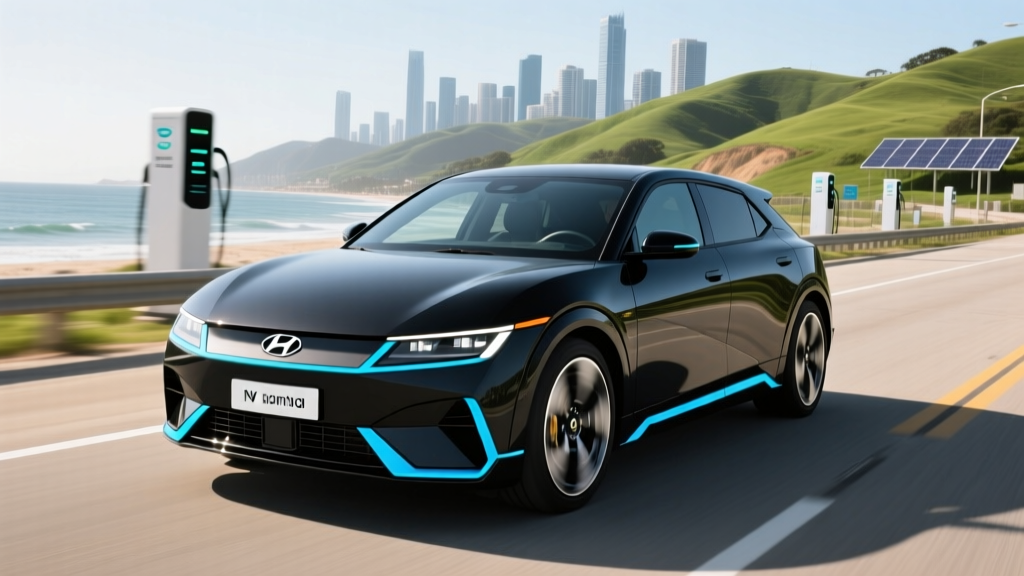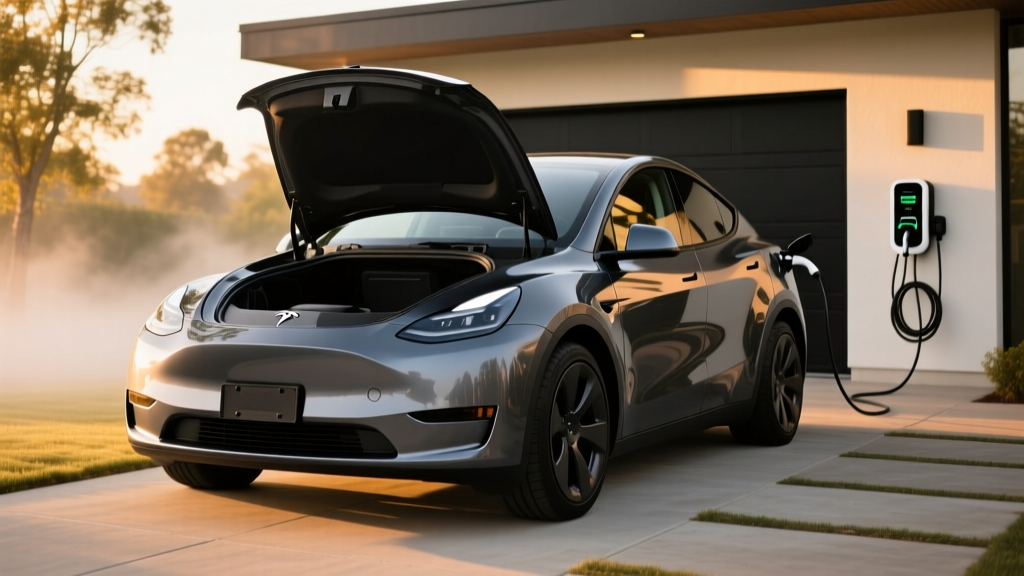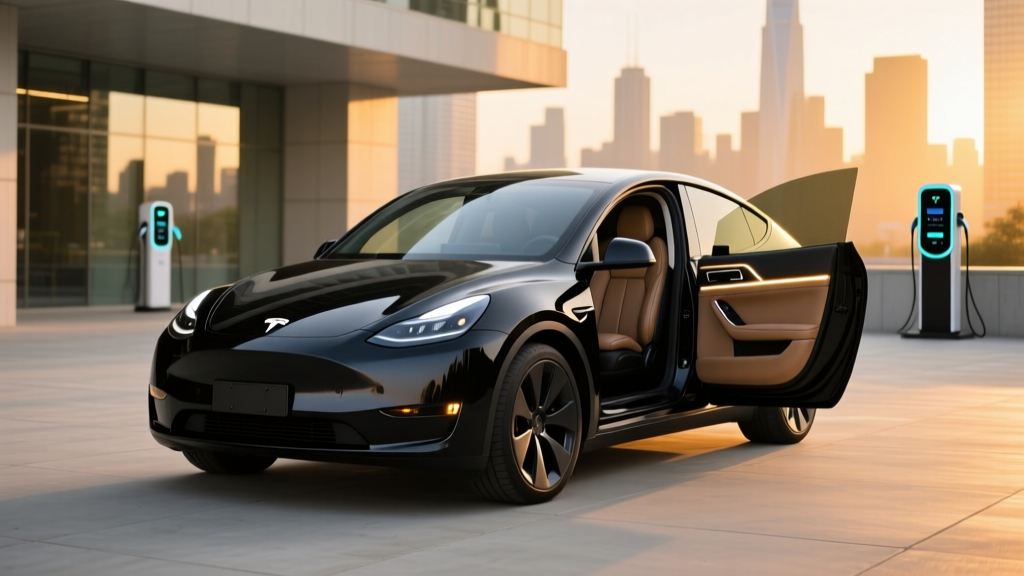
If you have been searching for a CTO Tesla — a custom-to-order configuration direct from the factory — the 2026 Model Y is the most popular vehicle buyers build online and order for delivery. Tesla's direct-sales model means every car is essentially a CTO (custom-to-order): you pick the trim, color, wheels, interior, and software package, and the vehicle is built or matched to your spec at Giga Texas or Giga Berlin depending on your market.
This review breaks down the 2026 Tesla Model Y (the refreshed "Juniper" generation) with the exact numbers that matter: real-world range versus the EPA sticker, DC fast-charging curves, §30D tax-credit eligibility, and how it stacks up against the Hyundai Ioniq 5 and Ford Mustang Mach-E.
2026 Tesla Model Y: Quick Verdict
The 2026 Model Y remains the best-selling EV in the United States for good reason. The Juniper refresh brings a quieter cabin, a rear infotainment screen, ventilated front seats, a front light bar, and an adaptive suspension that smooths out the ride that earlier Model Y owners frequently criticized. Efficiency improved slightly thanks to revised aerodynamics and updated heat-pump calibration. The Long Range AWD variant hits a sweet spot of 320 miles EPA range, strong performance, and relative affordability in the mid-size electric crossover segment.
However, the Model Y is no longer the only compelling choice. Competitors have closed the gap on charging speed, interior quality, and ride comfort. Whether a CTO Tesla Model Y is the right call depends heavily on how you value the Supercharger network, software integration, and cargo versatility versus alternatives that now offer 800V architectures and more luxurious cabins.
| Spec | Long Range AWD | Performance AWD |
|---|---|---|
| EPA Range | 320 mi | 293 mi |
| Battery (usable) | ~78 kWh (NMC) | ~78 kWh (NMC) |
| Drivetrain | Dual-Motor AWD | Dual-Motor AWD |
| Horsepower | 384 hp | 456 hp |
| 0–60 mph | 4.8 sec | 3.5 sec |
| Peak DC Fast Charge | 250 kW | 250 kW |
| 10–80% DC Charge | ~27 min | ~27 min |
| Level 2 (11.5 kW) | ~44 mi/hr | ~44 mi/hr |
| MPGe (combined) | 111 MPGe | 102 MPGe |
| Efficiency | 28 kWh/100 mi | 31 kWh/100 mi |
| Cargo (rear seats up) | 30.2 cu ft | 30.2 cu ft |
| Cargo (rear seats down) | 72.0 cu ft | 72.0 cu ft |
| Base MSRP | $44,990 | $51,490 |
Range, Battery, and Real-World Efficiency
The 2026 Model Y Long Range AWD carries an EPA-estimated 320 miles of range, up slightly from the pre-refresh figure thanks to improved aero and a more efficient heat-pump system. The battery pack is an NMC (nickel manganese cobalt) lithium-ion unit with approximately 78 kWh of usable capacity. Tesla does not publish exact chemistry details per pack, but teardown analyses and supply-chain data confirm NMC for Long Range and Performance variants; the Standard Range RWD (if available in your market) typically uses LFP (lithium iron phosphate), which trades energy density for longevity and lower cost.
EPA: 320 mi (Long Range AWD) / 293 mi (Performance AWD)
- Mixed driving (city + highway): Expect 280–305 mi in moderate temperatures (60–80°F).
- Sustained highway (70–75 mph): ~250–275 mi. The Model Y's bluff-body crossover shape creates more drag at speed than a sedan like the Model 3.
- Cold weather (20–35°F): ~210–245 mi without preconditioning; ~250–270 mi with preconditioning and cabin heat-pump active.
- Towing (max 3,500 lb rated): Range drops to roughly 150–180 mi depending on trailer aerodynamics and terrain.
Efficiency lands at 28 kWh per 100 miles for the Long Range, which translates to 111 MPGe combined per the EPA's fueleconomy.gov data. That is competitive with the segment, though the Hyundai Ioniq 5 (with its 800V architecture) edges slightly ahead in certain trims at up to 114 MPGe combined.
Charging: DC Fast Charge, Level 2, and the Supercharger Advantage
Tesla's charging ecosystem remains a primary reason buyers choose a CTO Tesla over competitors. The 2026 Model Y supports a peak DC fast-charge rate of 250 kW at V3 Superchargers and compatible CCS/NACS third-party stations.
| Charging Level | Power / Rate | Speed (mi/hr added) | Notes |
|---|---|---|---|
| Level 1 (120V / 12A) | ~1.4 kW | ~3–4 mi/hr | Emergency/trickle only; ~80+ hrs for full charge |
| Level 2 (240V / 48A) | 11.5 kW | ~44 mi/hr | Home Wall Connector; full charge in ~7 hrs |
| DC Fast (V3 Supercharger) | Peak 250 kW | ~1,000+ mi/hr at peak | 10–80% in ~27 min; tapers significantly above 80% |
| DC Fast (V4 Supercharger) | Up to 250 kW* | Similar to V3 | *Model Y limited to 250 kW; newer V4 stalls capable of higher rates for future platforms |
Charging-curve reality: The 250 kW peak only sustains between roughly 10–30% state of charge. From 30–60%, expect ~170–200 kW. From 60–80%, the rate tapers to ~90–120 kW. Above 80%, charging slows dramatically to protect the NMC cells — plan to unplug at 80% on road trips to maximize your miles-per-minute at the charger.
Home charging on a Level 2 Tesla Wall Connector (48 amps / 11.5 kW) adds about 44 miles of range per hour, meaning a full overnight session easily replenishes a daily commute. For a typical 40-mile daily round trip, plugging in each night means you rarely need public charging at all. Note: the 2026 Model Y uses the NACS (North American Charging Standard) connector natively — the same connector now adopted by Ford, GM, Rivian, Hyundai, and most major automakers, meaning the Supercharger network is increasingly open to non-Tesla EVs as well.
Performance and Driving Dynamics
The Long Range AWD's dual-motor setup delivers 384 hp and a 4.8-second 0–60 mph time — brisk by any measure and more than adequate for highway merging and passing. The Performance trim bumps output to 456 hp and drops the sprint to 3.5 seconds, which puts it in sports-car territory for a five-seat crossover.
The Juniper refresh introduced an adaptive damper system that substantially improves ride quality over the firm, crashy ride of the 2020–2024 Model Y. Road noise is noticeably reduced thanks to acoustic glass and additional sound deadening. The steering remains quick and direct, though some drivers find it overly assisted in Comfort mode. Regenerative braking offers strong one-pedal-driving capability, though Tesla removed the user-adjustable regen setting — it is now fixed at a strong level, which most owners adapt to within a week.
Interior, Cargo, and Technology
The 2026 Model Y interior received meaningful updates with the Juniper refresh. Ambient lighting strips run across the dash and doors, ventilated front seats are now standard on Long Range and above, and a 8-inch rear touchscreen lets rear passengers control climate, media, and even stream video while parked. The front 15.4-inch touchscreen runs Tesla's latest software with wireless Apple CarPlay and Android Auto (finally added for 2025–2026 model years via software update).
Cargo space remains a Model Y strength: 30.2 cubic feet behind the second row and 72.0 cubic feet with the 60/40 split rear seats folded. The front trunk (frunk) adds a modest amount of sealed storage for charging cables or a small bag. Rear legroom measures 40.5 inches — generous for adults on longer trips.
Standout tech features:
- Tesla Autopilot (standard): adaptive cruise + lane-centering, SAE Level 2 driver assist
- Full Self-Driving (Supervised) option: enhanced lane changes, Navigate on Autopilot, traffic-light recognition — still Level 2, requires active driver supervision
- Sentry Mode with live camera access via the Tesla app
- Over-the-air updates that add features quarterly
- Dog Mode, Camp Mode, and built-in trip planner with Supercharger routing
Tesla Autopilot and FSD (Supervised) are SAE Level 2 systems. They do not make the Model Y self-driving. You must keep your hands on the wheel and eyes on the road at all times. Camera-based monitoring enforces attentiveness. Only Level 4 services like Waymo operate without a human driver — and those are geofenced robotaxis, not consumer vehicles.
Pricing, Trims, and Federal Tax Credit Eligibility
When you configure a CTO Tesla Model Y on Tesla's website, you are building a custom order that typically delivers in 2–6 weeks depending on region and configuration. Here is the pricing landscape for 2026:
| Trim | Base MSRP | As-Tested (typical CTO) | Est. §30D Credit | Effective Price |
|---|---|---|---|---|
| Long Range AWD | $44,990 | $47,490 (w/ paint + FSD) | Up to $7,500* | ~$39,990* |
| Performance AWD | $51,490 | $54,990 (w/ red paint + 21" wheels) | Up to $7,500* | ~$47,490* |
Federal tax credit (§30D) eligibility is not guaranteed for every buyer. Under current IRS rules, the following conditions apply:
- MSRP cap: SUVs/crossovers must have an MSRP at or below $80,000. The Model Y qualifies in all trims.
- Buyer income cap: Modified AGI must not exceed $150,000 (single), $225,000 (head of household), or $300,000 (married filing jointly).
- Battery sourcing: A percentage of critical minerals and battery components must be sourced from the U.S. or free-trade-agreement countries. Tesla has progressively shifted Model Y battery supply chains, but the exact credit amount ($3,750 or $7,500) depends on the specific battery batch in your vehicle. Check the fueleconomy.gov tax credit database for the VIN-specific credit before ordering.
- Point-of-sale transfer: As of 2024, you can transfer the credit to Tesla at purchase, reducing your out-of-pocket cost immediately rather than waiting for a tax refund.
Always verify current eligibility with your tax professional and the IRS clean vehicle credits page, as sourcing requirements tighten annually.
Warranty and Long-Term Ownership
Tesla provides the following warranty coverage for the 2026 Model Y:
- Basic vehicle: 4 years / 50,000 miles
- Battery and drive unit: 8 years / 120,000 miles (Long Range & Performance AWD), with a minimum 70% capacity retention guarantee during the warranty period
NMC battery degradation in Tesla Model Y packs typically follows a curve of roughly 5–8% loss in the first year, then slowing to approximately 1–2% per year thereafter. Many high-mileage Tesla owners report 85–90% state of health (SoH) at 100,000 miles. Tesla's battery management system (BMS) is among the most sophisticated in the industry, with active thermal management keeping cells in their optimal temperature window during charging and driving.
Out-of-warranty battery replacement remains expensive — estimated at $12,000–$18,000 depending on the pack — but the vast majority of owners never need one within typical ownership horizons of 8–12 years.
- Supercharger network access — still the most reliable DC fast-charging ecosystem in North America
- Class-leading cargo space (72 cu ft) and practical hatchback design
- Strong efficiency (28 kWh/100 mi) keeps charging costs low
- Continuous OTA updates add features over time
- Juniper refresh fixes ride-quality complaints
- Strong resale value relative to most EVs
- Peak DC charge rate (250 kW) trails 800V competitors (Ioniq 5, EV6 at 350 kW)
- No user-adjustable regen braking setting
- Minimalist interior lacks physical buttons — climate and mirror controls are screen-only
- FSD (Supervised) costs $8,000 or $99/mo and remains Level 2 — not autonomous
- Insurance premiums run 15–30% higher than comparable ICE crossovers in most states
- Panel gaps and paint quality, while improved, still trail legacy automakers
Who Should CTO a Tesla Model Y?
- Choose the Model Y Long Range AWD if: You want a daily-drivable family EV with 300+ real-world miles, best-in-class cargo space, access to Superchargers for road trips, and strong resale value. Ideal for suburban commuters with home charging and families who take 2–4 road trips per year.
- Choose the Model Y Performance if: You prioritize acceleration and handling over range, and 293 EPA miles (roughly 245 real-world highway) is sufficient for your routine. Best for driving enthusiasts who still need crossover practicality.
- Look elsewhere (Ioniq 5, Mach-E, EV6) if: You need faster DC charging on 350 kW stations, prefer physical buttons and traditional switchgear, or want a more luxurious interior at a similar price point. The Ioniq 5 charges 10–80% in ~18 minutes vs. the Model Y's ~27 minutes.
2026 Tesla Model Y vs. Key Competitors
| Attribute | Tesla Model Y LR AWD | Hyundai Ioniq 5 LR AWD | Ford Mustang Mach-E ER AWD |
|---|---|---|---|
| EPA Range | 320 mi | 290 mi | 290 mi |
| Peak DC Charge | 250 kW | 350 kW (800V) | 150 kW |
| 10–80% Time | ~27 min | ~18 min | ~36 min |
| Cargo (rear up) | 30.2 cu ft | 27.2 cu ft | 29.7 cu ft |
| Base MSRP | $44,990 | $48,500 | $45,995 |
| §30D Credit Eligible | Yes* | Yes* | Yes* |
The Model Y wins on range and cargo. The Ioniq 5 wins on charging speed. The Mach-E offers a more traditional driving feel and dealer service network. All three qualify for at least partial federal tax credits depending on battery sourcing — verify before ordering.
Frequently Asked Questions
What is the real-world range of the 2026 Tesla Model Y?
The EPA rates the Long Range AWD at 320 miles, but in real-world mixed driving expect 280–305 miles. Sustained highway driving at 75 mph drops that to roughly 250–275 miles, and cold weather (below 35°F) can reduce range to 210–245 miles without preconditioning.
How fast does the 2026 Model Y charge at home and on the road?
On a Level 2 home charger (11.5 kW / 48A), the Model Y adds about 44 miles of range per hour, fully charging overnight in roughly 7 hours. On a V3 Supercharger or 250 kW DC fast charger, it reaches 10–80% in approximately 27 minutes, though the charge rate tapers significantly above 80% SoC.
How much does a CTO Tesla Model Y cost after tax credits?
A 2026 Model Y Long Range AWD starts at $44,990 MSRP. With typical CTO options (paint, wheels), expect $46,000–$48,000. If you qualify for the full $7,500 §30D federal credit (income, MSRP, and battery-sourcing requirements met), the effective price drops to roughly $38,500–$40,500. The point-of-sale transfer option lets you apply this credit at checkout rather than waiting for tax season.
Does the 2026 Model Y qualify for the federal EV tax credit?
The Model Y's MSRP is well under the $80,000 SUV cap, so it passes that test. Eligibility then depends on your household income (must be under $150K single / $300K joint) and whether the specific battery in your vehicle meets critical-mineral and component-sourcing thresholds. The credit may be $3,750 or $7,500 depending on sourcing compliance. Verify the exact amount on fueleconomy.gov for the specific VIN before finalizing your order.
Is the 2026 Model Y worth buying versus competitors?
If you prioritize Supercharger access, cargo space, range, and software integration, the Model Y is still the segment benchmark. If faster DC charging (18-minute 10–80%), a more premium interior, or physical controls matter more, the Hyundai Ioniq 5 or Kia EV6 are strong alternatives. Test-drive both before committing to a CTO order.
What are the biggest pros and cons?
Top pros: Supercharger network, 320-mile EPA range, 72 cu ft cargo, strong OTA updates, improved Juniper ride quality. Top cons: 250 kW peak charge rate trails 800V rivals, screen-only controls, FSD is expensive and still Level 2, higher insurance costs.