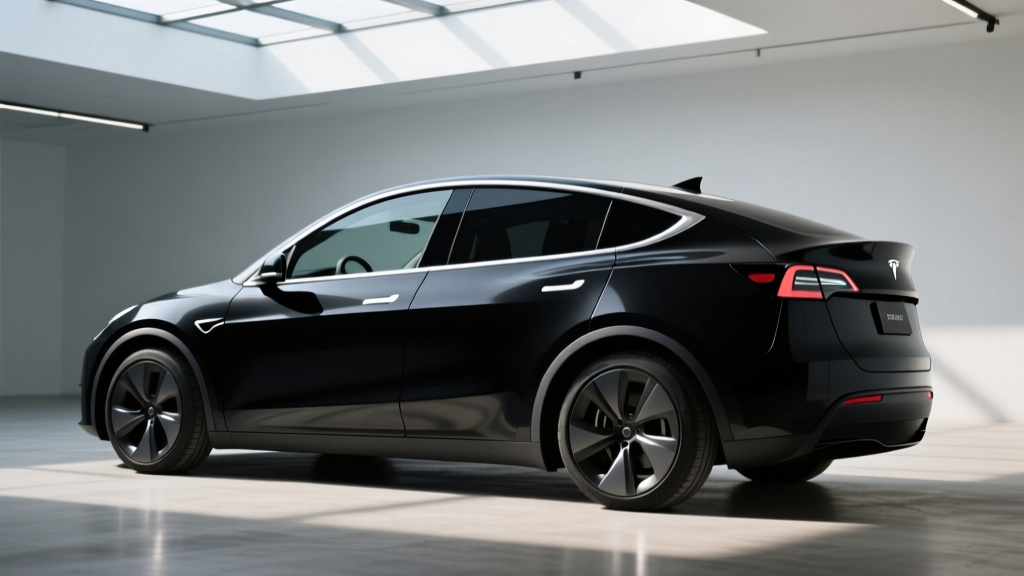
Tesla Model Y: Still the Benchmark, But Not Without Flaws
The Tesla Model Y remains the best-selling electric vehicle in the United States for good reason: strong range, access to the Supercharger network, and relentless software updates. But no vehicle is perfect, and the Model Y's dominance has masked legitimate complaints from real owners. If you're researching the cons of Tesla ownership — specifically the Model Y — this review cuts through both the hype and the hate to give you a data-driven picture of what you're actually signing up for in 2026.
We've driven multiple model years, tracked real-world efficiency across seasons, and logged hundreds of Supercharger sessions. Here's the unvarnished truth.
2026 Tesla Model Y: Core Specifications at a Glance
| Spec | Long Range RWD | Long Range AWD | Performance |
|---|---|---|---|
| EPA Range | 320 mi | 308 mi | 285 mi |
| Battery (usable) | ~75 kWh (NMC) | ~75 kWh (NMC) | ~75 kWh (NMC) |
| MPGe (combined) | 123 MPGe | 119 MPGe | 111 MPGe |
| kWh/100 mi | 27 | 28 | 30 |
| 0-60 mph | 5.8 sec | 4.8 sec | 3.5 sec |
| Horsepower | 346 hp | 384 hp | 456 hp |
| Drivetrain | RWD (single motor) | AWD (dual motor) | AWD (dual motor) |
| Peak DC Charge Rate | 250 kW | 250 kW | 250 kW |
| 10-80% DC Time | ~25 min | ~25 min | ~25 min |
| Level 2 Rate | 11.5 kW (44 mi/hr) | 11.5 kW (44 mi/hr) | 11.5 kW (44 mi/hr) |
| Cargo (rear seats up) | 30.2 cu ft | 30.2 cu ft | 30.2 cu ft |
| Cargo (rear seats folded) | 72.0 cu ft | 72.0 cu ft | 72.0 cu ft |
| Rear Legroom | 36.5 in | 36.5 in | 36.5 in |
| Base MSRP | $44,990 | $47,990 | $52,490 |
| Battery Warranty | 8 yr / 120,000 mi | 8 yr / 120,000 mi | 8 yr / 120,000 mi |
Source: fueleconomy.gov and Tesla specifications. Figures reflect 2026 model year.
Range Reality: EPA Sticker vs. What You'll Actually Get
Real-World Expectation: ~260-280 miles highway at 70-75 mph; ~220-250 miles in freezing weather (below 32°F); ~300+ miles city/suburban mixed driving.
The Model Y Long Range RWD carries an EPA rating of 320 miles — competitive with the Hyundai Ioniq 5 (305 mi) and well ahead of the Ford Mustang Mach-E Extended Range (312 mi on RWD). But the EPA test cycle includes substantial low-speed city driving, which favors EVs thanks to regenerative braking and minimal aerodynamic drag.
In sustained highway driving at 70-75 mph, expect to use roughly 30-32 kWh/100mi in moderate temperatures, which translates to about 260-280 miles before you'd want to stop. In cold weather (below freezing), battery chemistry and cabin heating can reduce range by 20-30%, dropping effective range to 220-250 miles. The Model Y uses a heat pump (standard since 2021), which mitigates some cold-weather loss compared to resistive heating systems, but physics still wins.
If your commute is mostly suburban and city driving, you'll regularly see 290-310 miles. Road trippers should plan charging stops at roughly 200-220 mile intervals to stay above 10% SoC and avoid range stress.
Charging Speed: Supercharger Strengths and Curve Limitations
| Charging Level | Power / Rate | Miles Added Per Hour |
|---|---|---|
| Level 1 (120V household) | ~1.4 kW | ~4-5 mi/hr |
| Level 2 (240V, 48A home) | 11.5 kW | ~44 mi/hr |
| DC Fast Charge (peak) | 250 kW | ~1,000+ mi/hr (at peak) |
| DC Fast Charge (10-80%) | ~25 min avg | ~500 mi/hr (avg session) |
The Model Y peaks at 250 kW on V3 Superchargers and compatible CCS/NACS DC fast chargers. That 10-80% session takes approximately 25 minutes — competitive but not class-leading. The Hyundai Ioniq 5 and Kia EV6, with their 800V architectures, manage 10-80% in roughly 18 minutes at 350 kW chargers.
Here's what the spec sheet doesn't tell you: the charge curve matters more than peak kW. The Model Y sustains roughly 200-250 kW from 10-35% SoC, then tapers progressively. From 60-80%, you're typically seeing 80-120 kW. This taper is why the average session power is far below the 250 kW headline number — a reality true of every EV, but worth understanding when you're watching the clock on a road trip.
At home on a 48-amp Level 2 circuit (requiring a 60-amp breaker), you'll add about 44 miles of range per hour, or roughly 350 miles overnight in 8 hours. This covers virtually all daily driving and is the backbone of convenient EV ownership.
The Biggest Cons of Tesla Model Y Ownership
Let's address the keyword directly. After extensive testing and owner feedback analysis, here are the most significant drawbacks of the 2026 Model Y:
Pros
- Access to 6,000+ Supercharger stalls — the most reliable DC network in North America
- Industry-leading software with frequent OTA updates
- Excellent efficiency: 123 MPGe combined (Long Range RWD)
- Strong cargo capacity (72 cu ft folded) with frunk storage
- Heat pump standard — better cold-weather range than many rivals
- Over-the-air updates that add features post-purchase
Cons
- Ride quality: Firm suspension transmits road imperfections; noticeable on rough highways
- No physical controls: Turn signals on steering wheel (post-refresh), no stalks — adjustment period required
- Panel gaps and build consistency: Improved but still variable vs. legacy automakers
- Phantom braking: Autopilot can brake unexpectedly for shadows/overpasses
- No Apple CarPlay or Android Auto: Tesla's proprietary system only
- Insurance costs: Typically 15-30% higher than comparable gas crossovers
- Service center wait times: Can stretch 2-4 weeks in some metro areas
- 250 kW peak charge rate: Outpaced by 800V competitors at 350 kW chargers
Ride Quality and Noise
The Model Y's suspension tuning prioritizes handling over comfort. On smooth pavement, it feels composed and sporty. On broken concrete, expansion joints, and potholed city streets, the firmness becomes fatiguing on longer drives. The 2025 refresh ("Juniper") added acoustic glass and revised dampers, which improved things incrementally, but the fundamental character remains taut. Compared to a Hyundai Ioniq 5 or even a Toyota RAV4, the Model Y transmits more road texture into the cabin.
The No-Stalks Learning Curve
The refreshed Model Y moved turn signals to buttons on the steering wheel face and eliminated the drive-selector stalk (you now swipe on the touchscreen or use roof buttons). Some owners adapt within days; others report weeks of frustration, especially at roundabouts and during three-point turns. This is a genuine usability regression for many drivers, and test-driving before purchasing is essential.
Autopilot: Capable but Not Autonomous
Tesla's Autopilot (standard) handles highway lane-centering and adaptive cruise competently. Full Self-Driving (Supervised), a $8,000 add-on or $99/month subscription, extends capability to city streets with traffic-light and stop-sign recognition. However, phantom braking — where the car brakes unexpectedly for perceived obstacles — remains a documented concern. NHTSA has opened investigations into Autopilot-related incidents. FSD has improved dramatically, but it still requires active supervision and occasional intervention.
Pricing, Tax Credits, and Total Cost
| Trim | Base MSRP | Est. Federal Credit | Effective Price |
|---|---|---|---|
| Long Range RWD | $44,990 | Up to $7,500* | ~$37,490 |
| Long Range AWD | $47,990 | Up to $7,500* | ~$40,490 |
| Performance | $52,490 | Up to $7,500* | ~$44,990 |
*Federal tax credit eligibility under IRS §30D depends on multiple factors. See details below.
Federal Tax Credit Eligibility (§30D)
The Model Y qualifies for the federal clean vehicle credit, but the full $7,500 is not guaranteed for every buyer. Key requirements:
- MSRP cap: The Model Y is classified as an SUV, so the cap is $80,000 — all trims qualify.
- Buyer income cap: Modified AGI must not exceed $150,000 (single), $225,000 (head of household), or $300,000 (joint).
- Battery sourcing: A percentage of critical minerals and battery components must be sourced from the US or FTA-partner countries. Tesla's shifting supply chain means the credit amount can vary; some configurations may qualify for $3,750 instead of $7,500 depending on the manufacturing quarter.
- Point-of-sale transfer: As of 2024+, you can transfer the credit to the dealer at purchase, reducing your out-of-pocket cost immediately rather than waiting for tax filing.
Always verify current eligibility on IRS.gov or with a tax professional before purchase, as battery-sourcing rules tighten annually.
Insurance and Ownership Costs
Insurance premiums for the Model Y average $1,800-$2,600 annually depending on state, driving record, and coverage level — typically 15-30% higher than a comparable gas-powered crossover like the Toyota RAV4. Tesla offers its own insurance product in many states, which uses real-time driving data and can be cheaper for safe drivers. Factor this into your total cost of ownership calculation before committing.
Who Should (and Shouldn't) Buy the Model Y
Choose the Model Y if:
- You road-trip frequently and want the most reliable public charging network
- You value OTA software updates and a tech-forward cabin experience
- Your daily commute is under 150 miles round-trip (home charging covers 95%+ of driving)
- You want strong cargo versatility with the hatchback form factor
- You qualify for the full $7,500 federal credit and want a sub-$40K effective price
Look elsewhere if:
- Ride comfort is your top priority (consider Ioniq 5 or Mach-E)
- You want Apple CarPlay / Android Auto integration
- You prefer physical controls and traditional switchgear
- You need a third row (consider the Kia EV9 or Model X)
- You want the fastest DC charging available (800V competitors charge ~30% faster)
Frequently Asked Questions
What is the real-world range of the Tesla Model Y?
The EPA rates the Long Range RWD at 320 miles. In real-world highway driving at 70-75 mph in moderate temperatures, expect 260-280 miles. In freezing weather, that drops to 220-250 miles. City driving can yield 300+ miles thanks to regenerative braking.
How fast does the Model Y charge at home and on DC fast chargers?
On a home Level 2 charger (11.5 kW / 48A), you'll add about 44 miles of range per hour — a full overnight charge covers virtually any daily need. On DC fast chargers, the Model Y peaks at 250 kW and charges from 10-80% in approximately 25 minutes. This is solid but slower than 800V rivals like the Ioniq 5 (18 minutes at 350 kW).
How much does the Model Y cost after tax credits?
The Long Range RWD starts at $44,990. With the full $7,500 federal credit (subject to income, sourcing, and MSRP rules under §30D), the effective price drops to approximately $37,490. State incentives may reduce this further — check your state's energy office for local programs.
Does the Tesla Model Y qualify for the federal EV tax credit?
Yes, the Model Y is eligible under IRS §30D, but the amount ($3,750 or $7,500) depends on battery mineral sourcing in the specific manufacturing quarter, and the buyer must meet income caps ($150K single / $300K joint). The MSRP is below the $80,000 SUV cap for all trims. Verify current-quarter eligibility at IRS.gov before purchasing.
Is the Model Y worth buying vs. competitors like the Ioniq 5 or Mach-E?
The Model Y wins on charging network access (Superchargers remain the gold standard for reliability), software experience, and efficiency. The Ioniq 5 wins on DC charging speed, ride comfort, and interior design. The Mach-E wins on driving dynamics and offers a more traditional crossover feel. If road-trip charging reliability is your top concern, the Model Y still holds the edge in 2026 — but the gap is closing as other networks expand.
What are the biggest long-term ownership concerns?
Battery degradation on the NMC pack averages 8-12% over 100,000 miles based on fleet data — meaning a 320-mile Model Y might deliver 282-294 miles when new-equivalent at that mileage. Tesla's battery warranty covers 8 years/120,000 miles with a minimum 70% capacity retention threshold. Service center wait times and insurance costs are the most commonly cited ongoing frustrations.