The Tesla Model Y remains the best-selling electric vehicle in the United States for good reason: it offers a compelling mix of range, charging speed, cargo space, and access to the Supercharger network. But with the mid-2025 "Juniper" refresh carrying into the 2026 model year, buyers face a more nuanced decision than ever — from choosing among the updated Tesla Model Y colors to understanding which powertrain qualifies for federal tax credits.
This guide covers every 2026 Model Y variant with exact specs, real-world range expectations, charging performance, and a detailed look at the exterior color palette so you can configure your order with confidence.
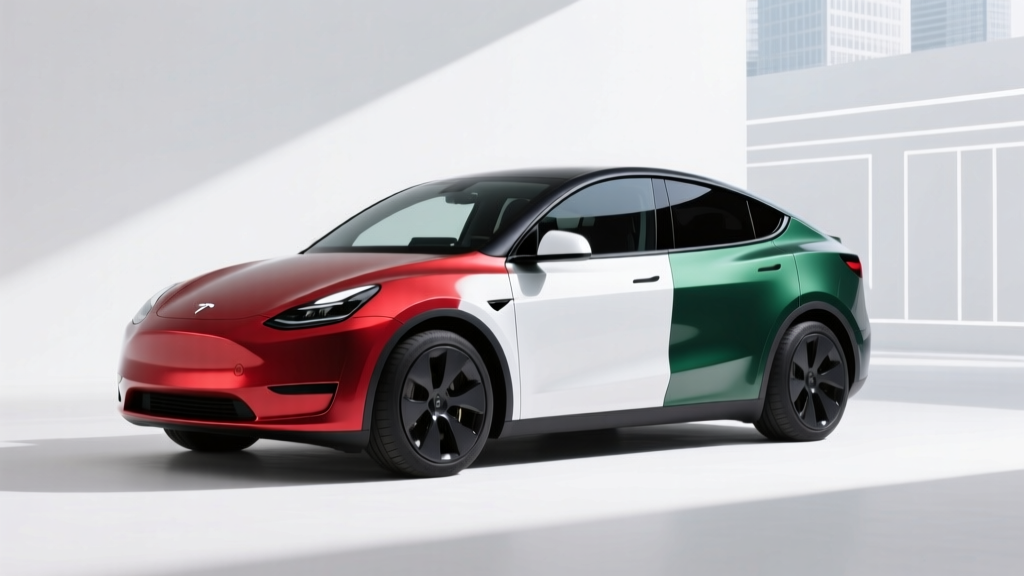
2026 Tesla Model Y Colors: The Full Exterior Palette
With the Juniper redesign, Tesla overhauled the Model Y's exterior color lineup, replacing older options with more premium, multi-coat finishes. Here is the current menu of Tesla Model Y colors available for the 2026 model year:
- Glacier Blue Metallic — A new signature color for the Juniper generation. Deep, multi-coat finish with a cool undertone that reads differently depending on lighting. Replaces the previous Deep Blue Metallic.
- Quicksilver — A sophisticated warm silver with subtle copper undertones. Premium multi-coat paint that replaces the former Midnight Silver Metallic.
- Starlight Black — A deep, metallic black with fine metallic flake. Replaces Solid Black and offers more depth than the prior flat black option.
- Pearl White Multi-Coat — The carryover white option. Tri-coat finish with a pearlescent shimmer. Remains the most popular and highest-resale-value color.
- Ultra Red — A vivid, candy-apple red with multi-coat depth. Carried over from late 2024 and replaces the prior Red Multi-Coat.
Cost note: Pearl White Multi-Coat is typically the no-cost base color. All other Tesla Model Y colors carry a premium — usually $1,000 to $2,500 depending on the finish. Ultra Red and Glacier Blue Metallic sit at the top of the pricing tier as multi-coat premium options. Exact pricing varies by configuration and is confirmed at order time on Tesla's configurator.
Range, Battery, and Real-World Efficiency
The 2026 Model Y continues with three main configurations: Long Range RWD, Long Range AWD, and Performance AWD. Battery chemistry and capacity differ by trim, which directly affects range, charging behavior, and long-term degradation.
| Spec | Long Range RWD | Long Range AWD | Performance AWD |
|---|---|---|---|
| EPA Range | 320 mi | 308 mi | 277 mi |
| Battery (usable) | ~78 kWh (NMC) | ~78 kWh (NMC) | ~78 kWh (NMC) |
| Drivetrain | Rear-Wheel Drive | Dual-Motor AWD | Dual-Motor AWD |
| Horsepower | ~295 hp | ~384 hp | ~456 hp |
| 0-60 mph | 5.8 sec | 4.8 sec | 3.5 sec |
| MPGe (combined) | 123 MPGe | 117 MPGe | 111 MPGe |
| Efficiency | 27 kWh/100mi | 29 kWh/100mi | 30 kWh/100mi |
| Top Speed | 125 mph | 125 mph | 155 mph |
| Base MSRP | $44,990 | $47,990 | $52,490 |
Real-World Range: What to Actually Expect
EPA sticker: 320 mi (Long Range RWD) / 308 mi (Long Range AWD)
Real-world highway (70-75 mph, mild weather): Expect approximately 260-285 miles for the Long Range AWD. The Model Y's aerodynamic profile helps at speed, but sustained highway driving still consumes 10-15% more energy than the EPA combined cycle.
Cold-weather impact (below 32°F / 0°C): Plan for a 20-30% range reduction, bringing usable range to roughly 210-240 miles for the Long Range AWD. The Juniper refresh includes a standard heat pump, which mitigates cabin-heating losses, but battery chemistry itself is less efficient in cold temperatures.
Practical road-trip planning: Budget 220-250 miles between stops on a long highway trip in moderate weather. This keeps you in the 10-80% state of charge sweet spot where DC fast charging is fastest.
All 2026 Model Y trims use NMC (nickel manganese cobalt) lithium-ion battery packs. NMC offers higher energy density than LFP (lithium iron phosphate), which is why the Model Y achieves its range targets in a relatively compact battery. The trade-off: Tesla recommends daily charging to 80-90% for NMC packs to preserve long-term health, whereas LFP packs (found in the Standard Range Model 3) tolerate daily 100% charges. For most owners, 80-90% daily still provides ample commuting range, and you only charge to 100% before long road trips.
Charging Performance: DC Fast, Level 2, and Home Setup
Charging speed is where the Juniper-generation Model Y shows meaningful improvement. The updated battery thermal management system allows higher sustained charge rates, particularly in the critical 10-80% window.
| Charging Level | Max Rate | Speed / Time |
|---|---|---|
| DC Fast Charge (V4 Supercharger) | 250 kW peak | 10-80% in ~22 min |
| DC Fast Charge (3rd-party CCS via adapter) | ~150-175 kW typical | 10-80% in ~30-35 min |
| Level 2 Home (48A / 11.5 kW) | 11.5 kW | ~37 mi/hr added; full charge ~8.5 hr |
| Level 2 Home (32A / 7.7 kW) | 7.7 kW | ~25 mi/hr added; full charge ~12 hr |
| Level 1 (120V standard outlet) | ~1.4 kW | ~4-5 mi/hr added |
Charging curve reality check: The 250 kW peak rate is not sustained across the entire session. The Model Y's charge curve peaks around 250 kW at low state of charge (10-20%), then progressively tapers. From 50-80%, expect sustained rates closer to 100-130 kW. This is normal lithium-ion behavior — peak kW numbers are marketing highlights, but the 10-80% time is what matters for road trips.
NACS vs CCS: The 2026 Model Y uses the native NACS (North American Charging Standard) connector. This gives you direct access to Tesla's Supercharger network — still the most reliable DC fast-charging infrastructure in the US. If you need to use Electrify America, EVgo, or other CCS-based networks, Tesla sells an official CCS adapter (~$175) that enables compatibility, though at slightly reduced charge speeds due to protocol overhead.
Home charging recommendation: Install a Tesla Wall Connector on a 60-amp circuit for the full 48-amp / 11.5 kW charge rate. This adds roughly 37 miles of range per hour of charging — enough to fully replenish overnight. Budget $500-$1,500 for professional installation depending on your electrical panel's capacity and distance from the panel to your garage. If your home has a 200-amp panel with spare capacity, installation is straightforward. Older homes with 100-amp panels may require a panel upgrade ($1,500-$3,000+).
Interior, Cargo Space, and Technology
The Juniper interior redesign brought meaningful upgrades to the Model Y's cabin. The minimalist aesthetic remains, but material quality, ambient lighting, and rear-seat comfort have all improved.
Cargo capacity:
- Behind second row: 30.2 cu ft
- With second row folded: 72.1 cu ft
- Front trunk (frunk): 4.1 cu ft
- Total maximum cargo: 76.2 cu ft
Passenger dimensions:
- Front legroom: 41.8 inches
- Rear legroom: 40.5 inches (Juniper improvement — pre-refresh was ~37 in)
- Front headroom: 41.0 inches
- Rear headroom: 38.4 inches
- Seating: 5 passengers standard; 7-seat option available on Long Range AWD ($3,000 add, but third row is best suited for small children only)
Standout tech features:
- 15.4-inch center touchscreen — Runs Tesla's latest UI with improved navigation, trip planning, and battery preconditioning visualization
- 8-inch rear touchscreen — New for Juniper; rear passengers control climate, media, and ventilation
- Ambient lighting — Full customizable interior ambient lighting, a first for Model Y
- Ventilated front seats — Finally standard on Long Range and Performance trims
- Power-folding second row — One-touch fold from the cargo area or touchscreen
- Sentry Mode & Dashcam — Continuous recording with USB storage
Notable drawbacks:
- No physical buttons for climate, wipers, or glovebox — everything routes through the touchscreen
- No Apple CarPlay or Android Auto — Tesla's native infotainment only
- Turn signal stalks removed in Juniper refresh — signals are now steering-wheel-mounted buttons, which draws polarized owner feedback
- Rear visibility is compromised by the sloping roofline; the backup camera is essential
Driver Assistance: Autopilot and FSD (Supervised)
SAE Automation Level: Level 2
Tesla Autopilot and Full Self-Driving (Supervised) are SAE Level 2 driver-assistance systems. This means the vehicle can manage steering, acceleration, and braking under certain conditions, but the driver must remain fully attentive, hands on or near the wheel, and ready to take over at any moment. These systems are not self-driving. Tesla's branding of "Full Self-Driving" is a feature name, not a description of capability.
Autopilot (standard): Includes Traffic-Aware Cruise Control and Autosteer (lane-centering on divided highways). Adequate for most highway commuting.
FSD Supervised ($8,000 add or $99/month): Adds automatic lane changes, Navigate on Autopilot (on-ramp to off-ramp highway driving), Autosteer on city streets, traffic light and stop sign recognition, and Smart Summon. Capability continues to improve via over-the-air updates, but requires constant driver supervision. According to NHTSA, all Level 2 systems require the human driver to serve as the fallback — Tesla is no exception.
Pricing, Trims, and Federal Tax Credit Eligibility
| Trim | Base MSRP | Est. Federal Credit | Effective Price |
|---|---|---|---|
| Long Range RWD | $44,990 | Up to $7,500* | ~$37,490* |
| Long Range AWD | $47,990 | Up to $7,500* | ~$40,490* |
| Performance AWD | $52,490 | Up to $7,500* | ~$44,990* |
*Credit eligibility depends on buyer income, battery sourcing, and MSRP caps. See details below.
The IRS §30D Clean Vehicle Credit can reduce your federal tax liability by up to $7,500 on a new Model Y — and as of 2024, this credit can be transferred to the dealer at the point of sale, effectively reducing your purchase price upfront. However, eligibility is not automatic. Here is the current checklist:
§30D Federal EV Tax Credit Requirements (2026)
- MSRP cap: Vehicle MSRP must be ≤ $80,000 for SUVs (Model Y qualifies as an SUV per IRS classification)
- Buyer income cap: Modified Adjusted Gross Income ≤ $150,000 (single) / $225,000 (head of household) / $300,000 (joint filers)
- Battery critical minerals: A percentage of critical minerals must be sourced from the US or free-trade-agreement partners (phase-in percentage increases yearly)
- Battery component manufacturing: A percentage of battery components must be manufactured or assembled in North America
- Foreign Entity of Concern (FEOC) restriction: Vehicles with battery components or critical minerals from a FEOC (primarily Chinese entities) may be disqualified
- Point-of-sale transfer: You may transfer the credit to Tesla at purchase for an upfront price reduction, even if you have no tax liability — but you must still meet income requirements
Current status for the Model Y: The Long Range AWD, assembled at Giga Texas, has historically qualified for the full $7,500 credit thanks to North American battery sourcing. However, critical mineral and FEOC requirements tighten each year. Always verify current eligibility on fueleconomy.gov before ordering, as qualification can change with supply-chain shifts.
Warning: This article reflects §30D rules as of early 2026. Tax credit eligibility changes frequently based on battery sourcing rules, FEOC determinations, and legislative updates. Consult a tax professional and check irs.gov before making a purchase decision based on credit eligibility.
Pros, Cons, and Who Should Buy the 2026 Model Y
Pros
- Class-leading Supercharger network access (native NACS)
- Excellent efficiency — 27-30 kWh/100mi depending on trim
- Spacious cargo area (76.2 cu ft max) with practical frunk
- Strong real-world fast-charging speed (~22 min 10-80%)
- Over-the-air updates continuously add features
- Improved Juniper interior: ventilated seats, rear screen, ambient lighting
- Heat pump standard — better cold-weather range retention
- Strong resale value relative to EV segment average
Cons
- No Apple CarPlay or Android Auto
- Turn signal buttons on steering wheel (no stalk) — adjustment period required
- All climate/wiper/glovebox controls are touchscreen-only
- FSD ($8,000) remains Level 2 — not autonomous despite the name
- Ride quality is firm; road noise is noticeable on coarse pavement
- NMC battery requires 80-90% daily charge limit for longevity
- 7-seat option third row is impractical for adults
- Insurance premiums run 15-25% above segment average
Who Should Buy the 2026 Model Y?
Choose the Model Y Long Range RWD if: You want maximum range (320 mi EPA) at the lowest price, primarily drive in mild climates, and don't need all-wheel drive. Best for commuters and budget-conscious families.
Choose the Model Y Long Range AWD if: You need all-weather traction, live in a region with snow or rain, and want strong performance without paying the Performance premium. This is the best all-around configuration for most buyers.
Choose the Model Y Performance if: You prioritize acceleration (3.5 sec 0-60) and track capability, and can accept ~40 miles less EPA range. Best for driving enthusiasts who still need a practical daily driver.
Look elsewhere if: You require Apple CarPlay, prefer physical buttons, want a more luxurious interior (consider the Genesis Electrified GV70 or BMW iX), or need a true LFP battery for daily 100% charging convenience (consider the Model 3 RWD).
How the Model Y Stacks Up Against Key Competitors
The Model Y's competitive set has grown significantly. Here is how it compares on the metrics that matter most:
| Metric | Tesla Model Y LR AWD | Ford Mustang Mach-E ER AWD | Hyundai Ioniq 5 Long Range AWD |
|---|---|---|---|
| EPA Range | 308 mi | 290 mi | 290 mi |
| Max DC Charge | 250 kW | ~150 kW | ~240 kW |
| 10-80% Time | ~22 min | ~38 min | ~18 min |
| Cargo (max cu ft) | 76.2 | 59.7 | 59.3 |
| Base MSRP | $47,990 | $48,995 | $50,150 |
| Charging Network | Native Supercharger | NACS adapter available | NACS adapter available |
The Model Y's advantages remain cargo volume and native Supercharger access. The Ioniq 5 charges faster from 10-80% thanks to its 800V architecture, but its smaller cargo hold and newer NACS-adapter requirement are trade-offs. The Mach-E is a compelling driver's car but lags in charging speed. For pure practicality and road-trip ease, the Model Y still leads the segment.
Battery Warranty and Long-Term Ownership
Tesla covers the Model Y's battery and drive unit with an 8-year / 120,000-mile warranty (whichever comes first) for Long Range and Performance trims. The warranty guarantees the battery will retain at least 70% of its original capacity during the coverage period. If degradation exceeds 30%, Tesla will repair or replace the pack at no cost.
Real-world degradation data: Based on aggregated fleet data from Tesla's Impact Report and third-party tracking (Tessie, Recurrent Auto), NMC Model Y packs typically lose approximately 5-8% capacity in the first 30,000 miles, then degrade more slowly, settling around 10-12% total loss by 100,000 miles. This means a 308-mile Model Y would realistically offer roughly 270-275 miles of range at 100,000 miles — still highly usable.
Longevity tips for NMC owners:
- Set daily charge limit to 80% (or 90% if you need the range)
- Only charge to 100% when departing on a road trip
- Avoid letting the battery sit at 100% for extended periods
- Use preconditioning when navigating to a Supercharger — this warms the battery for faster charging and reduced stress
- In extreme cold, plug in when parked to allow the battery thermal management system to maintain optimal temperature
Frequently Asked Questions
What is the real-world range of the 2026 Tesla Model Y?
The EPA rates the Long Range RWD at 320 miles and the Long Range AWD at 308 miles. In real-world highway driving at 70-75 mph in mild weather, expect 260-285 miles from the Long Range AWD. In cold weather (below freezing), plan for 210-240 miles due to battery chemistry limitations and increased cabin heating demand, even with the standard heat pump.
How fast does the Model Y charge at home and on the road?
On DC fast charging, the Model Y peaks at 250 kW on V4 Superchargers, achieving a 10-80% charge in approximately 22 minutes. At home on a 48-amp Level 2 Tesla Wall Connector (11.5 kW), you add roughly 37 miles of range per hour, fully replenishing the battery in about 8.5 hours overnight.
How much does the 2026 Model Y cost after tax credits?
The Long Range AWD starts at $47,990. If you qualify for the full $7,500 federal §30D credit (based on income, battery sourcing, and MSRP requirements), the effective price drops to approximately $40,490. You can transfer the credit at point of sale to reduce your upfront cost. Verify current eligibility on fueleconomy.gov and consult a tax professional.
Does the Tesla Model Y qualify for the $7,500 federal EV tax credit?
Historically, yes — the US-built Model Y has qualified for the full credit. However, §30D eligibility depends on your income (≤$150K single / $300K joint), the vehicle's MSRP (≤$80K for SUVs), and battery critical-mineral and component sourcing requirements that tighten annually. Always check current status before ordering.
Is the Model Y worth buying vs the Ioniq 5 or Mach-E?
The Model Y wins on cargo space (76.2 cu ft vs ~59 cu ft), Supercharger network access, and software ecosystem. The Hyundai Ioniq 5 charges faster (18 min 10-80% vs 22 min) and offers a more distinctive design. The Mach-E delivers better steering feel. If road-trip charging reliability and cargo volume are top priorities, the Model Y remains the default choice.
What Tesla Model Y colors are available in 2026?
The 2026 Model Y is offered in five exterior colors: Pearl White Multi-Coat (no-cost), Glacier Blue Metallic, Quicksilver, Starlight Black, and Ultra Red. Premium multi-coat colors like Glacier Blue and Ultra Red carry a $1,500-$2,500 upcharge. Pearl White tends to hold resale value best.
How long will the Model Y battery last?
Tesla warranties the battery for 8 years or 120,000 miles with a 70% capacity retention guarantee. Real-world data suggests NMC Model Y packs lose roughly 10-12% capacity by 100,000 miles when properly maintained (daily charge limited to 80-90%). Many Model Y packs are projected to last 200,000+ miles before reaching 70% state of health.