Why Tesla's China Numbers Matter for Your Next EV Purchase
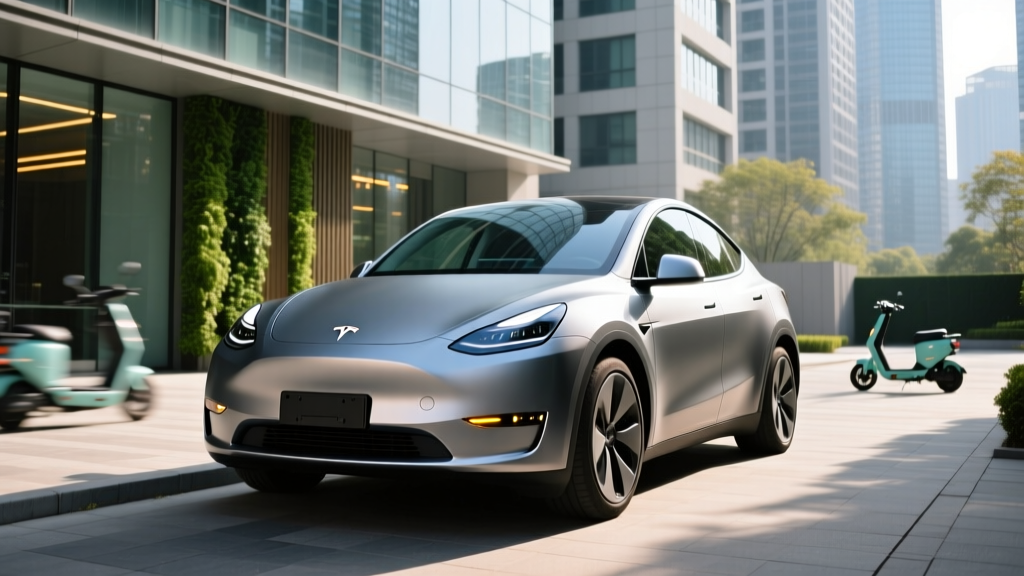
Search for "tesla sales china" and you'll find headlines about quarterly delivery volumes and market share battles with BYD. But for US-based EV shoppers, the real story is how China's hyper-competitive market is forcing Tesla to sharpen the Model Y into a better product — one that American buyers now inherit at a lower price point. The 2026 Tesla Model Y, refreshed after the "Juniper" update first deployed in Shanghai's Gigafactory 3, reflects lessons learned from selling over 400,000 units annually in the world's most demanding EV market.
This review examines the US-spec 2026 Model Y Long Range AWD and Performance trims through the lens of what actually matters: real-world range, charging speed, interior quality, pricing after federal tax credits, and how it stacks up against rivals that have closed the gap significantly since 2023.
2026 Tesla Model Y: Core Specifications
| Spec | Long Range AWD | Performance |
|---|---|---|
| EPA Range | 320 miles | 295 miles |
| Battery (usable) | 78.1 kWh, NMC | 78.1 kWh, NMC |
| Drivetrain | Dual-motor AWD | Dual-motor AWD |
| Horsepower | 384 hp | 510 hp |
| 0-60 mph | 4.8 seconds | 3.5 seconds |
| Peak DC Fast Charge | 250 kW | 250 kW |
| 10-80% DC Charge | ~24 minutes | ~24 minutes |
| Level 2 Home Charge | 11.5 kW (~44 mi/hr) | 11.5 kW (~44 mi/hr) |
| Efficiency | 122 MPGe / 28 kWh/100mi | 111 MPGe / 30 kWh/100mi |
| Cargo Volume (rear seats up) | 30.2 cu ft | 30.2 cu ft |
| Cargo Volume (rear seats folded) | 72.0 cu ft | 72.0 cu ft |
| Base MSRP | $44,990 | $51,490 |
| Warranty (battery) | 8 yr / 120,000 mi | 8 yr / 120,000 mi |
Source: fueleconomy.gov and Tesla's official US spec sheet. Figures reflect the 2026 model year.
Real-World Range: What the EPA Sticker Doesn't Tell You
EPA Estimated: 320 miles (Long Range AWD)
Real-World Expectation: 270-290 miles on a mixed highway commute at 70 mph; 240-260 miles in sustained sub-30°F winter conditions; 300-310 miles in city-dominant driving with regenerative braking set to high.
Tesla's NMC battery pack holds 78.1 kWh of usable energy, which translates to roughly 28 kWh per 100 miles of mixed driving — excellent efficiency for a crossover weighing over 4,400 pounds. The Juniper refresh improved the thermal management system, borrowing cold-weather heat pump optimizations that were validated during two harsh winters in northern China, where Model Y owners in cities like Harbin demanded reliable range at -10°F.
In practice, you'll see the full 320 miles only under ideal conditions: 55-65 mph, moderate temperatures, minimal HVAC use. Push 80 mph on an interstate run in July with A/C blasting and expect closer to 265 miles before the battery buffer warning kicks in. This isn't a Tesla-specific problem — it's physics — but buyers should plan road trips around 250 miles of usable range per charge leg to maintain a comfortable buffer.
Charging Speed: 250 kW Peak, but Read the Fine Print
| Charging Level | Power | Speed | Typical Use Case |
|---|---|---|---|
| Level 1 (120V outlet) | 1.4 kW | ~5 miles/hour | Emergency / overnight trickle |
| Level 2 (240V home) | 11.5 kW | ~44 miles/hour | Daily home charging (7-8 hr full charge) |
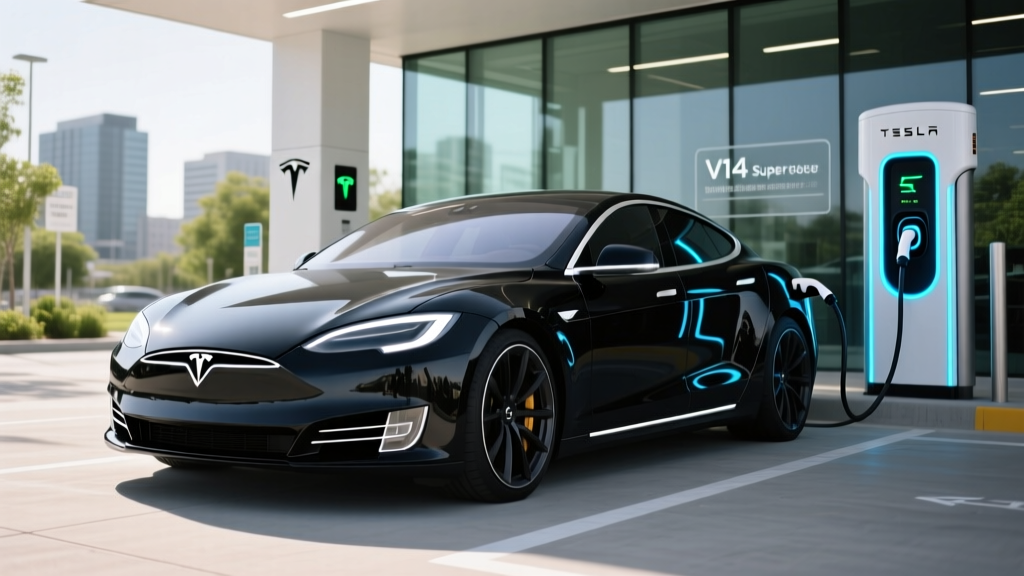
| DC Fast (Supercharger V3) | 250 kW peak | 10-80% in ~24 min | Road trips, rapid top-ups |
| DC Fast (Supercharger V4) | 250 kW (capped by vehicle) | 10-80% in ~24 min | Newer stations, same vehicle limit |
A critical point often missed in spec sheets: the 250 kW figure is a peak, not a sustained rate. The Model Y's charge curve ramps quickly to ~250 kW between 10-30% State of Charge (SoC), then progressively tapers. From 50-80%, you're pulling closer to 100-130 kW. This means the 10-80% time of roughly 24 minutes is an average, not 24 minutes at full speed.
Preconditioning matters enormously here. Navigate to a Supercharger using the car's built-in routing and the battery will preheat to optimal charging temperature — skip this step (for example, by driving to a third-party charger without preconditioning) and your first 10 minutes may be capped below 100 kW, especially in cold weather.
For home charging, a 48-amp Level 2 wall connector on a 60-amp circuit delivers the full 11.5 kW. Expect installation costs of $800-$2,000 depending on whether your electrical panel needs an upgrade. Always have a licensed electrician assess your panel capacity before committing to equipment.
Performance, Ride Quality, and the Juniper Refresh
The 2026 Model Y Long Range AWD hits 60 mph in 4.8 seconds with 384 horsepower — quick by any standard, though the Hyundai Ioniq 5 N and Ford Mustang Mach-E GT have made performance less of a differentiator than it was in 2021. The Performance trim's 3.5-second sprint and 510 hp remain genuinely thrilling, but most buyers will find the Long Range more than adequate for highway merging and passing.
Where the Juniper refresh genuinely transformed the Model Y is ride quality and cabin isolation. The previous generation drew consistent criticism for firm suspension and road noise — complaints amplified by Chinese buyers accustomed to the luxury-tier NVH (noise, vibration, harshness) standards of domestic competitors like NIO and Li Auto. Tesla responded with revised dampers, acoustic glass on all four doors, and improved sound deadening. The result is a crossover that finally matches its premium pricing with a premium feel on rough pavement.
The updated interior swaps the controversial all-touchscreen approach for a more layered dashboard with ambient lighting, ventilated front seats (finally standard on Long Range), and a rear-seat entertainment screen. Cargo space remains class-competitive at 30.2 cu ft behind the second row and 72.0 cu ft with seats folded, plus a modest front trunk (frunk) for charging cables and groceries.
Pricing, Tax Credits, and Total Cost
| Trim | Base MSRP | Destination | §30D Credit Potential | Effective Price |
|---|---|---|---|---|
| Long Range AWD | $44,990 | $1,390 | Up to $7,500* | ~$38,880* |
| Performance | $51,490 | $1,390 | Up to $7,500* | ~$45,380* |
*Federal §30D tax credit eligibility depends on buyer income (AGI caps: $150K single / $300K joint), vehicle MSRP (must be under $80,000 for SUVs — both trims qualify), and battery critical-mineral/component sourcing requirements that shift annually. Credit can now be transferred to the dealer as a point-of-sale discount. Verify current eligibility at IRS.gov before purchasing.
The Model Y's US pricing has dropped meaningfully since 2023, driven partly by Tesla's need to compete in China where the same vehicle sells for roughly ¥260,000 (~$36,000 USD). That pricing pressure has cascaded globally. Combined with the potential $7,500 federal credit and available state incentives (which vary widely — check your state's energy office), the Long Range AWD can land below $39,000 for eligible buyers — territory that makes it competitive with the Hyundai Ioniq 5, Kia EV6, and Ford Mustang Mach-E on price, not just brand cachet.
Tax Credit Eligibility: The §30D Checklist
- MSRP Cap: Vehicle MSRP must not exceed $80,000 (SUVs/trucks). Both Model Y trims clear this easily.
- Buyer Income Cap: Modified AGI must be ≤ $150,000 (single), ≤ $225,000 (head of household), or ≤ $300,000 (joint filers).
- Battery Sourcing: Increasing percentages of critical minerals and battery components must be sourced from the US or FTA-partner countries. Tesla's shift toward LFP batteries from CATL for some Standard Range models has complicated eligibility for those trims — the Long Range AWD with NMC chemistry has historically maintained eligibility, but verify the specific VIN with the dealer.
- Point-of-Sale Transfer: As of 2024, buyers can transfer the credit to the dealer for an immediate price reduction rather than waiting for a tax refund. This requires the dealer to be registered with the IRS Energy Credits Online system.
- One Vehicle Per Taxpayer: You can only claim the credit once every three years.
Consult a tax professional before relying on credit eligibility. Rules have shifted multiple times since the Inflation Reduction Act passed, and battery-sourcing requirements tighten each calendar year.
Driver Assistance: Autopilot and FSD (Supervised)
SAE Automation Level: Level 2
Tesla Autopilot and Full Self-Driving (Supervised) are Level 2 driver-assistance systems. The driver must remain fully engaged, hands on or near the wheel, eyes on the road, at all times. These systems do NOT make the vehicle autonomous. Only Level 4 services like Waymo operate without a human driver.
The 2026 Model Y ships with Tesla's latest vision-based Autopilot, which handles adaptive cruise control and lane centering competently on well-marked highways. FSD (Supervised), available as an $8,000 add-on or $99/month subscription, extends capability to city streets with traffic light recognition and turn execution. It has improved substantially but still requires frequent driver intervention in construction zones, during heavy rain, and at complex multi-lane intersections.
Competitors like GM's Super Cruise and Ford's BlueCruise offer comparable Level 2 functionality on pre-mapped highways with more robust driver-monitoring systems (eye tracking vs. Tesla's steering-torque detection). If hands-free highway driving on approved routes is your priority, those systems currently offer a more relaxed experience within their operational domains.
How the Model Y Compares to Key Rivals
| Spec | 2026 Tesla Model Y LR | 2026 Hyundai Ioniq 5 LR | 2026 Ford Mach-E ER AWD |
|---|---|---|---|
| EPA Range | 320 mi | 318 mi | 312 mi |
| Battery | 78.1 kWh NMC | 84.0 kWh NMC | 91.0 kWh NMC |
| Peak DC Charge | 250 kW | 240 kW (800V) | 150 kW |
| 10-80% Time | ~24 min | ~18 min | ~38 min |
| 0-60 mph | 4.8 sec | 5.1 sec | 5.1 sec |
| Base MSRP | $44,990 | $46,500 | $45,995 |
| Supercharger Access | Native | NACS adapter included | NACS adapter available |
The Ioniq 5's 800-volt architecture gives it a meaningful charging-speed advantage (18 minutes vs. 24 minutes for 10-80%), while the Model Y retains an edge in Supercharger network seamlessness — no adapters, no third-party apps, just plug and charge. The Mach-E has improved but still lags on DC charging speed, which matters for road-trip-heavy buyers.
Pros
- Best-in-class Supercharger network reliability (native NACS, no adapter needed)
- Strong efficiency (28 kWh/100mi) stretches range without an oversized battery
- Juniper refresh fixes ride quality and cabin noise complaints
- Over-the-air updates continuously add features post-purchase
- Competitive pricing after price cuts and potential $7,500 credit
- Strong resale value relative to most EV competitors
Cons
- DC charging speed (250 kW peak) lags 800V rivals like Ioniq 5 and EV6
- Vision-only Autopilot struggles in heavy rain and low-visibility conditions
- No physical buttons for climate or volume — touchscreen dependency
- FSD (Supervised) remains an expensive add-on without full autonomy
- Rear-seat headroom is tight for passengers over 6'2"
- Insurance premiums run 15-25% higher than comparable ICE crossovers
Who Should Buy the 2026 Tesla Model Y?
Best for: Daily commuters with home charging access who want a proven, efficient EV crossover with access to the most reliable DC fast-charging network in the US. The Model Y's efficiency and Supercharger infrastructure make it the lowest-friction choice for first-time EV buyers who road-trip 3-5 times per year.
Consider alternatives if: You prioritize the fastest possible charging (Hyundai Ioniq 5's 800V system), you want physical controls and a more traditional interior layout (Ford Mach-E, Kia EV6), or you need maximum rear-seat space for tall teenagers (the Ioniq 5's flat floor and longer wheelbase provide more legroom).
The competitive pressure from Tesla's China battleground — where the company fights BYD, NIO, and Xiaomi for every sale — has made the 2026 Model Y a meaningfully better vehicle than the 2023 version at a lower price. American buyers benefit directly from that global competition.
Choose the Model Y Long Range AWD if: You want the simplest road-trip charging experience, prioritize efficiency and range per dollar, and can charge at home nightly.
Choose the Model Y Performance if: You want sub-4-second acceleration and track-capable handling, and you're willing to trade 25 miles of range for it.
Look elsewhere if: You need the absolute fastest DC charging, prefer physical buttons, or require Level 4 autonomous capability (not available in any consumer vehicle as of 2026).
Frequently Asked Questions
What is the real-world range of the 2026 Tesla Model Y?
The EPA rates the Long Range AWD at 320 miles. In real-world highway driving at 70 mph, expect 270-290 miles. In cold weather (below 30°F), plan for 240-260 miles. City driving with regenerative braking can approach the EPA figure.
How fast does the Model Y charge at home and on the road?
At home on a 240V Level 2 charger (48 amps), the Model Y adds roughly 44 miles of range per hour, charging from empty to full in about 7-8 hours. On a Tesla Supercharger (250 kW peak DC), a 10-80% charge takes approximately 24 minutes, though the charge curve tapers significantly above 50% SoC.
Does the 2026 Model Y qualify for the $7,500 federal EV tax credit?
The Model Y Long Range AWD (MSRP $44,990) and Performance ($51,490) both fall under the $80,000 SUV MSRP cap. Eligibility depends on your income (AGI ≤ $300K joint / $150K single), the battery's critical-mineral sourcing compliance for the current year, and purchasing through a registered dealer. The credit can be applied as a point-of-sale discount. Verify your specific eligibility at IRS.gov and with a tax professional.
Is the Tesla Model Y worth buying over the Hyundai Ioniq 5 or Ford Mach-E?
The Model Y wins on Supercharger network access, efficiency (fewer kWh per mile), and over-the-air feature updates. The Ioniq 5 charges faster on DC (800V architecture) and offers more interior volume. The Mach-E provides a more conventional interior with physical controls. All three are strong choices — the decision hinges on whether charging-network seamlessness (Tesla) or charging speed (Hyundai) matters more to your lifestyle.
What is the battery warranty on the 2026 Model Y?
Tesla covers the battery and drive unit for 8 years or 120,000 miles, whichever comes first, with a minimum 70% capacity retention guarantee. If the battery degrades below 70% of its original capacity within the warranty period, Tesla will repair or replace it. This is competitive with Hyundai's 10-year/100,000-mile battery warranty, though Hyundai's coverage period is longer.
How do Tesla sales in China affect US pricing?
Tesla's Shanghai Gigafactory is its highest-volume, lowest-cost production facility. Intense competition from BYD, NIO, Xiaomi, and other Chinese EV makers has forced Tesla to cut prices and accelerate feature updates in China first. These improvements — including the Juniper refresh's ride quality, interior materials, and thermal management upgrades — flow to US-market vehicles, while the pricing pressure helps keep US MSRPs lower than they would be in a less competitive global market.