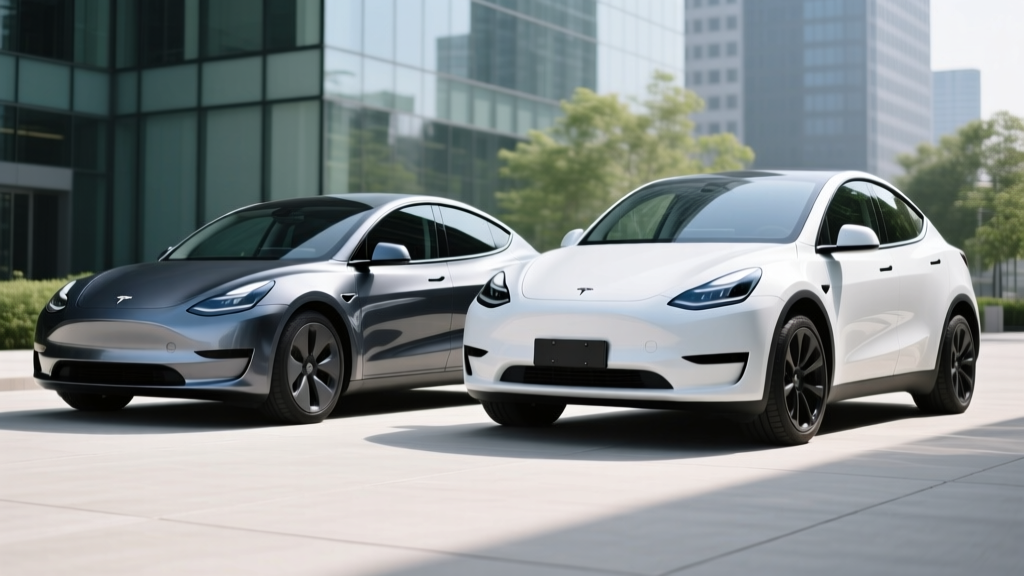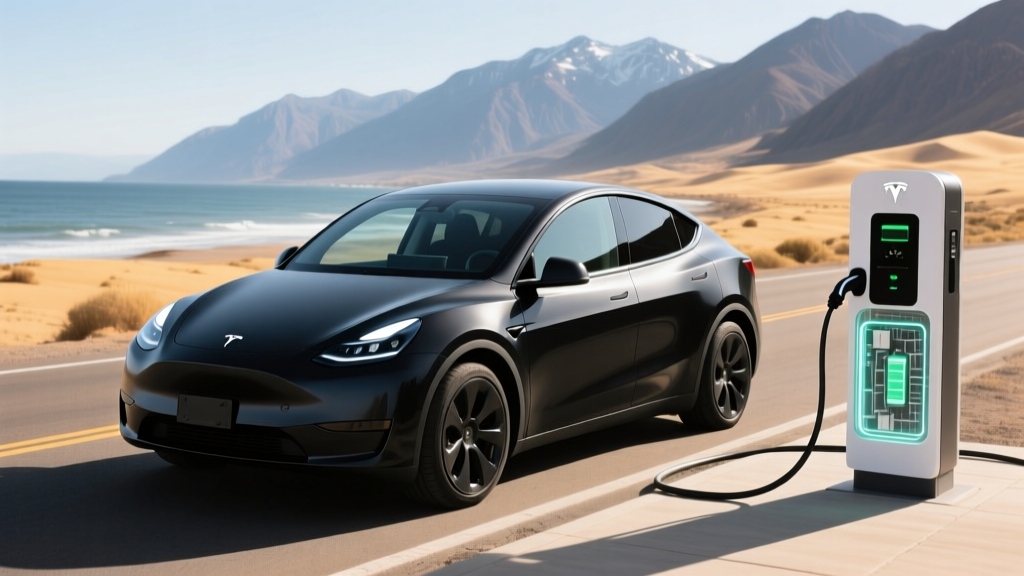
Owning a Tesla in Chile presents a unique set of advantages and challenges that most US-centric EV reviews simply don't address. Chile's geography — stretching over 2,600 miles of varied terrain from the Atacama Desert to Patagonian fjords — demands real range, robust charging infrastructure, and a vehicle that can handle everything from Santiago's congested Autopista Central to the winding Carretera Austral. The 2026 Tesla Model Y Long Range AWD remains the most practical Tesla for Chilean buyers, balancing range, cargo capacity, and access to Tesla's expanding Supercharger network across the country.
This review evaluates the Model Y through the lens of Chilean ownership: how its EPA-rated range translates to Chilean highways, what charging actually looks like from Santiago to Concepción, and whether the total cost of import and operation makes sense compared to local alternatives. We'll cover every spec you need — battery chemistry, charge curves, real-world efficiency — so you can make an informed decision before committing to one of the most significant vehicle purchases available in the Chilean market.
Range, Efficiency, and the Chilean Reality
The 2026 Model Y Long Range AWD carries an EPA-estimated 320 miles of range from its 78.1 kWh usable battery pack (NMC chemistry). That EPA figure is derived from standardized US testing cycles, but Chilean driving conditions tell a more nuanced story.
Real-World Chilean Highway (Santiago–Concepción, 520 km): Expect ~260–280 miles (420–450 km) at sustained 120 km/h with elevation changes.
Cold-Weather Impact (Southern Chile, winter): Range drops 15–25% in temperatures below 40°F (4°C), common in Temuco and Puerto Montt during June–August.
City Driving (Santiago commute): Regen braking recovers energy effectively; expect 290–310 miles in stop-and-go traffic.
The Model Y's efficiency rating stands at 122 MPGe combined (28 kWh/100 mi) per fueleconomy.gov. On Chilean highways where speeds average 100–120 km/h, real-world consumption typically measures 16–19 kWh/100 km — slightly higher than the EPA cycle due to the Andean elevation changes and aggressive wind conditions on Route 5 (Panamericana).
Chile's electricity grid runs predominantly on renewable sources — over 60% from solar, wind, and hydro as of 2025 — making the Model Y's tailpipe-free operation genuinely low-carbon in the Chilean context. Enel and CGE offer residential EV tariffs that make home charging significantly cheaper than gasoline per kilometer.
Battery, Chemistry, and Long-Term Degradation
The 2026 Model Y Long Range uses a 78.1 kWh usable NMC (nickel-manganese-cobalt) battery pack supplied primarily by LG Energy Solution and Panasonic. NMC chemistry offers higher energy density than LFP (lithium iron phosphate), which is why the Long Range achieves 320 EPA miles while the base RWD model — equipped with a ~60 kWh LFP pack — achieves 260 miles.
| Specification | Model Y Long Range AWD | Model Y RWD (Base) |
|---|---|---|
| Battery Chemistry | NMC | LFP |
| Usable Capacity | 78.1 kWh | ~60 kWh |
| EPA Range | 320 mi (515 km) | 260 mi (420 km) |
| Drivetrain | Dual-Motor AWD | Single-Motor RWD |
| 0–60 mph | 4.8 seconds | 6.6 seconds |
| Horsepower | 384 hp combined | 295 hp |
| Base MSRP (US) | $48,990 | $44,990 |
Tesla's battery warranty covers 8 years or 120,000 miles (192,000 km) for the Long Range, whichever comes first, with a guaranteed minimum 70% capacity retention over that period. For Chilean buyers importing the vehicle, this warranty remains valid through Tesla Service Centers in Santiago (Las Condes and Huechuraba locations). Real-world degradation data from Teslanomics and Recurrent Auto shows NMC packs typically retain 88–92% capacity after 100,000 miles when charged primarily to 80% daily.
Charging Speed: DC Fast, Supercharger, and Home
Charging infrastructure is the make-or-break factor for any EV in Chile, and the Model Y benefits from Tesla's proprietary Supercharger network, which has expanded to over 25 stations across Chile as of early 2026 — covering the Santiago–Valparaíso corridor, Route 5 south to Chillán, and key stops along the road to Concepción and Temuco.
| Charging Method | Max Power (kW) | Speed | Time / Notes |
|---|---|---|---|
| Tesla V3 Supercharger (DC) | 250 kW peak | ~175 mi in 15 min | 10–80% in ~22 minutes; tapers above 60% |
| Tesla V4 Supercharger (DC) | 250–350 kW | ~200 mi in 15 min | Newer cabinets; CCS adapter not needed for Tesla-native stalls |
| Third-Party DC (Enel X / Copec Voltex) | 50–150 kW (CCS2) | Varies | Requires CCS2 adapter; Chile uses CCS2 (Type 2 Combo), not NACS |
| Level 2 Home (Wall Connector) | 11.5 kW (48A) | ~44 mi/hr | Full charge in ~8 hours; ideal for overnight |
| Level 2 Public (Enel X JuiceBox) | 7.4–22 kW | 28–85 mi/hr | Common at malls, hotels in Santiago/Viña |
| Level 1 (Standard 120V/220V outlet) | 1.4–2.4 kW | 3–9 mi/hr | Emergency only; Chilean 220V helps |
Critical note for Chilean buyers: Chile uses the CCS2 (Type 2 Combo) standard for public DC fast charging, while Tesla's native Superchargers use the NACS (North American Charging Standard) connector in vehicles imported from Fremont or Austin. Tesla vehicles sold in Chile through official channels come with a CCS2 adapter, and Tesla Supercharger stalls in Chile are equipped with CCS2-compatible cables. If you're importing a US-spec Model Y, budget approximately $200–$300 for a quality CCS2 adapter to access Enel X and Copec Voltex public chargers.
The Model Y's charge curve peaks at 250 kW between roughly 10–35% state of charge, then tapers progressively: ~170 kW at 50%, ~100 kW at 70%, and ~50 kW above 85%. This means a 10–80% session takes approximately 22 minutes at a V3 Supercharger, but charging from 80–100% adds another 25+ minutes. For road trips on Route 5, plan Supercharger stops at 15–20% SoC to maximize time spent in the fast-charging sweet spot.
Performance, Cargo, and Daily Practicality
The dual-motor AWD Model Y delivers 384 combined horsepower and a 4.8-second 0–60 mph time. In Chilean driving, the instant torque and AWD traction prove valuable on wet roads in Valdivia and on the steep grades of the Andean foothills east of Santiago (La Dehesa, Lo Barnechea). The 16.2-inch ground clearance handles speed bumps and unpaved sections of rural roads adequately, though this is not an off-road vehicle.
Cargo capacity is where the Model Y distinguishes itself for Chilean families:
- Rear cargo (behind 2nd row): 30.2 cu ft (855 liters)
- Total cargo (2nd row folded): 72.1 cu ft (2,041 liters)
- Front trunk (frunk): 4.1 cu ft (116 liters)
- Rear legroom: 41.6 inches (1,057 mm)
- Front headroom: 40.7 inches (1,034 mm)
That cargo volume accommodates ski gear for trips to Valle Nevado or Farellones, weekly supermarket hauls from Lider or Jumbo, and luggage for airport runs to Arturo Merino Benítez (SCL). The optional third row (available in some markets) is extremely tight for adults and best reserved for small children on short trips.
Tech features include a 15.4-inch center touchscreen running Tesla's native infotainment (no Apple CarPlay or Android Auto), over-the-air software updates, Sentry Mode dashcam recording, and the Tesla mobile app for remote preconditioning — particularly useful for warming the cabin on cold Puerto Montt mornings without draining range while parked.
Autopilot and Driver Assistance on Chilean Roads
The Model Y ships with Tesla's Basic Autopilot suite, which includes Traffic-Aware Cruise Control and Autosteer (lane centering). This is classified as SAE Level 2 driver assistance — the driver must remain fully engaged, hands on or near the wheel, and eyes on the road at all times.
On Chilean highways, Autopilot performs well on well-marked sections of Route 5 and the Autopista Central. However, lane markings on rural roads (especially south of Los Ángeles) can be faded or absent, causing Autosteer to disengage. Construction zones around Santiago's expanding metro and highway system require manual override. FSD (Supervised) is available as a $8,000 add-on or $99/month subscription, but its traffic-light and stop-sign recognition is calibrated primarily for US and European road patterns — Chilean roundabouts and informal intersection behaviors may require frequent driver intervention.
• Navigate unmarked rural roads autonomously
• Handle Chilean-style roundabouts without supervision
• Recognize all local speed limit signage reliably
• Replace an alert, sober, licensed driver
• Operate safely in heavy rain, fog (camanchaca), or snow without driver readiness
Pricing, Import Costs, and Chilean Ownership Economics
Tesla does not manufacture or officially sell vehicles in Chile as of 2026. Chilean buyers typically acquire a Model Y through one of three channels: personal import from the US, specialized EV importers (like Energy Solutions or E-Mobility Chile), or the gray market. This significantly impacts the final landed cost.
| Cost Component | Amount (USD) |
|---|---|
| Model Y Long Range AWD — US MSRP | $48,990 |
| Shipping (US West Coast → San Antonio/Antofagasta port) | $2,500–$4,000 |
| Chilean import duty (6% ad valorem) | ~$2,940 |
| IVA (19% VAT on CIF + duty value) | ~$10,370 |
| Homologation / registration | $500–$1,500 |
| CCS2 adapter (if needed) | $200–$300 |
| Estimated Total Landed Cost | $65,500–$68,000 |
Chile does not offer a direct equivalent to the US federal §30D EV tax credit for individual buyers. However, Chilean EV owners benefit from:
- Exemption from the "impuesto verde" (green tax) that applies to higher-emission vehicles at first registration
- Reduced annual circulation permit (permiso de circulación) in several comunas, including Santiago, Providencia, and Las Condes
- Access to HOV/restricted-lane exemptions under Santiago's Hoy No Circula program — EVs are exempt from the weekday driving restriction based on license plate
- Lower per-kilometer fuel cost: At Chilean residential electricity rates (~$0.12–$0.18/kWh), charging a Model Y costs approximately $0.03–$0.05/km vs. $0.10–$0.14/km for a comparable gasoline SUV at ~$1,300 CLP/liter
For US readers comparing costs: the IRS §30D federal tax credit offers up to $7,500 for qualifying new EVs purchased in the US, subject to MSRP caps ($55,000 for SUVs like the Model Y), buyer income limits ($300,000 joint / $150,000 single AGI), and battery critical-mineral and component sourcing requirements. The Model Y Long Range AWD assembled at Giga Texas currently qualifies for the full $7,500 for eligible US buyers, bringing the effective US price to approximately $41,490 before state incentives — dramatically lower than the Chilean landed cost.
Tesla in Chile vs. Key Competitors
The Chilean EV market has grown substantially, and the Model Y faces competition from models officially sold through local dealerships with full warranty support:
| Model | Range (WLTP) | Approx. Chile Price (USD) | Dealer Support |
|---|---|---|---|
| Tesla Model Y LR AWD (imported) | 533 km | $65,500–$68,000 | Tesla Service (Santiago) |
| BYD Atto 3 / Yuan Plus | 420 km | $32,000–$36,000 | Full dealer network |
| Hyundai Ioniq 5 | 480 km | $52,000–$58,000 | Hyundai Chile |
| Kia EV6 | 490 km | $54,000–$62,000 | Kia Chile |
| Volvo XC40 Recharge | 418 km | $58,000–$65,000 | Volvo Chile |
The BYD Atto 3 undercuts the Model Y on price by nearly half, but offers less range, slower DC charging (80 kW peak vs 250 kW), and no Supercharger network access. The Hyundai Ioniq 5 and Kia EV6 offer 800V architecture with ~350 kW DC charging capability and CCS2-native compatibility (no adapter needed at Chilean public chargers), but their dealer networks charge premium service rates. The Model Y's Supercharger network remains its strongest competitive moat for intercity travel in Chile.
• You regularly drive Santiago–Concepción or longer routes and need reliable fast-charging
• You value over-the-air updates and Tesla's software ecosystem
• You can install a Level 2 Wall Connector at home (single-family housing in La Dehesa, Vitacura, etc.)
• You accept the import process and gray-market risks
Consider a competitor if:
• You want full local dealer warranty and service without importation hassle
• Your budget is under $40,000 USD (look at BYD, MG ZS EV)
• You primarily drive in Santiago and don't need 320+ miles of range
• You prefer native CCS2 without needing an adapter
Pros and Cons of Owning a Tesla in Chile
- Best-in-class 250 kW DC charging; 10–80% in ~22 minutes
- 320 EPA miles (515 km) handles Santiago–Concepción with one Supercharger stop
- Supercharger network covers Chile's main corridors (25+ stations)
- Exempt from Santiago's Hoy No Circula driving restrictions
- 384 hp dual-motor AWD excels on Andean grades and wet southern roads
- 72.1 cu ft cargo space for a compact SUV
- OTA updates continuously improve the vehicle post-purchase
- Low per-km energy cost vs. gasoline (~$0.04/km vs $0.12/km)
- No official Tesla sales channel in Chile — import required
- Landed cost of $65K–$68K is 35–40% above US MSRP
- CCS2 adapter needed for non-Tesla public DC chargers
- Autopilot calibrated primarily for US/EU road markings
- No Apple CarPlay or Android Auto
- Service requires Santiago Tesla Center — limited options outside the capital
- Insurance premiums 20–35% higher than comparable ICE SUVs in Chile
- Range drops 15–25% in Patagonian winter conditions
Frequently Asked Questions
What is the real-world range of the Tesla Model Y in Chile?
Expect 260–280 miles (420–450 km) on Chilean highways at 120 km/h, and up to 310 miles in city driving with regenerative braking. In cold southern-Chile winter conditions (below 4°C), range drops 15–25%, so plan for ~220–240 miles in Puerto Montt or Coyhaique during June–August.
How fast does the Model Y charge on Chilean Superchargers?
Tesla V3 Superchargers in Chile deliver up to 250 kW DC, charging the Model Y Long Range from 10–80% in approximately 22 minutes. That adds roughly 175 miles (280 km) of range in a 15-minute stop — enough to cover Santiago to Curicó.
Does the Tesla Model Y qualify for any tax credits in Chile?
Chile does not offer a direct purchase subsidy equivalent to the US §30D credit. However, EVs are exempt from the impuesto verde registration tax, qualify for reduced permiso de circulación in many comunas, and are exempt from Santiago's Hoy No Circula restrictions. The US §30D credit ($7,500) only applies to vehicles purchased and registered in the United States.
Is it worth importing a Tesla to Chile vs. buying a BYD or Hyundai locally?
If range, charging speed, and intercity travel are priorities, the Model Y's Supercharger network access and 320-mile range justify the import premium. If you primarily drive in Santiago and want dealer warranty simplicity, the BYD Atto 3 or Hyundai Ioniq 5 (sold locally) offer strong value at lower cost with full manufacturer support.
Can I charge a Tesla at non-Tesla chargers in Chile?
Yes, but you'll need a CCS2 adapter. Chile's public DC chargers (Enel X, Copec Voltex) use the CCS2 standard. Tesla vehicles imported from the US use the NACS connector natively. A CCS2 adapter ($200–$300) enables access to all public chargers. Tesla Superchargers in Chile have CCS2-compatible cables built in.
What does it cost to charge a Model Y at home in Chile?
At Chilean residential rates of approximately $130–$180 CLP/kWh (~$0.14–$0.18 USD), a full 78 kWh charge costs roughly $11–$14 USD. That delivers 320 miles of range — equivalent to about 5–6 liters of gasoline in cost, compared to 40+ liters a gasoline SUV would consume over the same distance.