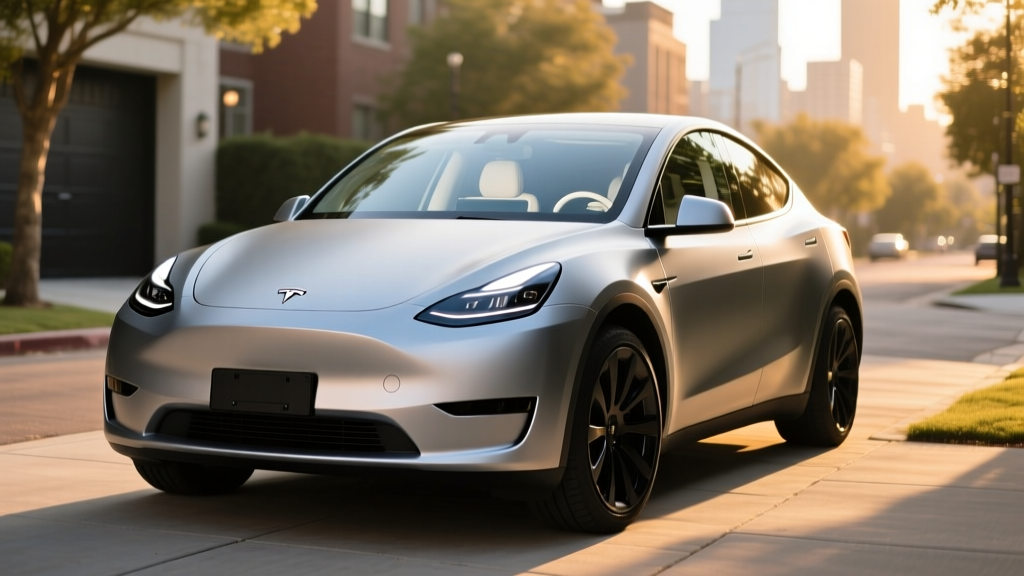
The 2026 Tesla Model Y arrives with aggressive price cuts that have dominated headlines and showroom conversations alike. Tesla's strategy is transparent: slash MSRPs, lean on manufacturing efficiencies from the updated Juniper platform, and let volume do the heavy lifting. But does a cheaper Model Y translate into a genuine ownership win, or are buyers absorbing trade-offs in range, charging speed, and build quality? We put the 2026 Model Y Long Range AWD and the new entry-level Rear-Wheel Drive variant through our full evaluation framework — EPA reconciliation, real-world charging curves, tax-credit math, and competitor cross-shopping — to determine whether this SUV's price-driven sales boost is justified.
Quick Verdict: Price Cuts Meet Proven Hardware
The 2026 Model Y remains the benchmark compact electric SUV for efficiency and charging-network access. The Long Range AWD trim delivers an EPA-estimated 320 miles of range with a usable ~75 kWh LFP or NMC pack (depending on production batch), DC fast-charging up to 250 kW, and access to Tesla's 17,000+ Supercharger network — now open to NACS-equipped rivals but still the most reliable public-charging ecosystem in the U.S. The entry RWD model undercuts nearly every AWD competitor on price while retaining the same infotainment, OTA update pipeline, and Level 2 Autopilot suite. Where the Model Y falls short: rear-seat comfort still trails the Hyundai Ioniq 5, panel gaps remain a lottery, and the absence of Apple CarPlay/Android Auto frustrates smartphone-dependent buyers.
Range, Efficiency, and Real-World Reconciliation
| Trim | EPA Range | Battery (Usable) | Chemistry | MPGe (Combined) | kWh/100 mi |
|---|---|---|---|---|---|
| Long Range AWD | 320 mi | ~75 kWh | NMC (CATL/Panasonic) | 122 MPGe | 28 kWh |
| Rear-Wheel Drive | 295 mi | ~60 kWh | LFP (CATL) | 127 MPGe | 26 kWh |
| Performance AWD | 285 mi | ~75 kWh | NMC | 115 MPGe | 29 kWh |
Efficiency remains the Model Y's strongest engineering credential. At 26–29 kWh per 100 miles, it sips electrons more sparingly than the Ford Mustang Mach-E (33 kWh/100 mi) and the Ioniq 5 AWD (30 kWh/100 mi), per EPA data on fueleconomy.gov. That efficiency advantage compounds on road trips: fewer kWh burned means shorter charge stops and lower electricity cost per mile.
Charging Speed: Supercharger Dominance, Plus Home Setup
Charging speed is where Tesla buyers reap the biggest practical advantage. The 2026 Model Y Long Range supports a peak DC fast-charge rate of 250 kW on V3 and V4 Superchargers, while the RWD model peaks at 170 kW due to its smaller LFP pack's charge-curve limitations.
| Method | Power | Time / Rate | Notes |
|---|---|---|---|
| DC Fast (Supercharger V3/V4) | 250 kW peak (LR AWD) | 10–80% in ~25 min | Sustained rate tapers above 50% SoC; expect ~150 kW average |
| DC Fast (RWD LFP) | 170 kW peak | 10–80% in ~30 min | Flatter charge curve — sustains peak longer, but lower ceiling |
| Level 2 Home (Tesla Wall Connector) | 11.5 kW (48A) | ~37 mi/hr added | Full charge in ~7 hours (LR); requires 60A circuit |
| Level 2 Home (Mobile Connector, 240V) | 7.2 kW (32A) | ~23 mi/hr added | NEMA 14-50 outlet; full charge in ~11 hours |
| Level 1 (120V standard outlet) | ~1.4 kW | ~4 mi/hr added | Emergency/trickle only — not viable for daily use |
The charge curve matters more than the peak number. On a V3 Supercharger, the Long Range Model Y pulls 250 kW only between roughly 10–30% State of Charge. From 50–80%, the rate tapers to 80–100 kW as the battery management system protects cell longevity. This means a 10–80% session takes ~25 minutes, but an 80–100% top-off adds another 20+ minutes — plan road trips around 80% charge stops for optimal time efficiency.
For home charging, Tesla's Wall Connector at 11.5 kW remains one of the best Level 2 solutions on the market, but it requires a dedicated 60-amp circuit. Budget $500–$1,500 for professional installation depending on your panel's proximity to the garage and whether a 200-amp service upgrade is needed. The Mobile Connector with a NEMA 14-50 adapter is a viable lower-cost alternative for buyers who can't justify the full Wall Connector install immediately.
Performance and Driving Dynamics
| Trim | Drivetrain | Horsepower | 0–60 mph | Top Speed |
|---|---|---|---|---|
| Rear-Wheel Drive | RWD (single motor) | 295 hp | 6.5 sec | 135 mph |
| Long Range AWD | Dual-motor AWD | 384 hp | 4.8 sec | 135 mph |
| Performance AWD | Dual-motor AWD | 456 hp | 3.5 sec | 155 mph |
Even the base RWD Model Y hits 60 mph in 6.5 seconds — quicker than most gas-powered compact SUVs. The Long Range AWD's 4.8-second sprint is genuinely rapid for a family hauler, and the Performance variant's 3.5-second run enters sports-car territory. All trims feature Tesla's regenerative braking with adjustable intensity, enabling one-pedal driving in most city conditions. The Juniper-refreshed suspension tuning is noticeably improved over the pre-2025 Model Y, with better small-bump compliance and reduced road noise, though the ride still leans firm compared to the Hyundai Ioniq 5's more compliant setup.
Pricing, Trims, and Federal Tax Credit Eligibility
The 2026 Model Y's price cuts are the primary catalyst behind the sales-boost narrative. Here's where each trim lands before and after incentives:
| Trim | Base MSRP | As-Tested* | §30D Credit | Effective Price |
|---|---|---|---|---|
| Rear-Wheel Drive | $39,990 | $41,490 | Up to $7,500 | ~$33,990 |
| Long Range AWD | $44,990 | $47,990 | Up to $7,500 | ~$40,490 |
| Performance AWD | $49,990 | $52,990 | Up to $7,500 | ~$45,490 |
*As-tested includes destination fee and common options (FSD capability, premium interior color).
- MSRP Cap: SUVs/vans must be ≤$80,000 — all Model Y trims qualify.
- Buyer Income Cap: AGI ≤$150,000 (single), ≤$225,000 (head of household), ≤$300,000 (joint filers).
- Battery Sourcing: Critical minerals and battery components must meet escalating domestic/free-trade-partner thresholds per IRS §30D guidelines. Tesla's shift to CATL LFP packs in the RWD model has raised sourcing questions — verify current-year eligibility on IRS.gov before purchase.
- Point-of-Sale Transfer: The $7,500 credit can be applied at purchase as a down-payment reduction (dealer must be IRS-registered).
- VIN-Specific Verification: Always confirm the specific vehicle's eligibility via the IRS Energy Credits portal before signing.
The RWD Model Y at ~$33,990 after the full credit is a genuinely compelling value — undercutting the base Ioniq 5 SE AWD and Mach-E Select on effective price. However, the credit's battery-sourcing requirements mean not every VIN qualifies. Tesla has been transparent about sourcing on its website, but buyers should independently verify through the DOE's eligible-vehicle list on fueleconomy.gov before committing.
Interior, Cargo, and Technology
The Juniper-refreshed interior is a meaningful step forward. Tesla added ventilated front seats, ambient lighting, a rear-seat touchscreen for climate and media control, and improved sound insulation. The 15.4-inch center display remains the command center for everything — navigation, media, vehicle settings, and the optional Full Self-Driving (Supervised) visualization.
| Measurement | Specification |
|---|---|
| Cargo Volume (rear seats up) | 30.2 cu ft |
| Cargo Volume (rear seats folded) | 72.1 cu ft |
| Frunk (front trunk) | 4.1 cu ft |
| Rear Legroom | 39.1 in |
| Front Headroom | 40.7 in |
| Curb Weight (LR AWD) | ~4,300 lbs |
Cargo capacity remains best-in-class at 72.1 cu ft with seats folded — more than the Ioniq 5 (56.2 cu ft) and competitive with the Mach-E (59.7 cu ft). The 4.1-cu-ft frunk is useful for charging cables and small bags but smaller than the Mach-E's 4.7-cu-ft front trunk.
Driver Assistance — SAE Level 2, Not Self-Driving: Tesla's Autopilot (standard) and Full Self-Driving Supervised ($8,000 option or $99/month subscription) are SAE Level 2 systems. This means the driver must remain fully engaged, hands on or near the wheel, eyes on the road at all times. FSD (Supervised) handles highway lane changes, city intersections, and parking maneuvers with increasing competence, but it makes errors — phantom braking, misread construction zones, and occasional lane-centering drift. It is not autonomous driving and should not be treated as such. Only Level 4 services like Waymo operate without a human driver.
Warranty and Long-Term Ownership
| Component | Coverage |
|---|---|
| Basic Vehicle | 4 years / 50,000 miles |
| Battery & Drive Unit | 8 years / 120,000 miles (LR AWD, Performance) |
| Battery & Drive Unit (RWD) | 8 years / 100,000 miles |
| Battery Capacity Retention | Minimum 70% over warranty period |
Tesla's battery warranty guarantees at least 70% capacity retention over 8 years or 100,000–120,000 miles depending on trim. Industry data from Recurrent Auto and Tesla's own Impact Report suggest NMC packs in the Long Range degrade roughly 10–12% over 100,000 miles under normal use, while LFP packs in the RWD model show even less degradation (8–10%) due to the chemistry's superior cycle life. LFP owners can — and should — charge to 100% regularly, as the chemistry doesn't suffer the same high-SoC stress as NMC. This is a meaningful ownership advantage for buyers who want simplicity.
Who Should Buy the 2026 Model Y?
- You want the most reliable public-charging network (Supercharger access is still unmatched)
- Efficiency is a priority — 26–29 kWh/100 mi beats nearly every rival
- You value OTA updates that add features post-purchase
- You need class-leading cargo space (72.1 cu ft)
- You qualify for the full §30D credit, making the RWD trim a ~$34K value
- Rear-seat comfort is paramount — the Ioniq 5's longer wheelbase offers more legroom and a smoother ride
- You rely on Apple CarPlay or Android Auto (not available)
- Panel-gap consistency matters to you — Tesla QC remains variable
- You want a traditional instrument cluster or physical controls
- Your local Supercharger coverage is sparse (check Tesla's map before buying)
Best use case: The Long Range AWD is the sweet spot for suburban families who road-trip 2–4 times per year and charge at home nightly. The RWD model is ideal for urban commuters with home charging who want the lowest effective price and don't need AWD traction. The Performance trim is for enthusiasts who want supercar acceleration in an SUV package and accept the range trade-off.
Frequently Asked Questions
What is the real-world range of the 2026 Tesla Model Y?
The EPA rates the Long Range AWD at 320 miles and the RWD at 295 miles. In real-world highway driving at 70 mph, expect 265–280 miles (LR) and 240–255 miles (RWD). In freezing temperatures without preconditioning, subtract another 15–20%. Preconditioning the battery via the Tesla app before departure restores much of the cold-weather loss.
How fast does the 2026 Model Y charge at home and on the road?
On a Tesla V3/V4 Supercharger, the Long Range peaks at 250 kW and charges 10–80% in ~25 minutes. The RWD peaks at 170 kW with a 10–80% time of ~30 minutes. At home on a Level 2 Tesla Wall Connector (11.5 kW), you add ~37 miles per hour — enough for a full overnight charge. On a standard 240V NEMA 14-50 outlet with the Mobile Connector (7.2 kW), expect ~23 miles per hour.
How much does the 2026 Model Y cost after the federal tax credit?
The RWD starts at $39,990 MSRP and drops to approximately $32,490–$33,990 after the $7,500 §30D credit, depending on options. The Long Range AWD at $44,990 falls to ~$37,490–$40,490. Eligibility depends on buyer income (AGI caps apply), battery-sourcing compliance, and MSRP limits — all Model Y trims clear the $80,000 SUV cap. Always verify VIN-specific eligibility on the IRS portal before purchase.
Does the 2026 Model Y qualify for the federal EV tax credit?
All trims fall under the $80,000 MSRP cap for SUVs. However, the $7,500 credit has two components — $3,750 for critical-mineral sourcing and $3,750 for battery-component sourcing — and Tesla's supply chain shifts (particularly CATL LFP packs in the RWD) mean eligibility can vary by production batch and model year. Buyer income must not exceed $150K (single) / $300K (joint). Confirm your specific vehicle's status at irs.gov.
Is the 2026 Model Y worth buying vs. the Hyundai Ioniq 5 or Ford Mustang Mach-E?
The Model Y wins on efficiency (lowest kWh/100 mi), charging-network reliability (Supercharger), cargo space (72.1 cu ft), and software ecosystem. The Ioniq 5 wins on rear-seat comfort, ride quality, 800V ultra-fast charging (10–80% in 18 min on a 350 kW charger), and available CarPlay. The Mach-E offers the most engaging driving dynamics and a more traditional interior layout. If Supercharger access and efficiency are your top priorities, the Model Y remains the strongest overall package at its 2026 price point.
What are the biggest pros and cons of the 2026 Model Y?
Pros: Class-leading efficiency and cargo space, Supercharger network, strong OTA update pipeline, competitive post-credit pricing, LFP option for worry-free 100% charging, top safety ratings from NHTSA.
Cons: No Apple CarPlay/Android Auto, rear-seat comfort trails rivals, panel-gap inconsistency, FSD (Supervised) is expensive and still requires full driver attention, limited dealer-style service network for body repairs.