2026 Tesla Model Y: The Charging-Cost Breakdown Every Buyer Needs
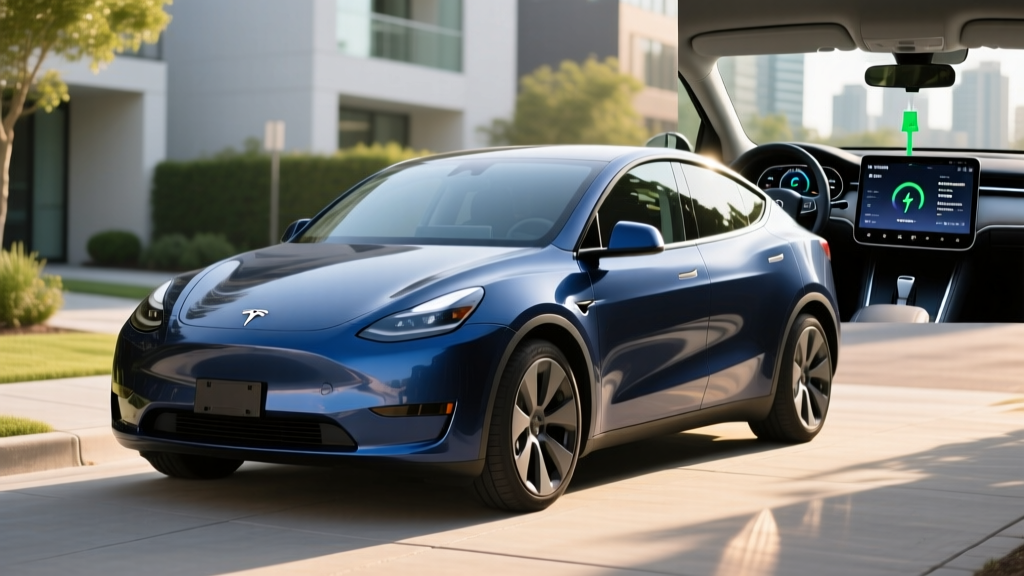
If you're researching the Model Y, you've probably typed some version of "how much does it cost to charge a Tesla" into a search engine. The answer depends entirely on where and how you charge. A full charge at home on a residential rate can cost under $12, while the same energy at a peak-rate Supercharger can run $30 or more. Below, we map every charging scenario with real 2026 data, then put the Model Y's range, performance, and ownership profile under the microscope.
Full Spec Sheet: 2026 Tesla Model Y at a Glance
| Spec | Long Range AWD | Performance (if available) |
|---|---|---|
| EPA Range | 320 mi | ~295 mi |
| Battery (usable) | ~75 kWh, NMC | ~75 kWh, NMC |
| DC Fast Charge Peak | 250 kW (CCS/NACS) | 250 kW |
| 10–80% DC Time | ~23 min | ~23 min |
| Level 2 (Home/AC) | 11.5 kW / ~37 mi/hr | 11.5 kW / ~37 mi/hr |
| 0–60 mph | 4.8 sec | 3.5 sec |
| Horsepower | 384 hp (dual motor) | ~456 hp |
| Drivetrain | AWD (dual motor) | AWD (dual motor) |
| Efficiency | 122 MPGe / 28 kWh/100mi | ~115 MPGe |
| Cargo (rear seats up) | 30.2 cu ft | 30.2 cu ft |
| Cargo (seats folded) | 72.1 cu ft | 72.1 cu ft |
| Base MSRP | $44,990 | ~$52,490 |
| Battery Warranty | 8 yr / 120,000 mi | 8 yr / 120,000 mi |
Source: fueleconomy.gov and Tesla's official specifications page. Specs reflect 2026 model year and are subject to change.
How Much Does It Cost to Charge a Tesla Model Y? Every Scenario
To answer this precisely, we need to separate kW (power — the rate electricity flows) from kWh (energy — the total amount stored in the battery). The Model Y Long Range holds roughly 75 kWh of usable battery energy. Here's what filling that battery costs across common scenarios, using a 0–100% charge as the baseline:
| Charging Scenario | Rate (per kWh) | Full Charge Cost | Cost Per Mile |
|---|---|---|---|
| Home — National Avg ($0.16/kWh) | $0.16 | $12.00 | $0.038 |
| Home — Off-Peak TOU Rate | $0.08–$0.10 | $6.00–$7.50 | $0.019–$0.024 |
| Home — High-Cost State (CA, ~$0.30/kWh) | $0.30 | $22.50 | $0.070 |
| Tesla Supercharger (Avg ~$0.35/kWh) | $0.35 | $26.25 | $0.082 |
| Supercharger Peak Urban (~$0.48/kWh) | $0.48 | $36.00 | $0.113 |
| Third-Party DC (EA, EVgo, ~$0.40/kWh) | $0.40 | $30.00 | $0.094 |
| Free Destination / Workplace Charging | $0.00 | $0.00 | $0.000 |
The gas comparison: A comparable AWD gas crossover averaging 26 MPG combined at $3.40/gallon costs about $0.13 per mile. Even at the highest Supercharger rates, the Model Y competes on a per-mile basis — and home charging slashes that cost to roughly one-quarter of gasoline.
Key insight most guides miss: The Model Y's charge curve tapers significantly above 80% state of charge (SoC). Tesla's 250 kW peak rate holds roughly from 10–45% SoC, then steps down. If you're road-tripping, plan stops from 10% to 80% to avoid the slow taper zone. Charging from 80–100% at a Supercharger can take as long as the 10–80% session itself.
Real-World Range: What the EPA Sticker Doesn't Tell You
EPA Estimated: 320 miles
Real-World Highway (70–80 mph): ~260–285 miles
Real-World City/Mixed: ~290–310 miles
Cold Weather (below 32°F, highway): ~210–245 miles (25–35% reduction)
Towing (3,500 lb trailer, flat terrain): ~170–200 miles
The EPA test cycle includes low-speed city driving and moderate highway speeds with climate control in a mild temperature. In practice, sustained 75–80 mph highway driving pushes aerodynamic drag higher, reducing efficiency by roughly 12–18%. The Model Y's heat pump (standard on 2026 models) helps mitigate cold-weather cabin heating losses compared to resistive heaters, but battery chemistry itself loses efficiency below freezing — expect a meaningful range hit in northern winters.
Tesla's navigation system accounts for elevation, temperature, and driving style when predicting arrival SoC, which is one of the more accurate range-estimation systems in the industry. Trust the car's projected arrival percentage over the dashboard range gauge, which simply multiplies recent efficiency by remaining kWh.
Charging Speed Deep Dive: Home, Supercharger, and CCS Networks
| Level | Power (kW) | Miles Added Per Hour | Best For |
|---|---|---|---|
| Level 1 (120V outlet) | ~1.4 kW | ~4 mi/hr | Emergency top-ups, PHEVs |
| Level 2 (240V, 48A) | 11.5 kW | ~37 mi/hr | Daily home charging |
| Level 2 (240V, 32A) | 7.7 kW | ~25 mi/hr | Lower-cost home install |
| DC Fast (Tesla Supercharger V3/V4) | Up to 250 kW | ~180 mi in 15 min | Road trips |
| DC Fast (CCS stations via adapter) | Up to 250 kW | Varies by station | Non-Tesla network access |
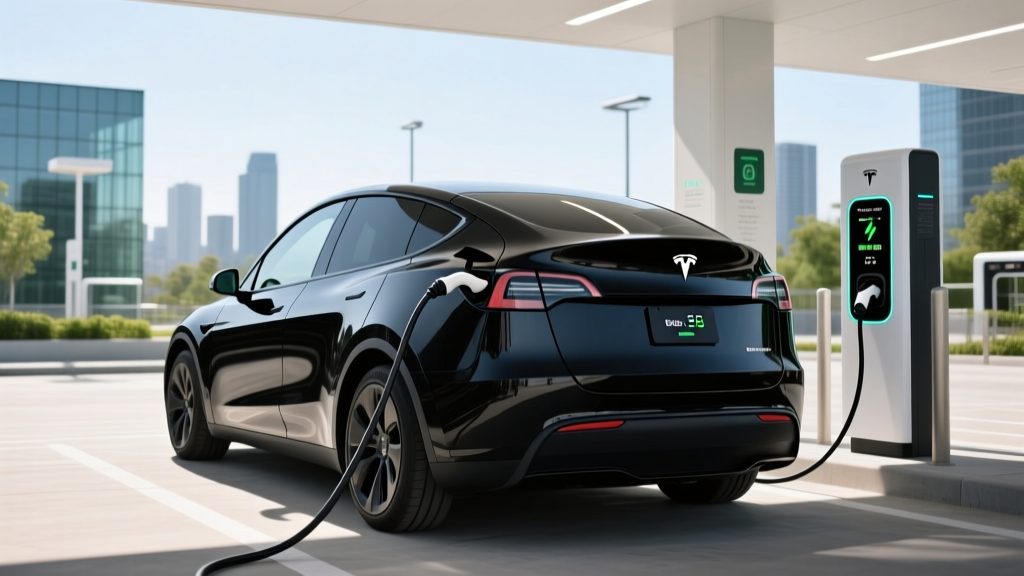
The 2026 Model Y uses the NACS (North American Charging Standard) connector natively. Tesla's Supercharger network — now the largest and most reliable DC fast-charging network in North America — remains the primary road-trip backbone. With Tesla opening Superchargers to non-Tesla EVs via the NACS standard, congestion at popular corridors has increased slightly, but Tesla owners still benefit from seamless plug-and-charge integration with no app or RFID card needed.
Home charging setup: Most Model Y owners install a Tesla Wall Connector on a 240V/60A circuit, delivering the car's maximum 11.5 kW AC acceptance rate. A full overnight charge (say, 20% to 90%) takes roughly 5–6 hours — more than adequate for daily use. Installation costs vary widely: expect $500–$1,500 if your electrical panel has capacity, or $2,000–$4,000+ if a panel upgrade (to 200A service) is needed. Always get a quote from a licensed electrician before committing.
Preconditioning matters: When you navigate to a Supercharger in the Model Y, the car automatically warms the battery to optimal charging temperature. Skipping this (for example, by driving to a charger without entering it in navigation) can reduce peak charge rates by 30–50% in cold weather. Always route through the car's nav for DC fast stops.
Pricing, Trims, and Federal Tax Credit Eligibility
The 2026 Model Y lineup has simplified compared to prior years. Here's the pricing landscape:
| Trim | MSRP | Est. After §30D Credit | §30D Eligible? |
|---|---|---|---|
| Long Range AWD | $44,990 | ~$37,490* | Likely (verify sourcing) |
| Performance AWD | ~$52,490 | ~$44,990* | Likely (verify sourcing) |
*Assumes full $7,500 §30D credit and buyer eligibility. Point-of-sale transfer available at participating dealers.
- MSRP Cap: SUVs/crossovers must be ≤ $80,000 (Model Y qualifies)
- Buyer Income Cap: AGI ≤ $150,000 (single), $225,000 (head of household), $300,000 (joint)
- Battery Sourcing: Critical minerals and battery components must meet escalating domestic/free-trade-partner thresholds (check IRS.gov for current-year requirements)
- Assembly: Final assembly must occur in North America (Model Y assembled in Fremont, CA and Austin, TX — qualifies)
- Transfer Option: Eligible buyers can transfer the credit to the dealer for a point-of-sale price reduction
Critical caveat: Battery component and critical-mineral sourcing requirements tighten each year. Tesla's supply chain has generally met thresholds, but eligibility can shift. Always verify your specific vehicle's VIN on fueleconomy.gov before purchase and consult a tax professional.
Performance, Interior, and Daily Livability
The Model Y Long Range AWD's dual-motor setup produces 384 hp and rockets to 60 mph in 4.8 seconds — brisk by any crossover standard. The instant torque delivery makes merging and passing effortless, and the low center of gravity (battery pack under the floor) keeps body roll controlled on twisty roads. Ride quality on the 2026 model has improved over earlier years, with revised damper tuning that absorbs sharp impacts more gracefully, though it still leans firm compared to a Hyundai Ioniq 5 or Ford Mustang Mach-E.
Interior space: The Model Y offers 30.2 cu ft of cargo space behind the second row and 72.1 cu ft with seats folded — competitive with mid-size gas crossovers. Rear legroom measures 41.6 inches, adequate for adults on longer trips. The front trunk (frunk) adds 4.1 cu ft for charging cables or a small bag.
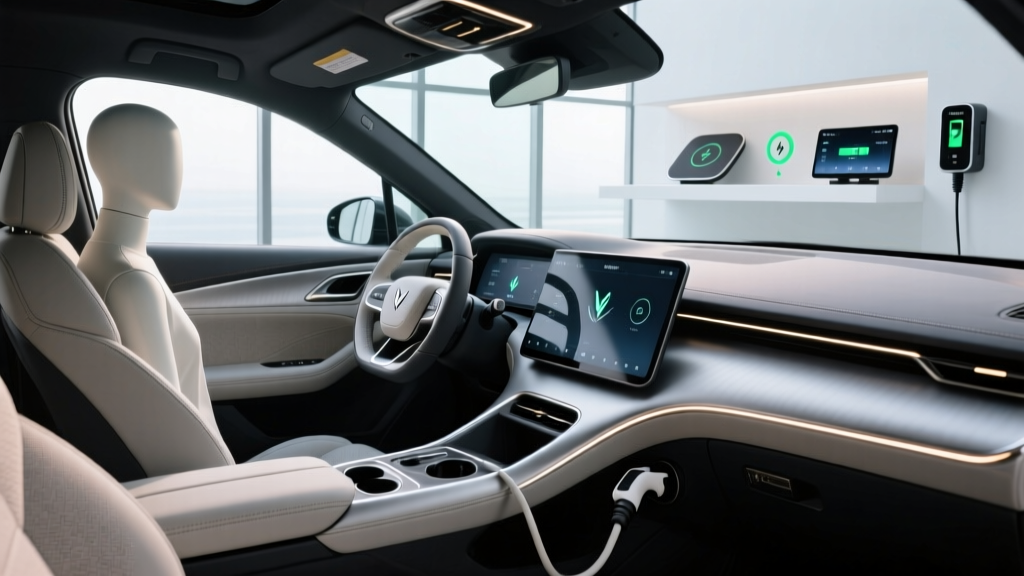
Tech and driver assistance: The 15.4-inch center touchscreen handles all vehicle controls, navigation, media, and vehicle settings. Tesla's infotainment remains one of the most responsive in the industry, with native streaming apps, a solid navigation system with real-time Supercharger routing, and over-the-air updates that regularly add features.
Tesla Autopilot and Full Self-Driving (Supervised) are SAE Level 2 driver-assistance systems. The driver must remain fully engaged, hands on or near the wheel, and eyes on the road at all times. These systems do NOT make the Model Y a self-driving vehicle. Only Level 4 robotaxi services (Waymo, Zoox) operate without a human driver. Misuse of Level 2 systems has contributed to NHTSA-investigated crashes.
Standard Autopilot includes Traffic-Aware Cruise Control and Autosteer (lane centering). FSD (Supervised), available as a $8,000 option or $99/month subscription, adds automatic lane changes, Navigate on Autopilot (highway on/off-ramp handling), and traffic-light/stop-sign recognition. While impressive on well-marked highways, FSD can struggle with construction zones, faded lane markings, and unprotected left turns. Treat it as a workload-reducer, not a replacement for attention.
Warranty, Battery Longevity, and Ownership Costs
Tesla covers the Model Y's battery and drive units for 8 years or 120,000 miles (whichever comes first), with a minimum 70% capacity retention threshold. The limited vehicle warranty is 4 years / 50,000 miles. This is competitive with other premium EV makers, though some competitors (Hyundai/Kia) offer longer 10-year/100,000-mile battery warranties.
Battery degradation in practice: Tesla's NMC battery chemistry in the Long Range typically shows ~5–8% capacity loss over the first 50,000 miles, then stabilizes. Data from high-mileage Model Y owners suggests 85–92% state of health (SoH) at 100,000 miles is common. To maximize longevity, Tesla recommends daily charging to 80–90% for NMC batteries and reserving 100% charges for road trips.
Insurance: Model Y insurance premiums tend to run 15–30% higher than comparable gas crossovers, reflecting higher repair costs and parts pricing. Expect $1,800–$2,800/year depending on your state, age, and driving record. Always get quotes before purchasing.
Maintenance savings: No oil changes, no spark plugs, no transmission fluid. Brake pad life is extended significantly by regenerative braking — many owners report original pads at 80,000+ miles. Cabin air filter replacement ($50–$100 every 2 years) and tire rotation are the primary recurring costs.
Pros, Cons, and Who Should Buy the Model Y
✓ Pros
- Access to the Supercharger network — the most reliable DC fast-charging ecosystem in North America
- Class-leading efficiency (122 MPGe) translates to lower per-mile charging cost
- Strong real-world range (320 mi EPA) covers most daily and road-trip needs
- Spacious cargo area (72.1 cu ft) and practical frunk
- Excellent OTA updates continuously improve the vehicle
- Point-of-sale tax credit can reduce effective price to ~$37,490
✗ Cons
- Firm ride quality compared to rivals like Ioniq 5 or Mach-E
- No physical buttons or stalks — all controls via touchscreen (wipers, glovebox, mirrors)
- FSD (Supervised) remains Level 2 — not self-driving despite the name
- Insurance premiums above segment average
- Rear visibility limited by sloping roofline; no rear wiper
- Build quality has improved but panel-gap consistency still trails legacy luxury brands
Who Should Buy the 2026 Model Y?
Best for: Daily commuters with home charging access, families needing cargo flexibility, and frequent road-trippers who value Supercharger network reliability. The 320-mile range and 23-minute DC fast-charge sessions make this one of the most practical EVs for mixed-use ownership.
Consider alternatives if: You prioritize ride comfort and cabin quietness (test-drive the Ioniq 5 or BMW iX), you need a third row (Kia EV9), or you want physical controls and traditional luxury materials.
Frequently Asked Questions
How much does it cost to charge a Tesla Model Y at home per month?
Assuming 1,000 miles driven per month and a national average electricity rate of $0.16/kWh, expect roughly $38–$45 per month in home charging costs. On an off-peak time-of-use rate ($0.08–$0.10/kWh), that drops to $19–$24. Compare this to ~$131/month in gasoline for a 26 MPG crossover at $3.40/gallon.
Is Supercharging bad for the Model Y's battery?
Occasional DC fast charging has minimal impact on long-term battery health. However, exclusively using DC fast charging (and frequently charging to 100%) can accelerate degradation slightly. Tesla's battery management system actively manages thermal conditions during Supercharging to mitigate wear. For daily use, Level 2 home charging to 80–90% is the longevity-friendly approach.
Does the 2026 Model Y qualify for the full $7,500 federal tax credit?
The Model Y is assembled in North America and falls under the $80,000 SUV MSRP cap, which are two key requirements. However, full eligibility depends on the buyer's income (AGI caps apply), the battery's critical-mineral and component sourcing meeting 2026 thresholds, and the vehicle's specific VIN. Verify on fueleconomy.gov and consult a tax professional before relying on the credit.
Can I charge a Tesla Model Y at non-Tesla charging stations?
Yes. The 2026 Model Y uses the NACS connector natively. Tesla's Supercharger network is now open to many non-Tesla EVs, and the broader industry has shifted toward NACS as the standard. For CCS-equipped stations, Tesla provides a CCS adapter. CHAdeMO stations are largely legacy and require a separate adapter with slower speeds.
How does the Model Y compare to the Ford Mustang Mach-E and Hyundai Ioniq 5?
The Model Y wins on Supercharger network access and efficiency (122 MPGe vs. ~110 MPGe for the Mach-E Extended Range). The Ioniq 5 charges faster on paper (800V architecture, 10–80% in ~18 minutes at 350 kW stations) but relies on third-party networks. The Mach-E offers a more traditional driving feel with physical controls. All three are strong choices — the decision often comes down to charging network preference and interior ergonomics.
What is the real-world range of the Model Y on a road trip?
On a 75 mph highway drive in moderate temperatures (60–80°F), expect 260–285 miles from a full charge. In winter conditions below freezing, that drops to 210–245 miles. Plan Supercharger stops every 200–230 miles in winter for a comfortable buffer. Tesla's trip planner in navigation is generally accurate for arrival SoC predictions.