Quick Verdict: Is the Model Y Still the Default EV?
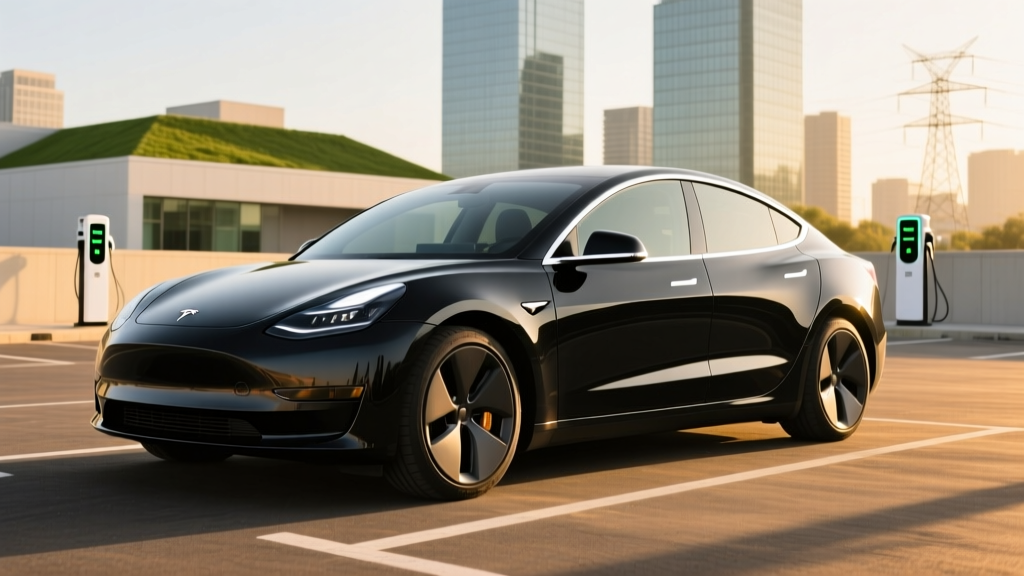
The 2026 Tesla Model Y Long Range AWD remains the benchmark midsize electric SUV — not because it's perfect, but because its efficiency, Supercharger network access, and cargo practicality are still hard to beat. For buyers researching Tesla charge cost, the Model Y's class-leading efficiency (roughly 27 kWh/100 mi combined) means you'll spend less per mile than almost any competitor, whether charging at home on Level 2 or on the road via DC fast charging. Below, we break down every number that matters: range, charging speed, real-world cost, and ownership economics.
Real-World Range Reality Check
EPA Estimated: 320 miles (Long Range AWD, 19" wheels)
Real-World Expectation: 270–290 mi on the highway at 70 mph; 230–250 mi in sub-30°F winter conditions. City driving with regen can approach or exceed the EPA sticker. The 20" wheel option drops EPA range to ~300 mi.
Spec Table: 2026 Tesla Model Y at a Glance
| Spec | Long Range AWD | Performance |
|---|---|---|
| EPA Range | 320 mi | 290 mi |
| Battery (usable) | ~78 kWh, NMC | ~78 kWh, NMC |
| Drivetrain | Dual-Motor AWD | Dual-Motor AWD |
| Horsepower | 384 hp | 456 hp |
| 0–60 mph | 4.8 sec | 3.5 sec |
| Peak DC Fast Charge | 250 kW | 250 kW |
| 10–80% DCFC Time | ~25 min | ~25 min |
| Level 2 Rate | 11.5 kW (44 mi/hr) | 11.5 kW (44 mi/hr) |
| MPGe (combined) | 122 MPGe | 111 MPGe |
| Efficiency | 27 kWh/100 mi | 30 kWh/100 mi |
| Cargo (rear up/down) | 30 / 72 cu ft | 30 / 72 cu ft |
| Rear Legroom | 41.6 in | 41.6 in |
| Battery Warranty | 8 yr / 120,000 mi | 8 yr / 120,000 mi |
| Base MSRP | $44,990 | $52,490 |
Sources: EPA fueleconomy.gov, Tesla spec sheets.
Tesla Charge Cost: Home, Public, and Per-Mile Economics
The phrase "Tesla charge cost" covers three distinct scenarios, and the differences are massive:
| Charging Scenario | Rate | Cost per Full Charge (0–100%) | Cost per Mile |
|---|---|---|---|
| Home Level 2 (US avg $0.16/kWh) | 11.5 kW | ~$12.50 | ~$0.04 |
| Home Level 2 (California $0.30/kWh) | 11.5 kW | ~$23.40 | ~$0.07 |
| Tesla Supercharger V3 (avg $0.35/kWh) | Up to 250 kW | ~$27.30 | ~$0.09 |
| Non-Tesla DCFC (avg $0.48/kWh) | Up to 150–350 kW | ~$37.40 | ~$0.12 |
| Gasoline SUV (25 MPG, $3.40/gal) | — | — | ~$0.14 |
Key insight: Home charging is where the Model Y's economics shine. At the US average electricity rate, a full 78 kWh charge costs roughly $12.50 — about one-third the fuel cost of a comparable gas SUV. Even on Tesla Superchargers, you're paying less per mile than gasoline. The charge curve matters on road trips: the Model Y peaks at 250 kW but tapers significantly above 60% SoC, so 10–80% takes ~25 minutes while 80–100% can add another 20+ minutes. Plan your stops to 80% to minimize time at the charger.
Charging Speed Deep Dive: DC Fast and Level 2
The Model Y's 250 kW peak DC fast-charge rate is no longer class-leading — competitors like the Hyundai Ioniq 5 (peak 350 kW on 800V architecture) charge faster in ideal conditions. But Tesla's advantage is consistency: the Supercharger network delivers reliable, plug-and-charge sessions with minimal downtime, and the battery's thermal preconditioning (triggered when you navigate to a Supercharger) helps sustain higher rates in cold weather.
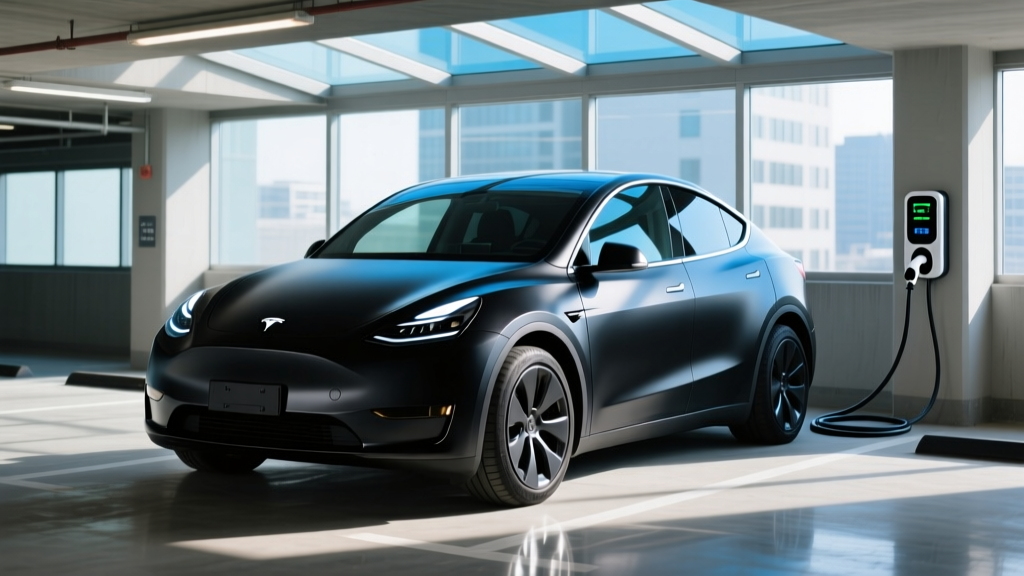
Level 2 home charging at 11.5 kW (48A) adds roughly 44 miles of range per hour. A full overnight charge from 20% to 100% takes about 7 hours on a Tesla Wall Connector or equivalent 48A unit. If your home electrical panel supports a 60A circuit, installation typically runs $800–$2,000 including the Wall Connector ($475) and electrician labor. Homes needing a panel upgrade (100A to 200A service) can see costs jump to $3,000–$5,000+.
Performance, Tech, and Daily Livability
The Long Range AWD's 4.8-second 0–60 time is brisk for a family SUV, and the dual-motor setup provides confident all-weather traction. The Performance trim shaves that to 3.5 seconds but sacrifices 30 miles of EPA range and a noticeably firmer ride.
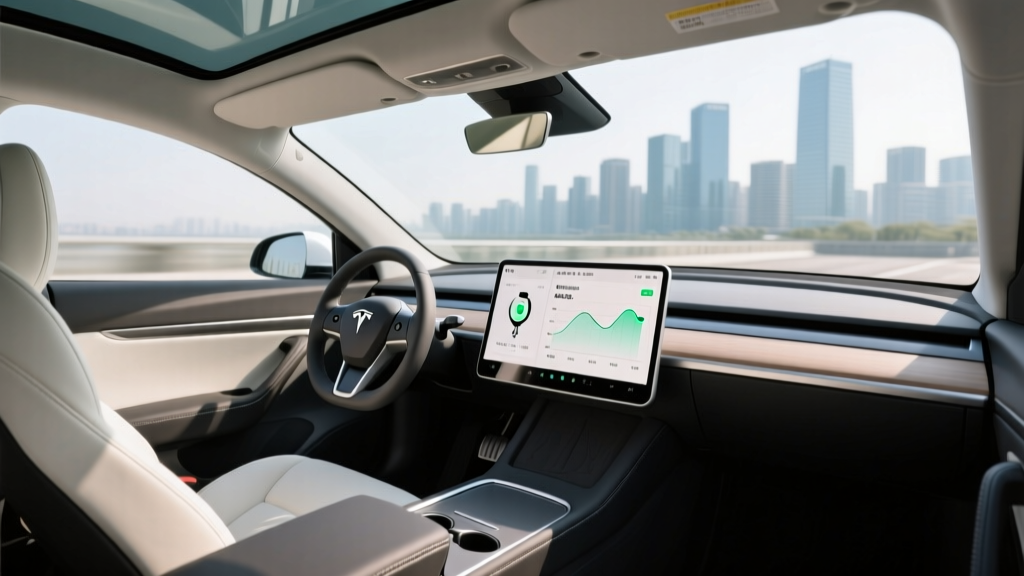
Interior and cargo: The refreshed Model Y interior uses premium vegan leather, a 15.4" center touchscreen, and a minimalist layout. Cargo volume (30 cu ft behind the second row, 72 cu ft folded) beats most competitors, including the Ford Mustang Mach-E (29.7 / 59.7 cu ft). Rear legroom at 41.6 inches is generous for adults. The front trunk (frunk) adds 4.1 cu ft for cables and small bags.
Tech highlights:
- 15.4" touchscreen with integrated navigation, streaming, and Tesla app ecosystem
- Over-the-air updates that add features post-purchase
- Autopilot standard (SAE Level 2 driver assist — requires active supervision)
- Full Self-Driving (Supervised) available as a $8,000 add-on or $99/month subscription — still Level 2, not autonomous
- Sentry Mode, Dog Mode, and Camp Mode for unique utility
Pricing, Tax Credit, and Total Cost
| Trim | Base MSRP | Est. After §30D Credit* | Destination |
|---|---|---|---|
| Long Range AWD | $44,990 | ~$37,490 | $1,390 |
| Performance | $52,490 | ~$44,990 | $1,390 |
*Assumes full $7,500 federal credit eligibility. Actual credit depends on buyer income, battery sourcing, and MSRP caps under IRS §30D rules. Point-of-sale transfer available at participating dealers.
- MSRP Cap: SUVs must be under $80,000 — Model Y qualifies on all trims
- Income Cap: AGI ≤ $150K single / $225K head of household / $300K joint
- Battery Sourcing: Critical minerals and battery component requirements tighten annually; verify current-year compliance on IRS.gov before purchase
- Point-of-Sale: You can transfer the credit to the dealer for an immediate price reduction at purchase
Model Y vs. Key Competitors
| Spec | Tesla Model Y LR AWD | Hyundai Ioniq 5 Limited AWD | Ford Mustang Mach-E Premium AWD |
|---|---|---|---|
| EPA Range | 320 mi | 290 mi | 300 mi |
| Peak DCFC | 250 kW | 350 kW (800V) | 150 kW |
| 10–80% Time | ~25 min | ~18 min | ~38 min |
| 0–60 mph | 4.8 sec | 5.1 sec | 5.1 sec |
| Cargo (rear up) | 30 cu ft | 27.2 cu ft | 29.7 cu ft |
| Base MSRP (AWD) | $44,990 | $52,600 | $45,995 |
| Charging Network | Supercharger (native) | NACS (adapter or native) | NACS (adapter or native) |
The Ioniq 5 charges faster on paper thanks to its 800V architecture, but real-world DCFC availability at 350 kW stations is limited. The Mach-E trails on charging speed. The Model Y's Supercharger advantage has narrowed now that competitors have NACS access, but Tesla's network reliability and station density remain strong.
Pros
- Best-in-class efficiency (27 kWh/100 mi)
- Lowest per-mile charge cost in segment
- Supercharger network reliability
- Spacious cargo area (72 cu ft max)
- Strong OTA update track record
- Eligible for full $7,500 §30D credit (verify sourcing)
Cons
- No physical buttons — all controls via touchscreen
- FSD (Supervised) is expensive and still Level 2
- Ride quality on Performance trim is firm
- 250 kW peak DCFC trails 800V competitors
- Insurance costs above segment average
- Rear visibility limited without camera mirror
Warranty and Long-Term Battery Outlook
Tesla covers the Model Y's battery and drive units for 8 years or 120,000 miles (whichever comes first), with a capacity retention threshold of 70%. The limited vehicle warranty is 4 years / 50,000 miles. Real-world degradation data from owner communities suggests NMC packs in the Model Y lose roughly 8–12% capacity over the first 100,000 miles, with the steepest drop in the first year. Battery replacement out of warranty is estimated at $12,000–$16,000 — a figure to consider if you plan to keep the vehicle beyond the warranty period.
Who Should Buy the 2026 Model Y?
Choose the Model Y if: You want the lowest Tesla charge cost per mile, need maximum cargo space in a midsize EV SUV, rely on road-trip charging infrastructure, and prefer a single-screen tech-forward cabin.
Look elsewhere if: You want the fastest possible DC charging (Ioniq 5), prefer physical buttons and a traditional cockpit (Mach-E, EV6), or need third-row seating (Kia EV9).
Frequently Asked Questions
What is the real-world range of the Tesla Model Y?
The EPA rates the Long Range AWD at 320 miles. In real-world highway driving at 70 mph, expect 270–290 miles. In cold weather (below 30°F), range can drop to 230–250 miles due to battery resistance and cabin heating demands. City driving with regenerative braking can match or exceed the EPA figure.
How fast does the Model Y charge?
On a DC fast charger, the Model Y peaks at 250 kW and charges from 10–80% in approximately 25 minutes. At home on a Level 2 (11.5 kW / 48A) charger, it adds about 44 miles of range per hour, fully charging overnight in ~7 hours from 20%. Level 1 (120V) adds roughly 3–4 miles per hour — usable for emergencies only.
How much does it cost to charge a Tesla Model Y?
At the US average home electricity rate ($0.16/kWh), a full charge costs about $12.50 — roughly $0.04 per mile. On Tesla Superchargers (avg $0.35/kWh), a full charge runs ~$27, or $0.09 per mile. Both are significantly cheaper than gasoline at $0.14/mile for a 25 MPG SUV.
Does the Model Y qualify for the federal EV tax credit?
The Model Y qualifies for up to $7,500 under IRS §30D, provided the buyer meets income caps ($150K single / $300K joint), the MSRP is under $80,000 (all trims qualify), and the battery meets current-year critical mineral and component sourcing requirements. Always verify eligibility on IRS.gov before purchasing. The credit can be transferred to the dealer at point of sale.
Is the Model Y worth buying over competitors in 2026?
For buyers prioritizing efficiency, lowest charge cost, cargo space, and charging network reliability, the Model Y remains the segment leader. If faster DC charging speed matters most, the Hyundai Ioniq 5 is superior on paper. If you prefer physical controls and a more traditional interior, the Ford Mach-E or Kia EV6 are strong alternatives. The Model Y's dominance is less absolute than in prior years, but its overall package is still compelling.
How long will the Model Y battery last?
Tesla warranties the battery for 8 years / 120,000 miles at 70% capacity retention. Owner-reported data shows typical NMC degradation of 8–12% over 100,000 miles. Many Model Y batteries are projected to last 200,000+ miles before reaching 70% capacity. Out-of-warranty replacement is estimated at $12,000–$16,000.