The Back of the Tesla Model Y: What You're Actually Getting
Search for "back of Tesla" and you'll find thousands of photos of the Model Y's cargo area, tailgate, and rear seats. That's no accident — the rear of Tesla's best-selling vehicle is where ownership reality sets in. Can it fit a family's road-trip gear? Does the sloping roofline eat into cargo height? And once you've loaded up, how far can you actually drive before the next Supercharger stop?
The 2026 Tesla Model Y (refreshed for the 2025 model year with the "Juniper" update and carried forward) remains the benchmark compact electric SUV. But benchmarks earn their title through specifics, not hype. Let's walk through exact numbers on range, charging, cargo dimensions, and ownership economics — the data that actually determines whether this EV fits your life.
2026 Tesla Model Y Spec Sheet at a Glance
| Spec | Long Range AWD | Performance AWD |
|---|---|---|
| EPA Range | 320 miles | 293 miles |
| Battery (usable) | ~75 kWh (NMC) | ~75 kWh (NMC) |
| Drivetrain | Dual-Motor AWD | Dual-Motor AWD |
| Horsepower | 384 hp | 456 hp |
| 0–60 mph | 4.8 sec | 3.5 sec |
| Max DC Fast Charge | 250 kW | 250 kW |
| 10–80% DC Time | ~27 min | ~27 min |
| Level 2 Home Charge | 11.5 kW (~44 mi/hr) | 11.5 kW (~44 mi/hr) |
| MPGe (combined) | 111 MPGe | 102 MPGe |
| Efficiency | 30 kWh/100 mi | 33 kWh/100 mi |
| Base MSRP | $46,630 | $52,130 |
| Battery Warranty | 8 yr / 120,000 mi | 8 yr / 120,000 mi |
All figures reflect the current 2026 model year as listed on Tesla's configurator and fueleconomy.gov. Tesla occasionally adjusts specs mid-year; verify at purchase.
Real-World Range vs. the EPA Sticker
Real-World Expectation: ~260–290 mi highway at 70 mph; ~220–250 mi in freezing temps (below 30°F)
The EPA's 320-mile estimate for the Long Range AWD is generous by modern standards, but real-world highway driving tells a different story. At sustained 70–75 mph speeds, aerodynamic drag pushes consumption to roughly 33–35 kWh/100 mi, dropping effective range to approximately 260–290 miles depending on wind, elevation, and tire choice.
Cold weather compounds the loss. Lithium-ion NMC chemistry suffers reduced efficiency below freezing, and cabin heating draws heavily from the pack. Expect a 20–30% range reduction in sustained sub-30°F conditions — the Model Y's heat pump (standard on Juniper and later builds) mitigates this compared to older resistive-heater EVs, but physics still wins. Plan for roughly 220–250 miles in deep winter before needing a charge.
City driving with frequent regenerative braking opportunities pushes efficiency closer to the EPA figure, and mild-weather commuters regularly report 300+ miles between charges. Your mileage, literally, will vary — but knowing the floor matters more than chasing the ceiling.
Charging Speed: DC Fast, Home, and the Curve Reality
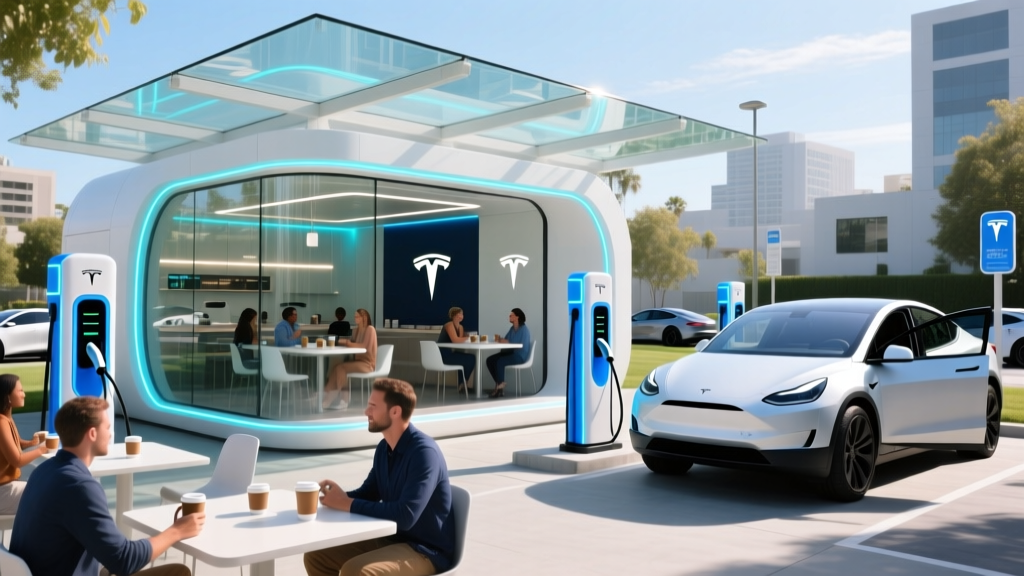
The Model Y supports Tesla's V3 and V4 Superchargers at a peak rate of 250 kW (DC fast charging). That peak is not sustained across the full session — here's what the charge curve actually looks like:
| Charging Level | Max Power (kW) | Speed | Notes |
|---|---|---|---|
| Level 1 (120V) | ~1.4 kW | ~5 mi/hr | Emergency/trickle only |
| Level 2 (240V, 48A) | 11.5 kW | ~44 mi/hr | Full charge in ~7.5 hrs |
| DC Fast (Supercharger V3/V4) | 250 kW (peak) | 10–80% in ~27 min | Tapers sharply above 80% |
The 10–80% time of roughly 27 minutes assumes battery preconditioning — the car's thermal management system warms the pack when you navigate to a Supercharger. Without preconditioning (say, plugging into a non-Tesla DC charger via adapter on a cold morning), that peak rate may not arrive for several minutes, extending your stop.
Above 80% state of charge, the curve tapers aggressively to protect battery longevity. Charging from 80–100% can take nearly as long as 10–80%. For road trips, the optimal strategy is to charge to 80% and drive on — you'll reach the next Supercharger faster than if you'd waited for a full pack.
Home Level 2 charging at 11.5 kW (48 amps on a 60-amp circuit) adds approximately 44 miles of range per hour. A full overnight session from 20% to 100% takes about 7–8 hours. Installation of a Tesla Wall Connector or equivalent NACS-compatible Level 2 unit typically runs $500–$1,500 for equipment plus $800–$2,500 for electrician labor, depending on panel proximity and whether a 200-amp service upgrade is needed.
Inside the Back of the Tesla: Cargo, Seats, and Dimensions
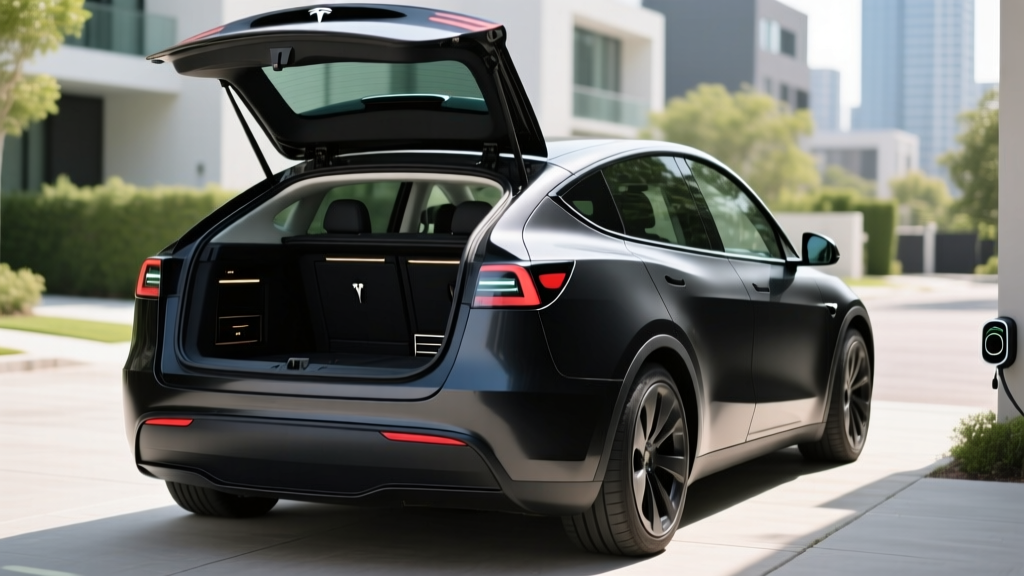
This is where the "back of Tesla" search intent lives — and the Model Y delivers class-leading utility for its footprint:
- Cargo behind 2nd row: 30.2 cu ft (rear seats up)
- Cargo with 2nd row folded: 72.1 cu ft
- Front trunk (frunk): 4.1 cu ft — fits a charging cable bag and a small duffel
- Rear legroom: 40.5 inches
- Rear headroom: 39.4 inches
- Rear shoulder room: 54.0 inches
The Juniper refresh flattened the load floor and squared off the cargo opening compared to pre-2025 models, making it easier to slide in bulky items like a full-size stroller or two large suitcases side by side. The 60/40 split-folding rear seats create a nearly flat surface when dropped — a genuine advantage over competitors with pronounced seat-back humps.
Headroom is the compromise of the coupe-like roofline. Passengers over 6'2" will notice the descending glass in the rear, though the panoramic glass roof (now with improved UV coating on 2025+ builds) creates a sense of openness that offsets the physical measurement. For families with children in car seats, the rear door openings are wide and the LATCH anchors are easily accessible.
Pricing, Trims, and Federal Tax Credit Eligibility
| Trim | Base MSRP | As-Tested (typical options) | Potential §30D Credit |
|---|---|---|---|
| Long Range AWD | $46,630 | $49,630 (w/ paint + wheels) | Up to $7,500* |
| Performance AWD | $52,130 | $55,130 (w/ paint + FSD) | Up to $7,500* |
*Federal tax credit eligibility under IRS §30D is subject to multiple requirements that change periodically. As of the 2026 tax year, consult irs.gov for current rules.
Key eligibility factors for the §30D new clean vehicle credit:
- MSRP cap: SUVs/vans/pickups must have an MSRP at or below $80,000 — both Model Y trims clear this threshold.
- Buyer income limits: Modified AGI must not exceed $300,000 (married filing jointly), $225,000 (head of household), or $150,000 (single).
- Battery sourcing: A percentage of critical minerals and battery components must be sourced from the U.S. or free-trade-agreement partners. These thresholds increase annually and may affect the credit amount — verify current-year compliance on the IRS qualified vehicle list.
- Point-of-sale transfer: Eligible buyers can transfer the credit to the dealer at purchase, reducing the out-of-pocket price immediately rather than waiting for a tax refund.
With full credit eligibility, the Long Range AWD effectively starts near $39,130 — a price point that competes directly with the Hyundai Ioniq 5, Ford Mustang Mach-E, and Chevrolet Equinox EV. Without the credit (due to income, sourcing, or other disqualifications), the value proposition narrows.
Technology, Driver Assistance, and Notable Drawbacks
The Model Y's 15.4-inch center touchscreen handles virtually every vehicle function — climate, navigation, media, and vehicle settings. The Juniper refresh introduced a secondary 8-inch rear touchscreen for rear-seat passengers, a ventilated front-seat option, and ambient lighting that addresses long-standing complaints about the interior feeling spartan.
Driver assistance: Tesla's Basic Autopilot (traffic-aware cruise control and lane-centering) is standard. Enhanced Autopilot ($6,000) adds automatic lane changes, auto-park, and Summon. Full Self-Driving (Supervised) remains a $8,000 option or $99/month subscription.
Notable drawbacks:
- No physical buttons for climate or volume — everything routes through the touchscreen, which frustrates some drivers during bumpy-road use.
- Panel-gap inconsistency remains a Tesla hallmark, though Juniper builds show measurable improvement over 2022–2024 units.
- The NACS (Tesla) connector is now the industry standard, but non-Tesla Supercharger access for other brands means Tesla owners may encounter more stalls occupied by non-Tesla vehicles at peak travel times.
- Insurance premiums for the Model Y average 15–25% above comparable ICE SUVs, according to industry data — factor this into total cost of ownership.
Who the Model Y Suits Best
- You need 300+ miles of EPA range with access to the most reliable DC fast-charging network (Superchargers).
- Cargo versatility matters — the flat-fold rear seats and 72 cu ft maximum beat most competitors.
- You value over-the-air updates that add features post-purchase.
- You qualify for the §30D tax credit, bringing the effective price below $40K.
- You want physical buttons, a traditional instrument cluster, or Apple CarPlay/Android Auto (none offered).
- You need three rows of seating — consider the Kia EV9 or Tesla Model X.
- Your budget is firm below $35K — the Chevrolet Equinox EV or used Model Y market may serve better.
- You prioritize dealership service infrastructure — Tesla's mobile-ranger and service-center network is growing but still thinner than legacy brands in rural areas.
Pros and Cons
- Class-leading Supercharger network reliability (17,000+ U.S. stalls)
- 320-mile EPA range (Long Range) with 250 kW DC charging
- Spacious 72.1 cu ft max cargo with flat load floor
- Strong efficiency (30 kWh/100 mi) keeps charging costs low
- Over-the-air updates continuously improve the vehicle
- Qualifies for up to $7,500 §30D credit (subject to eligibility)
- No Apple CarPlay or Android Auto integration
- Touchscreen-only controls frustrate some drivers
- Insurance premiums run 15–25% above segment average
- Panel gaps, while improved, still trail luxury competitors
- FSD (Supervised) remains Level 2 despite the "self-driving" name
- Performance trim's 293-mile range trails Long Range by 27 miles
Frequently Asked Questions
What is the real-world range of the Tesla Model Y?
The EPA rates the Long Range AWD at 320 miles and the Performance at 293 miles. In real-world highway driving at 70–75 mph, expect 260–290 miles. In freezing temperatures, plan for 220–250 miles due to battery chemistry limitations and cabin heating demand.
How fast does the Model Y charge?
On a V3 or V4 Supercharger, the Model Y peaks at 250 kW and charges from 10–80% in approximately 27 minutes with battery preconditioning. At home on a Level 2 (240V, 48A) charger, it adds about 44 miles of range per hour, reaching a full charge in roughly 7.5 hours.
How much does the Model Y cost after tax credits?
The Long Range AWD starts at $46,630 MSRP. If you qualify for the full $7,500 §30D federal credit (income, MSRP, and battery-sourcing requirements apply), the effective price drops to approximately $39,130. Eligibility varies — verify on irs.gov and consult a tax professional.
Is the Model Y worth buying vs. the Ioniq 5, Mach-E, or Equinox EV?
The Model Y wins on charging infrastructure access (Superchargers), cargo space (72.1 cu ft max), and efficiency. The Hyundai Ioniq 5 offers faster 800V charging architecture (~18 min 10–80%) and a more button-friendly interior. The Mach-E delivers a sportier driving feel. The Equinox EV undercuts on price. Your priority — infrastructure, interior ergonomics, or budget — determines the winner.
Does the 2026 Model Y qualify for the federal EV tax credit?
Both trims fall under the $80,000 SUV MSRP cap, making them potentially eligible for up to $7,500 under §30D. However, buyer income limits ($150K single / $300K joint), critical-mineral sourcing thresholds, and battery-component requirements all affect final eligibility. The credit can be transferred at point of sale. Always check the IRS qualified vehicles list before purchasing.
What battery chemistry does the Model Y use?
The U.S.-market Model Y Long Range and Performance use NMC (nickel manganese cobalt) chemistry with approximately 75 kWh of usable capacity. NMC offers higher energy density than LFP, which is why it's used in the longer-range variants. Tesla's base RWD model (when available) has used LFP chemistry, which allows routine 100% charging but carries lower energy density.
What is the battery warranty?
Tesla covers the Model Y battery and drive unit for 8 years or 120,000 miles (whichever comes first) with a minimum 70% capacity retention guarantee. This is competitive with the industry standard (Hyundai offers 10yr/100K on the Ioniq 5 battery). Real-world degradation data from Tesla's fleet reports an average of approximately 12% capacity loss at 150,000 miles.