Quick Verdict: The Model Y as a Camper's EV
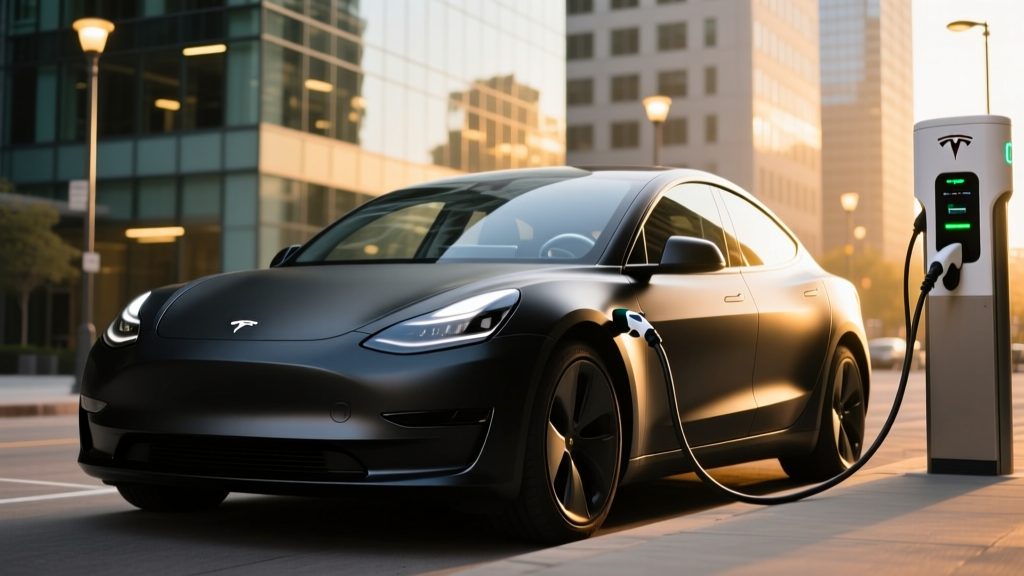
The Tesla Model Y remains one of the most popular electric vehicles for car camping, overlanding, and weekend getaways — and Camp Mode is a big reason why. This software feature transforms the cabin into a climate-controlled shelter, keeping the HVAC system running overnight while you sleep on a mattress in the back. But beyond the camping trick, the 2026 Model Y (now in its refreshed "Juniper" generation) is a seriously capable daily driver with class-leading efficiency, strong DC fast-charging speeds, and access to the Supercharger network.
This review walks you through exactly how to activate Camp Mode, then dives deep into the 2026 Model Y's real-world range, charging performance, pricing after federal tax credits, and how it stacks up against the Hyundai Ioniq 5, Ford Mustang Mach-E, and other rivals.
How to Turn on Camp Mode in a Tesla: Step-by-Step
Camp Mode is available on all Tesla vehicles running recent software versions. Here's how to activate it in the Model Y:
- Ensure the vehicle is in Park. Camp Mode cannot be engaged while driving or in Neutral.
- Tap the fan icon at the bottom of the touchscreen to open the climate controls.
- Tap "Camp" in the upper-right corner of the climate panel (you'll see three options: Keep, Dog, and Camp).
- Camp Mode activates immediately. The HVAC system will maintain your set temperature, the touchscreen stays on (displaying a campfire animation), and USB ports remain powered for charging devices.
- Set your desired temperature before engaging Camp Mode — the system holds whatever temp was last set.
- Expect overnight energy consumption of roughly 10–15% of battery capacity (varies with outside temperature and whether you're using seat heaters).
- Camp Mode disables Sentry Mode and walk-away auto-lock to prevent false alerts while you're inside.
- For cold-weather camping, use seat heaters and the heated steering wheel instead of cranking cabin heat — this significantly reduces overnight kWh draw.
2026 Tesla Model Y: Specs at a Glance
| Spec | Long Range AWD | Performance |
|---|---|---|
| EPA Range | 320 miles | 294 miles |
| Battery (usable) | ~75 kWh (NMC) | ~75 kWh (NMC) |
| Drivetrain | Dual-motor AWD | Dual-motor AWD |
| Horsepower | 384 hp | ~456 hp |
| 0–60 mph | 4.8 sec | 3.5 sec |
| Max DC Fast Charge | 250 kW (peak) | 250 kW (peak) |
| 10–80% DC Charge | ~25 min | ~25 min |
| Level 2 Home Charge | 11.5 kW (~44 mi/hr) | 11.5 kW (~44 mi/hr) |
| MPGe (combined) | 111 MPGe | 102 MPGe |
| Base MSRP | $46,630 | $52,130 |
| Cargo (rear seats up) | 30.2 cu ft | 30.2 cu ft |
| Cargo (rear seats folded) | 72.1 cu ft | 72.1 cu ft |
| Battery Warranty | 8 yr / 120,000 mi | 8 yr / 120,000 mi |
Real-World Range: What the EPA Number Doesn't Tell You
The Juniper-generation Model Y uses a nickel-manganese-cobalt (NMC) battery pack with roughly 75 kWh of usable capacity. Tesla's thermal management system is among the best in the industry — the heat pump (standard on all trims) minimizes range loss in moderate cold compared to older resistive-heater EVs. However, NMC chemistry is more sensitive to extreme cold than LFP (lithium iron phosphate), so if you live in northern climates and primarily take shorter trips, Tesla's LFP-equipped Standard Range models (where available) may offer better long-term calendar-life durability at the cost of lower total range.
For camping specifically, a fully charged Long Range Model Y gives you a comfortable overnight buffer. Running Camp Mode for 8 hours in 40°F weather typically consumes 6–10 kWh, leaving you with roughly 280+ miles of range the next morning — plenty for most weekend trips.
Charging Speed: Supercharger and Home Setup
The Model Y supports a peak DC fast-charge rate of 250 kW on V3 Superchargers. However, as with all EVs, peak rate is not sustained rate. Here's what the charging curve actually looks like:
- 10–30% SoC: Near-peak 240–250 kW (fastest segment)
- 30–60% SoC: Tapers to ~170–200 kW
- 60–80% SoC: Further taper to ~100–130 kW
- 80–100% SoC: Slow trickle, ~30–50 kW (avoid DC fast-charging above 80% on road trips)
The 10–80% charge takes approximately 25 minutes under ideal conditions (battery preconditioned via navigation to a Supercharger). Without preconditioning — for example, pulling into a charger with a cold battery — add 5–10 minutes to that estimate.
For home charging, the Model Y's onboard charger accepts up to 11.5 kW on a 48-amp Level 2 circuit (requires a 60-amp breaker). This delivers roughly 44 miles of range per hour of charging, meaning a full overnight session (8–10 hours) easily replenishes a depleted battery. Tesla's Wall Connector (~$420) is a solid choice, though any J1772/NACS-compatible Level 2 unit works. Note: as of 2025, all new Tesla vehicles ship with the NACS (North American Charging Standard) connector natively, eliminating the need for adapters at most networks.
Pricing, Trims, and Federal Tax Credit Eligibility
| Trim | MSRP | Est. After §30D Credit |
|---|---|---|
| Long Range AWD | $46,630 | ~$39,130* |
| Performance | $52,130 | ~$44,630* |
*Tax credit estimates assume full $7,500 eligibility. Actual credit depends on buyer income, battery sourcing, and MSRP cap compliance. See IRS §30D rules for current requirements.
The federal EV tax credit under IRS §30D offers up to $7,500 for qualifying new EVs, but eligibility is not guaranteed. Key requirements for 2026:
- MSRP cap: SUVs/crossovers must be priced at or below $80,000 (both Model Y trims qualify).
- Buyer income cap: Modified AGI must not exceed $150,000 (single), $225,000 (head of household), or $300,000 (joint).
- Battery sourcing: A percentage of critical minerals and battery components must be sourced from the U.S. or free-trade-agreement countries. Tesla has made significant progress in domestic sourcing, but the exact credit amount ($3,750 vs. $7,500) can shift based on annual sourcing thresholds. Always verify current eligibility at purchase time.
- Point-of-sale transfer: As of 2024, buyers can transfer the credit to the dealer at purchase, reducing the out-of-pocket price immediately rather than waiting for a tax refund.
Interior, Cargo, and Camping Practicality
The Juniper refresh brought a noticeably quieter cabin, ventilated front seats, ambient lighting, and a rear touchscreen for passengers. The Model Y's 72.1 cu ft of cargo space (rear seats folded) is competitive with midsize SUVs and forms a nearly flat load floor — ideal for a foam or inflatable camping mattress.
Key interior dimensions:
- Front legroom: 41.8 inches
- Rear legroom: 37.5 inches
- Cargo behind 2nd row: 30.2 cu ft
- Cargo, seats folded: 72.1 cu ft
- Frunk (front trunk): ~4.1 cu ft — useful for charging cables, a small cooler, or camping gear
For camping, the flat load floor accommodates a full-size foam mattress (roughly 74 × 48 inches fits with the tailgate closed). The panoramic glass roof provides stargazing without opening anything. USB-C ports (up to 65W) in both rows keep phones and laptops charged overnight. The 12V outlet in the frunk area can power a small cooler or fan with an inverter.
Tech, Driver Assistance, and Standout Features
Every Model Y includes Tesla's Basic Autopilot (adaptive cruise control and lane centering). Enhanced Autopilot ($6,000) adds auto lane change, autosteer on city streets, and summon. Full Self-Driving (Supervised) at $8,000 adds traffic light and stop sign recognition, though it remains an SAE Level 2 system — meaning the driver must remain fully attentive and keep hands on the wheel at all times.
Other standout tech features:
- 15.4-inch center touchscreen with Netflix, YouTube, and gaming while parked
- Over-the-air updates that regularly add features and improve efficiency
- Sentry Mode — 360° camera recording when parked (disabled automatically in Camp Mode)
- Tesla Supercharger network — the most reliable and widespread DC fast-charging network in North America, now open to non-Tesla EVs via NACS
- Dashcam and recording built into the vehicle's camera system
Model Y vs. Competitors: Is It Worth Buying?
The Model Y's direct competitors include the Hyundai Ioniq 5, Ford Mustang Mach-E, and Kia EV6. Here's how they compare on the metrics that matter most:
- Range: Model Y Long Range (320 mi) edges out Ioniq 5 Long Range (~305 mi) and Mach-E Extended Range (~312 mi).
- Charging speed: Ioniq 5 and EV6 (800V architecture, peak ~350 kW, 10–80% in ~18 min) charge noticeably faster than the Model Y's 400V system.
- Charging network: Tesla's Supercharger network remains the gold standard for reliability. Non-Tesla EVs can now access Superchargers with a NACS adapter or native NACS port, but the experience is still smoother in a Tesla.
- Cargo/camping: Model Y's 72.1 cu ft cargo area and flat floor give it an edge for camping over the Ioniq 5 and EV6.
- Efficiency: Model Y's 111 MPGe combined is among the best in the segment, translating to lower per-mile electricity costs.
- Price: The Model Y Long Range at ~$46,630 before credits is competitive, though the Mach-E and Ioniq 5 often have more aggressive dealer incentives.
Pros and Cons
Pros
- Class-leading efficiency (111 MPGe)
- Supercharger network access (most reliable DC charging)
- Camp Mode for overnight climate control
- Flat cargo floor ideal for mattress/camping
- Strong real-world range (320 mi EPA)
- OTA updates add features over time
- Excellent thermal management with heat pump
Cons
- DC fast-charge speed (250 kW) trails 800V rivals (350 kW)
- No Apple CarPlay / Android Auto
- FSD (Supervised) expensive and still Level 2
- Rear visibility limited by sloping roofline
- Service center wait times can be long in some regions
- Touchscreen-dependent controls (no physical buttons for climate, mirrors)
Frequently Asked Questions
How much battery does Camp Mode use overnight?
Expect roughly 1–2% of battery per hour in mild weather (50–70°F), scaling up to 2–3% per hour in freezing conditions. An 8-hour night in 35°F weather will consume approximately 8–12 kWh, or about 10–15% of a full charge.
Can I use Camp Mode while plugged in at home?
Yes. If you're plugged into a Level 2 charger, Camp Mode will draw power from the grid once the battery reaches your set charge limit, effectively running the HVAC off shore power. This is ideal for backyard camping or pre-cooling/heating before a trip.
Does the 2026 Model Y qualify for the $7,500 federal tax credit?
It may, depending on your income, the vehicle's battery sourcing compliance at time of purchase, and the MSRP cap (the Model Y is well under the $80,000 SUV limit). Always verify current eligibility on the IRS clean vehicle credit page and consult a tax professional before relying on the credit.
What's the real-world range of the Model Y Long Range?
The EPA rates it at 320 miles. In real-world highway driving at 70+ mph, expect 260–285 miles. In cold weather, plan for 220–250 miles. For road-trip planning, budgeting 250 miles between Supercharger stops is a safe approach.
Is the Model Y good for towing?
The Model Y has a 3,500-pound towing capacity, adequate for a small utility trailer, bike rack, or light camper. However, towing cuts range roughly in half — expect 150–180 miles between charges when towing near max capacity.
Who is the Model Y best for?
The Model Y is ideal for daily commuters who want low running costs, small families needing versatile cargo space, and weekend adventurers who value Camp Mode and Supercharger access for road trips. If you prioritize the absolute fastest DC charging or want Apple CarPlay, the Hyundai Ioniq 5 or Kia EV6 may be a better fit.