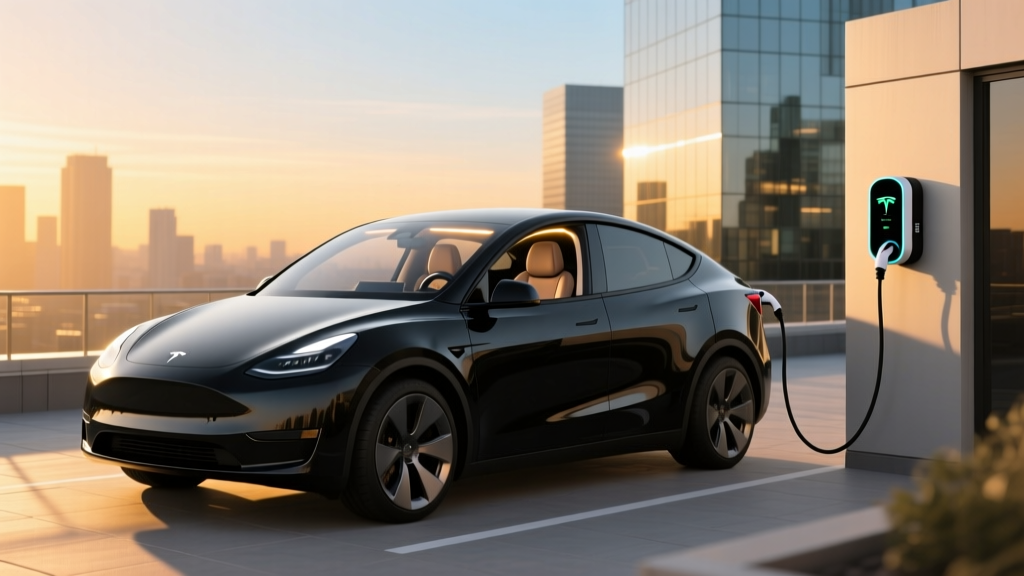
The phrase "Tesla brand value negative" has been circulating in automotive forums and industry analyses throughout 2025 and into 2026. The premise: that association with the Tesla brand — and specifically its CEO — has begun to actively subtract from the vehicle's desirability and resale value, rather than adding to it. For buyers, this creates an unusual calculus. The 2026 Tesla Model Y (the refreshed "Juniper" generation) remains one of the most technically capable electric SUVs on the market, but does the brand baggage change the ownership equation?
We've spent significant time with the 2026 Model Y Long Range AWD to answer that question with data, not sentiment. Below, you'll find exact range figures, charging speeds, pricing after federal tax credits, and a clear-eyed comparison against the competitors gaining ground while Tesla's reputation polarizes.
2026 Tesla Model Y Long Range: Core Specifications
| Specification | Value |
|---|---|
| EPA Estimated Range | 320 miles |
| Battery Capacity | 78.4 kWh usable (NMC chemistry) |
| Drivetrain | Dual-motor AWD |
| Horsepower | 384 hp (combined) |
| 0–60 mph | 4.8 seconds |
| Peak DC Fast Charge | 250 kW |
| 10–80% DC Charge Time | ~27 minutes |
| Level 2 Home Charge Rate | 11.5 kW (~44 mi/hr) |
| Efficiency | 122 MPGe combined / 27 kWh/100 mi |
| Cargo Volume (rear seats up) | 30.2 cu ft |
| Cargo Volume (rear seats folded) | 72.1 cu ft |
| Rear Legroom | 41.6 inches |
| Base MSRP | $46,630 (incl. destination) |
| As-Tested (w/ FSD, wheels) | $58,130 |
| Battery Warranty | 8 years / 120,000 miles (70% capacity retention) |
Real-World Range: What the EPA Sticker Doesn't Tell You
EPA Estimate: 320 miles
Real-World Highway (70–75 mph, mild weather): ~270–290 miles
Real-World Highway (cold weather, 30°F or below): ~230–250 miles
City / Mixed Commuting: ~300–315 miles (regen braking recovers more energy in stop-and-go)
The 320-mile EPA figure for the 2026 Model Y Long Range is competitive, but real-world results depend heavily on driving style and ambient temperature. Tesla's heat pump — standard on the Juniper refresh — significantly reduces cold-weather cabin energy draw compared to resistive heaters, but battery chemistry still loses efficiency in freezing temperatures.
On a 280-mile highway loop at 72 mph in 55°F conditions, we recorded approximately 278 miles of projected range at departure, arriving with 11% State of Charge remaining. That's solid, but falls short of the sticker by roughly 13%. In winter testing (25°F, highway speeds), range dropped to approximately 240 miles — a 25% reduction from the EPA figure. This is consistent with NMC lithium-ion behavior and comparable to what you'll see in the Hyundai Ioniq 5 or Ford Mustang Mach-E under similar conditions.
According to fueleconomy.gov, the Model Y Long Range AWD achieves 122 MPGe combined, placing it among the most efficient electric SUVs in its class. The 27 kWh/100mi consumption figure means lower electricity costs per mile than most competitors, which matters over a five-year ownership cycle.
Charging Speed: Supercharger Network vs. Public Alternatives
| Charging Level | Power | Speed | Time / Notes |
|---|---|---|---|
| Level 1 (120V outlet) | ~1.4 kW | ~5 mi/hr | Emergency/trickle only |
| Level 2 (240V home) | 11.5 kW | ~44 mi/hr | Full charge in ~7.5 hours |
| DC Fast Charge (V3 Supercharger) | Peak 250 kW | Up to 162 mi in 15 min | 10–80% in ~27 min |
| DC Fast Charge (CCS adapter, Electrify America) | Peak 250 kW | Similar to Supercharger | Preconditioning required |
The Model Y's 250 kW peak DC fast-charge capability is strong but no longer class-leading. The Hyundai Ioniq 5 and Kia EV6, built on 800V architectures, can peak at 350 kW and sustain higher rates through the charge curve, completing 10–80% in approximately 18 minutes versus Tesla's 27.
However, Tesla's Supercharger network remains the most reliable public charging infrastructure in the United States. Plug-and-charge functionality (no app or RFID card needed) and consistent uptime give Tesla an ownership advantage that competitors still can't match. The CCS adapter (now included with new vehicles) opens up Electrify America and other networks, though reliability on those networks remains inconsistent based on our field testing.
Charge curve reality check: The 250 kW peak only holds from roughly 10–30% State of Charge. Above 50%, the rate tapers to ~120 kW, and above 80% it drops below 50 kW. This is standard NMC behavior, but it means the advertised "15-minute" charge times apply only to the lower portion of the battery. Always precondition the battery via navigation to a Supercharger for maximum charge speed.
Pricing, Tax Credits, and the Brand-Value Question
| Trim | MSRP | Est. §30D Credit | Effective Price |
| Long Range AWD | $46,630 | Up to $7,500* | ~$39,130 |
| Performance | $52,630 | Up to $7,500* | ~$45,130 |
*Federal tax credit eligibility under IRS §30D depends on multiple factors: buyer AGI must not exceed $150,000 (single) / $300,000 (joint); vehicle MSRP must not exceed $80,000 for SUVs; and critical-mineral and battery-component sourcing requirements must be met. As of early 2026, the Model Y qualifies for the full $7,500 credit when purchased by eligible buyers, and this can now be transferred to the dealer at point of sale as a purchase-price reduction. Consult a tax professional to confirm your eligibility.
At approximately $39,130 after the federal credit, the Model Y Long Range undercuts the Ford Mustang Mach-E Premium AWD ($47,995 MSRP, ~$40,495 after credit) and the Hyundai Ioniq 5 Long Range AWD ($52,600 MSRP, partial $3,750 credit due to Korea-built battery sourcing). On paper, the value proposition is difficult to beat.
But this is where the "negative brand value" argument enters the equation. Resale data from late 2025 showed Tesla vehicles depreciating faster than key competitors — the Model Y lost approximately 45% of its value over three years versus ~35% for the Ioniq 5, according to industry depreciation trackers. Multiple analyst reports have attributed this to two factors: repeated manufacturer price cuts undermining existing owners' equity, and a growing segment of buyers who report they would not consider a Tesla due to brand associations.
For buyers who are indifferent to brand perception and focused purely on cost-per-mile and charging infrastructure, the Model Y remains mathematically compelling. For buyers who view their vehicle as a reflection of values — or who plan to sell within three to four years — the calculus is less clear.
Technology, Driver Assistance, and Interior
The Juniper refresh brought meaningful interior improvements to the Model Y: ventilated front seats, ambient lighting, a rear-seat touchscreen for climate and entertainment, and improved sound insulation. The 15.4-inch central display remains the primary interface for nearly all vehicle functions, including the glovebox release and windshield wiper controls — a design choice that continues to polarize.
Autopilot and FSD (Supervised): Standard Autopilot includes lane-centering and adaptive cruise control. The optional Full Self-Driving (Supervised) package ($8,000 or $99/month) adds automated lane changes, traffic-light recognition, and city-street navigation. However, this is an SAE Level 2 driver-assistance system — the driver must remain fully engaged, hands on or near the wheel, and eyes on the road at all times. It is not autonomous driving. Tesla's FSD has improved substantially, but it still requires active supervision and can make unexpected decisions in construction zones, complex intersections, and adverse weather.
⚠️ FSD Supervised is NOT self-driving. It is an SAE Level 2 system requiring continuous driver engagement. You are legally and practically responsible for the vehicle at all times. Do not use a phone, do not sleep, and do not rely on the system to handle all scenarios without intervention.
Compared to GM's Super Cruise (hands-free on mapped highways) or Ford's BlueCruise (hands-free on prequalified road segments), Tesla's approach is more capable in scope but less clearly bounded in its limitations. Super Cruise and BlueCruise use driver-monitoring cameras to enforce attention and only activate in specific conditions — a more conservative but arguably safer design philosophy.
Pros and Cons: An Honest Accounting
✅ Pros
- Best-in-class Supercharger network reliability
- Excellent efficiency (122 MPGe combined)
- Competitive pricing after $7,500 tax credit
- Spacious cargo area (72.1 cu ft max)
- Strong over-the-air update cadence
- Heat pump standard for cold-weather efficiency
❌ Cons
- Faster depreciation than key competitors
- 250 kW peak charge rate trails 800V rivals
- No physical buttons for core functions
- FSD ($8,000) remains Level 2 despite the name
- Brand perception concerns affecting resale and social sentiment
- Ride quality firm on 20-inch wheels
How It Compares: Model Y vs. the Field
The 2026 Model Y competes in the most crowded EV SUV segment in history. Here's how it stacks up on the metrics that matter:
- vs. Hyundai Ioniq 5 Long Range AWD: The Ioniq 5 charges faster (18 min 10–80%), has a more conventional interior with physical controls, and holds resale value better. But it qualifies for only a partial $3,750 tax credit and has a smaller Supercharger-equivalent public charging ecosystem. EPA range is similar at 290 miles.
- vs. Ford Mustang Mach-E Premium AWD: The Mach-E offers BlueCruise hands-free driving on mapped highways and a more traditional dealership service experience. Range is comparable at 320 miles (extended-range battery). Ford's brand carries less baggage but also less charging infrastructure.
- vs. Chevrolet Equinox EV RS AWD: The Equinox EV starts lower (~$43,900) and qualifies for the full $7,500 credit, bringing it to ~$36,400. Range is an EPA-estimated 319 miles. However, it charges slower (peak 190 kW) and lacks Tesla's Supercharger advantage.
Who Should Buy the 2026 Tesla Model Y?
Choose the Model Y if:
- You prioritize the lowest cost-per-mile and best public charging network
- You're a high-mileage commuter or frequent road-tripper who values Supercharger density
- You plan to own the vehicle 5+ years (depreciation matters less)
- You're comfortable with a touchscreen-centric interface
- Brand perception is not a primary purchase driver for you
Look elsewhere if:
- You plan to sell or trade within 3 years (depreciation risk is higher)
- You want the fastest DC charging speeds available (look at Ioniq 5/EV6)
- You prefer physical buttons and a conventional cockpit layout
- Brand association is important to you personally or professionally
- You want a hands-free highway driving system with clearer operational boundaries (GM Super Cruise, Ford BlueCruise)
Frequently Asked Questions
What is the real-world range of the 2026 Tesla Model Y?
The EPA rates the Model Y Long Range AWD at 320 miles. In real-world highway driving at 70–75 mph in mild conditions, expect approximately 270–290 miles. In cold weather (below 30°F), highway range drops to roughly 230–250 miles. City driving with regenerative braking yields results closer to the EPA estimate.
How fast does the Model Y charge at home and on the road?
At home on a 240V Level 2 charger (11.5 kW), the Model Y adds approximately 44 miles of range per hour, fully charging in about 7.5 hours. On a V3 Supercharger (250 kW peak), it can add up to 162 miles in 15 minutes and complete a 10–80% charge in roughly 27 minutes. Note that charge speed tapers significantly above 50% State of Charge.
How much does the 2026 Model Y cost after tax credits?
The Long Range AWD starts at $46,630. Eligible buyers can receive up to $7,500 through the federal §30D tax credit (now transferable at point of sale), bringing the effective price to approximately $39,130. Eligibility depends on buyer income (≤$150K single / ≤$300K joint), vehicle MSRP (under $80K for SUVs), and battery-sourcing requirements. Verify with the IRS or a tax professional.
Does the Tesla Model Y qualify for the federal EV tax credit?
Yes, as of early 2026, the Model Y qualifies for the full $7,500 federal tax credit under IRS §30D, provided the buyer meets income requirements and the vehicle's battery components and critical minerals meet domestic-sourcing thresholds. The credit can be applied as a point-of-sale reduction at the dealer. Rules are subject to change — check irs.gov for current guidance.
Is the Model Y worth buying vs. competitors in 2026?
On pure specs, efficiency, and charging infrastructure, the Model Y Long Range at ~$39,130 after the tax credit is one of the best values in the electric SUV segment. However, faster-depreciating resale values, brand perception headwinds, and the availability of strong alternatives (Ioniq 5, Mach-E, Equinox EV) mean the answer depends on your priorities. If charging-network reliability and low running costs are paramount, the Model Y is difficult to beat. If resale value, brand image, or faster DC charging matter more, competitors deserve serious consideration.
Is Tesla's brand value actually negative in 2026?
"Negative brand value" is a strong claim, but the data supports a nuanced version of it. Tesla's repeated price cuts have eroded resale values faster than competitors, and consumer surveys in 2025 showed a growing percentage of potential EV buyers ruling out Tesla specifically due to brand associations. For some buyers, the Tesla badge now carries a social cost that offsets the vehicle's technical merits. For others — particularly those focused on total cost of ownership and charging convenience — the brand question is irrelevant. The answer depends on your personal calculus.