Verdict: The Stealthy Upgrade That Actually Matters
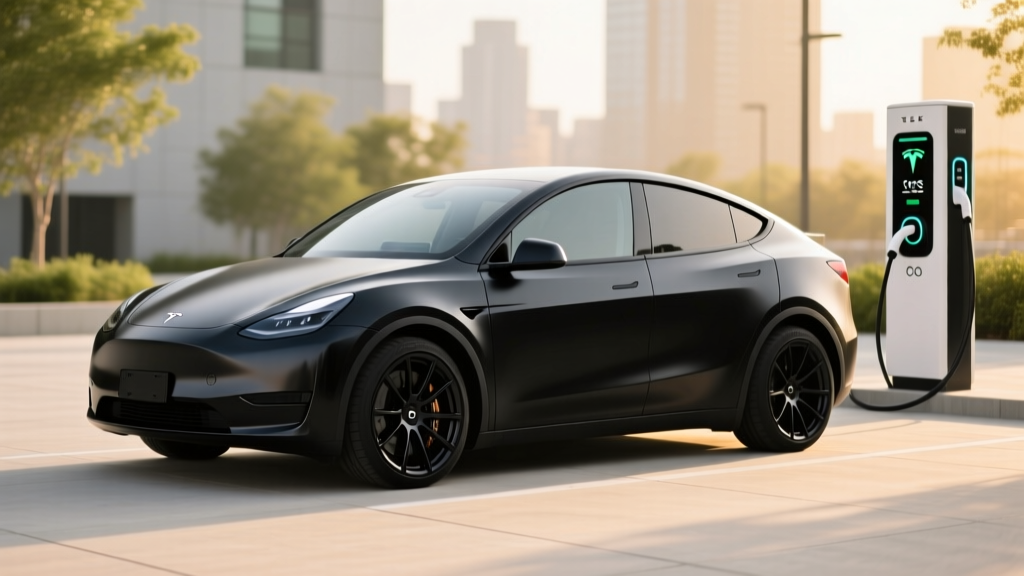
The 2026 Tesla Model Y remains the benchmark midsize electric SUV, and opting for the factory black aero wheel covers (or the 20-inch Induction black rims) does more than sharpen the styling. The aero covers measurably improve highway efficiency by reducing drag, squeezing an extra 10–15 miles of real-world range compared to the standard 19-inch Gemini wheels without covers. For buyers searching for a Tesla with black rims, the decision comes down to whether you prioritize maximum range (aero covers on 19s) or sharper looks with a slight efficiency trade-off (20-inch Inductions).
Below, we break down the 2026 Model Y Long Range AWD — the volume seller — with exact EPA data, real-world range expectations, charging speeds, and post-credit pricing.
| Spec | Value |
|---|---|
| EPA Range (19" Gemini w/ aero covers) | 320 miles |
| EPA Range (20" Induction black rims) | 300 miles |
| Battery (usable) | ~75 kWh, NMC chemistry |
| Peak DC Fast Charge | 250 kW (V3 Supercharger) |
| 10–80% DC Fast Charge Time | ~25 minutes |
| Level 2 Home Charge Rate | 11.5 kW (~44 mi/hr) |
| 0–60 mph | 4.8 seconds |
| Horsepower | 384 hp (dual motor) |
| Drivetrain | AWD (dual motor) |
| Efficiency | 122 MPGe combined / 28 kWh/100mi |
| Cargo (rear seats up) | 30.2 cu ft |
| Cargo (rear seats folded) | 72.1 cu ft |
| Base MSRP (Long Range AWD) | $47,990 |
| Battery Warranty | 8 years / 120,000 miles |
Range: EPA Sticker vs What You'll Actually Get
Tesla's range estimates have historically tracked closer to reality than some competitors, but physics still applies. Sustained highway speeds above 70 mph increase energy consumption significantly — expect around 300–320 Wh/mi on the highway versus the EPA combined average of roughly 280 Wh/mi. In winter, the heat pump helps, but battery chemistry (NMC) loses some available capacity in cold temperatures, and cabin heating still draws substantial energy even with the heat pump's efficiency advantage.
If maximum range is your priority, stick with the 19-inch Gemini wheels and install the black aero covers — they give you the blacked-out look while preserving the full 320-mile EPA rating. The 20-inch Induction wheels look aggressive but cost you roughly 6–7% efficiency due to increased weight and reduced aerodynamic efficiency.
Charging Speed: Supercharger Network Advantage
| Level | Power | Miles Added per Hour | Notes |
|---|---|---|---|
| Level 1 (120V household) | ~1.4 kW | ~4–5 mi/hr | Emergency/trickle only |
| Level 2 (240V home Wall Connector) | 11.5 kW | ~44 mi/hr | Full charge overnight (~7 hrs) |
| DC Fast (V3 Supercharger) | Peak 250 kW | ~1,000+ mi/hr (peak) | 10–80% in ~25 min |
| DC Fast (V4 Supercharger) | Peak 250 kW (Model Y limited) | Similar to V3 | Model Y cannot utilize higher V4 rates |
The Model Y Long Range peaks at 250 kW on V3 and V4 Superchargers, but like all EVs, it doesn't sustain that rate. The charge curve is strong from 10–50% SoC (holding near 250 kW), then tapers progressively. From 50–80%, expect an average closer to 120–150 kW. This is why Tesla quotes 10–80% in roughly 25 minutes rather than a full 0–100% time — charging above 80% slows dramatically to protect battery health.
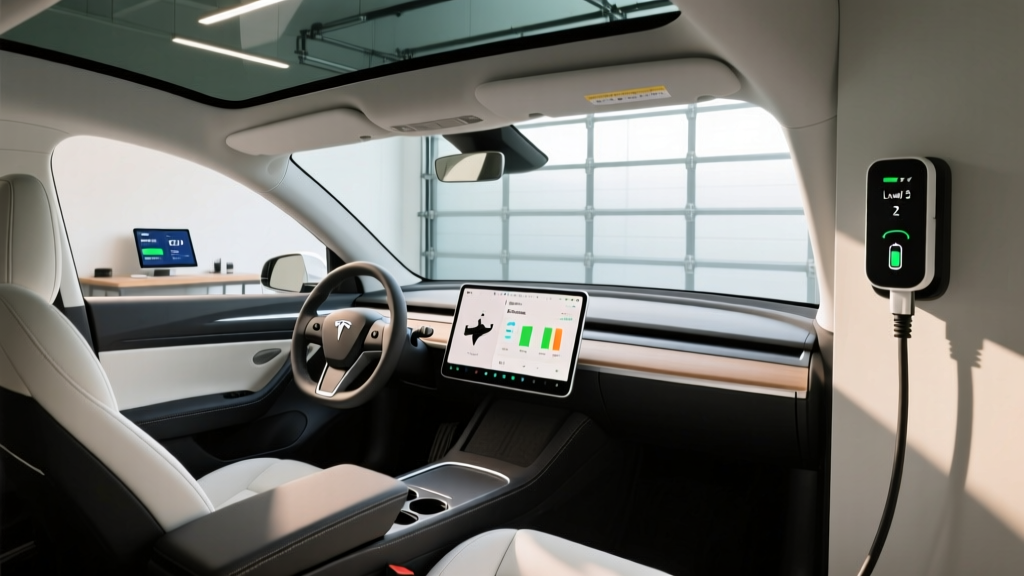
At home on a Tesla Wall Connector (48-amp circuit, 60-amp breaker), you'll add roughly 44 miles of range per hour. A full 10–80% home charge takes about 5–6 hours, which is ideal for overnight top-ups. For installation, budget $500–$1,500 for the electrician if your panel is close to the garage and has capacity; panel upgrades can add $1,500–$3,000. Always consult a licensed electrician for final specs.
One key advantage: Tesla's NACS connector is now the North American standard. By 2026, most public networks (Electrify America, EVgo, ChargePoint) offer NACS cables or adapters, making the Model Y compatible virtually everywhere without dongles.
Performance and Driving Dynamics
The Long Range AWD's dual-motor setup delivers 384 horsepower and a 4.8-second 0–60 mph time — quick for a family SUV and more than adequate for highway merging and passing. The instant torque delivery makes it feel quicker than the numbers suggest in daily driving.
Ride quality on the 2026 Model Y (the refreshed "Juniper" generation introduced in 2025) is noticeably improved over the pre-refresh model. Tesla added acoustic glass, retuned dampers, and improved seat cushioning. With the 20-inch Induction black rims, you'll feel slightly more road imperfection than on the 19-inch Gemmis due to the lower-profile tire sidewall, but it's a marginal difference on most surfaces.
Regenerative braking remains strong and predictable, enabling near one-pedal driving in most conditions. The heat pump is standard, improving cold-weather efficiency and preconditioning speed at Superchargers.
Pricing, Tax Credits, and Total Cost
| Item | Amount |
|---|---|
| Long Range AWD Base MSRP | $47,990 |
| 20" Induction Black Rims (upgrade) | $2,000 |
| Destination Fee | $1,390 |
| As-Tested Price (w/ black rims) | $51,380 |
| Federal §30D Tax Credit (if eligible) | Up to $7,500 |
| Effective Price After Max Credit | ~$43,880 |
The 2026 Model Y Long Range AWD qualifies for the full $7,500 federal EV tax credit under IRS §30D, provided you meet the following requirements:
- MSRP Cap: SUVs must be under $80,000 — the Model Y passes easily.
- Income Cap: AGI must not exceed $150,000 (single), $225,000 (head of household), or $300,000 (joint).
- Battery Sourcing: Critical minerals and battery components must meet phased-in domestic/free-trade requirements. Tesla's Fremont-built Model Y has historically met these thresholds, but always verify at purchase using the IRS's official VIN-check tool at fueleconomy.gov.
- Point-of-Sale Transfer: As of 2024, you can transfer the credit to the dealer at purchase, reducing your out-of-pocket cost immediately rather than waiting for a tax refund.
Consult a tax professional to confirm your personal eligibility — income limits and sourcing rules are subject to legislative change.
Interior, Cargo, and Technology
The Juniper-refreshed Model Y interior is substantially quieter and more refined than the outgoing generation. Key improvements include ventilated front seats, ambient lighting, a rear-seat touchscreen for climate and media control, and improved material quality throughout.
Cargo space: 30.2 cu ft behind the second row, expanding to 72.1 cu ft with seats folded. The front trunk (frunk) adds 4.1 cu ft for charging cables or a small bag. Rear legroom measures 41.6 inches — competitive with the Hyundai Ioniq 5 and Ford Mustang Mach-E.
Tech highlights:
- 15.4-inch center touchscreen with Tesla's latest UI
- Wireless Apple CarPlay and Android Auto (added in 2025 refresh)
- Over-the-air updates continuously improve features
- Sentry Mode dashcam recording with USB storage
- Vehicle-to-Load (V2L) not available on Model Y as of 2026
Driver Assistance: Autopilot and FSD (Supervised)
Standard Autopilot includes Traffic-Aware Cruise Control and Autosteer (lane centering). FSD (Supervised), available as a $8,000 one-time purchase or $99/month subscription in 2026, adds automatic lane changes, Navigate on Autopilot, and traffic light/stop sign recognition. It remains a driver-assist system that requires constant supervision and can make errors in construction zones, adverse weather, or unusual road configurations.
Pros, Cons, and Who Should Buy
Pros
- Class-leading Supercharger network access and reliability
- Strong real-world range (270–290 mi highway with aero covers)
- 250 kW peak DC charging with proven charge curve
- Full $7,500 federal tax credit eligibility (verify sourcing)
- Refined Juniper interior — much quieter than pre-2025
- Black aero covers improve efficiency AND aesthetics
- OTA updates add features over time
Cons
- 20" Induction rims reduce range by ~20 EPA miles
- No Apple CarPlay/Android Auto at launch (added late 2025 — verify trim)
- FSD remains expensive and requires supervision
- Ride still firmer than some rivals on rough pavement
- No V2L capability for camping/power outage use
- Insurance premiums tend to run higher than segment average
Who Is This EV For?
Choose the Model Y with black aero covers if: You want maximum range, access to the best charging network, and a blacked-out look without sacrificing efficiency. Ideal for commuters and road-trippers who regularly drive 200+ miles between charges.
Choose the Model Y with 20" Induction black rims if: Style is a priority and you typically drive under 250 miles between charges. The 20-mile EPA range hit is manageable for most daily and weekly driving patterns.
Look at competitors (Ioniq 5, Mach-E, EV6) if: You want V2L, a more plush ride, or prefer traditional dealer service networks over Tesla's mobile-ranger model.
Warranty Coverage
Tesla covers the Model Y battery and drive unit for 8 years or 120,000 miles (whichever comes first), with a minimum 70% capacity retention threshold. The basic vehicle limited warranty is 4 years / 50,000 miles. This is competitive with Hyundai's 10-year/100,000-mile battery warranty, though Tesla's track record for NMC degradation has been strong — most owners report less than 10% degradation at 100,000 miles based on fleet data.
Frequently Asked Questions
Do the black aero wheel covers actually improve range?
Yes. Tesla's own testing and independent verification show roughly 3–5% efficiency improvement with aero covers installed on the 19-inch Gemini wheels. That translates to approximately 10–15 additional real-world highway miles compared to running the Gemmis without covers. If you want the blacked-out look, the aero covers are the range-optimal choice.
How fast does the Model Y charge at home overnight?
On a Tesla Wall Connector with a 60-amp breaker (48 amps continuous), the Model Y charges at 11.5 kW, adding roughly 44 miles of range per hour. A typical overnight session of 6–8 hours easily replenishes a full day's driving for most owners.
Does the 2026 Model Y qualify for the $7,500 federal tax credit?
As of early 2026, the US-built Model Y Long Range qualifies for the full $7,500 credit under §30D, subject to buyer income caps ($150K single / $300K joint) and battery-sourcing compliance. Always verify your specific VIN at fueleconomy.gov before purchase, as sourcing rules can shift.
Is the Model Y worth it vs the Hyundai Ioniq 5 or Ford Mach-E?
The Model Y wins on charging network access, efficiency, and cargo space. The Ioniq 5 offers V2L, faster 10–80% charging (18 min on 350 kW chargers), and a more comfortable ride. The Mach-E offers a more traditional driving feel and dealer service. If charging infrastructure access is your top concern, Tesla's network remains the most reliable in 2026.
What does the Model Y battery replacement cost?
Out-of-warranty battery replacement for the Model Y runs approximately $12,000–$16,000 including labor, based on current Tesla service center pricing. However, NMC batteries in Tesla vehicles have shown strong longevity, with most units retaining 85–90%+ capacity at 100,000 miles. Full replacement is rare within the warranty period.
Can I put aftermarket black rims on the Model Y?
Yes, but ensure they match Tesla's 5x114.3 bolt pattern, 64.1mm center bore, and appropriate offset. Aftermarket wheels may affect range, ride quality, and potentially warranty claims related to suspension or drivetrain. Factory 20-inch Induction wheels in black remain the safest option for fitment and resale value.