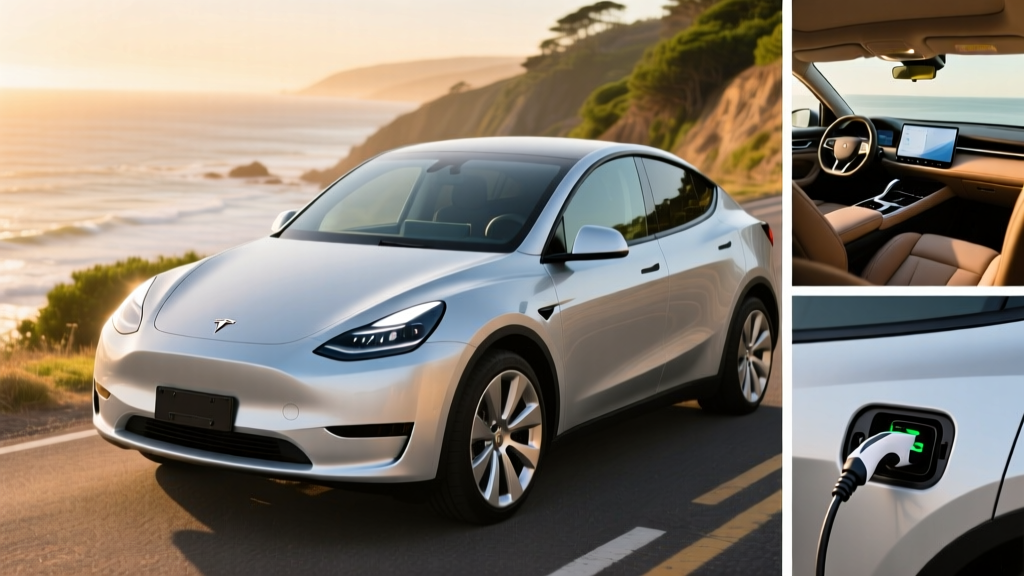
The Tesla Model Y has been the best-selling EV in America for several years running, and for 2026, it returns with the refreshed "Juniper" styling, updated battery management, and the same practical crossover formula that made it a household name. If you've been searching for news that the Tesla Model Y is back in stock after recent production changeovers, you're not alone — demand continues to outstrip supply at many delivery centers. Here's the full buyer's breakdown: range, charging, pricing, tax credit eligibility, and whether it still earns its crown against a growing field of rivals.
2026 Tesla Model Y: Quick Verdict
The refreshed Model Y (internally dubbed "Juniper") carries over the core powertrain architecture that made the pre-refresh version a benchmark, but adds a front light bar, ventilated seats, ambient lighting, power-folding second-row seats, and a slightly retuned suspension for improved ride quality. The Long Range AWD remains the volume trim, offering the best balance of range, performance, and price. The base Rear-Wheel Drive model undercuts it significantly but sacrifices range and the dual-motor traction that many buyers in snowy climates want.
For 2026, the Model Y remains the default answer for buyers who want a proven EV ecosystem (Supercharger network, software, reliability data) in a midsize crossover package. Its weaknesses — minimalist interior, firm ride on larger wheels, and the polarizing touchscreen-only interface — persist, but the Juniper refresh narrows the gap with competitors like the Hyundai Ioniq 5 and Ford Mustang Mach-E in cabin comfort.
Range, Efficiency & Real-World Expectations
| Trim | EPA Range | MPGe (Combined) | kWh/100 mi |
|---|---|---|---|
| Long Range AWD | 320 mi | 111 MPGe | 30 kWh |
| Rear-Wheel Drive | 302 mi | 117 MPGe | 29 kWh |
| Performance AWD | 285 mi | 104 MPGe | 32 kWh |
Efficiency is where Tesla's engineering advantage shows. The Model Y Long Range achieves roughly 30 kWh per 100 miles — among the most efficient vehicles in its class. The RWD variant is slightly more efficient at 29 kWh/100 mi thanks to lower weight and single-motor losses, while the Performance trim's stickier tires and more aggressive tuning push consumption to about 32 kWh/100 mi.
Battery, Chemistry & Warranty
The 2026 Model Y Long Range AWD uses a 78.1 kWh usable (approximately 82 kWh gross) nickel-manganese-cobalt (NMC) lithium-ion battery pack. The Rear-Wheel Drive variant uses a 60 kWh usable lithium iron phosphate (LFP) pack — a chemistry that trades energy density for longevity, lower cost, and the ability to charge to 100% daily without accelerated degradation concerns.
| Attribute | LFP (RWD) | NMC (Long Range / Performance) |
|---|---|---|
| Energy Density | Lower (heavier pack for same range) | Higher (more range in lighter package) |
| Cycle Life | 3,000+ cycles to 80% SoH | 1,500-2,000 cycles to 80% SoH |
| Daily Charging | Can charge to 100% daily | Best kept at 80% daily; 100% for trips |
| Cold Performance | Weaker in extreme cold | Better low-temp output |
| Cost | Lower (contributes to RWD price) | Higher |
Warranty: Tesla covers the battery and drive unit for 8 years or 120,000 miles (Long Range/Performance) and 8 years or 100,000 miles (RWD), whichever comes first, with a minimum 70% capacity retention threshold. The basic vehicle limited warranty is 4 years/50,000 miles. According to fueleconomy.gov, most modern EV batteries retain 90%+ capacity after 100,000 miles under normal use.
Charging Speed: DC Fast, Level 2 & Home Setup
| Charging Level | Power | Speed / Time |
|---|---|---|
| DC Fast Charging (Peak) | 250 kW (Long Range) / 170 kW (RWD) | 10-80% in ~25 min (Long Range) / ~30 min (RWD) |
| Tesla Supercharger V4 | Up to 250 kW sustained | ~162 mi added in 15 min (Long Range) |
| Level 2 (Home, 48A) | 11.5 kW | ~37 mi/hr of charge |
| Level 2 (Home, 32A) | 7.7 kW | ~25 mi/hr of charge |
| Level 1 (120V outlet) | ~1.4 kW | ~4-5 mi/hr of charge |
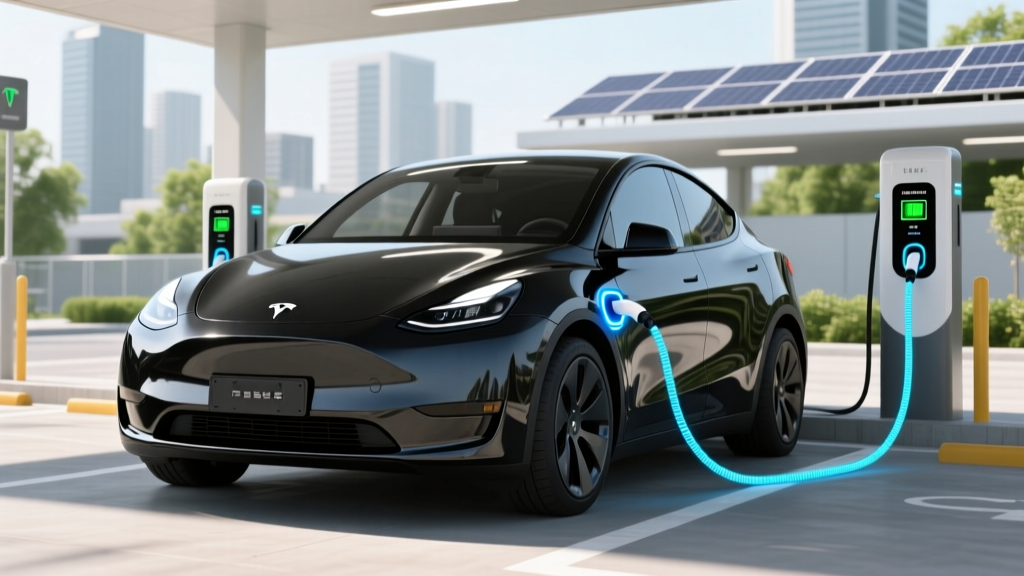
The Model Y Long Range peaks at 250 kW on a V3 or V4 Supercharger, but that peak is only sustained briefly between roughly 10-30% state of charge. The charge curve tapers progressively — by 60% SoC, you'll see roughly 120-150 kW, and above 80%, speeds drop below 50 kW. This is normal lithium-ion charging behavior, not a flaw. The practical takeaway: plan stops around 10-80% for fastest sessions; charging from 80-100% at a DC fast charger is rarely worth the wait.
For home charging, a 48-amp Level 2 wall connector on a 60-amp circuit (NEMA 14-50 or hardwired) delivers roughly 37 miles of range per hour of charging — enough to fully replenish the Long Range overnight in about 8-9 hours. Most owners find a 32-amp setup (7.7 kW) adequate if daily driving is under 150 miles. Home installation typically costs $800-$2,000 depending on panel capacity and run length; a 200-amp service panel is usually sufficient.
Performance & Driving Dynamics
| Trim | 0-60 mph | Horsepower | Drivetrain | Top Speed |
|---|---|---|---|---|
| Long Range AWD | 4.8 sec | 384 hp | Dual-Motor AWD | 135 mph |
| Rear-Wheel Drive | 6.6 sec | 295 hp | Single-Motor RWD | 135 mph |
| Performance AWD | 3.5 sec | 456 hp | Dual-Motor AWD | 155 mph |
Even the base RWD Model Y hits 60 mph in a respectable 6.6 seconds — quicker than most gas-powered compact SUVs. The Long Range AWD's 4.8-second sprint feels effortless in daily driving, with instant torque delivery and no gear shifts. The Performance trim's 3.5-second time puts it in sports-car territory, though the ride quality trade-offs (stiffer suspension, 21-inch wheels) make it less ideal for families prioritizing comfort.
The Juniper refresh brought a retuned suspension with revised damper rates and updated bushings. The result is a noticeably smoother ride over rough pavement compared to the pre-refresh model, though it still leans firm compared to a Hyundai Ioniq 5 or Kia EV6. Steering remains quick and precise, and the low center of gravity keeps body roll well-controlled in corners.
Interior, Cargo & Technology
The 2026 Model Y interior received meaningful upgrades with the Juniper refresh: ventilated front seats, ambient lighting, a power-folding second row, improved sound insulation, and a front LED light bar. However, Tesla's minimalist philosophy remains — nearly all controls route through the 15.4-inch center touchscreen. There are no physical buttons for climate, mirrors, or glovebox release.
Cargo volume: 30.2 cubic feet behind the second row, expanding to 72.1 cubic feet with the rear seats folded. The front trunk (frunk) adds 4.1 cubic feet — useful for charging cables or a small bag. Total interior passenger volume is 106.1 cubic feet with seating for five.
Legroom: 41.8 inches front / 37.3 inches rear. Rear headroom is generous at 39.4 inches thanks to the panoramic glass roof, though the roof does contribute to cabin heat in summer — a sunshade (now included with Juniper) is essential in warm climates.
Tech highlights:
- 15.4-inch center touchscreen with Tesla's proprietary OS (no Apple CarPlay or Android Auto)
- Over-the-air software updates adding features continuously
- 9-camera Tesla Vision system (no radar or ultrasonic sensors)
- Autopilot standard (SAE Level 2 driver assist — requires hands on wheel and full attention)
- Full Self-Driving (Supervised) available as a $8,000 add-on — still Level 2, not autonomous
- Sentry Mode, Dog Mode, and built-in dashcam
- Vehicle-to-load (V2L) not supported — no native power export
Pricing, Trims & Federal Tax Credit
| Trim | Base MSRP | §30D Credit Eligible? | Effective Price (with credit) |
|---|---|---|---|
| Rear-Wheel Drive | $44,990 | Yes (up to $7,500) | ~$37,490 |
| Long Range AWD | $48,990 | Yes (up to $7,500) | ~$41,490 |
| Performance AWD | $53,990 | Yes (up to $7,500) | ~$46,490 |
All 2026 Model Y trims fall under the IRS §30D MSRP cap of $80,000 for SUVs. However, eligibility for the full $7,500 federal tax credit depends on several factors that change periodically:
- Buyer income limits: Modified adjusted gross income (MAGI) must not exceed $150,000 (single), $225,000 (head of household), or $300,000 (joint filers)
- Battery sourcing: Critical minerals and battery components must meet phased-in percentages from US or free-trade-agreement countries — Tesla has generally met these thresholds for US-built Model Y, but verify current-year compliance at irs.gov
- Point-of-sale transfer: As of 2024+, you can transfer the credit to the dealer at purchase, reducing your out-of-pocket cost immediately rather than waiting for tax filing
- Tax liability: The credit is now transferable at point of sale, which effectively makes it a discount regardless of your tax liability (subject to income caps)
Destination charges, paint upgrades ($1,000-$2,500), FSD ($8,000), and other options add to the as-tested price. A Long Range AWD with red multi-coat paint and no FSD comes in around $50,990 before incentives.
How It Compares: Model Y vs. Key Competitors
| Spec | Tesla Model Y LR AWD | Hyundai Ioniq 5 Limited AWD | Ford Mustang Mach-E Ext. Range AWD |
|---|---|---|---|
| EPA Range | 320 mi | 290 mi | 305 mi |
| Battery (usable) | 78.1 kWh (NMC) | 77.4 kWh (NMC) | 91 kWh (NMC) |
| Peak DC Charge | 250 kW | 240 kW | 150 kW |
| 10-80% Time | ~25 min | ~20 min (800V) | ~38 min |
| 0-60 mph | 4.8 sec | 5.1 sec | 5.1 sec |
| Cargo (rear up) | 30.2 cu ft | 27.2 cu ft | 29.7 cu ft |
| Base MSRP | $48,990 | $53,500 | $51,995 |
| Charging Network | Tesla Supercharger (NACS) | CCS (NACS adapter available) | CCS (NACS adapter available) |
The Ioniq 5's 800-volt architecture charges faster from 10-80% despite a slightly lower peak kW, and its interior quality and physical controls appeal to traditionalists. The Mach-E offers a more car-like driving feel but charges significantly slower. The Model Y's advantages remain its efficiency (fewer kWh per mile), Supercharger access, cargo space, and software ecosystem. With Hyundai and Ford now gaining Supercharger access via NACS adapters, Tesla's charging moat is narrowing — but native integration still means fewer adapters and more seamless plug-and-charge sessions.
Who Should Buy the 2026 Model Y?
Choose the Model Y Long Range AWD if: You want the best combination of range (320 mi EPA), efficiency, cargo space, and Supercharger access for road trips. Ideal for families, commuters with 40-100 mile round trips, and anyone in a region with cold winters who needs AWD traction.
Choose the Model Y RWD if: You live in a mild climate, mostly drive in the city, want the lowest entry price (~$37,490 after credit), and value the LFP battery's ability to charge to 100% daily without degradation worry.
Choose the Model Y Performance if: You prioritize acceleration (3.5 sec 0-60) and sporty handling over ride comfort and range, and don't mind the 285-mile EPA range and firmer suspension.
Look elsewhere if: You need Apple CarPlay/Android Auto, prefer physical buttons and a traditional instrument cluster, or want the fastest possible DC charging (the Ioniq 5's 800V architecture charges 10-80% faster).
Frequently Asked Questions
What is the real-world range of the 2026 Tesla Model Y?
The EPA rates the Long Range AWD at 320 miles. Real-world highway driving at 70-75 mph typically yields 260-280 miles. In cold weather below 30°F, expect 220-250 miles of highway range. City driving with regenerative braking often matches or slightly exceeds the EPA figure.
How fast does the Model Y charge at home and on the road?
On a Tesla Supercharger, the Long Range peaks at 250 kW and charges from 10-80% in approximately 25 minutes. At home on a 48-amp Level 2 charger (11.5 kW), you'll add roughly 37 miles of range per hour, fully charging overnight in 8-9 hours. The RWD model peaks at 170 kW DC and charges 10-80% in about 30 minutes.
How much does the Model Y cost after federal tax credits?
The RWD starts at $44,990 MSRP and can drop to approximately $37,490 with the full $7,500 §30D credit. The Long Range AWD starts at $48,990 (~$41,490 after credit). Eligibility depends on buyer income caps, battery-sourcing compliance, and current IRS rules. Verify at irs.gov before purchasing.
Is the Tesla Model Y worth buying vs. competitors in 2026?
Yes, if you prioritize efficiency, Supercharger network access, cargo space, and Tesla's software ecosystem. The Ioniq 5 offers faster 10-80% charging and a more conventional interior; the Mach-E provides a sportier driving feel. The Model Y remains the best all-around package for most buyers, particularly those who road-trip frequently.
What are the biggest pros and cons of the 2026 Model Y?
- Class-leading efficiency (30 kWh/100 mi)
- 320-mile EPA range (Long Range)
- Native Supercharger network access
- Best-in-class cargo space (30.2 cu ft)
- Strong software/OTA update track record
- Competitive pricing after tax credit
- No Apple CarPlay or Android Auto
- Touchscreen-only controls frustrate some drivers
- No V2L power export capability
- Firm ride on Performance trim
- Supercharger access now open to rivals
- Minimalist interior not for everyone
Does the 2026 Model Y qualify for the federal EV tax credit?
All trims are under the $80,000 SUV MSRP cap and have historically qualified for up to $7,500 under IRS §30D, provided the buyer meets income limits and battery-sourcing requirements are satisfied. Tesla manufactures the Model Y in Fremont, California, and Austin, Texas, which supports domestic content compliance. Always check the latest eligibility at fueleconomy.gov before finalizing your purchase.
How does Tesla Autopilot work, and is it self-driving?
Autopilot is a standard SAE Level 2 driver-assistance system that provides adaptive cruise control, lane centering, and automatic emergency braking. Full Self-Driving (Supervised), available for $8,000, adds features like automated lane changes and traffic-light recognition. Neither system is autonomous — the driver must remain fully attentive, keep hands on the wheel, and be prepared to take over at any moment. Tesla Vision uses 9 cameras with no radar or ultrasonic backup.