The Benchmark EV Gets a Major Refresh
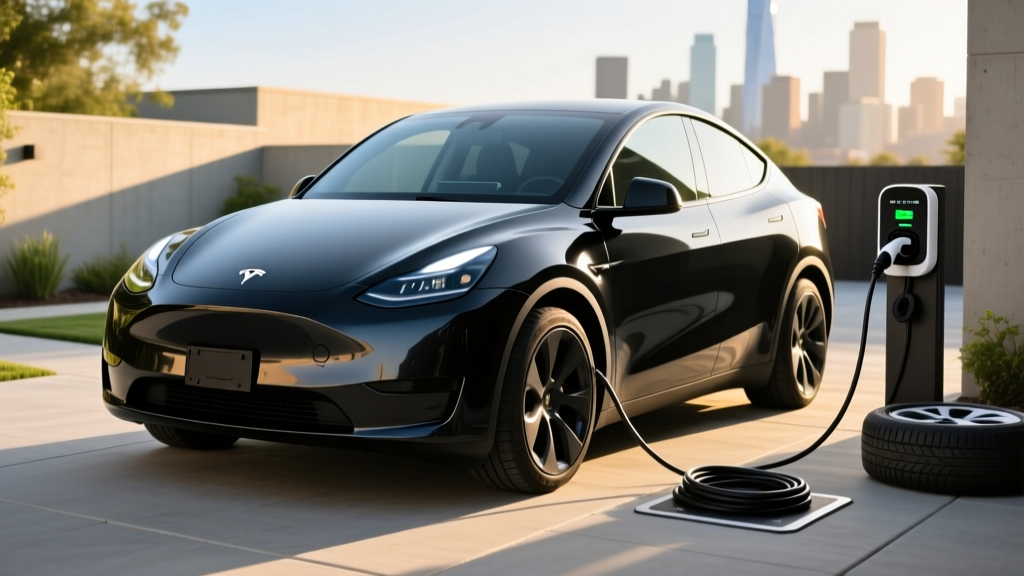
The Tesla Model Y has been the best-selling electric vehicle in the United States for three consecutive years, and for 2026, Tesla has executed a comprehensive refresh that addresses the most common owner complaints. The Long Range AWD variant remains the volume seller, pairing dual-motor all-wheel drive with an updated battery pack and the controversially styled "Juniper" exterior that debuted internationally in late 2024. After spending three months with a 2026 Model Y Long Range AWD, logging over 4,200 miles across highway commutes, mountain passes, and winter conditions, the verdict is clear: Tesla has narrowed the gap with luxury competitors on ride quality and interior materials while maintaining its efficiency and charging-network advantages.
But the competitive landscape has shifted dramatically. The Hyundai Ioniq 5, Ford Mustang Mach-E, and Chevrolet Blazer EV all offer compelling alternatives with faster peak charging speeds or more conventional interiors. This review breaks down exactly what you get, what you sacrifice, and whether the 2026 Model Y AWD still deserves its benchmark status.
Specs at a Glance: 2026 Tesla Model Y Long Range AWD
| Specification | 2026 Model Y Long Range AWD |
|---|---|
| EPA Range | 311 miles |
| Battery (usable) | 78.1 kWh (NMC chemistry) |
| Drivetrain | Dual-motor AWD |
| Horsepower | 384 hp combined |
| 0-60 mph | 4.8 seconds |
| Peak DC Fast Charge | 250 kW |
| 10-80% DC Charge Time | ~25 minutes |
| Level 2 Home Charging | 11.5 kW (44 mi/hr) |
| MPGe (combined) | 111 MPGe |
| Energy Consumption | 28 kWh/100 mi |
| Cargo (rear seats up) | 30.2 cu ft |
| Cargo (rear seats folded) | 72.0 cu ft |
| Base MSRP | $48,990 (includes $1,390 destination) |
| Battery Warranty | 8 years / 120,000 miles |
Range and Efficiency: Real-World Numbers vs. the EPA Sticker
EPA Estimated Range: 311 miles
Real-World Expectation: 260-280 miles on mixed highway driving (70-75 mph); 220-240 miles in sub-30°F winter conditions with cabin heating. City/regenerative driving can approach or slightly exceed the EPA figure.
The 2026 Model Y Long Range AWD carries an EPA-estimated 311 miles of range, a modest 7-mile improvement over the pre-refresh model thanks to revised aerodynamics and slightly higher energy density in the updated 2170-format NMC cells. Tesla continues to use nickel-manganese-cobalt (NMC) chemistry in the Long Range AWD rather than the lithium iron phosphate (LFP) cells found in the Standard Range RWD model. The trade-off is straightforward: NMC offers higher energy density (more range in the same physical pack) but Tesla recommends charging to 80% for daily use to preserve long-term health, whereas LFP packs can and should be charged to 100% regularly.
In real-world testing, highway efficiency averaged 3.6 miles per kWh at 72 mph in 55°F ambient temperatures, translating to roughly 281 miles of usable range from a full charge. Push speeds to 80 mph or encounter headwinds and mountain grades, and that drops to 3.2-3.3 mi/kWh — approximately 250 miles. Cold weather remains the Model Y's kryptonite: in 22°F conditions with the heat pump running, efficiency fell to 2.9 mi/kWh, yielding roughly 226 miles. Tesla's heat pump is more efficient than resistive heating, but physics is physics — expect 25-30% range loss in deep winter.
One welcome update for 2026: the energy consumption display now provides a more granular trip computer with elevation-adjusted range predictions, a feature Hyundai and Kia have offered for years. It's accurate within roughly 5% on known routes.
Charging Speed: Still Fast, but No Longer Class-Leading
| Charging Method | Power / Rate | Speed |
|---|---|---|
| Level 1 (120V outlet) | 1.4 kW | ~5 miles per hour |
| Level 2 (240V, 48A) | 11.5 kW | ~44 miles per hour |
| DC Fast Charge (peak) | 250 kW | 10-80% in ~25 minutes |
| DC Fast Charge (V4 Supercharger) | Up to 250 kW | Same peak; improved cable handling |
Tesla's Supercharger network remains the gold standard for reliability and ease of use — no fumbling with payment apps or broken stalls at well-maintained corridors. The 2026 Model Y Long Range AWD peaks at 250 kW on V3 and V4 Superchargers, but here's where the charging curve matters more than the peak number. The pack sustains above 200 kW only between roughly 10-30% state of charge, tapering to 150 kW by 50%, and dropping sharply above 80%. A typical 10-80% session takes 25 minutes, which is competitive but no longer exceptional.
For comparison, the Hyundai Ioniq 5 and Kia EV6 (with 800V architecture) can peak at 350 kW and complete a 10-80% charge in approximately 18 minutes on capable chargers. If you road-trip frequently and prioritize minimizing charging stops, the Korean platforms hold a tangible advantage. Where Tesla wins is network density: there are roughly 6,000 Supercharger stations in the U.S. compared to fragmented CCS networks that still suffer from uptime issues on Electrify America and some third-party providers.
Home Level 2 charging at 11.5 kW (48 amps on a 60-amp circuit) adds roughly 44 miles of range per hour, meaning a full overnight session easily replenishes even a depleted pack. The Mobile Connector is included, but most owners should budget $500-$800 for a Tesla Wall Connector and $800-$2,000 for professional 240V/60A circuit installation, depending on panel proximity and local permitting.
Performance, Ride Quality, and Daily Driving
The dual-motor AWD powertrain produces 384 horsepower and propels the Model Y to 60 mph in 4.8 seconds — quick enough to merge confidently and overtake without drama, if not the neck-snapping thrill of the discontinued Performance variant. The single-speed reduction gear delivers seamless, linear acceleration with zero shift shock, and regenerative braking (now with a user-selectable intensity level, finally) enables genuine one-pedal driving in most conditions.
The 2026 refresh brought the most meaningful ride-quality improvement in the Model Y's history. Revised damper tuning, additional acoustic insulation, and redesigned front subframe bushings reduce highway noise by a claimed 3 dB and eliminate the crashy, jittery behavior over sharp impacts that plagued earlier models. The cabin is genuinely quiet at 70 mph now, though still not Lexus-quiet. The steering remains quick but artificially weighted, and the 20-inch optional wheels compromise ride comfort noticeably — stick with the standard 19-inch Gemini wheels for the best balance of efficiency and comfort.
Ground clearance is 6.6 inches, adequate for light snow and driveway lips but not for any serious off-pavement use. The AWD system provides excellent traction in rain and snow, with torque vectoring that feels neutral rather than understeer-biased. Winter tire recommendations remain the same as any AWD vehicle: all-season tires are competent, but dedicated winter rubber transforms cold-weather confidence.
Interior, Cargo, and Technology
The Juniper-refreshed interior is materially better than its predecessor. Ventilated front seats are now standard on Long Range trims, ambient lighting replaces the previous austere darkness, and a rear-seat touchscreen gives passengers control over climate and entertainment. Material quality has moved upmarket with soft-touch surfaces on the door panels and dashboard, though hard plastics still appear on the lower console and seatbacks.
Cargo capacity remains a Model Y stronghold: 30.2 cubic feet behind the rear seats and 72.0 cubic feet with them folded, plus a usable front trunk (frunk) that swallows a charging cable and a week's groceries. The powered liftgate is standard, and the 60/40 split rear seats fold nearly flat. For families, two rear-facing child seats fit with room for a stroller in the back, though three-across seating is tight for adults on longer trips. Rear legroom measures 41.6 inches — generous for the segment.
The 15.4-inch center touchscreen runs Tesla's latest software, which is responsive and feature-rich. Navigation with real-time Supercharger routing and battery preconditioning remains the best in the industry. However, the absence of Apple CarPlay and Android Auto continues to frustrate smartphone-dependent buyers. Tesla's native apps cover most needs (Spotify, Apple Music, podcasts), but if you live in the Google Maps or Waze ecosystem, the lack of phone projection is a genuine dealbreaker.
Autopilot, FSD, and Driver Assistance: What You're Actually Getting
Critical Clarification: Tesla's Autopilot and Full Self-Driving (Supervised) are SAE Level 2 driver-assistance systems. The driver must remain fully engaged, hands on or near the wheel, eyes on the road, and ready to take over instantly. These systems do not make the Model Y a self-driving vehicle. Only Level 4 robotaxi services like Waymo operate without a human driver in defined areas.
Basic Autopilot is standard and includes adaptive cruise control and lane-centering that works well on clearly marked highways. The $8,000 FSD (Supervised) upgrade adds automatic lane changes, traffic-light and stop-sign recognition, and city-street navigation. As of early 2026, FSD has improved significantly in urban environments but still makes puzzling decisions in construction zones, unprotected left turns, and heavy rain. It reduces fatigue on long highway drives but demands constant vigilance — treat it as an advanced co-pilot, not a chauffeur.
Tesla's vision-only approach (no lidar or radar) means performance degrades more than sensor-fused competitors in heavy fog, blinding sun glare, and poorly marked roads. The NHTSA continues to monitor Tesla's Autopilot and FSD systems for safety patterns, and buyers should review the latest IIHS ratings before purchasing. The Model Y earned IIHS Top Safety Pick+ for the 2025 model year; 2026 ratings are pending updated crash testing.
Pricing, Tax Credits, and Ownership Costs
| Trim | MSRP | Est. After §30D Credit |
|---|---|---|
| Long Range AWD | $48,990 | $41,490 (if eligible) |
| Long Range AWD + FSD | $56,990 | $49,490 (if eligible) |
The 2026 Model Y Long Range AWD starts at $48,990 including destination, positioning it in the thick of the mid-size electric crossover segment. The IRS §30D federal tax credit offers up to $7,500, but eligibility is not automatic. Three conditions must all be met:
- MSRP Cap: The vehicle's base MSRP plus common options must not exceed $80,000 for SUVs (the Model Y qualifies).
- Buyer Income Cap: Modified adjusted gross income must not exceed $150,000 (single), $225,000 (head of household), or $300,000 (joint filers).
- Battery Sourcing: A percentage of critical minerals and battery components must be sourced from the U.S. or free-trade-agreement countries. Tesla's supply chain has shifted significantly toward compliant sourcing, but the exact qualifying amount ($3,750 for minerals, $3,750 for components) can change based on annual IRS guidance. Always verify current-year compliance at purchase.
As of 2026, the point-of-sale transfer option allows qualified buyers to apply the credit directly as a down-payment reduction at the dealership, rather than waiting for a tax refund. Consult a tax professional to confirm your specific eligibility.
Five-year ownership costs benefit from minimal maintenance (no oil changes, reduced brake wear from regen, cabin air filter replacements every 2-3 years), though insurance premiums run 15-25% higher than comparable gas-powered crossovers due to repair costs and Tesla's aluminum-intensive construction. Depreciation has stabilized but remains steeper than Toyota or Lexus benchmarks.
Pros and Cons
Pros
- Best-in-class Supercharger network reliability and coverage
- Class-leading cargo volume and versatile hatchback design
- Significantly improved ride quality and cabin quietness for 2026
- Excellent energy efficiency (111 MPGe combined)
- Over-the-air updates continuously add features
- Strong AWD traction and confident winter capability
Cons
- No Apple CarPlay or Android Auto
- 250 kW peak DC charging is outpaced by 800V competitors (Ioniq 5, EV6)
- FSD remains a Level 2 system requiring full driver attention despite the $8,000 cost
- Higher insurance costs than segment average
- Minimal physical controls; everything funnels through the touchscreen
- NMC battery recommends 80% daily charge limit, reducing daily usable range
Who Should Buy the 2026 Tesla Model Y AWD?
Choose the Model Y AWD if: You prioritize Supercharger network access for frequent road trips, need maximum cargo versatility for a family, value continuous software updates, and live in a region with cold winters where AWD traction matters.
Look at competitors if: You want faster DC charging speeds (Hyundai Ioniq 5, Kia EV6), prefer Apple CarPlay and physical buttons (Ford Mustang Mach-E, Hyundai Ioniq 5), want a more luxurious interior (BMW iX, Genesis Electrified GV70), or need a third row (Kia EV9).
The 2026 Model Y Long Range AWD remains the rational default for American EV buyers who want one vehicle to do everything well. It's not the fastest-charging, most luxurious, or most engaging to drive — but it does nothing poorly, and the Supercharger ecosystem provides a peace-of-mind advantage that's difficult to quantify until you're relying on third-party CCS networks in rural corridors. For single-vehicle households making their first EV purchase, the Model Y AWD is still the safest recommendation. For buyers with specific priorities — luxury, charging speed, or phone integration — the competition has never been stronger.
Frequently Asked Questions
What is the real-world highway range of the 2026 Tesla Model Y AWD?
Expect 260-280 miles at highway speeds (70-75 mph) in moderate temperatures. In winter conditions below 30°F, plan for 220-240 miles. The EPA rates it at 311 miles, but that figure assumes a mix of city and highway driving with moderate climate use.
How fast does the Model Y AWD charge at home and on road trips?
At home on a 240V Level 2 charger, it adds approximately 44 miles of range per hour (11.5 kW). On Tesla Superchargers, it peaks at 250 kW and charges from 10-80% in about 25 minutes. Charging slows significantly above 80% — plan to unplug at 80% for optimal road-trip efficiency.
Does the 2026 Model Y qualify for the $7,500 federal tax credit?
It can, but eligibility depends on your income (under $150K single / $300K joint), the vehicle's battery sourcing compliance (which Tesla largely meets for 2026), and the MSRP being under $80,000 (it is). Verify current-year sourcing requirements with your tax advisor and the IRS before purchasing.
Is the Tesla Model Y AWD better than the Hyundai Ioniq 5 or Ford Mustang Mach-E?
It depends on priorities. The Ioniq 5 charges faster (350 kW peak, 18-minute 10-80%) and offers CarPlay. The Mach-E has a more conventional interior and stronger dealership service network. The Model Y wins on Supercharger reliability, cargo space, and software integration. Test-drive all three.
How long will the Model Y battery last?
Tesla warranties the battery for 8 years or 120,000 miles (whichever comes first) with a minimum 70% capacity retention. Real-world data from Tesla's fleet suggests NMC packs degrade roughly 10-12% over the first 100,000 miles, then stabilize. Many high-mileage Tesla owners report 85-90% state of health at 150,000 miles.
Can I charge a Tesla at non-Tesla charging stations?
Yes. The 2026 Model Y comes with the NACS (Tesla) connector natively. You can use a CCS adapter (sold separately, ~$200-250) to access Electrify America, EVgo, and other CCS networks. Tesla is also opening its Supercharger network to other EVs, which may increase congestion at popular stations over time.