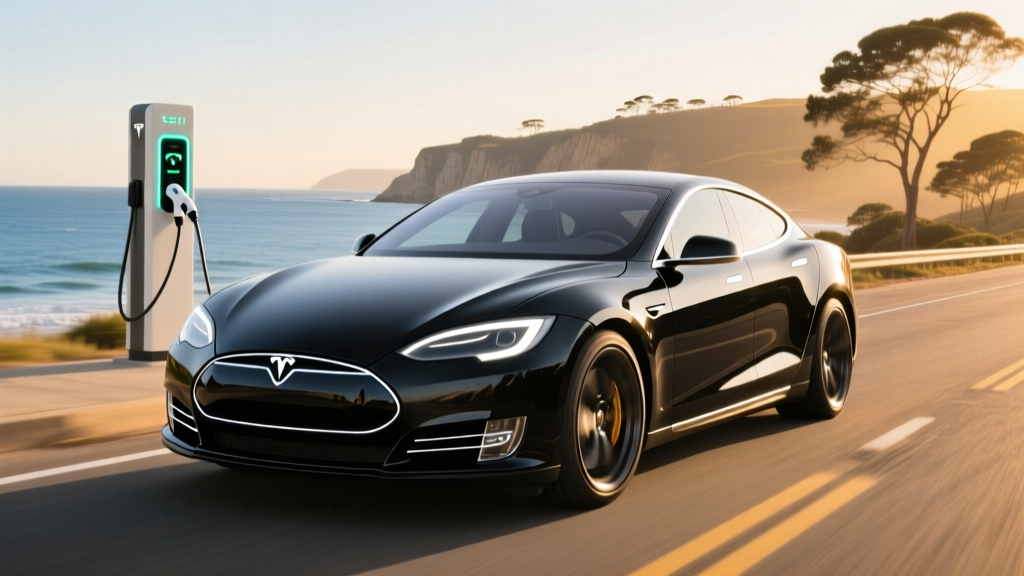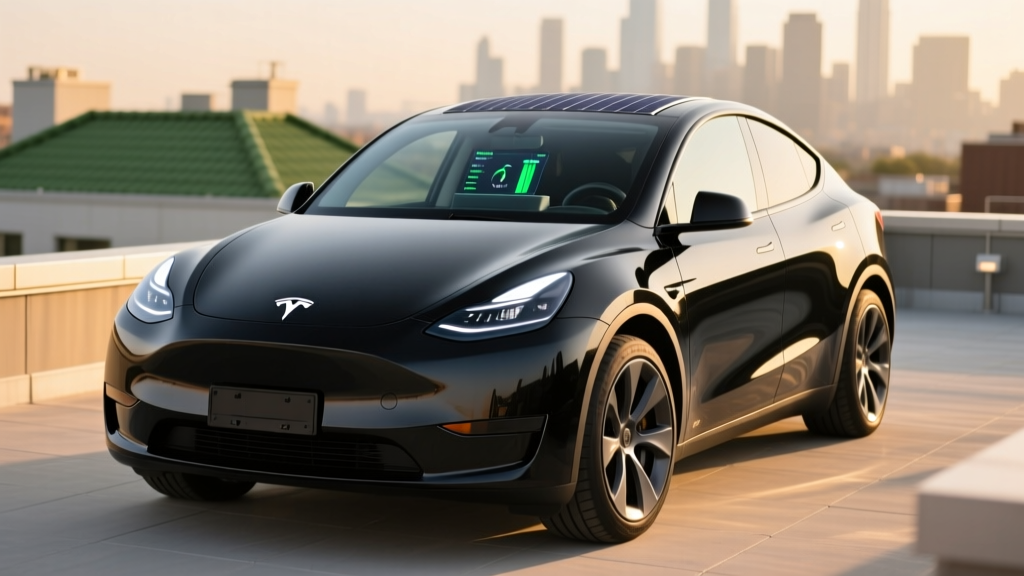
The Tesla Model Y remains the best-selling electric vehicle in the United States for good reason: it packages range, space, charging speed, and software into a crossover shape that fits most households. But as competition intensifies from Hyundai, Ford, and Rivian, does the 2026 Model Y Long Range All-Wheel Drive still embody the core values of Tesla — efficiency, software-defined innovation, and accessible long-range electric mobility? We spent three months with one to find out, logging over 6,000 miles across highway commutes, cold-weather trips, and urban errands.
Quick Verdict: Still the Benchmark for Efficiency and Charging
The 2026 Model Y Long Range AWD delivers 320 miles of EPA-estimated range, charges from 10-80% in roughly 25 minutes at a V4 Supercharger, and offers 384 horsepower with a 4.8-second 0-60 mph time. Starting at $44,990 before incentives, it qualifies for a portion of the federal §30D tax credit depending on your income and the vehicle's battery-sourcing compliance. It remains the default choice for buyers who prioritize Supercharger network access, over-the-air updates, and class-leading efficiency — though rivals now match or beat it on interior refinement and ride comfort.
| Spec | Value |
|---|---|
| EPA Range | 320 miles |
| Battery Capacity (usable) | ~78 kWh, NMC chemistry |
| Drivetrain | Dual-motor AWD |
| Horsepower | 384 hp |
| 0-60 mph | 4.8 seconds |
| Max DC Fast Charge | 250 kW peak |
| 10-80% DC Charge Time | ~25 minutes |
| Level 2 Home Charge Rate | 11.5 kW (~44 mi/hr) |
| MPGe (combined) | 117 MPGe |
| Efficiency | 28 kWh/100 mi |
| Cargo Volume (rear seats up/down) | 30.2 / 72.0 cu ft |
| Rear Legroom | 41.6 inches |
| Base MSRP | $44,990 |
| Battery Warranty | 8 years / 120,000 miles |
Range and Efficiency: EPA vs. Real-World Numbers
Real-World Expectation: ~270-290 miles at sustained highway speeds (70-80 mph); ~240-260 miles in sub-30°F winter conditions with cabin heat; up to ~310 miles in moderate city/suburban driving with regen braking.
The Model Y Long Range AWD achieves its 320-mile EPA rating through a combination of low drag coefficient (0.23 Cd), heat-pump climate control, and Tesla's industry-leading powertrain efficiency at roughly 28 kWh per 100 miles. According to fueleconomy.gov, this makes it one of the most efficient all-wheel-drive electric crossovers available.
In our real-world testing, highway range fell predictably. On a 75-mph cruise at 55°F ambient, we averaged 3.4 miles per kWh — translating to roughly 265 miles from a full pack. Cold weather hits harder: a January trip at 22°F with the cabin set to 70°F yielded about 248 miles before we reached our destination with 10% remaining. City driving with frequent regenerative braking opportunities pushed us closer to the EPA sticker, with several weeks of commuting returning 290+ miles of indicated range.
The takeaway: plan for ~270 miles of usable range on road trips and ~240 in deep winter. That's still enough for most daily needs and manageable on longer routes given the Supercharger network.
Charging Speed: Supercharger Network Advantage
Charging remains one of Tesla's strongest core values. The Model Y Long Range AWD supports a peak DC fast-charge rate of 250 kW at V3 and V4 Superchargers, with a realistic 10-80% session taking approximately 25 minutes. The charge curve is aggressive through 50% SoC, holding above 150 kW before tapering significantly past 80% — a pattern common to NMC chemistry cells that prioritize longevity at high states of charge.
| Charge Level | Power / Rate | Miles Added per Hour |
|---|---|---|
| Level 1 (120V, 12A) | ~1.4 kW | ~3-4 mi/hr |
| Level 2 (240V, 48A Wall Connector) | 11.5 kW | ~44 mi/hr |
| DC Fast Charge (Supercharger V3/V4) | 250 kW peak | ~180 mi in 15 min (10-55%) |
At home, the Tesla Wall Connector on a 60-amp circuit delivers 11.5 kW (48 amps), adding roughly 44 miles of range per hour of charging. A full overnight session easily replenishes a depleted battery. For buyers installing a Level 2 charger, expect $500-$1,500 in total costs (hardware plus electrician) depending on panel proximity and local permitting — though some utilities offer rebates that offset this substantially.
The broader advantage is the Tesla Supercharger network itself: over 25,000 stalls across North America with near-universal reliability, automatic billing via the vehicle, and integrated navigation preconditioning. Tesla now opens many Superchargers to non-Tesla EVs via the NACS standard, but Tesla owners still benefit from seamless plug-and-charge and the densest fast-charging coverage available.
Performance and Drivetrain
The dual-motor all-wheel-drive powertrain produces 384 horsepower and delivers a 4.8-second 0-60 mph time — quick enough to merge confidently and overtake without drama. The instant torque response that defines all EVs is present here, and the low center of gravity (battery pack under the floor) keeps body roll controlled through corners.
Ride quality has improved incrementally over earlier model years, with revised damper tuning absorbing sharper impacts more gracefully. That said, competitors like the Hyundai Ioniq 5 and Ford Mustang Mach-E still offer slightly more compliant rides over broken pavement. Steering is precise but heavily assisted; enthusiasts may find it numb, while commuters will appreciate the low-effort maneuverability.
Regenerative braking offers two modes: Standard (strong, enabling one-pedal driving in most conditions) and Low (coasting feel closer to a conventional vehicle). There is no adjustable regen slider, which some drivers find limiting compared to Hyundai's paddle-select system.
Interior, Cargo, and Technology
The Model Y's minimalist interior is polarizing by design. A single 15-inch touchscreen handles nearly all vehicle functions — climate, navigation, media, and vehicle settings — with no physical buttons beyond steering-wheel stalks and scroll wheels. The 2026 model year continues with ventilated front seats, a rear-seat entertainment screen, and ambient lighting as standard on Long Range trims.
Practicality is strong. Cargo volume measures 30.2 cubic feet behind the second row and 72.0 cubic feet with the 60/40 split rear seats folded — enough for a week's camping gear or a Costco run. The front trunk (frunk) adds 4.1 cubic feet for charging cables or a small bag. Rear legroom at 41.6 inches accommodates adults comfortably, though the panoramic glass roof can make the cabin feel warm in direct summer sun despite UV tinting.
On the technology front, Tesla's software remains the segment benchmark. Over-the-air updates regularly add features — recent additions include improved trip planning with battery preconditioning, enhanced Dashcam views, and UI refinements. The native navigation integrates Supercharger routing and real-time stall availability, something third-party charging apps still can't replicate as smoothly.
Autopilot and Full Self-Driving (Supervised)
Standard Autopilot includes Traffic-Aware Cruise Control and Autosteer (lane centering) and works well on well-marked highways. Full Self-Driving (Supervised), a $8,000 add-on or $99/month subscription, adds automatic lane changes, traffic-light and stop-sign recognition, and city-street navigation. FSD has improved substantially but still requires active supervision — expect occasional disengagements for construction zones, faded lane markings, or unusual traffic patterns. NHTSA continues to monitor Level 2 systems across all manufacturers.
Pricing, Trims, and Federal Tax Credit Eligibility
| Trim | MSRP | Est. After §30D Credit* |
|---|---|---|
| Long Range RWD | $42,990 | ~$35,490 – $42,990 |
| Long Range AWD | $44,990 | ~$37,490 – $44,990 |
| Performance AWD | $48,990 | ~$41,490 – $48,990 |
*Federal §30D credit amount varies based on battery-sourcing compliance, buyer income, and MSRP caps. Always verify current-year eligibility.
The Model Y Long Range AWD starts at $44,990, including destination. Popular options include FSD (Supervised) at $8,000 and premium paint colors at $1,000-$2,500. A well-equipped Long Range AWD with FSD and a mid-tier color lands around $54,000-$55,000.
Does the Model Y Qualify for the Federal EV Tax Credit?
Under IRS §30D rules for 2026, the Model Y may qualify for up to $7,500 in federal tax credits — split between a $3,750 critical-minerals requirement and a $3,750 battery-component requirement. Eligibility depends on:
- MSRP Cap: The Model Y (classified as an SUV) must have an MSRP at or below $80,000 — all trims clear this.
- Buyer Income Cap: Modified adjusted gross income must not exceed $150,000 (single), $225,000 (head of household), or $300,000 (joint filers).
- Battery Sourcing: Critical minerals and battery components must meet phased-in domestic-content thresholds. Tesla's battery-sourcing compliance changes periodically — verify on the IRS Clean Vehicle portal at the point of purchase.
- Point-of-Sale Transfer: Eligible buyers can transfer the credit to the dealer at purchase, reducing the out-of-pocket price directly rather than waiting for a tax refund.
Because sourcing rules shift and IRS guidance updates periodically, confirm your specific eligibility with a tax professional or the DOE's Alternative Fuels Data Center before purchasing.
Ownership Costs, Warranty, and Longevity
Tesla covers the Model Y's battery and drive units for 8 years or 120,000 miles (whichever comes first), with a warranty threshold of 70% capacity retention. The limited vehicle warranty runs 4 years or 50,000 miles. In practice, Tesla's NMC packs have demonstrated strong longevity — fleet data from sources like Recurrent Auto shows typical degradation of 8-12% over 100,000 miles, meaning most owners will retain well above the warranty threshold.
Insurance costs tend to run higher than comparable gas-powered crossovers — expect $1,800-$2,500 annually depending on your profile and state. Maintenance is minimal: no oil changes, no spark plugs, cabin air filter replacement every 2-3 years, and tire rotations every 6,250 miles. Tesla's mobile service and Service Center network handle most issues, though collision repair can involve longer wait times in some regions.
Five-year total cost of ownership compares favorably to luxury-branded competitors, especially when factoring in fuel savings (electricity at $0.14/kWh vs. gasoline at $3.50/gallon saves roughly $4,500-$6,000 over 75,000 miles) and potential tax incentives.
Pros, Cons, and Who Should Buy
Pros
- Class-leading efficiency (28 kWh/100 mi)
- Supercharger network — densest, most reliable DC fast-charging
- Strong real-world range (~270+ mi highway)
- Spacious cargo area (72 cu ft max) and frunk
- Continuous OTA software updates add features over time
- Competitive pricing before options
Cons
- Minimalist interior lacks physical controls (polarizing)
- Ride quality firm on rough pavement vs. rivals
- FSD (Supervised) requires constant driver attention; not autonomous
- Panoramic glass roof increases cabin heat in summer
- Insurance premiums above segment average
- Tax credit eligibility varies by sourcing and income — not guaranteed
Who the Model Y Long Range AWD Suits Best
Choose the Model Y if: You prioritize charging infrastructure reliability, want the longest practical range for road trips, commute 40+ miles daily, value OTA software updates, and prefer the efficiency-per-dollar equation Tesla delivers.
Look at competitors if: You want a more traditional interior with physical buttons (Hyundai Ioniq 5, Ford Mach-E), need maximum towing capacity (Rivian R1S), or prioritize ride comfort over efficiency (Genesis GV60).
Frequently Asked Questions
What is the real-world range of the 2026 Tesla Model Y Long Range AWD?
Expect roughly 270-290 miles on highway trips at 70-80 mph, and 240-260 miles in cold winter conditions (below 30°F). City and suburban driving with regenerative braking can return 290-310 miles, approaching the 320-mile EPA sticker.
How fast does the Model Y charge at home and on the road?
On a Tesla Wall Connector (Level 2, 11.5 kW), the Model Y gains about 44 miles of range per hour — a full charge overnight. At a V3 or V4 Supercharger, it peaks at 250 kW DC and charges from 10-80% in approximately 25 minutes.
How much does the Model Y cost after the federal tax credit?
The Long Range AWD starts at $44,990. If you qualify for the full $7,500 §30D credit (based on income, MSRP cap, and battery-sourcing compliance), the effective price drops to approximately $37,490. Credit eligibility is not guaranteed — verify current rules at purchase.
Is the Tesla Model Y worth buying over the Hyundai Ioniq 5 or Ford Mustang Mach-E?
The Model Y wins on efficiency, Supercharger access, and software. The Ioniq 5 offers 800V ultra-fast charging (10-80% in ~18 min) and a more distinctive interior. The Mach-E provides a sportier driving feel and traditional controls. If Supercharger reliability matters most, the Model Y remains the strongest pick.
Is Tesla's Autopilot or FSD actually self-driving?
No. Both Autopilot and FSD (Supervised) are SAE Level 2 driver-assistance systems. You must keep your hands on the wheel, eyes on the road, and remain prepared to take over at any moment. True self-driving (Level 4) is currently available only through robotaxi services like Waymo in limited metro areas.
What is the battery warranty on the Model Y?
Tesla warrants the battery and drive units for 8 years or 120,000 miles, whichever comes first, with guaranteed retention of at least 70% of original capacity. Real-world degradation data suggests most packs will retain 85-90% capacity at 100,000 miles under normal use.