The Tesla Model Y Long Range AWD remains one of the most-purchased electric vehicles in the United States, and for good reason: it threads the needle between family-SUV practicality, strong acceleration, and access to the most reliable DC fast-charging network in the country. But buyers researching the Model Y AWD 0-60 time, real-world range, and true ownership cost often find marketing materials light on the details that matter. This review fills in those gaps with exact figures, real-world caveats, and the tax-credit math you need before signing a purchase agreement.
Quick Verdict: Who the Model Y AWD Is For
If you need a five-passenger electric crossover that can hit 60 mph in under five seconds, carry 76 cubic feet of cargo with the rear seats folded, and recharge from 10-80% in roughly 25 minutes on a V3 Supercharger, the Model Y Long Range AWD is still the segment benchmark. It's best suited for suburban families, tech-forward commuters, and road-trippers who value charging-network density over luxury interior materials. If you prioritize ride comfort, button-build quality, or Android Auto integration, competitors like the Hyundai Ioniq 5 or Ford Mustang Mach-E may serve you better.
Performance: Model Y AWD 0-60, Horsepower, and Drivetrain
The 2026 Model Y Long Range AWD uses a dual-motor setup — one permanent-magnet motor on the rear axle and one induction motor up front — producing a combined 384 horsepower and 375 lb-ft of torque. Tesla quotes a 0-60 mph time of 4.8 seconds, and independent testing by outlets like Car and Driver has confirmed results within a tenth of that figure on prepped surfaces.
| Spec | Value |
|---|---|
| 0-60 mph | 4.8 seconds |
| Horsepower | 384 hp (combined) |
| Torque | 375 lb-ft |
| Drivetrain | Dual-motor AWD |
| Top Speed | 135 mph |
| Battery (usable) | ~75 kWh, NMC chemistry |
| EPA Range | 311 miles |
| Efficiency | 117 MPGe / 28 kWh/100 mi |
| Max DC Fast Charge | 250 kW (peak) |
| 10-80% DC Charge | ~25 minutes |
| Level 2 Home Charge | 11.5 kW (~44 mi/hr) |
| Cargo (rear seats up / folded) | 30.2 / 76.2 cu ft |
| Base MSRP | $44,990 |
| Battery Warranty | 8 yr / 120,000 mi |
That 4.8-second sprint places the Model Y AWD ahead of the Ford Mustang Mach-E Premium AWD (5.1 sec) and the Hyundai Ioniq 5 AWD (5.2 sec), though the Porsche Macan Electric and BMW iX xDrive50 both dip into the low-four-second range at significantly higher price points. Off the line, the Model Y's instant torque delivery and low center of gravity make it feel quicker than the stopwatch suggests, especially in everyday 0-40 mph city driving.
Range & Efficiency: EPA Sticker vs. Real-World Miles
Real-World Expectation: Plan for ~260-280 miles on a 75-mph highway drive in moderate temperatures. In sub-30°F winter conditions, expect 220-245 miles due to cabin heating demand and increased battery resistance. City and suburban driving with regenerative braking can push results above 300 miles.
The Model Y Long Range AWD carries an NMC (nickel manganese cobalt) lithium-ion pack with approximately 75 kWh of usable capacity. Tesla's thermal management system — which includes a heat pump standard on all trims — helps mitigate cold-weather range loss compared to older resistive-heater EVs, but physics still applies: any EV loses 15-30% of range in deep cold.
Efficiency is rated at 117 MPGe combined (28 kWh per 100 miles) by the EPA, making the Model Y one of the most efficient AWD electric crossovers available. That efficiency translates directly into lower charging costs: at the national average residential electricity rate of ~$0.17/kWh, a full home charge costs roughly $12.75 — about one-quarter the cost of fueling a comparable gas-powered compact SUV for 311 miles.
Charging Speed: DC Fast Charging and Home Level 2
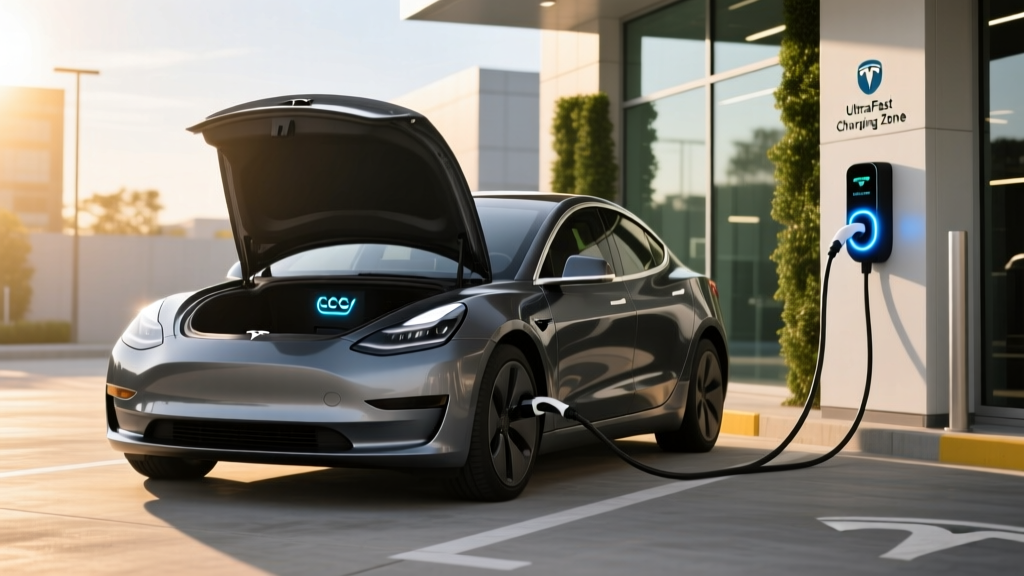
Charging speed is where Tesla's vertical integration pays dividends. The Model Y AWD supports a peak DC fast-charge rate of 250 kW on V3 Superchargers and compatible third-party CCS/NACS stations. However, peak rate is not sustained rate — the charge curve tapers significantly above 60% state of charge.
| Charging Level | Power (kW) | Speed (mi/hr added) | Typical Use Case |
|---|---|---|---|
| Level 1 (120V household) | ~1.4 kW | ~3-4 mi/hr | Overnight trickle / emergency |
| Level 2 (240V home Wall Connector) | 11.5 kW | ~44 mi/hr | Daily home charging |
| DC Fast (V3 Supercharger) | Up to 250 kW peak | ~175 mi in 15 min | Road trips |
| DC Fast (10-80%) | Average ~120 kW sustained | ~25 minutes total | Typical fast-charge stop |
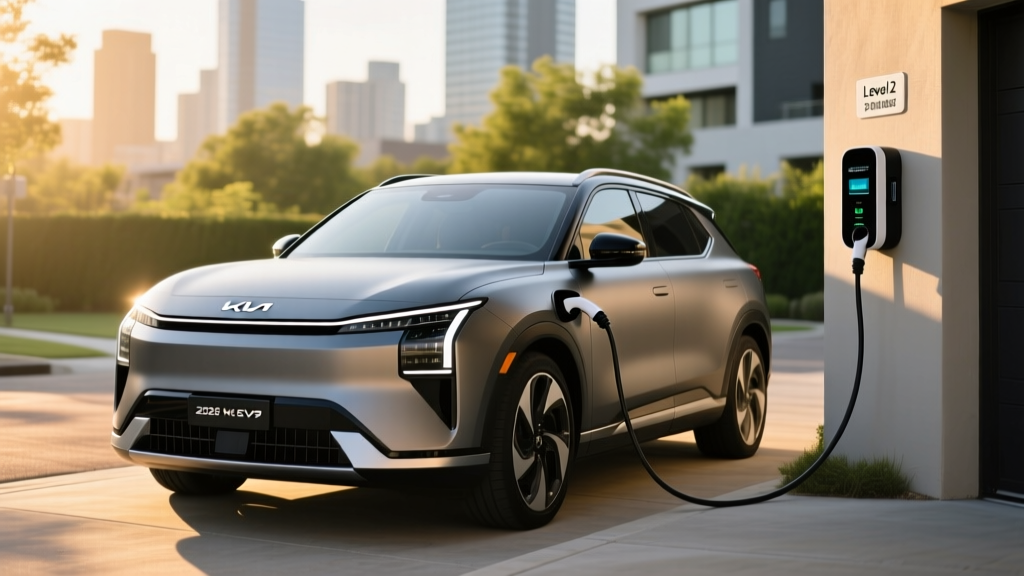
For home charging, Tesla's Wall Connector on a 60-amp circuit delivers 11.5 kW (48 amps continuous), replenishing a depleted battery in roughly 7-8 hours. If your home electrical panel supports only a 40-amp circuit, expect ~7.7 kW (30 mi/hr), which is still adequate for most daily driving needs. Always consult a licensed electrician to confirm your panel's capacity before installation — a 200-amp panel upgrade can add $1,500-$3,000 to your install cost.
With the industry's shift to NACS (North American Charging Standard), the Model Y's native connector is now the dominant standard in North America. Ford, Rivian, GM, and others have adopted NACS, meaning Model Y owners will increasingly share Supercharger stalls with non-Tesla EVs — a factor in peak-travel-time wait considerations.
Pricing, Trims, and Federal Tax Credit Eligibility
The 2026 Model Y lineup is streamlined into three main configurations:
| Trim | MSRP | Drivetrain | EPA Range | Est. Price After §30D Credit* |
|---|---|---|---|---|
| Long Range RWD | $42,990 | RWD | 320 mi | ~$35,490 |
| Long Range AWD | $44,990 | Dual-motor AWD | 311 mi | ~$37,490 |
| Performance AWD | $48,990 | Dual-motor AWD | 285 mi | ~$41,490 |
*Federal tax credit estimates assume full §30D eligibility. Actual credit depends on battery-sourcing compliance, buyer income, and point-of-sale transfer availability.
The IRS §30D Clean Vehicle Credit offers up to $7,500 for qualifying new EVs, but eligibility is not automatic. Key requirements include:
- MSRP cap: SUVs must be priced at or below $80,000 (all Model Y trims qualify).
- Buyer income cap: Modified adjusted gross income must not exceed $150,000 (single), $225,000 (head of household), or $300,000 (joint filers).
- Battery sourcing: A percentage of critical minerals and battery components must be sourced from the U.S. or free-trade-agreement partners. These thresholds tighten annually — verify current-year compliance on Tesla's website or the IRS qualified vehicle list before purchasing.
- Point-of-sale transfer: As of 2024, buyers can transfer the credit to the dealer at purchase, reducing the out-of-pocket price immediately rather than waiting for a tax refund.
The Long Range AWD at $44,990 (potentially ~$37,490 after credit) undercuts the BMW iX xDrive50 by over $30,000 and the Ford Mustang Mach-E GT by several thousand, while offering comparable or better range and charging speed. Consult a tax professional to confirm your personal eligibility before relying on the credit in your budget.
Interior, Cargo, and Technology
The Model Y's interior is minimalist by design — some say spartan. A single 15.4-inch touchscreen handles all infotainment, climate, and vehicle settings. There is no traditional instrument cluster; speed and navigation appear on the main display. Build quality has improved significantly since the 2022 Fremont production refresh, with tighter panel gaps and upgraded materials, though it still trails Hyundai/Genesis and BMW in perceived luxury.
Cargo space is a standout: 30.2 cubic feet behind the second row and 76.2 cubic feet with the 60/40 split rear seats folded. The front trunk (frunk) adds 4.1 cubic feet for charging cables or a small bag. Rear legroom measures 41.6 inches, generous for adults on longer trips.
Technology highlights include:
- Autopilot (standard): Adaptive cruise control and lane-centering. This is an SAE Level 2 driver-assistance system — the driver must remain fully engaged with hands on the wheel and eyes on the road at all times.
- Full Self-Driving (Supervised): Available as a $8,000 add-on or $99/month subscription. Despite the name, FSD remains SAE Level 2 and requires constant driver supervision. It adds automated lane changes, traffic-light recognition, and Navigate on Autopilot.
- Over-the-air updates: Tesla regularly pushes software updates that add features, improve efficiency, and refine the UI.
- Sentry Mode and Dashcam: Built-in camera recording for security and incident documentation.
Notable drawbacks: no Apple CarPlay or Android Auto (Tesla uses its proprietary infotainment), no heads-up display, and the reliance on touchscreen controls for simple adjustments like mirror positioning or wiper speed can be distracting while driving.
Warranty, Ownership Costs, and Longevity
Tesla covers the Model Y's battery and drive unit with an 8-year / 120,000-mile warranty (whichever comes first), guaranteeing a minimum of 70% battery capacity retention over that period. The limited vehicle warranty is 4 years / 50,000 miles — shorter than Hyundai's 5-year/60,000-mile basic and 10-year/100,000-mile powertrain coverage.
Long-term battery degradation data from Tesla's fleet reports and third-party tracking (e.g., Teslanom community data) suggests NMC packs in the Model Y typically lose 8-12% of capacity over the first 100,000 miles, with degradation slowing significantly after the initial break-in period. A full battery replacement out of warranty currently costs between $12,000 and $16,000 depending on the service center and pack revision.
Insurance costs are above average for the segment. Expect annual premiums of $2,200-$3,200 depending on your state, driving record, and coverage level — roughly 20-35% higher than a comparable Toyota RAV4 Hybrid. Get quotes before purchasing to avoid surprises.
Model Y AWD vs. Key Competitors
The Model Y Long Range AWD competes primarily with the Hyundai Ioniq 5 AWD, Ford Mustang Mach-E Premium AWD, and Volkswagen ID.4 AWD. Here's how the numbers compare:
| Spec | Tesla Model Y LR AWD | Hyundai Ioniq 5 AWD | Ford Mach-E Premium AWD | VW ID.4 AWD |
|---|---|---|---|---|
| EPA Range | 311 mi | 290 mi | 290 mi | 275 mi |
| 0-60 mph | 4.8 sec | 5.2 sec | 5.1 sec | 5.4 sec |
| Peak DC Charge | 250 kW | 238 kW | 150 kW | 175 kW |
| 10-80% DC Time | ~25 min | ~18 min (800V) | ~38 min | ~30 min |
| Cargo (behind 2nd row) | 30.2 cu ft | 27.2 cu ft | 29.7 cu ft | 30.3 cu ft |
| Base MSRP (AWD) | $44,990 | $48,500 | $45,995 | $46,815 |
| Apple CarPlay | No | Yes (wireless) | Yes (wireless) | Yes (wired) |
The Ioniq 5's 800-volt architecture gives it a faster 10-80% charge time, but the Model Y wins on total range, acceleration, and Supercharger network access. The Mach-E offers a more conventional interior and Ford dealer service, while the ID.4 provides the most cargo space but trails in performance and charging speed.
Frequently Asked Questions
What is the real-world range of the Tesla Model Y AWD?
The EPA rates the Model Y Long Range AWD at 311 miles. In real-world highway driving at 70-75 mph in moderate temperatures, expect 260-280 miles. In winter conditions below 30°F, plan for 220-245 miles. City driving with frequent regenerative braking can yield results closer to or slightly above the EPA figure.
How fast does the Model Y AWD charge at home and on the road?
At home on a 240V Level 2 Wall Connector (11.5 kW), the Model Y adds roughly 44 miles of range per hour, fully charging in about 7-8 hours. On a 250 kW V3 Supercharger, a 10-80% charge takes approximately 25 minutes, adding about 175 miles in 15 minutes at peak rate.
Does the Tesla Model Y qualify for the $7,500 federal tax credit?
The Model Y qualifies for up to $7,500 under IRS §30D, provided the buyer meets income caps ($150K single / $300K joint) and the vehicle's battery meets current-year critical-mineral and component sourcing requirements. All trims fall under the $80,000 SUV MSRP cap. The credit can be transferred at point of sale. Verify current sourcing compliance on the IRS qualified vehicle list before purchasing.
Is the Model Y AWD worth buying over the Ioniq 5 or Mach-E?
Choose the Model Y AWD if you prioritize range (311 mi), Supercharger network access, acceleration (4.8 sec 0-60), and over-the-air updates. Choose the Ioniq 5 if faster DC charging (18-min 10-80%), Apple CarPlay, and a more distinctive design matter to you. Choose the Mach-E for a traditional dealer service experience and a more driver-focused interior.
What are the biggest pros and cons of the Model Y AWD?
- Best-in-class EPA range (311 mi) for the price
- 4.8-sec 0-60 mph — quicker than most competitors
- Supercharger network reliability and density
- 76.2 cu ft cargo volume with seats folded
- Strong OTA update cadence adds value over time
- Heat pump standard for cold-climate efficiency
- No Apple CarPlay or Android Auto
- Touchscreen-dependent controls can distract
- Insurance premiums 20-35% above segment average
- Ride quality is firm on rough pavement
- FSD (Supervised) is expensive and still Level 2
- Increasing Supercharger congestion as NACS adoption grows
How long will the Model Y battery last?
Tesla warranties the battery for 8 years / 120,000 miles with at least 70% capacity retention. Fleet data suggests most Model Y NMC packs retain 88-92% capacity at 100,000 miles under normal use. Avoid frequent 100% charges and prolonged storage at very low or very high state of charge to maximize longevity.
Sources: EPA Fuel Economy (fueleconomy.gov), Tesla official specifications, IRS Clean Vehicle Credit guidelines (irs.gov).