Quick Verdict: The Benchmark Compact EV Gets Smarter
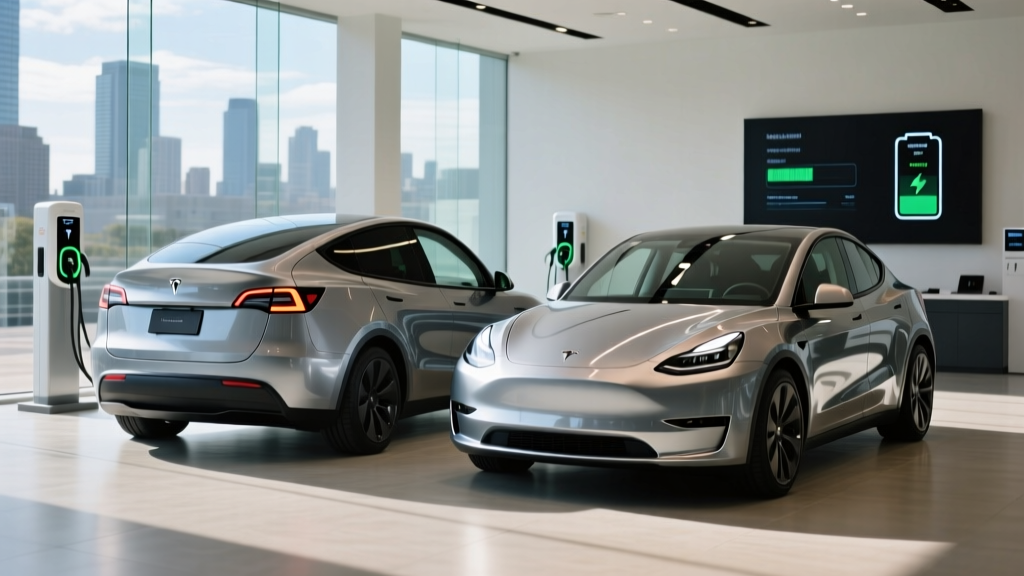
The 2026 Tesla Model Y remains the default recommendation for buyers entering the electric-vehicle market. With a refreshed design carried over from the Juniper update, improved cabin insulation, and Tesla's latest active-safety suite—including the highly rated autobrake system—the Model Y continues to set the pace in the compact electric SUV segment. But with rivals like the Hyundai Ioniq 5, Ford Mustang Mach-E, and Chevrolet Equinox EV closing the gap on range and charging speed, the question is no longer whether the Model Y is good. It's whether its specific blend of efficiency, Supercharger access, and software still delivers the best ownership experience in 2026.
This review breaks down every number that matters: real-world range vs. EPA estimates, DC fast-charging curves, autobrake and ADAS performance, tax-credit eligibility under current IRS §30D rules, and the total cost picture that most spec sheets leave out.
Range, Efficiency & Battery: What the EPA Sticker Doesn't Tell You
| Spec | 2026 Model Y Long Range AWD | 2026 Model Y Performance |
|---|---|---|
| EPA Range | 320 miles | 295 miles |
| Battery (usable) | ~78 kWh, NMC | ~78 kWh, NMC |
| MPGe (combined) | 122 MPGe | 111 MPGe |
| Efficiency | 27 kWh/100 mi | 30 kWh/100 mi |
| Drivetrain | Dual-motor AWD | Dual-motor AWD |
The Model Y uses an NMC (nickel manganese cobalt) lithium-ion pack, which offers higher energy density than LFP chemistry but comes with a recommended daily charge limit of 80% to preserve long-term health. For maximum range on road-trip days, you can charge to 100%, but Tesla's battery management system advises against making that a daily habit. The usable capacity of approximately 78 kWh is managed by a robust thermal system that preconditions the battery for both fast charging and cold-weather driving.
Source: EPA fueleconomy.gov
Charging Speed: Supercharger Network Advantage
Charging speed is where Tesla still holds a meaningful edge—not just in peak kW, but in the reliability and density of the Supercharger network, now increasingly open to NACS-equipped vehicles from other manufacturers.
| Charging Level | Power / Rate | Practical Speed |
|---|---|---|
| Level 1 (120V household) | ~1.4 kW | ~3–4 miles per hour |
| Level 2 (240V home, 48A) | 11.5 kW | ~37 miles per hour |
| DC Fast Charge (V3 Supercharger) | Peak 250 kW | 10–80% in ~25 minutes |
| DC Fast Charge (V4 Supercharger) | Peak 250+ kW | 10–80% in ~22 minutes |
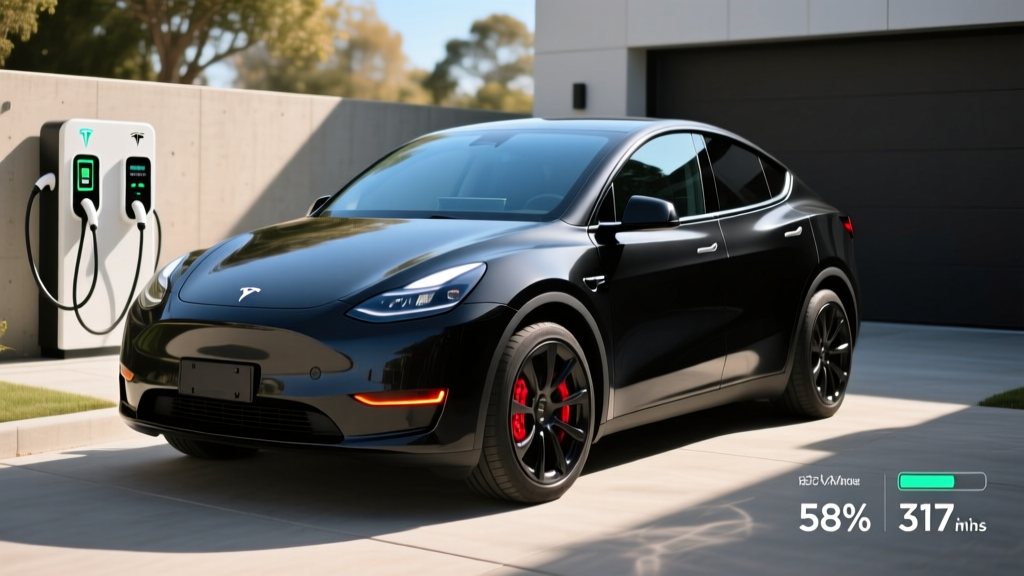
The Model Y's charge curve is front-loaded: it pulls peak power (around 250 kW) from roughly 10% to 35% State of Charge, then tapers progressively. By 60% SoC, you're seeing around 150 kW, and above 80%, the rate drops sharply to protect the battery—down to under 50 kW. This means the published 10–80% time of 25 minutes is accurate under optimal conditions (preconditioned battery, warm ambient temperature, V3/V4 stall). In cold weather without adequate preconditioning, add 5–10 minutes.
For home charging, a 48-amp Level 2 wall connector on a 60-amp circuit delivers about 37 miles of range per hour of charging. Most owners find that plugging in overnight fully replenishes daily driving. A 200-amp electrical panel is typically sufficient, but homes with older 100-amp service may require a panel upgrade ($1,500–$3,000) before installing a hardwired Level 2 charger.
Performance & Driving Dynamics
| Spec | Long Range AWD | Performance |
|---|---|---|
| 0–60 mph | 4.8 seconds | 3.5 seconds |
| Horsepower | ~384 hp (combined) | ~456 hp (combined) |
| Top Speed | 125 mph | 155 mph |
| Towing Capacity | 3,500 lbs | 3,500 lbs |
Even the "slower" Long Range variant hits 60 mph in under five seconds—quicker than most gas-powered sport sedans from a decade ago. The Performance trim's 3.5-second sprint is supercar territory. Both models use dual-motor all-wheel drive with independent torque vectoring between front and rear axles, giving confident traction in rain and light snow.
The Juniper-refreshed suspension tuning is noticeably more compliant than pre-2025 Model Y versions. Road noise has been reduced through additional acoustic glass and improved door seals. The ride still firms up over sharp impacts, but it no longer feels punishing on rough pavement—a common complaint from earlier owners.
Autobrake, Autopilot & Active Safety Systems
The keyword that brought many buyers to this review—Tesla autobrake—refers to the Automatic Emergency Braking (AEB) component of Tesla's active safety suite. This system is standard on every Model Y and operates independently of the optional Autopilot or Full Self-Driving (Supervised) packages.
Autobrake (AEB) capabilities:
- Detects vehicles, pedestrians, and cyclists ahead using Tesla Vision (camera-only, no radar or ultrasonic sensors in current models)
- Provides forward collision warning, then applies full braking if the driver doesn't react
- Operates at speeds from approximately 3 mph to 90+ mph
- Includes intersection emergency braking for cross-traffic scenarios
In IIHS testing, the Model Y has consistently earned top marks in crash avoidance. The autobrake system has demonstrated effective mitigation in both vehicle-to-vehicle and vehicle-to-pedestrian scenarios. However, Tesla Vision's camera-only approach can occasionally struggle in heavy rain, fog, or direct sun glare—situations where radar-equipped competitors may maintain more consistent detection.
Autopilot (standard): Includes Traffic-Aware Cruise Control and Autosteer (lane-centering) on marked highways. FSD Supervised ($8,000 option or $99/month): Adds automatic lane changes, on/off-ramp navigation, traffic light and stop sign recognition, and city-street autosteer. Both require constant driver supervision. FSD has improved substantially in 2025–2026, but it still makes occasional errors at complex intersections and construction zones that require immediate driver intervention.
Interior, Cargo & Practicality
The refreshed Model Y interior trades the spartan minimalism of earlier years for more material variety—textured dash surfaces, ambient lighting, and ventilated front seats. A rear-seat touchscreen (8 inches) gives passengers climate and entertainment control.
| Dimension | Measurement |
|---|---|
| Front legroom | 41.8 inches |
| Rear legroom | 41.6 inches |
| Cargo (behind 2nd row) | 30.2 cu ft |
| Cargo (2nd row folded) | 72.1 cu ft |
| Front trunk (frunk) | 4.1 cu ft |
| Seating | 5-passenger (optional 7-seat available) |
Cargo volume is competitive with the segment. The 72.1 cu ft maximum with seats folded is generous for a compact SUV and sufficient for camping gear, large furniture flat-packs, or two full-size bicycles with wheels on. The optional third row (a $3,000 add on Long Range) is best suited for children under 5'4"—adults will find it cramped on anything beyond short trips.
Notable drawbacks: The absence of physical buttons means even basic climate and mirror adjustments route through the central 15.4-inch touchscreen. Turn signals are on a steering-wheel-mounted stalk (retained post-refresh, unlike the Model 3 Highland), but wiper controls and glove-box release remain screen-only. Rear visibility is limited by the sloping roofline; the rear camera partially compensates.
Pricing, Trims & Federal Tax Credit Eligibility
| Trim | Base MSRP | Est. Federal Credit | Effective Price |
|---|---|---|---|
| Long Range AWD | $48,990 | Up to $7,500* | ~$41,490 |
| Performance | $53,990 | Up to $7,500* | ~$46,490 |
*Credit eligibility depends on buyer income, battery sourcing, and MSRP caps under IRS §30D. See details below.
- MSRP Cap: SUVs must have a base MSRP at or below $80,000 — both Model Y trims qualify.
- Income Cap: Modified AGI must not exceed $150,000 (single), $225,000 (head of household), or $300,000 (married filing jointly).
- Battery Sourcing: The full $7,500 requires meeting both critical-mineral and battery-component sourcing thresholds set by the IRS. Tesla has progressively shifted sourcing, but partial credit ($3,750) may apply if only one threshold is met. Check the latest IRS clean vehicle credit page for the current Model Y qualification status.
- Point-of-Sale Transfer: Eligible buyers can transfer the credit to the dealer at purchase, reducing the upfront price rather than waiting for a tax refund.
Destination charges ($1,390) and common add-ons like FSD or premium paint push the as-tested price higher. A Long Range AWD with FSD, red paint, and 20-inch wheels lands near $59,000 before credits.
Warranty & Long-Term Ownership
| Coverage | Term |
|---|---|
| Basic Vehicle | 4 years / 50,000 miles |
| Battery & Drive Unit | 8 years / 120,000 miles |
| Battery Retention Guarantee | Minimum 70% capacity over warranty term |
Tesla's 8-year/120,000-mile battery and drive-unit warranty is competitive, though some rivals like Hyundai offer 10-year/100,000-mile coverage on the battery. The 70% capacity retention threshold is standard—if your battery degrades below that within the warranty period, Tesla will repair or replace it. Real-world data from high-mileage Model Y owners suggests typical degradation of 8–12% over the first 100,000 miles with NMC chemistry, meaning most packs remain well above the warranty floor.
Maintenance costs are low: no oil changes, no transmission fluid, and regenerative braking significantly extends pad life. Cabin air filter replacement (~$50–$100 every 2 years) and tire rotation are the primary recurring costs. Insurance premiums, however, tend to run 15–25% higher than equivalent gas-powered SUVs due to repair costs and Tesla's aluminum-intensive construction.
Pros, Cons & Who Should Buy
- Best-in-class Supercharger network reliability
- Top-tier efficiency (122 MPGe combined)
- Strong autobrake and crash-test performance
- Over-the-air updates add features post-purchase
- Spacious cargo area and practical liftback design
- Screen-dependent controls frustrate some drivers
- NMC battery requires 80% daily charge limit
- FSD is expensive and still requires full supervision
- Phantom braking events still occur intermittently
- Rear visibility limited by coupe-like roofline
Consider competitors if: You want LFP chemistry for worry-free 100% daily charging (base Model 3 RWD offers this), prefer physical buttons and traditional interiors (Hyundai Ioniq 5, Kia EV6), or need maximum towing capacity (Rivian R2, Ford Mach-E GT with tow package).
The Model Y suits daily commuters, small families, and road-trip-capable households who have reliable home charging. If your commute exceeds 80 miles round-trip, the Long Range's real-world 265+ mile highway range provides ample headroom. For apartment dwellers without home charging, the Supercharger network makes ownership feasible, but weekly charging stops add 25–40 minutes to your routine.
Frequently Asked Questions
What is the real-world range of the 2026 Tesla Model Y?
The EPA rates the Long Range AWD at 320 miles, but real-world highway driving yields approximately 265–285 miles. In cold weather (below 30°F), expect 220–245 miles. City driving with regenerative braking can match or slightly exceed the EPA figure in mild temperatures.
How fast does the Model Y charge at home and on the road?
On a 48-amp Level 2 home charger, the Model Y gains about 37 miles of range per hour (11.5 kW). On a V3 Supercharger, it peaks at 250 kW and charges from 10–80% in roughly 25 minutes under optimal conditions. The charge curve tapers significantly above 80%, so plan to unplug at 80% on road trips unless you need the extra miles.
How much does the Model Y cost after the federal tax credit?
The Long Range AWD starts at $48,990 MSRP. With the full $7,500 §30D credit (if you meet income, MSRP, and battery-sourcing requirements), the effective price drops to approximately $41,490. The Performance trim at $53,990 falls to ~$46,490. Always verify current eligibility on IRS.gov, as sourcing rules update periodically.
Is the Tesla Model Y worth buying over the Hyundai Ioniq 5 or Ford Mach-E?
The Model Y wins on efficiency, Supercharger access, and cargo space. The Ioniq 5 offers faster peak charging (up to 350 kW on 800V architecture), a more distinctive interior, and LFP options. The Mach-E appeals to buyers who want a more traditional driving feel and dealer-service network. Your choice depends on charging access, interior preference, and road-trip frequency.
Does Tesla autobrake work in all weather conditions?
Tesla's autobrake uses Tesla Vision (cameras only, no radar). It performs well in clear conditions and moderate rain but can experience reduced detection range in heavy rain, dense fog, snow, or direct sun glare. The system remains active but may issue warnings about limited capability. Always drive to conditions regardless of ADAS features.
Does the 2026 Model Y qualify for the full $7,500 federal EV tax credit?
Both trims fall under the $80,000 MSRP cap for SUVs. Full credit eligibility depends on your income (≤$150K single / ≤$300K joint), and whether the specific vehicle's battery meets IRS critical-mineral and component-sourcing thresholds for the current year. Tesla's qualification status has shifted as sourcing rules tighten—check the IRS clean vehicle credit page or consult a tax professional before purchasing.