For buyers evaluating the 2026 Tesla Model Y, the sticker price is only half the equation. The other half—financing rates, federal incentives, charging costs, and real-world efficiency—determines what you actually pay per month and per mile. With Tesla periodically offering promotional APR financing (often 0.99% to 3.99% through Tesla Financial Services for qualified buyers), the Model Y's affordability hinges on stacking those rate incentives with the federal §30D tax credit and realistic ownership projections.
This review breaks down the 2026 Model Y Long Range AWD and Performance trims with exact EPA figures, charging benchmarks, and a financing-versus-cash comparison so you can decide whether now is the right time to buy.
2026 Tesla Model Y: Quick Verdict
The Model Y remains the benchmark compact electric SUV for range efficiency, Supercharger network access, and cargo versatility. The 2026 Long Range AWD delivers an EPA-estimated 320 miles of range, peaks at 250 kW on DC fast chargers, and starts at $44,990 before incentives. For commuters and road-trippers who value minimal charging stops and over-the-air updates, it's still the segment leader—though competitors like the Hyundai Ioniq 5 and Ford Mustang Mach-E close the gap on interior comfort and ride quality.
| Spec | Long Range AWD | Performance |
|---|---|---|
| EPA Range | 320 miles | 293 miles |
| Battery (usable) | ~75 kWh, NMC | ~75 kWh, NMC |
| Efficiency | 26 kWh/100mi (128 MPGe) | 28 kWh/100mi (120 MPGe) |
| Peak DC Charge Rate | 250 kW | 250 kW |
| 10–80% DC Fast Charge | ~25 min | ~25 min |
| Level 2 Home Charge | 11.5 kW (~44 mi/hr) | 11.5 kW (~44 mi/hr) |
| 0–60 mph | 4.8 sec | 3.5 sec |
| Horsepower | 384 hp | 456 hp |
| Drivetrain | Dual-Motor AWD | Dual-Motor AWD |
| Base MSRP | $44,990 | $48,990 |
Real-World Range vs. EPA Estimates
EPA Estimate: 320 miles (Long Range AWD)
Real-World Expectation: 260–290 miles at sustained 70 mph highway speeds; 220–250 miles in sub-30°F winter conditions with cabin heating.
Tesla's efficiency engineering—heat pump standard, integrated thermal management, and low-drag aero—keeps the Model Y near the top of its class for kWh-per-mile consumption. According to fueleconomy.gov, the Long Range AWD achieves 128 MPGe combined. However, EPA test cycles include significant city driving where regenerative braking recaptures energy. On a pure highway road trip from Denver to Kansas City (roughly 600 miles), expect two 20-minute Supercharger stops rather than one.
Cold-weather range loss remains physics, not a Tesla flaw. Lithium-ion cells experience higher internal resistance below freezing, and cabin heating draws 2–4 kW continuously. Preconditioning the battery while plugged in (via the Tesla app's scheduled departure feature) mitigates this by warming the pack using grid power rather than battery energy.
Charging Speed: DC Fast, Level 2, and the Supercharger Advantage
| Charging Method | Max Power | Miles Added per Hour | 10–80% Time |
|---|---|---|---|
| DC Fast Charge (V3 Supercharger) | 250 kW | ~1,000 mi/hr (peak) | ~25 minutes |
| DC Fast Charge (CCS station via adapter) | 150–250 kW | Varies by station | 25–35 minutes |
| Level 2 Home (Wall Connector, 48A) | 11.5 kW | ~44 mi/hr | ~7 hours (0–100%) |
| Level 1 (120V outlet) | 1.4 kW | ~4 mi/hr | ~50+ hours |
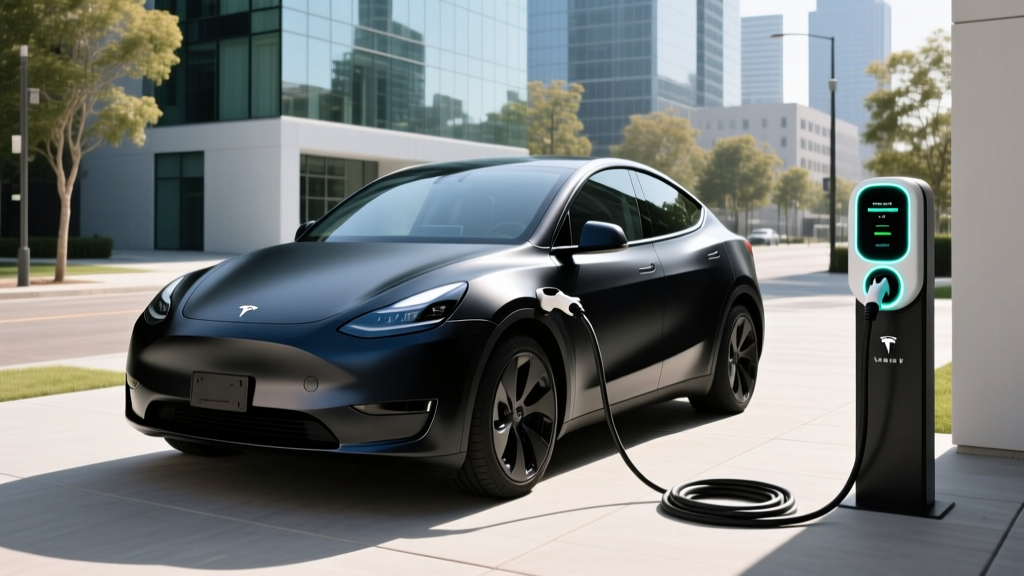
The Model Y's 250 kW peak charge rate is sustained only between roughly 10% and 35% state of charge. Above 50%, the charge curve tapers significantly—typical of NMC chemistry to protect long-term cell health. On a V3 Supercharger, you'll add 200 miles in about 15 minutes if arriving at a low state of charge. The Tesla Supercharger network remains the most reliable public charging infrastructure in the U.S., with over 6,000 stations and plug-and-charge authentication that eliminates app fumbling.
For home charging, Tesla's Wall Connector ($475) on a 60-amp circuit delivers 11.5 kW, replenishing a depleted battery overnight. Most owners charging from 20% to 80% daily need only 4–5 hours. Installation costs range from $500 (simple run near the panel) to $2,500+ if a panel upgrade to 200 amps is required.
Pricing, APR Financing, and Federal Tax Credit Math
The 2026 Model Y Long Range AWD starts at $44,990 (including destination). The Performance trim is $48,990. Adding Full Self-Driving (Supervised) capability costs $8,000, though we recommend skipping it—the included Basic Autopilot handles lane-centering and adaptive cruise competently, and FSD remains a SAE Level 2 driver-assist system requiring constant supervision.
| Line Item | Amount |
|---|---|
| Base MSRP | $44,990 |
| Federal §30D Tax Credit (if eligible) | –$7,500 |
| Effective Price After Credit | $37,490 |
| Est. State/Local Incentives (varies) | –$0 to –$4,000 |
Federal Tax Credit Eligibility (IRS §30D): The Model Y qualifies for the full $7,500 credit if you meet all criteria: adjusted gross income below $150,000 (single) or $300,000 (joint), the vehicle's MSRP does not exceed $80,000 (SUVs), and the battery meets critical-mineral and component-sourcing thresholds. As of 2026, Tesla sources sufficient North American battery components to satisfy the requirement, but buyers should verify current eligibility at IRS.gov before purchase. The credit is now available as a point-of-sale transfer, reducing your out-of-pocket cost at delivery rather than waiting for tax filing.
APR Financing Scenario: Tesla periodically offers promotional financing rates between 0.99% and 3.99% APR for 36–72 months through Tesla Financial Services (credit-tier dependent). At a 60-month term with 2.99% APR on the $37,490 net price (after the $7,500 credit applied at sale), your monthly payment would be approximately $673. Compare this to a standard bank auto loan at 6.5% APR, which would push the payment to roughly $733/month—a $3,600 difference over the loan term. Promotional APR offers effectively function as a secondary discount stacked atop the tax credit.
Performance, Efficiency, and Daily Drivability
The Long Range AWD's dual-motor setup delivers 384 hp and a 4.8-second 0–60 time—more than adequate for highway merging and confident passing. The Performance trim's 3.5-second sprint is sports-car territory, though it sacrifices 27 miles of EPA range and rides on stiffer suspension that transmits more road imperfections.
Efficiency is where the Model Y shines. At 26 kWh per 100 miles (Long Range), it consumes less energy per mile than the Ford Mustang Mach-E Extended Range (28 kWh/100mi) and Hyundai Ioniq 5 AWD (30 kWh/100mi). Over 15,000 annual miles at $0.14/kWh (national average residential electricity rate), annual charging costs roughly $546—compared to $1,800+ for a 25-MPG gas SUV at $3.00/gallon.
Ride quality has improved over earlier model years with revised damper tuning, though the Model Y still favors firmness over plushness. Cabin noise is well-controlled at highway speeds, and the panoramic glass roof creates an airy interior, though it does contribute to solar heat gain in summer (the included tint helps).
Cargo Space, Interior, and Tech
The Model Y offers 30.2 cubic feet of cargo space behind the second row and 76.2 cubic feet with the rear seats folded—competitive with the Toyota RAV4 and more usable than many luxury compact SUVs. The front trunk (frunk) adds 4.1 cubic feet for charging cables or a small bag. Rear legroom measures 41.6 inches, sufficient for adults on longer trips.
The 15-inch center touchscreen controls nearly all vehicle functions—climate, mirrors, glovebox, and drive settings. While minimalist, the interface is responsive and logically organized. Wireless phone charging, heated front and rear seats, and a HEPA air filtration system are standard. The optional $8,000 FSD (Supervised) package enables automatic lane changes, navigation-guided on/off-ramp handling, and city-street stoplight recognition, but remains a Level 2 system requiring hands-on-wheel attention and will not make the car autonomous.
Warranty and Long-Term Battery Outlook
Tesla covers the Model Y's battery and drive units for 8 years or 120,000 miles (whichever comes first), with a minimum 70% capacity retention threshold. The limited vehicle warranty is 4 years/50,000 miles. Real-world data from Tesla's fleet indicates typical NMC battery degradation of approximately 10–12% over 150,000 miles, meaning a 320-mile Model Y might retain 280–290 miles of range after high-mileage use. This is well within the warranty threshold and generally not a concern for first or second owners.
Tesla does not publish a fixed battery replacement cost, but out-of-warranty replacements for the Model Y have been reported in the $12,000–$16,000 range based on service invoices shared by owners. For context, most Model Y batteries will outlast the vehicle's economic life.
Pros, Cons, and Who Should Buy
Pros
- Class-leading efficiency (26 kWh/100mi)
- Supercharger network access—most reliable U.S. public charging
- Strong cargo versatility (76 cu ft max)
- Over-the-air updates continuously add features
- Promotional APR financing reduces total cost
Cons
- Firm ride quality on rough pavement
- Minimalist interior lacks physical buttons (learning curve)
- Panel-gap quality inconsistencies persist
- FSD (Supervised) expensive and still Level 2, not autonomous
- Insurance premiums 15–25% higher than gas equivalents
Best for: Tech-forward commuters, road-trippers who value Supercharger access, and families needing cargo space without stepping up to a Model X. The Model Y Long Range AWD at $44,990 (effectively $37,490 after the federal credit, less with promotional APR) is the sweet spot for value.
Consider alternatives if: You prioritize a plush ride (Hyundai Ioniq 5), need a third row (Kia EV9), or want Apple CarPlay/Android Auto integration (neither is available in Teslas).
Frequently Asked Questions
What is the real-world range of the 2026 Tesla Model Y Long Range?
The EPA rates it at 320 miles. In real-world highway driving at 70 mph, expect 260–290 miles. In freezing temperatures with cabin heat, plan for 220–250 miles. Preconditioning while plugged in recovers some winter range.
How fast does the Model Y charge on DC fast chargers and at home?
At a V3 Supercharger (250 kW), 10–80% takes approximately 25 minutes. At home on a Level 2 Wall Connector (11.5 kW), you'll add about 44 miles of range per hour, fully recharging overnight.
Does the 2026 Model Y qualify for the $7,500 federal EV tax credit?
Yes, provided you meet IRS §30D requirements: income below $150K (single) / $300K (joint), MSRP under $80K, and the vehicle's battery meets critical-mineral sourcing rules. Tesla currently qualifies. The credit can be applied at point of sale. Verify at IRS.gov before ordering.
What APR financing rates does Tesla offer?
Tesla Financial Services periodically offers promotional APRs between 0.99% and 3.99% for 36–72 months, depending on credit tier and promotional period. Standard rates outside promotions may be higher. Always compare against your bank or credit union's auto loan rate.
Is the Model Y worth buying over the Hyundai Ioniq 5 or Ford Mach-E?
The Model Y wins on efficiency, Supercharger network reliability, and cargo space. The Ioniq 5 offers a more comfortable ride and 800V architecture for faster charging on compatible stations. The Mach-E provides a more traditional SUV interior with physical controls. Test-drive all three; the right choice depends on whether you prioritize charging infrastructure (Tesla) or ride comfort (Hyundai/Ford).
Is Full Self-Driving (FSD) worth the $8,000 option?
For most buyers, no. FSD (Supervised) is a Level 2 driver-assist system—you must remain attentive with hands on the wheel. Basic Autopilot (included) handles highway lane-centering and adaptive cruise well. FSD's city-street features are impressive but not a substitute for an engaged driver. Wait for a subscription trial or skip it entirely.