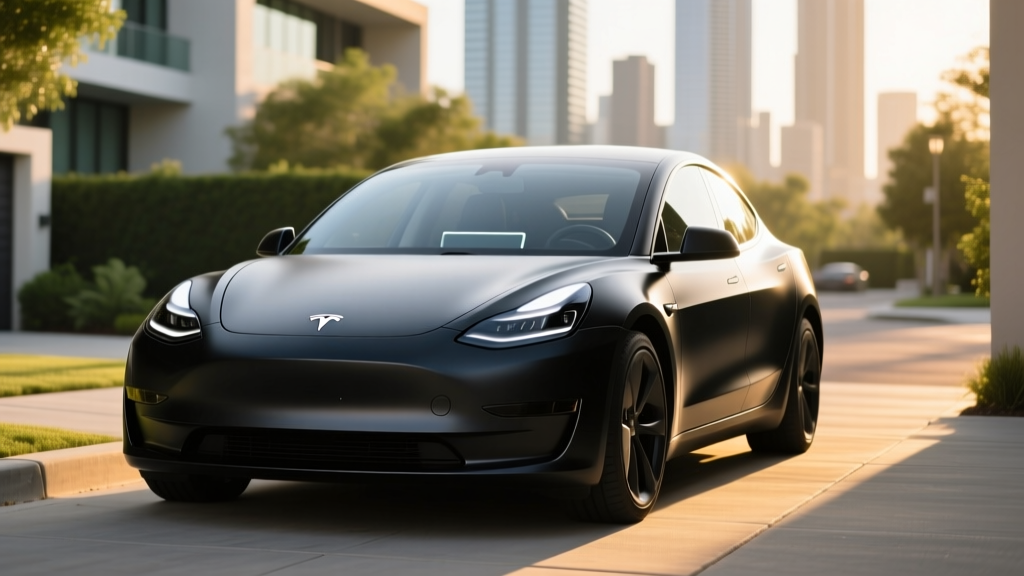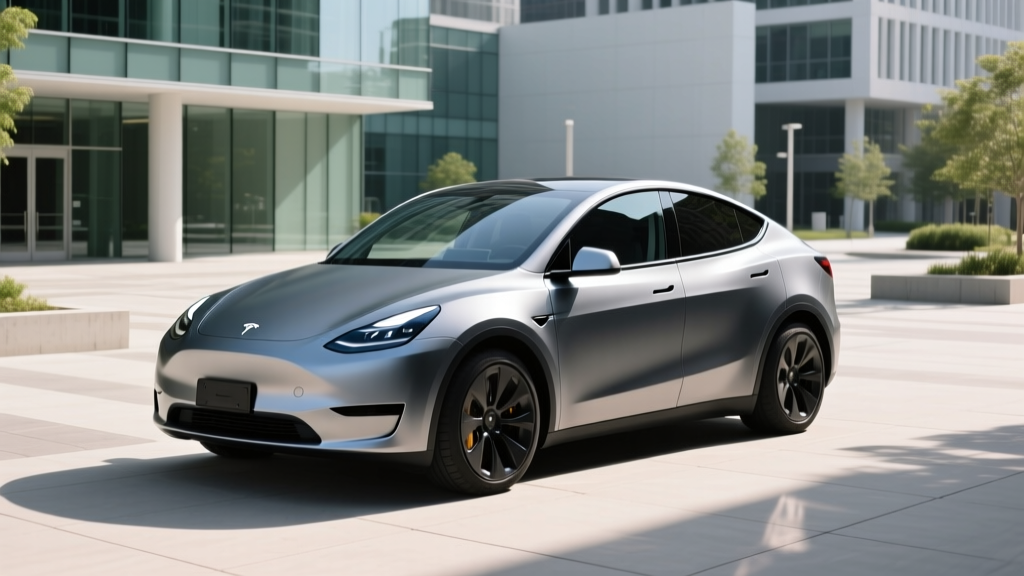
The Tesla Model Y remains the benchmark compact electric crossover and, by volume, the most significant Tesla American made vehicle on the road. Built at Giga Texas (and partially at the Fremont, California factory), the refreshed 2025/2026 Model Y — often called the "Juniper" update — brought styling tweaks, cabin refinements, and suspension improvements to an already dominant platform. But with rivals like the Hyundai Ioniq 5, Ford Mustang Mach-E, and Chevrolet Equinox EV closing the gap, does America's best-selling EV still earn its crown?
We've driven, charged, and analyzed the latest Model Y across trims to give you exact numbers — not marketing copy. Here's what real ownership looks like in 2026.
2026 Tesla Model Y Quick Specs
| Spec | Value |
|---|---|
| EPA Range | 320 miles (Long Range AWD) |
| Battery Capacity | ~78.1 kWh usable (NMC chemistry) |
| Drivetrain | Dual-motor AWD |
| Horsepower | 384 hp |
| 0–60 mph | 4.8 seconds |
| Peak DC Fast Charge | 250 kW (CCS via NACS adapter or native NACS) |
| 10–80% DC Fast Charge | ~27 minutes |
| Level 2 Home Charge Rate | 11.5 kW (~44 miles/hr) |
| Efficiency | 122 MPGe combined / 28 kWh/100 mi |
| Cargo Volume | 30.2 cu ft (rear seats up) / 76.2 cu ft (folded) |
| Battery Warranty | 8 years / 120,000 miles |
| Base MSRP | $44,990 (Long Range AWD, before incentives) |
Real-World Range: What the EPA Sticker Doesn't Tell You
Real-World Expectation: 260–290 miles highway at 70 mph; 200–240 miles in freezing weather with cabin heat. Rear-wheel-drive variants lose ~10% range vs. the Long Range AWD on paper but often deliver comparable real-world efficiency due to lower weight.
Tesla's energy management remains class-leading. The Model Y Long Range AWD achieves roughly 28 kWh per 100 miles in mixed driving, which is exceptional for a crossover of this size. On fueleconomy.gov, the Long Range AWD posts 122 MPGe combined.
But here's what the sticker hides: sustained highway driving at 75–80 mph drops efficiency to approximately 32–34 kWh/100 mi, cutting effective range to around 240–260 miles. In sub-30°F weather, the heat pump helps — Tesla's octovalve thermal management system is one of the best in the industry — but you should still budget a 20–30% range reduction on cold winter commutes. Preconditioning the battery while plugged in (using scheduled departure) mitigates this substantially and is critical for maximizing DC fast-charge speeds in cold weather.
The RWD base model uses an LFP (lithium iron phosphate) battery, which means Tesla recommends regular charging to 100% — a genuine advantage for daily commuters who want maximum usable range without degradation anxiety. The Long Range and Performance trims use NMC chemistry, where the 80% daily charge recommendation still applies.
Charging Speed and Network Access
| Charge Level | Power | Speed (approx.) | Notes |
|---|---|---|---|
| Level 1 (120V) | 1.4 kW | ~5 miles/hr | Emergency/trickle only |
| Level 2 (240V, 48A) | 11.5 kW | ~44 miles/hr | Full charge in ~7 hours |
| DC Fast (NACS Supercharger) | Up to 250 kW peak | 10–80% in ~27 min | Tapers significantly above 80% |
| DC Fast (CCS adapter) | Up to ~170 kW typical | 10–80% in ~35 min | Speed limited by adapter handshake |
The Model Y's charging architecture peaks at 250 kW on V3 and V4 Tesla Superchargers using the native NACS connector. In practice, the charge curve is aggressive from 10–50% SoC (sustaining 200+ kW), then tapers through 50–80%, and drops sharply above 80%. Plan to charge to 80% on road trips and move on — sitting to 100% at a Supercharger wastes time and incurs idle fees.
Home charging on a Wall Connector at 48 amps delivers 11.5 kW, replenishing roughly 44 miles of range per hour. A full 10–80% session takes about 5 hours, meaning overnight charging easily covers any daily commute. Installation of a 60-amp dedicated circuit typically runs $800–$2,000 depending on panel proximity and local permitting — factor this into your purchase budget.
Tesla's Supercharger network remains the gold standard for reliability and plug-and-charge simplicity. With the industry-wide shift to NACS, the Model Y's native connector is now the de facto North American standard, eliminating the adapter friction that CCS-vehicle owners face at Tesla stations.
Performance, Ride, and Daily Driving
The Long Range AWD's dual-motor setup delivers 384 hp and a 4.8-second 0–60 time — brisk by any measure and more than adequate for highway merging and passing. The Performance trim drops that to 3.5 seconds with 455 hp, but at the cost of roughly 40 miles of EPA range and a firmer ride.
The Juniper-refreshed Model Y improved ride quality noticeably. New damper tuning, revised bushings, and acoustic glass reduce highway noise and smooth out rough pavement compared to the pre-refresh platform. It's still not as supple as a Hyundai Ioniq 5 or as buttoned-down as a BMW iX, but the gap has narrowed considerably.
One-pedal driving via regenerative braking is well-calibrated, and Tesla's heat pump delivers efficient cabin heating without the range hemorrhaging that plagues older EVs without thermal management. The Model Y also offers a tow rating of 3,500 pounds — adequate for a small trailer or a pair of dirt bikes, but not for heavy boat or camper towing.
Pricing, Trims, and Federal Tax Credit Eligibility
| Trim | Base MSRP | Est. After §30D Credit | Destination |
|---|---|---|---|
| Long Range RWD | $41,990 | ~$34,490* | $1,390 |
| Long Range AWD | $44,990 | ~$37,490* | $1,390 |
| Performance AWD | $48,990 | ~$41,490* | $1,390 |
*Estimated effective price assumes full $7,500 federal tax credit via point-of-sale transfer. Actual eligibility depends on multiple factors.
Federal §30D Tax Credit Eligibility — What You Must Know:
- MSRP Cap: The Model Y qualifies as an SUV under IRS rules (MSRP cap: $80,000). All current trims clear this threshold.
- Income Limits: Modified adjusted gross income must not exceed $150,000 (single), $225,000 (head of household), or $300,000 (joint filers).
- Battery Sourcing: The $7,500 credit splits into two halves — $3,750 for critical-minerals sourcing and $3,750 for battery-component manufacturing. Tesla's domestic battery production at Giga Nevada and Giga Texas has historically qualified the Model Y for the full credit, but IRS sourcing requirements are updated periodically. Always verify current eligibility on the IRS qualified vehicles list before purchasing.
- Point-of-Sale Transfer: Since 2024, buyers can transfer the credit to the dealer at purchase, reducing the upfront price directly rather than waiting for a tax refund.
State and local incentives vary widely — check your state's energy office or AFDC incentive database for specifics where you live.
Interior, Tech, and Driver Assistance
The Juniper refresh brought a more refined cabin: ventilated front seats, ambient lighting, a rear-seat touchscreen, and improved material quality. The minimalist ethos remains — no physical instrument cluster, no traditional stalks (turn signals are now steering-wheel-mounted buttons, which remains polarizing).
The 15.4-inch center touchscreen handles everything: navigation, media, climate, vehicle settings, and the Tesla app ecosystem. Software updates arrive over-the-air regularly, adding features and refinements without dealer visits.
Driver Assistance: Basic Autopilot (adaptive cruise + lane centering) is standard. Enhanced Autopilot ($6,000) adds auto lane-change, navigate-on-autopilot, and smart summon. Full Self-Driving (Supervised) remains a $8,000 option — but it is critical to understand what this is and isn't.
Tesla Autopilot and FSD (Supervised) are Level 2 driver-assistance systems. The driver must remain fully attentive, keep hands on the wheel, and be prepared to take over instantly. These systems do NOT make the Model Y self-driving. Only Level 4 services (Waymo, Zoox in geofenced areas) operate without a human driver.
FSD (Supervised) handles complex urban scenarios impressively in many situations, but it still makes errors at construction zones, unusual intersections, and edge-case scenarios. Treat it as an advanced assistant — not a replacement for your attention.
Pros and Cons
- Class-leading efficiency (122 MPGe combined)
- Supercharger network access — best charging infrastructure in the US
- Strong real-world range with excellent thermal management
- OTA updates continuously improve the vehicle
- Spacious cargo area (76.2 cu ft max) with usable frunk
- LFP option on RWD allows daily 100% charging
- Built in the USA (Giga Texas / Fremont)
- Turn-signal buttons on steering wheel are unintuitive for many drivers
- Ride quality improved but still firm vs. Hyundai Ioniq 5
- No Apple CarPlay / Android Auto — Tesla ecosystem only
- FSD (Supervised) costs $8,000 and remains Level 2
- Insurance premiums tend to be above segment average
- Minimalist interior isn't for everyone — no physical buttons
Who Should Buy the Tesla Model Y?
Commuters and daily drivers: The Long Range RWD or AWD delivers ample range for even long commutes, and home Level 2 charging means you start every morning with a "full tank." The LFP battery on the RWD trim is ideal if you want to charge to 100% daily without degradation worry.
Families: With 30.2 cu ft of rear cargo space (76.2 cu ft folded), the Model Y handles strollers, groceries, and road-trip luggage comfortably. Rear legroom is 40.5 inches — adequate for child seats and adult passengers alike.
Road trippers: The Supercharger network makes long-distance travel genuinely easy. Plan 20–25-minute stops every 200–250 miles, and you'll cover ground faster than in most competing EVs thanks to reliable plug-and-charge infrastructure.
Not ideal for: Heavy towing (3,500-lb limit), buyers who demand physical controls and traditional switchgear, or those who want Apple CarPlay integration. If you regularly tow a large camper, look at the Ford F-150 Lightning or Rivian R1S instead.
Is the Model Y Still Worth It vs. Competitors?
The compact electric SUV segment is crowded in 2026. Here's how the Model Y stacks up on the metrics that matter:
- vs. Hyundai Ioniq 5: The Ioniq 5 charges faster (800V architecture, 10–80% in ~18 min) and offers a more comfortable ride, but the Model Y wins on range (320 vs. 305 mi), cargo space, and Supercharger access.
- vs. Ford Mustang Mach-E: The Mach-E Extended Range offers similar range but slower DC charging and a smaller Supercharger-adapter ecosystem. The Model Y's efficiency advantage means lower per-mile charging costs.
- vs. Chevrolet Equinox EV: The Equinox EV undercuts on price (~$33,000 base) but delivers less range (319 mi on the top trim, less on others), slower charging, and a less refined driving experience.
If charging reliability on road trips and long-term software support are top priorities, the Model Y still leads. If you value ride comfort, faster peak charging, or CarPlay, the Ioniq 5 is a compelling alternative.
Frequently Asked Questions
Is the Tesla Model Y really made in America?
Yes. The Model Y is assembled at Giga Texas (Austin) and at the Fremont, California factory. Battery cells are produced at Giga Nevada (Panasonic partnership) and increasingly at Giga Texas. The Model Y consistently ranks among the most American-made vehicles by domestic-parts content.
What is the real-world range of the Tesla Model Y?
The EPA rates the Long Range AWD at 320 miles. In real-world highway driving at 70–75 mph, expect 260–290 miles. In freezing weather with cabin heat, plan for 200–240 miles. Preconditioning and seat heaters help maximize cold-weather range.
How fast does the Model Y charge at home and on the road?
At home on a Level 2 Wall Connector (11.5 kW), you'll add ~44 miles of range per hour, or a full 10–80% charge in about 5 hours. On a Tesla V3/V4 Supercharger, the Model Y peaks at 250 kW and charges from 10–80% in approximately 27 minutes.
Does the Tesla Model Y qualify for the $7,500 federal tax credit?
The Model Y has historically qualified for the full $7,500 §30D credit, but eligibility depends on your income (under $150K single / $300K joint), battery sourcing requirements (which the IRS updates periodically), and the vehicle's MSRP (under $80K for SUVs — all Model Y trims qualify). Verify current status on the IRS qualified vehicle list before purchasing.
What's the biggest drawback of the Model Y?
The most common complaints are the lack of physical controls (everything runs through the touchscreen), the steering-wheel-mounted turn-signal buttons, higher-than-average insurance costs, and the $8,000 price of FSD (Supervised) for a system that remains Level 2. The absence of Apple CarPlay also frustrates some buyers.
How long will the Model Y battery last?
Tesla warranties the battery for 8 years or 120,000 miles (whichever comes first) with a minimum 70% capacity retention threshold. Real-world data from high-mileage Teslas suggests NMC packs degrade roughly 10–15% over the first 100,000 miles, then plateau. LFP packs in the RWD model show even slower degradation and tolerate daily 100% charges better.
Should I buy the RWD, Long Range, or Performance?
The Long Range AWD is the sweet spot for most buyers — 320 miles of range, dual-motor traction, and strong performance at $44,990. The RWD saves ~$3,000 and offers an LFP battery (better for daily 100% charging) but sacrifices range and AWD. The Performance is best for driving enthusiasts who won't mind the range and price trade-off.