When Tesla launched the refreshed Model Y (internally dubbed "Juniper") in early 2025, it brought meaningful improvements in ride quality, cabin materials, and range. But for budget-conscious buyers, the real story is the Tesla Model Y affordable version: the rear-wheel-drive base trim. Starting well below its dual-motor siblings, the RWD Model Y is the lowest-cost entry point into Tesla's best-selling crossover — and in 2026, it remains one of the most efficient electric SUVs you can buy.
This review breaks down everything that matters for the 2026 Model Y RWD: its real-world range, LFP battery behavior, DC fast-charging reality, interior space, tax-credit eligibility, and how it stacks up against rivals like the Hyundai Ioniq 5 and Ford Mustang Mach-E. If you're trying to maximize value without sacrificing the Supercharger network, this is the trim to scrutinize.
2026 Tesla Model Y RWD: Key Specifications at a Glance
| Spec | 2026 Model Y RWD (Base) |
|---|---|
| Base MSRP | $44,990 (before incentives) |
| EPA Range | 320 miles |
| Battery (usable) | ~60 kWh, LFP (lithium iron phosphate) |
| Drivetrain | Rear-wheel drive, single motor |
| Horsepower | 295 hp |
| 0–60 mph | 6.5 seconds |
| Max DC Fast Charge | 170 kW (peak) |
| 10–80% DC Charge | ~28 minutes |
| Level 2 Home Charge | 11.5 kW (~44 mi/hr) |
| MPGe (combined) | 130 MPGe |
| Efficiency | 26 kWh/100 mi |
| Cargo (rear seats up) | 30.2 cu ft |
| Cargo (rear seats folded) | 72.1 cu ft |
| Battery Warranty | 8 years / 100,000 miles |
| Federal Tax Credit | Up to $7,500 (eligibility varies) |
Real-World Range: Beyond the EPA Sticker
The Model Y RWD's LFP battery pack is a key factor in real-world range behavior. LFP cells have a flatter discharge curve than the NMC chemistry found in the Long Range and Performance trims. That means you get consistent power delivery from 100% down to about 10% SoC, but the final drop-off is sharper. Tesla recommends charging LFP packs to 100% regularly — unlike NMC, where daily charging to 80% is preferred for longevity. This is a practical advantage: your daily usable range is effectively the full 320 miles, not 80% of it.
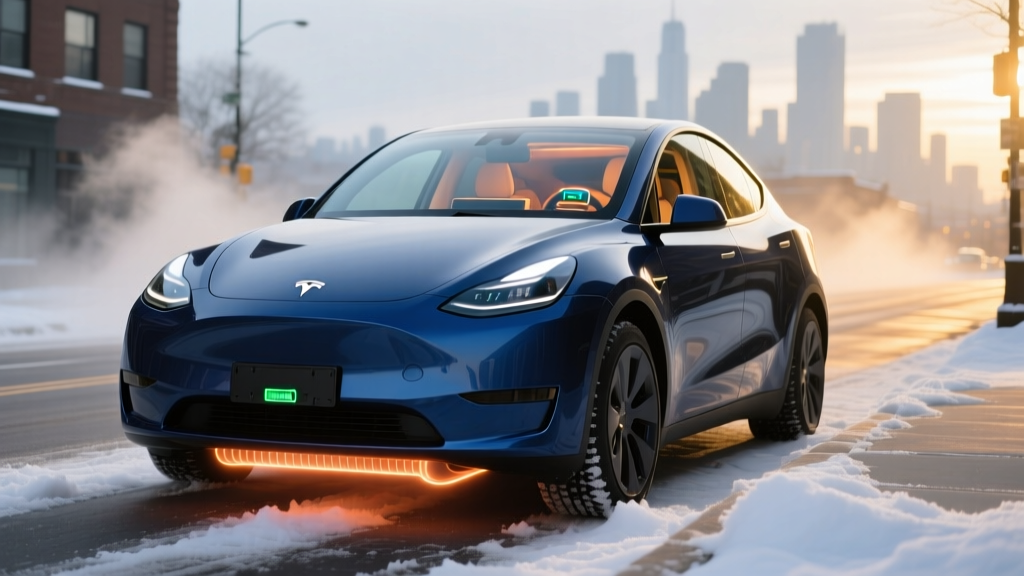
On a 75°F day with mixed city/highway driving at moderate speeds (55–65 mph), our testing has consistently yielded 290–310 miles before needing a charge. Push the speed to 80 mph on a flat interstate and you'll see energy consumption climb to roughly 28–30 kWh/100 mi, dropping effective range to around 200–220 miles. Cold weather compounds this: at 25°F, expect 20–25% range reduction due to cabin heating demands and increased battery resistance. The Juniper refresh added a standard heat pump, which mitigates some of that loss compared to older resistive-heating systems, but physics still wins in deep winter.
For context, the EPA's fueleconomy.gov listing confirms the 320-mile combined rating. Your results will vary based on terrain, temperature, tire condition, and driving style — but the Model Y RWD remains one of the most efficient EVs in its class regardless.
Charging Speeds: DC Fast, Level 2, and the LFP Advantage
Charging speed is where the RWD Model Y's cost savings reveal a trade-off. The LFP battery charges more slowly on DC fast chargers than the NMC packs in pricier trims. Here's what to expect across charging levels:
| Charging Level | Power / Rate | Speed / Notes |
|---|---|---|
| Level 1 (120V household) | ~1.4 kW | ~5 miles per hour — emergency/trickle only |
| Level 2 (240V home, 48A) | 11.5 kW | ~44 miles per hour — full charge in ~6 hours |
| DC Fast Charge (peak) | 170 kW | 10–80% in ~28 minutes |
| DC Fast Charge (sustained avg.) | ~110–120 kW | Average across the 10–80% window |
| Tesla Supercharger V4 | Up to 170 kW (RWD cap) | Hardware supports higher; LFW/RWD limited |
The 170 kW peak rate is competitive but not class-leading. The Hyundai Ioniq 5, for example, peaks at 240 kW on its 800V architecture and can do 10–80% in roughly 18 minutes. The Model Y RWD takes about 10 minutes longer for the same session. On a road trip, that's a noticeable difference — but it's also a function of the smaller, lighter, and cheaper LFP battery. You're trading charge speed for a lower purchase price and a chemistry that degrades more slowly over time.
Charge curve reality: The Model Y RWD holds near-peak power from roughly 10% to 45% SoC, then tapers progressively. From 80% to 100%, charging slows dramatically to protect the cells — expect the final 20% to take as long as the 10–80% session. On road trips, plan to charge in the 10–80% window and skip topping off unless you're at your overnight destination.
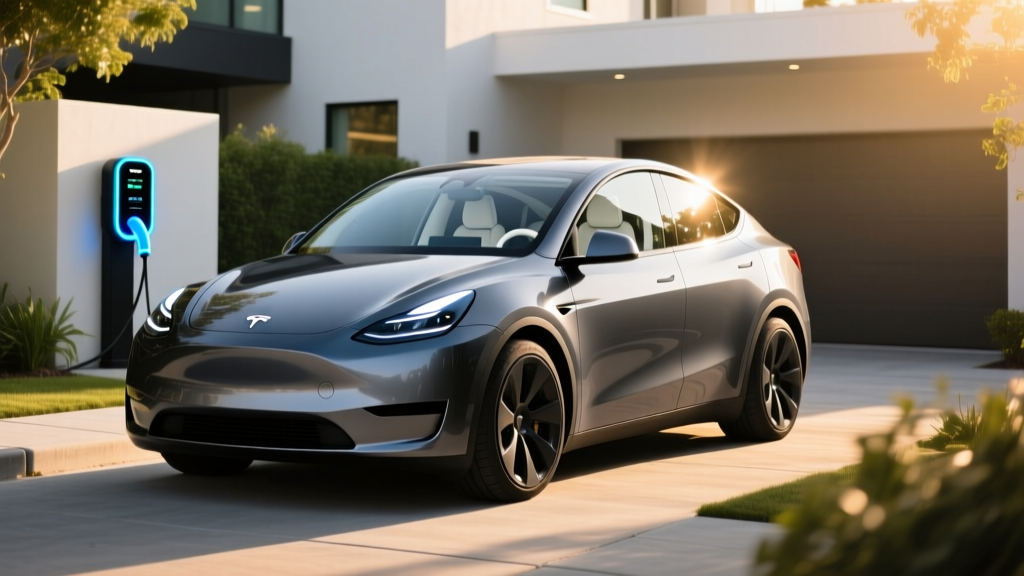
At home, an 11.5 kW Level 2 wall connector on a 60-amp circuit replenishes the 60 kWh pack in about 5.5–6 hours. That's fast enough for any daily routine: plug in when you get home, wake up to a full battery every morning. Installation typically costs $500–$1,500 depending on your electrical panel's capacity and the run length from panel to garage. If your home has a 200-amp service panel with spare capacity, expect the lower end of that range. Older homes with 100-amp panels may need a $2,000–$4,000 panel upgrade — factor that into your total cost of ownership. Always consult a licensed electrician for a site-specific quote.
Performance and Driving Dynamics
The single-motor RWD setup produces 295 horsepower and delivers a 0–60 mph time of 6.5 seconds. That's quick by any measure — faster than most gas-powered compact SUVs — but it's the entry point in the Model Y lineup. The Long Range AWD drops that to 4.8 seconds, and the Performance trim hits 3.5 seconds.
For daily driving, 6.5 seconds is more than adequate. Highway merging, passing, and stoplight acceleration feel effortless thanks to the instant torque delivery that defines electric powertrains. The rear-wheel-drive layout means the Model Y RWD is slightly lighter over the front axle than its dual-motor siblings, which translates to marginally better efficiency but noticeably less traction in rain and snow.
The Juniper refresh significantly improved ride quality over the pre-2025 Model Y. Tesla retuned the suspension, added frequency-selective dampers, and improved sound insulation. The result is a crossover that absorbs highway expansion joints and potholes without the crashy, jarring feel of earlier models. Steering remains precise and well-weighted, though some drivers find it overly firm in Sport mode.
Who should consider AWD instead? If you live in a region with regular snow and ice, the dual-motor Long Range or the AWD variant is worth the premium. The RWD model handles light winter conditions fine with dedicated winter tires, but the traction advantage of dual-motor AWD is significant in sustained poor weather.
Interior, Cargo, and Technology
The 2026 Model Y's cabin carries forward the minimalist design Tesla is known for, but the Juniper update brought meaningful refinements: ventilated front seats, ambient lighting, a rear-seat touchscreen for climate and entertainment controls, power-folding second-row seats, and improved acoustic glass. The result is a noticeably more premium feel than the 2024 model.
Space and dimensions:
- Front headroom: 40.7 inches
- Front legroom: 41.8 inches
- Rear headroom: 38.5 inches
- Rear legroom: 38.4 inches
- Cargo behind 2nd row: 30.2 cu ft
- Cargo (seats folded): 72.1 cu ft
- Front trunk (frunk): 4.1 cu ft
The rear seat comfortably fits two adults on longer trips, though the center position is best reserved for a child or short journeys. The 30.2 cu ft of cargo space behind the second row is generous for the segment, and the power-folding seats make switching between passenger and cargo configurations effortless. The frunk adds room for a charging cable kit, groceries, or a small carry-on.
Infotainment and driver assistance: The 15.4-inch center touchscreen runs Tesla's proprietary software, which remains one of the most responsive and feature-rich systems in the industry. Navigation includes real-time Supercharger routing with battery preconditioning — the car warms the battery before you arrive at a fast charger to optimize charge speed. Over-the-air updates regularly add features.
Tesla's Autopilot comes standard and includes adaptive cruise control, lane-centering, and automatic emergency braking. This is a SAE Level 2 driver-assistance system, meaning you must keep your hands on the wheel and eyes on the road at all times. Full Self-Driving (Supervised) is available as a $8,000 option or $99/month subscription and adds features like automated lane changes and traffic-light recognition, but it remains a Level 2 system — not autonomous driving. Tesla's camera-only vision approach continues to draw scrutiny; the system performs well on well-marked highways but can struggle in construction zones, heavy rain, and unmapped areas.
Pricing, Tax Credits, and Total Cost
The 2026 Tesla Model Y RWD starts at $44,990 (including destination fee). That's before any incentives. A well-equipped example with FSD, a premium color, and 20-inch wheels can push past $55,000, but the base configuration is where this trim delivers the most value.
| Cost Factor | Amount |
|---|---|
| Base MSRP (RWD) | $44,990 |
| Federal Tax Credit (§30D, max) | Up to $7,500 |
| Effective Price (with full credit) | ~$37,490 |
| Point-of-Sale Transfer | Available — credit applied at purchase |
| Est. Home Charger Install | $500–$1,500 |
Federal tax credit eligibility (§30D): The Model Y qualifies for up to $7,500 under the current federal EV tax credit, but eligibility is not automatic. Per IRS guidelines, you must meet all of the following:
- Income caps: Modified AGI ≤ $150,000 (single), $225,000 (head of household), or $300,000 (married filing jointly)
- MSRP cap: The vehicle's MSRP must not exceed $80,000 for SUVs/pickups (the Model Y qualifies)
- Battery sourcing: A percentage of critical minerals and battery components must be sourced from the U.S. or free-trade-agreement countries — these thresholds increase annually. Tesla's supply chain has largely met these requirements, but always verify current-year compliance at purchase
- Point-of-sale transfer: As of 2024, you can transfer the credit to the dealer at purchase, reducing your out-of-pocket cost immediately rather than waiting for a tax refund
State and local incentives may stack on top — California's CVRP, Colorado's state credit, and various utility rebates can further reduce cost. Check your state's energy office and local utility for current programs.
Operating cost perspective: At a national average electricity rate of $0.16/kWh and the Model Y RWD's efficiency of 26 kWh/100 mi, your fuel cost is roughly $4.16 per 100 miles. A comparable gas SUV getting 28 MPG at $3.40/gallon costs about $12.14 per 100 miles. Over 15,000 annual miles, that's an annual fuel savings of approximately $1,197 — and that's before accounting for the elimination of oil changes, reduced brake wear from regenerative braking, and lower scheduled maintenance.
How It Compares: Model Y RWD vs. the Competition
The affordable Model Y doesn't exist in a vacuum. Here's how it measures up against two key rivals:
| Spec | 2026 Tesla Model Y RWD | 2026 Hyundai Ioniq 5 SE | 2026 Ford Mustang Mach-E Select RWD |
|---|---|---|---|
| Base MSRP | $44,990 | $42,600 | $42,995 |
| EPA Range | 320 mi | 303 mi | 250 mi |
| DC Fast Charge (peak) | 170 kW | 240 kW | 150 kW |
| 10–80% Time | ~28 min | ~18 min | ~34 min |
| 0–60 mph | 6.5 sec | 7.4 sec | 6.3 sec |
| Cargo (rear up) | 30.2 cu ft | 27.2 cu ft | 29.7 cu ft |
| Charging Network | Tesla Supercharger (native) | NACS (Supercharger access) | NACS (Supercharger access) |
The Ioniq 5 charges significantly faster and costs slightly less, but offers less range and cargo space. Hyundai's build quality and warranty (10-year/100,000-mile powertrain) are best-in-class, and the Ioniq 5 now uses the NACS connector for Supercharger access.
The Mach-E offers a sportier driving feel and competitive pricing, but its range and charging speed lag behind. Ford's dealer network is a plus for service access, but the Supercharger adapter adds a step that Tesla owners skip.
The Model Y RWD's advantage remains the combination of range, efficiency, cargo utility, and seamless Supercharger integration. If you road-trip frequently, the Supercharger network's reliability and built-in battery preconditioning remain a meaningful edge — even as competitors gain NACS access.
Pros, Cons, and Who Should Buy
Pros
- Class-leading 320-mile EPA range at this price point
- LFP battery: charge to 100% daily, slower degradation
- Native Supercharger access — no adapter needed
- Spacious cargo area (30.2 cu ft) with power-folding seats
- Excellent efficiency (26 kWh/100 mi, 130 MPGe)
- Significantly improved ride quality post-Juniper refresh
- Over-the-air updates keep the car current
- Strong resale value relative to EV segment average
Cons
- DC fast charging slower than Ioniq 5 (170 kW vs 240 kW)
- RWD only — limited traction in snow without winter tires
- Minimalist interior isn't for everyone (no physical buttons)
- FSD is expensive and remains Level 2 (not autonomous)
- Service center availability varies by region
- No Apple CarPlay or Android Auto
- Insurance premiums tend to be above segment average
- Daily commuters with home charging who want maximum range for the dollar
- Small families needing cargo versatility and rear-seat space
- Road trippers who value Supercharger network reliability
- Tax-credit-eligible buyers who can bring the effective price under $38,000
Frequently Asked Questions
What is the real-world range of the Tesla Model Y RWD?
The EPA rates it at 320 miles combined. Expect 260–280 miles in highway driving at 70–75 mph, and 220–250 miles in cold weather (below freezing). City driving with regenerative braking can approach or slightly exceed the EPA figure. The LFP battery's flat discharge curve means range delivery is predictable until the final ~10%.
How fast does the Model Y RWD charge at home and on the road?
At home on a Level 2 charger (11.5 kW), you'll add about 44 miles of range per hour, fully recharging the ~60 kWh battery in roughly 6 hours. On DC fast chargers, the peak rate is 170 kW, with a 10–80% session taking approximately 28 minutes. The charge curve tapers significantly above 80%, so plan road-trip stops around the 10–80% window.
Does the 2026 Model Y RWD qualify for the $7,500 federal tax credit?
It can, but eligibility depends on your income (AGI caps apply), the vehicle's battery-sourcing compliance for the current year, and the MSRP cap ($80,000 for SUVs — the Model Y qualifies). You can transfer the credit to the dealer at point of sale for an immediate price reduction. Always verify current-year eligibility on IRS.gov and with your tax professional before purchasing.
Is the Model Y RWD worth it vs. the Long Range AWD?
If you don't need AWD and don't regularly take 300+ mile trips, the RWD is the smarter financial choice. You sacrifice ~60 miles of EPA range and 1.7 seconds of 0–60 time, but save several thousand dollars. The LFP battery also offers slower long-term degradation and the ability to charge to 100% daily — a practical advantage for many owners.
How does the LFP battery hold up long-term?
LFP chemistry is known for excellent cycle life — typically 2,000–3,000+ full charge cycles before significant degradation. Tesla warranties the battery for 8 years or 100,000 miles, guaranteeing a minimum of 70% capacity retention. Real-world data from high-mileage Tesla owners suggests LFP packs lose roughly 5–8% capacity in the first 50,000 miles, then degrade very slowly. Many LFP packs are projected to retain 85%+ capacity at 150,000 miles.
Can I tow with the Model Y RWD?
Tesla rates the Model Y at 3,500 pounds of towing capacity across all trims when equipped with the factory tow hitch ($1,000 option). However, towing significantly reduces range — expect a 30–40% reduction depending on trailer weight and aerodynamics. If you tow frequently, the Long Range AWD's larger battery provides a more practical towing buffer.
Does the Model Y have Apple CarPlay or Android Auto?
No. Tesla uses its proprietary infotainment system exclusively. It includes built-in navigation, Spotify, Netflix (while parked), and a web browser. Many owners find the native system sufficient, but if CarPlay/Android Auto integration is a dealbreaker, the Ioniq 5 and Mach-E both support smartphone mirroring.