Quick Verdict: Is the 2026 Model Y Finally Accessible?
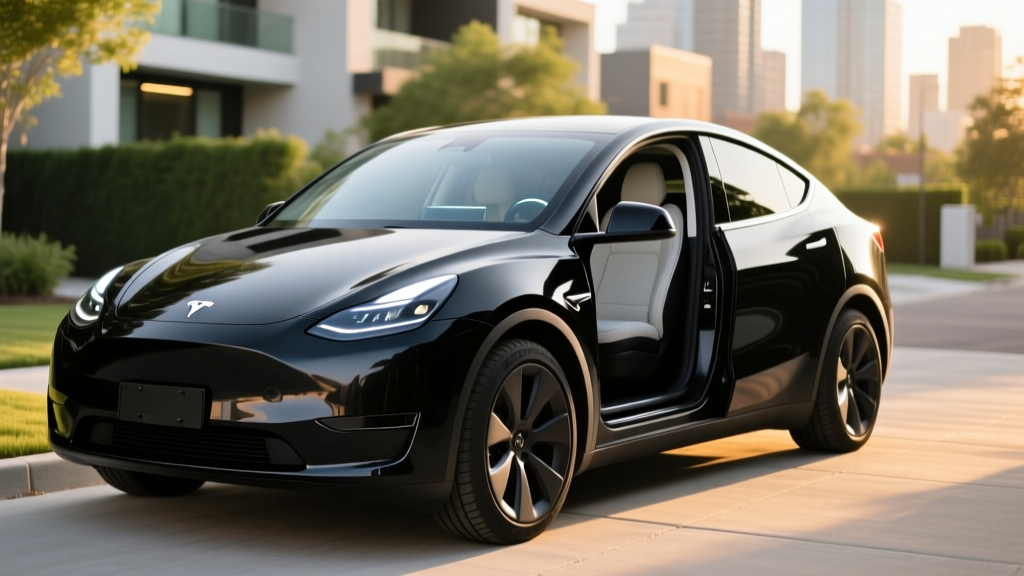
Tesla introduces more affordable Model Y lease options and trims for the 2026 model year, dropping the entry price to a point where mainstream crossover shoppers can realistically consider it. The refreshed Model Y (internally dubbed "Juniper") now starts below $40,000 before incentives, with a new Standard Range RWD trim and revised lease terms that push monthly payments into the $350–$450 range depending on down payment and mileage allowance. For buyers who found the previous Long Range AWD pricing out of reach, this is the most competitive Model Y lineup Tesla has offered since 2021.
But affordability only matters if the underlying product delivers. Below, we dissect real-world range, charging behavior, interior space, and total cost to help you decide whether the 2026 Model Y earns a spot in your driveway — or whether a Hyundai Ioniq 5, Ford Mustang Mach-E, or Chevrolet Equinox EV makes more sense for your budget.
2026 Tesla Model Y: Spec Table at a Glance
| Spec | Standard Range RWD | Long Range AWD | Performance AWD |
|---|---|---|---|
| Base MSRP | $38,490 | $44,990 | $51,490 |
| EPA Range | 295 mi | 335 mi | 305 mi |
| Battery (usable) | ~60 kWh (LFP) | ~79 kWh (NMC) | ~79 kWh (NMC) |
| Drivetrain | RWD single motor | AWD dual motor | AWD dual motor |
| 0–60 mph | 5.9 s | 4.8 s | 3.5 s |
| Horsepower | 295 hp | 384 hp | 456 hp |
| Max DC Charge Rate | 170 kW | 250 kW | 250 kW |
| 10–80% DCFC Time | ~28 min | ~22 min | ~22 min |
| Level 2 Rate | 11.5 kW (37 mi/hr) | 11.5 kW (44 mi/hr) | 11.5 kW (44 mi/hr) |
| Efficiency (EPA) | 133 MPGe / 25 kWh/100mi | 122 MPGe / 28 kWh/100mi | 111 MPGe / 30 kWh/100mi |
| Cargo (rear seats up) | 30.2 cu ft (76.2 cu ft folded) | ||
| Rear Legroom | 41.6 in | ||
| Battery Warranty | 8 yr / 100,000 mi | 8 yr / 120,000 mi | |
Source: fueleconomy.gov and Tesla spec sheets. Real-world results may vary.
Real-World Range: What the EPA Sticker Doesn't Tell You
Standard Range RWD: EPA 295 mi → Expect ~245–265 mi on highway trips at 70–80 mph; ~210–230 mi in sub-freezing winter conditions.
Long Range AWD: EPA 335 mi → Expect ~280–300 mi highway; ~240–260 mi in cold weather with cabin heating.
Performance AWD: EPA 305 mi → Expect ~250–270 mi highway; ~220–240 mi in cold weather.
The Model Y's EPA numbers are among the best in the compact electric SUV segment, but the physics of battery-electric driving still apply. Highway speeds above 70 mph increase aerodynamic drag disproportionately — you'll lose roughly 10–15% of rated range on a flat interstate at 75 mph. Cold weather compounds this: lithium-ion cells lose efficiency below 40°F, and cabin heating in a vehicle this size draws 3–5 kW continuously, cutting range by 20–30% in sustained sub-30°F driving.
The Standard Range RWD trim uses a lithium iron phosphate (LFP) battery. LFP cells have lower energy density than the nickel manganese cobalt (NMC) chemistry in the Long Range and Performance trims, which is why the smaller ~60 kWh pack yields 295 miles rather than 335. The trade-off: LFP batteries tolerate regular 100% charging without accelerated degradation, so Tesla recommends daily full charges for the Standard Range model. For the NMC trims, Tesla recommends an 80% daily charge limit to preserve long-term battery health, reserving 100% for road trips.
Charging Speed: DC Fast, Level 2, and Home Setup
Charging speed is the single biggest factor in daily EV satisfaction. Here's what each 2026 Model Y trim can actually pull at a DC fast charger and on a home Level 2 circuit:
| Charging Level | Standard Range RWD | Long Range AWD / Performance |
|---|---|---|
| Level 1 (120V household) | ~3 mi/hr (1.4 kW) | ~3 mi/hr (1.4 kW) |
| Level 2 (240V, 48A) | 11.5 kW / ~37 mi/hr | 11.5 kW / ~44 mi/hr |
| DC Fast Charge (peak) | 170 kW | 250 kW |
| 10–80% DCFC Time | ~28 min | ~22 min |
| Sustained avg (10–80%) | ~115 kW | ~170 kW |
Key distinction — kW vs. kWh: kW (kilowatts) measures charge rate — how fast energy flows into the battery. kWh (kilowatt-hours) measures battery capacity — how much energy the battery holds. A 250 kW charger fills a 79 kWh battery quickly, but the rate tapers above ~60% state of charge to protect cell health. That's why the 10–80% time is the most useful real-world metric: it represents the practical charging window you'll use on road trips.
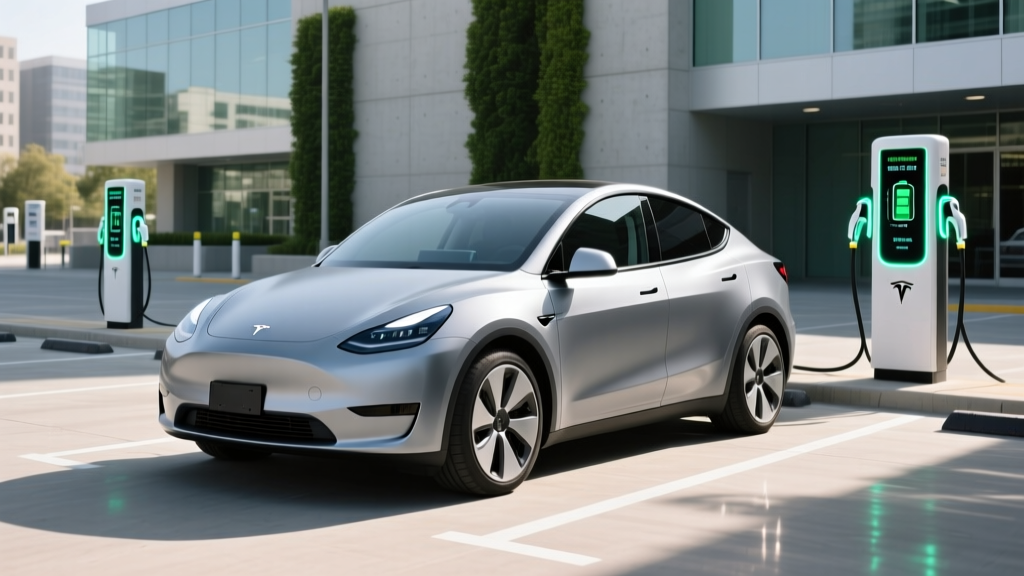
All 2026 Model Y trims come with the NACS (North American Charging Standard) connector natively. This means direct access to Tesla's Supercharger network — over 25,000 stalls in North America — without an adapter. For non-Tesla DC fast networks like Electrify America or EVgo, you'll need a CCS-to-NACS adapter (Tesla sells one for ~$175), though more third-party networks are adding NACS cables in 2025–2026.
For home charging, a 240V/48A Level 2 installation on a 60A circuit adds 37–44 miles of range per hour of charging. Most owners charge overnight and wake up to a full battery every morning. Expect a professional Level 2 installation to cost $800–$2,500 depending on panel proximity, conduit length, and whether your electrical panel needs a 200A upgrade (an additional $1,500–$3,500 for older homes).
Lease Pricing, Trims, and Federal Tax Credit Eligibility
The headline for 2026 is affordability. Tesla introduces more affordable Model Y lease options and trims, and the pricing structure reflects a deliberate push downmarket:
| Trim | Base MSRP | Est. Lease (36 mo, $3,999 down, 10K mi/yr) | Federal §30D Credit (if eligible) | Effective Price After Credit |
|---|---|---|---|---|
| Standard Range RWD | $38,490 | ~$379/mo | Up to $7,500 (point-of-sale) | ~$30,990 |
| Long Range AWD | $44,990 | ~$449/mo | Up to $7,500 (point-of-sale) | ~$37,490 |
| Performance AWD | $51,490 | ~$519/mo | Up to $7,500 (point-of-sale) | ~$43,990 |
Federal tax credit (§30D) eligibility is not automatic. To claim the full $7,500 credit on a new Model Y purchase (or apply it as a point-of-sale rebate through a participating dealer), you must meet all of the following criteria under current IRS rules:
- MSRP cap: SUVs must have an MSRP ≤ $80,000 (all Model Y trims qualify).
- Income cap: Modified adjusted gross income ≤ $150,000 (single), $225,000 (head of household), or $300,000 (joint).
- Battery sourcing: A percentage of critical minerals and battery components must be sourced from the U.S. or free-trade-agreement partners. Tesla has progressively shifted Model Y battery supply chains to meet these thresholds, but the exact credit amount ($3,750 or $7,500) depends on current-year sourcing compliance. Verify at the point of sale.
- Final assembly: Must occur in North America (Model Y is assembled in Fremont, CA, and Austin, TX — both qualify).
Lease vs. buy nuance: When you lease a Model Y through Tesla or a third-party lessor, the $7,500 credit goes to the leasing company (the legal owner), not to you directly. However, Tesla has been passing this savings through as a lease capital-cost reduction, which lowers your monthly payment. Always confirm whether the quoted lease price already reflects the credit pass-through.
Interior, Tech, and Driver Assistance
The Juniper-refreshed Model Y interior is a meaningful upgrade over the pre-2025 cabin. Tesla added ventilated front seats, a rear-seat touchscreen, ambient lighting, power-folding second-row seats, and acoustic glass on all trims — features that were either optional or absent on the previous generation.
Infotainment: The 15.4-inch center touchscreen runs Tesla's latest software with native Spotify, Netflix, YouTube (while parked), and a surprisingly good navigation system that factors in Supercharger availability and real-time stall status. There is no Apple CarPlay or Android Auto — Tesla's ecosystem is self-contained. For most owners this is fine; for smartphone-dependent users, it's a deal-breaker worth flagging.
Driver assistance (SAE Level 2):
Tesla's Autopilot and Full Self-Driving (Supervised) are SAE Level 2 driver-assist systems. The driver must remain fully attentive, hands on or near the wheel, and ready to take over at any moment. Only Level 4 services like Waymo operate without a human driver. FSD (Supervised) costs $8,000 to purchase or $99/month and adds automatic city-street navigation, stop-sign/light recognition, and lane-change assistance — but it does not eliminate driver responsibility. NHTSA continues to monitor and investigate Level 2 system incidents.
Standard Autopilot (included on all trims) provides adaptive cruise control and lane-centering on highways. It works well on divided interstates but can struggle with faded lane markings, construction zones, and aggressive cut-ins. FSD (Supervised) extends capability to surface streets, but real-world reliability varies significantly by geography and road complexity.
Pros, Cons, and Who Should Buy
Pros
- Supercharger network access — still the most reliable DC fast-charging ecosystem in North America
- Strong efficiency (25–30 kWh/100mi) means lower per-mile charging cost than most competitors
- LFP battery on Standard Range trim allows daily 100% charging with minimal degradation concern
- Class-leading cargo volume (76.2 cu ft with seats folded) and usable frunk space
- Over-the-air updates continuously add features post-purchase
- Competitive lease pricing now rivals Hyundai Ioniq 5 and Ford Mach-E monthly payments
Cons
- No Apple CarPlay / Android Auto — Tesla-only infotainment
- Standard Range RWD's 170 kW peak DC charge rate is slower than the Ioniq 5's 240 kW (800V architecture)
- FSD (Supervised) remains a Level 2 system despite the "Full Self-Driving" name — buyer confusion risk
- Ride quality on 20-inch Performance wheels can be firm on rough pavement
- Insurance premiums run 15–30% higher than comparable gas crossovers in most states
- No physical buttons for climate or wipers — everything routes through the touchscreen
Who Is the 2026 Model Y For?
Choose the Standard Range RWD if: You're a commuter driving under 40 miles/day round-trip, have reliable home Level 2 charging, and want the lowest possible entry price. The LFP battery's tolerance for daily 100% charges makes this the most worry-free daily driver in the lineup.
Choose the Long Range AWD if: You take regular road trips over 200 miles, live in a cold-weather climate where AWD traction matters, or frequently carry four adults plus cargo. The 335-mile EPA rating provides a comfortable buffer for 250-mile real-world highway legs between Supercharger stops.
Choose the Performance AWD if: You value 3.5-second 0–60 acceleration and track-mode capability, and you're willing to trade ~30 miles of range and a firmer ride for the thrill. This trim makes the most sense for enthusiasts who also need SUV practicality.
Look elsewhere if: You need Apple CarPlay, prefer physical buttons, or want the fastest possible DC charging (the Hyundai Ioniq 5 with its 800V architecture hits 10–80% in ~18 minutes at a 350 kW charger).
How It Stacks Up Against Key Competitors
The 2026 Model Y doesn't exist in a vacuum. Here's how it compares to the three most common cross-shops at this price point:
| Spec | Tesla Model Y LR AWD | Hyundai Ioniq 5 Limited AWD | Ford Mustang Mach-E Premium AWD ER | Chevrolet Equinox EV RS AWD |
|---|---|---|---|---|
| MSRP (approx.) | $44,990 | $53,500 | $48,995 | $45,900 |
| EPA Range | 335 mi | 290 mi | 312 mi | 319 mi |
| Max DCFC kW | 250 kW | 240 kW (800V) | 150 kW | 190 kW |
| 10–80% DCFC | ~22 min | ~18 min | ~36 min | ~30 min |
| Cargo (seats up) | 30.2 cu ft | 27.2 cu ft | 29.7 cu ft | 26.4 cu ft |
| Apple CarPlay | No | Yes (wireless) | Yes (wireless) | Yes (wireless) |
| NACS native | Yes | No (CCS, adapter avail.) | No (CCS, adapter avail.) | No (CCS, adapter avail.) |
The Model Y's combination of range, cargo space, and Supercharger access remains hard to beat at this price. The Ioniq 5 charges faster and offers CarPlay; the Mach-E has a more traditional interior layout; the Equinox EV undercuts on price but charges more slowly. Your priority list determines the winner.
Frequently Asked Questions
What is the real-world range of the 2026 Tesla Model Y?
The EPA rates the Long Range AWD at 335 miles, but real-world highway driving at 70–80 mph yields approximately 280–300 miles. In sustained sub-freezing temperatures, expect 240–260 miles. The Standard Range RWD delivers ~245–265 miles on the highway and ~210–230 in winter. Preconditioning the battery (automatic when you navigate to a Supercharger) helps recover some cold-weather efficiency.
How fast does the 2026 Model Y charge at home and on the road?
On a 240V Level 2 home charger at 48 amps, the Model Y adds 37–44 miles of range per hour, fully replenishing overnight. On DC fast chargers, the Long Range and Performance trims peak at 250 kW and charge from 10–80% in roughly 22 minutes. The Standard Range RWD peaks at 170 kW with a 10–80% time of about 28 minutes. Charging slows significantly above 80% SoC — plan to charge to 80% on road trips and move on rather than waiting for a full battery.
How much does the 2026 Model Y cost after federal tax credits?
The Standard Range RWD starts at $38,490 and can drop to approximately $30,990 if you qualify for the full $7,500 federal §30D credit. Eligibility depends on your income (≤$150K single / ≤$300K joint), the vehicle's MSRP (under the $80K SUV cap — all trims qualify), and battery-sourcing compliance. The credit can be applied at the point of sale as a rebate. Consult a tax professional and verify current IRS §30D rules before purchasing.
Does the 2026 Model Y qualify for the federal EV tax credit?
All three trims meet the MSRP cap and North American final-assembly requirement. Battery critical-mineral and component sourcing thresholds are met for at least a partial ($3,750) credit on most trims, and Tesla has stated that 2026 Model Y vehicles are expected to qualify for the full $7,500. However, sourcing rules tighten annually, and your personal income must fall within the IRS caps. Always confirm eligibility at the time of purchase or lease.
Is the 2026 Model Y worth buying vs. the Ioniq 5 or Mach-E?
If Supercharger network access, maximum cargo space, and best-in-class range are your top priorities, the Model Y Long Range AWD is the strongest pick. If you want the fastest DC charging and prefer Apple CarPlay, the Hyundai Ioniq 5 is compelling. If you want a more traditional crossover feel with physical controls, the Ford Mach-E is worth a test drive. The new lower lease pricing on the Model Y makes it competitive on monthly cost for the first time, which tips the scale for many buyers who were previously priced out.
What is the battery warranty on the 2026 Model Y?
The Standard Range RWD carries an 8-year/100,000-mile battery and drive-unit warranty. The Long Range AWD and Performance trims carry an 8-year/120,000-mile warranty. Tesla guarantees the battery will retain at least 70% of its original capacity during the warranty period. Real-world data from high-mileage Tesla owners suggests NMC packs typically retain 85–92% capacity at 100,000 miles under normal use, while LFP packs show similar or slightly better retention due to their inherent cycle-life advantage.
Specs and pricing reflect 2026 model-year information available at time of publication. Federal tax credit rules under IRS §30D are subject to change. Always verify current eligibility at irs.gov and confirm final pricing with Tesla before purchase or lease.