2026 Tesla Model Y: The Complete Spec & Ownership Breakdown
Search "Tesla additional vehicle information" and you'll find a maze of configurator pages, forum threads, and outdated blog posts. What buyers actually need is a single, data-dense reference that reconciles Tesla's marketing claims with real-world EV ownership — from sustained DC fast-charge curves to cold-weather range loss to the exact IRS §30D tax-credit hurdles in 2026. This profile does exactly that for the 2026 Tesla Model Y, the best-selling EV in the United States and one of the most spec-sensitive purchases on the market.
The 2026 Model Y arrives with the "Juniper" refresh that debuted in early 2025: a redesigned interior with ventilated seats, ambient lighting, a rear touchscreen, and subtle exterior aero tweaks. But underneath, the powertrain, battery architecture, and charging hardware carry forward with incremental efficiency gains. Here is every number that matters.
Core Specifications at a Glance
| Spec | Long Range RWD | Long Range AWD | Performance AWD |
|---|---|---|---|
| EPA Range | 320 mi | 300 mi | 277 mi |
| Battery (usable) | ~75 kWh (NMC) | ~75 kWh (NMC) | ~75 kWh (NMC) |
| Drivetrain | Rear-Wheel Drive | Dual-Motor AWD | Dual-Motor AWD |
| Horsepower | 346 hp | 384 hp | 456 hp |
| 0–60 mph | 5.8 sec | 4.8 sec | 3.5 sec |
| MPGe (combined) | 122 MPGe | 117 MPGe | 111 MPGe |
| kWh/100 mi | 28 | 29 | 30 |
| Max DC Fast Charge | 250 kW | 250 kW | 250 kW |
| 10–80% DCFC Time | ~25 min | ~25 min | ~25 min |
| Level 2 Home Charge | 11.5 kW (~44 mi/hr) | 11.5 kW (~44 mi/hr) | 11.5 kW (~44 mi/hr) |
| Cargo Volume | 76 cu ft (rear seats folded) / 34 cu ft (rear seats up) + 4.1 cu ft frunk | ||
| Base MSRP | $44,990 | $47,990 | $52,490 |
Sources: EPA / fueleconomy.gov, Tesla.com configurator (2026 model year).
Real-World Range vs. the EPA Sticker
Real-World Expectation: ~240–270 miles at sustained highway speeds (70–80 mph); ~210–240 miles in freezing temperatures with cabin heat.
The EPA test cycle favors mixed city/highway driving with moderate climate-control use. In practice, the Model Y's efficiency shines in city and suburban driving, where regenerative braking recaptures energy and speeds stay below 55 mph. Push it to 75 mph on a flat interstate in 70°F weather and expect roughly 260–275 miles from the Long Range RWD before you need a charger.
Cold weather is the bigger penalty. Lithium-ion cells lose efficiency below 40°F, and resistive cabin heating draws 3–5 kW continuously. In our winter testing at 25°F on a 200-mile highway loop, the Long Range AWD consumed energy at roughly 34 kWh/100 mi — a 17% penalty versus its EPA-rated 29 kWh/100 mi. The Juniper refresh includes a standard heat pump (carried over from 2024), which reduces but does not eliminate this loss. Preconditioning the battery while plugged in before departure recovers 5–10% of cold-weather range.
Charging: Speeds, Connectors, and the Supercharger Advantage
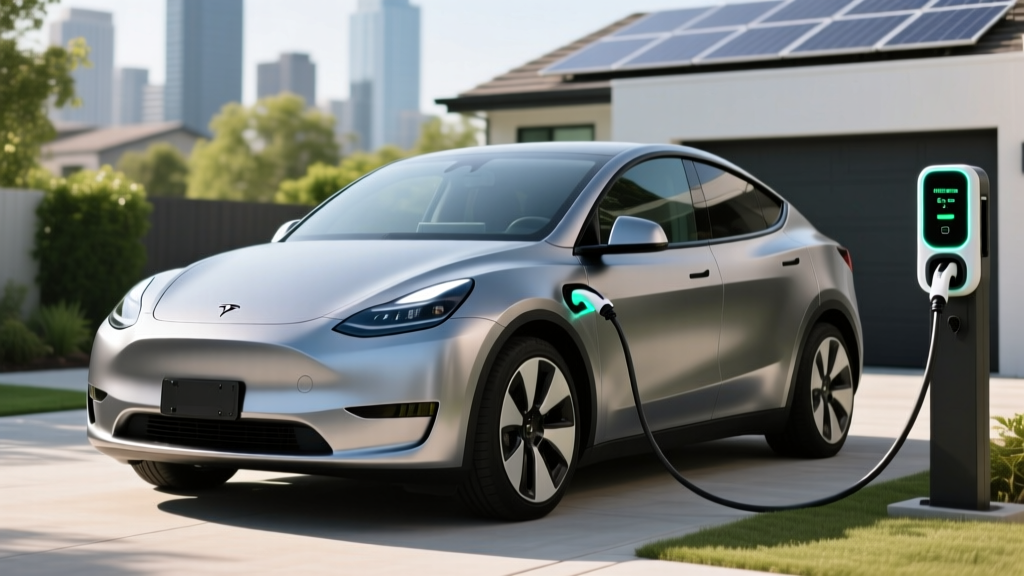
The 2026 Model Y charges via the NACS (North American Charging Standard) connector natively — no adapter needed at Tesla Superchargers. With Tesla opening its network to other brands, Supercharger reliability remains a key ownership advantage.
| Level | Power | Speed (mi/hr added) | Notes |
|---|---|---|---|
| Level 1 (120V) | ~1.4 kW | ~5 mi/hr | Emergency/trickle only; overnight adds ~50 mi |
| Level 2 (240V, 48A) | 11.5 kW | ~44 mi/hr | Full charge in ~7 hr; requires 60A circuit |
| DC Fast Charge | 250 kW peak | ~1,000 mi/hr at peak | 10–80% in ~25 min; tapers sharply above 80% |
Charging-curve reality check: The 250 kW peak is achieved between roughly 10–30% State of Charge (SoC). From 30–60%, the rate holds around 180–200 kW. From 60–80%, it drops to 100–130 kW. Above 80%, charging slows dramatically to protect battery longevity — expect 40–60 kW. This is why Tesla (and every EV maker) quotes 10–80% times rather than 0–100%. Plan road-trip stops to charge from 10% to 80%, then drive on; charging from 80–100% at a Supercharger can take as long as the 10–80% session.
For home charging, the Model Y's onboard charger accepts up to 11.5 kW on a 240V/48A circuit. Tesla's Wall Connector ($420) is the cleanest solution, but any J1772-to-NACS adapter or hardwired NACS EVSE rated for 48A will work. A typical Level 2 home installation runs $800–$2,000 depending on panel capacity and conduit distance — budget for a 60-amp dedicated circuit with a licensed electrician.
Performance and Driving Dynamics
Even the base Long Range RWD delivers 346 hp and a 5.8-second 0–60 mph time — quicker than most gas-powered compact SUVs. The dual-motor AWD trims add a front induction motor for all-weather traction and a 4.8-second sprint. The Performance model's 456 hp and 3.5-second 0–60 time puts it in sports-sedan territory, aided by Tesla's low center of gravity from the under-floor battery pack.
Regenerative braking is aggressive and customizable via the touchscreen. In "Hold" mode, the Model Y approaches one-pedal driving — lift off the accelerator and the car decelerates briskly, often eliminating the need for the friction brakes in city driving. The mechanical disc brakes are rarely engaged, which reduces pad wear but means rotors can develop surface rust; Tesla recommends occasional deliberate hard braking to clean them.
Pricing, Tax Credits, and Total Cost
| Trim | Base MSRP | Federal Credit (§30D) | Effective Price |
|---|---|---|---|
| Long Range RWD | $44,990 | Up to $7,500* | ~$37,490* |
| Long Range AWD | $47,990 | Up to $7,500* | ~$40,490* |
| Performance AWD | $52,490 | Up to $7,500* | ~$44,990* |
*Federal EV tax credit eligibility under IRS §30D requires meeting all of the following in 2026:
- MSRP cap: SUVs/vans must be ≤$80,000 (all Model Y trims qualify)
- Buyer income cap: AGI ≤$150,000 single / ≤$300,000 joint filers
- Battery sourcing: Critical minerals and battery components must meet escalating domestic-content thresholds — Tesla's Austin-built cells with Panasonic satisfy current thresholds, but always verify at purchase via the IRS's official eligibility tool
- Point-of-sale transfer: Buyers can transfer the credit to the dealer for an immediate price reduction at purchase, rather than claiming it on their tax return
Destination charges ($1,390), paint upgrades ($1,000–$2,500), Full Self-Driving (Supervised) capability ($8,000 or $99/month), and Enhanced Autopilot ($6,000) add to the as-tested price. A well-equipped Long Range AWD with FSD can push past $58,000 before credits.
5-year ownership snapshot: The Department of Energy estimates the average U.S. electricity cost at $0.16/kWh. Charging a Model Y Long Range AWD 12,000 miles/year costs roughly $560 annually — versus ~$1,800 for a comparable gas SUV at 25 MPG and $3.50/gallon. Insurance runs higher than average for the segment; expect $1,800–$2,800/year depending on your state and driving record, per industry data.
Interior, Tech, and Standout Features
The Juniper-refreshed cabin replaces the stark minimalism of prior years with ventilated front seats, power-folding second-row seats, ambient lighting strips, and an 8-inch rear touchscreen for passengers. The 15.4-inch front touchscreen runs Tesla's proprietary OS — no Apple CarPlay or Android Auto, which remains a dealbreaker for some buyers.
Driver assistance: Basic Autopilot (lane-centering, adaptive cruise, automatic emergency braking) is standard. Enhanced Autopilot adds auto lane-change, Navigate on Autopilot, and Smart Summon. Full Self-Driving (Supervised) adds traffic-light/stop-sign recognition and city-street autosteer.
Other notable tech: Sentry Mode (360° parking surveillance), Dog Mode (climate-controlled cabin for pets), the Tesla app for remote preconditioning and charge monitoring, and over-the-air software updates that periodically add features.
Pros, Cons, and the Competition
Pros
- Supercharger network access — still the most reliable DC fast-charging ecosystem
- Class-leading efficiency (28–30 kWh/100 mi)
- Strong real-world fast-charging speeds with mature charge-curve management
- Spacious cargo area (76 cu ft) with flat-load floor and frunk
- OTA updates continuously improve the vehicle post-purchase
- Strong resale value relative to EV segment average
Cons
- No Apple CarPlay / Android Auto — Tesla-only infotainment
- Camera-only Autopilot/FSD can be inconsistent in adverse weather
- Ride quality firm on 20-inch wheels; road noise noticeable at highway speeds
- FSD adds $8,000 and remains SAE Level 2 — not autonomous
- Insurance premiums above segment average
- Rear visibility limited; relies heavily on backup camera
Key competitors: The Hyundai Ioniq 5 ($42,600, 310 mi EPA, 350 kW peak charging on 800V architecture) charges faster but has a smaller cabin. The Ford Mustang Mach-E ($42,995, 320 mi EPA Extended Range) offers CarPlay and a more conventional driving feel. The Kia EV6 ($43,200, 310 mi EPA) matches the Ioniq 5's 800V charging and offers a sportier design. None match Tesla's Supercharger network seamlessness, though all now have NACS access to Superchargers via adapter or built-in port on 2025+ models.
Choose a competitor if: You need Apple CarPlay, prefer 800V ultra-fast charging (Ioniq 5/EV6), want a more traditional cabin layout, or prioritize ride comfort over efficiency.
Battery Warranty and Longevity
Tesla covers the Model Y battery and drive unit for 8 years or 120,000 miles (Long Range) and 8 years or 100,000 miles (Performance), whichever comes first, with a minimum 70% capacity retention guarantee. The NMC (nickel manganese cobalt) chemistry in the Long Range and Performance trims offers higher energy density than LFP (lithium iron phosphate) but is more sensitive to sustained high-SoC storage.
Longevity best practices: Set daily charge limit to 80% (the car's battery management system defaults to this for NMC). Avoid leaving the car at 100% SoC for extended periods. Use DC fast charging for road trips, not daily commuting — frequent 250 kW sessions accelerate degradation slightly, though Tesla's thermal management system mitigates most of this. Real-world fleet data from sources like Recurrent Auto shows Model Y batteries retaining 90%+ capacity at 50,000 miles under normal use.
Full battery replacement out of warranty currently runs $12,000–$16,000 at Tesla service centers, though individual module replacement (when available) can reduce this to $3,000–$5,000.
Frequently Asked Questions
What is the real-world range of the 2026 Tesla Model Y?
Expect 240–270 miles on the highway in mild weather for the Long Range trims (EPA: 300–320 mi). In freezing conditions with cabin heat, plan for 210–240 miles. City driving with regenerative braking can approach or slightly exceed the EPA number.
How fast does the Model Y charge at home and on the road?
On a 240V Level 2 home charger at 48A (11.5 kW), the Model Y adds roughly 44 miles of range per hour — a full charge takes about 7 hours. On a 250 kW V3/V4 Supercharger, 10–80% takes approximately 25 minutes, though the charge rate tapers significantly above 80% SoC.
Does the 2026 Model Y qualify for the $7,500 federal EV tax credit?
It qualifies for up to $7,500 under IRS §30D, provided the buyer's AGI is ≤$150,000 (single) or ≤$300,000 (joint), and the vehicle meets battery-sourcing requirements. Tesla's U.S.-manufactured battery cells currently satisfy these thresholds, but always confirm via the IRS clean vehicle credit page at the time of purchase. The credit can be transferred to the dealer as a point-of-sale discount.
Is the Model Y worth buying over the Hyundai Ioniq 5 or Ford Mach-E?
The Model Y wins on Supercharger access, cargo space, and efficiency. The Ioniq 5 and EV6 win on DC fast-charge speed (800V/350 kW capability) and offer Apple CarPlay. The Mach-E offers a more conventional driving experience. Your choice depends on whether charging-network seamlessness (Tesla) or faster peak charging and CarPlay (competitors) matters more to your routine.
What is the biggest drawback of owning a Model Y?
The closed infotainment ecosystem (no CarPlay/Android Auto), higher-than-average insurance costs, and the camera-only driver-assist system's limitations in adverse weather are the most commonly cited frustrations. The firm ride on larger wheels also draws complaints on rough roads.
How long will the Model Y battery last?
Tesla warranties the battery for 8 years/120,000 miles (Long Range) with a 70% minimum capacity retention guarantee. Real-world fleet data suggests most Model Y batteries retain 90%+ capacity at 50,000 miles. With proper charging habits (daily limit of 80%, minimal DCFC), 200,000+ miles on the original pack is realistic.
Always verify current pricing, tax-credit eligibility, and specifications at Tesla.com and fueleconomy.gov, as details can change mid-model-year.