The Verdict: Safety, Tech, and the 2026 Tesla Model Y
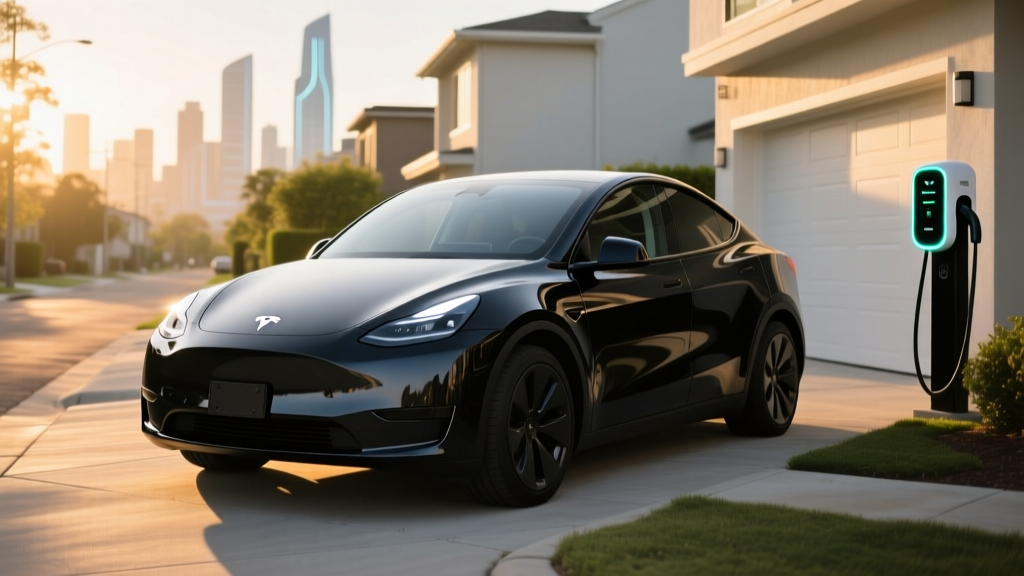
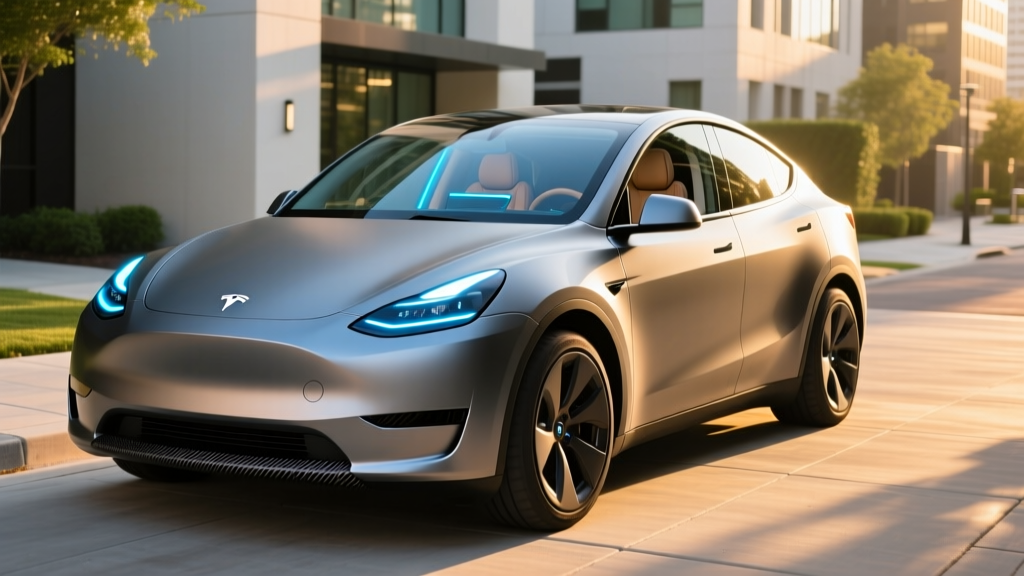
If you've searched for "Tesla auto accident" in the news, you've likely seen polarizing headlines. The reality of Tesla's safety record is more nuanced than viral crash videos suggest. The 2026 Tesla Model Y remains one of the best-selling EVs in the U.S. for good reason: top-tier crash-test ratings, class-leading efficiency, and access to the Supercharger network. But buyers need to understand what Autopilot actually does (and doesn't do), how the Juniper refresh changes the ownership equation, and whether this EV fits their daily driving needs.
This review covers everything a research-heavy buyer needs: EPA range vs. real-world expectations, exact charging speeds, battery chemistry, federal tax credit eligibility under current IRS §30D rules, and a clear-eyed look at Tesla's driver-assistance technology and accident data.
2026 Tesla Model Y: Core Specifications
| Specification | Value |
|---|---|
| EPA Estimated Range | 320 miles |
| Battery Capacity (Usable) | ~78 kWh (NMC chemistry) |
| Drivetrain | Dual-Motor All-Wheel Drive |
| Horsepower | 384 hp (combined) |
| 0–60 mph | 4.8 seconds |
| Efficiency | 122 MPGe / 28 kWh per 100 mi |
| Max DC Fast Charge | 250 kW (peak) |
| 10–80% DC Fast Charge | ~25 minutes |
| Level 2 Home Charge Rate | 11.5 kW (~44 mi/hr) |
| Cargo Volume (rear seats up) | 30.2 cu ft |
| Cargo Volume (rear seats folded) | 72.0 cu ft |
| Rear Legroom | 39.0 inches |
| Base MSRP | $47,990 |
| Battery & Drive Unit Warranty | 8 years / 120,000 miles |
Source: EPA fueleconomy.gov, Tesla specifications. Figures reflect the Juniper-refreshed Model Y Long Range AWD.
Real-World Range: What the EPA Sticker Doesn't Tell You
Tesla's efficiency remains a benchmark. The Juniper refresh improved aerodynamics (drag coefficient ~0.22 Cd) and thermal management, squeezing more miles from the same NMC battery pack. City driving with regenerative braking can actually exceed the EPA combined figure, but highway road trippers should plan charging stops around the 250-mile mark to maintain a comfort buffer.
Charging Speed: DC Fast, Level 2, and the Supercharger Advantage
Charging infrastructure is where Tesla still leads. The 2026 Model Y supports NACS (North American Charging Standard) natively — no adapter needed for Superchargers. With the industry-wide shift to NACS, the Supercharger network is opening to other brands, but Tesla owners still benefit from the most reliable, integrated charging experience.
| Charge Level | Power (kW) | Miles Added Per Hour | Notes |
|---|---|---|---|
| Level 1 (120V household) | ~1.4 kW | ~5 mi/hr | Emergency/trickle only |
| Level 2 (240V home, 48A) | 11.5 kW | ~44 mi/hr | Full charge overnight (~7.5 hrs) |
| DC Fast (Tesla V3 Supercharger) | 250 kW peak | Up to 162 mi in 15 min | 10–80% in ~25 min; tapers above 80% |
| DC Fast (V4 Supercharger) | Up to 325 kW* | Similar to V3 for Model Y | Model Y limited by onboard architecture to ~250 kW intake |
*V4 Supercharger cabinets can deliver higher peak power, but the Model Y's battery management system caps intake at approximately 250 kW. The Cybertruck and future vehicles may accept more.
Charge curve reality: The 250 kW peak applies only between roughly 10–30% State of Charge. From 30–60%, expect ~175 kW. From 60–80%, the rate drops to ~100 kW. Above 80%, charging slows dramatically to protect the NMC battery — plan to unplug at 80% on road trips unless you need the final stretch.
Autopilot, FSD, and Tesla Auto Accident Data: What Buyers Must Know
The search term "Tesla auto accident" often surfaces incidents involving Autopilot or FSD misuse. According to NHTSA data and Tesla's own quarterly safety reports, Teslas engaged in Autopilot have a lower crash rate per million miles than the U.S. fleet average — but this data requires context. Autopilot is primarily used on highways, which are inherently safer than urban driving. The Insurance Institute for Highway Safety (IIHS) has raised concerns about driver monitoring adequacy in Level 2 systems across the industry.
What FSD (Supervised) actually does in 2026:
- Navigates highway interchanges and on/off ramps
- Handles traffic-light-controlled intersections (with driver confirmation)
- Manages parking lot navigation and parking
- Performs lane changes based on navigation route
What FSD does NOT do:
- Operate without driver supervision (you can be cited for inattention)
- Reliably handle construction zones, unmapped roads, or severe weather
- Replace an alert human driver — it assists, not replaces
Tesla's passive safety is where the vehicle excels. The Model Y earned the NHTSA 5-Star Overall Safety Rating and IIHS Top Safety Pick+ designation. The rigid battery pack contributes to a low center of gravity and excellent rollover resistance. In Tesla auto accident scenarios, the structural engineering and airbag systems perform at the top of the class.
Pricing, Tax Credits, and Total Cost
| Trim | Base MSRP | Federal Credit (§30D) | Estimated Net Price |
|---|---|---|---|
| Long Range AWD | $47,990 | Up to $7,500* | ~$40,490* |
| Performance | $52,490 | Up to $7,500* | ~$44,990* |
*The federal EV tax credit under IRS §30D has strict eligibility requirements as of 2026. The full $7,500 requires meeting both critical-mineral sourcing and battery-component manufacturing thresholds, which are subject to annual tightening. Buyer income caps apply ($150K single / $300K joint MAGI). The Model Y qualifies as an SUV under the $80,000 MSRP cap. Point-of-sale transfer is available, reducing the purchase price at delivery. Always verify current eligibility on irs.gov before purchasing, as battery-sourcing rules change annually.
Interior, Tech, and Daily Livability
The Juniper refresh (introduced 2025) addressed the most common complaints about the previous Model Y. The cabin is noticeably quieter thanks to acoustic glass and improved sound deadening. A ventilated front seat option and ambient lighting bring the interior closer to luxury-compact competitors like the BMW iX3 and Genesis GV60.
Standout tech features:
- 15.4-inch center touchscreen with responsive, phone-like interface
- 8-inch rear-seat entertainment screen (Juniper addition)
- Sentry Mode dashcam recording with phone notifications
- Over-the-air updates that add features post-purchase
- Phone-as-key with automatic walk-up unlock
- Heat pump for efficient cold-weather cabin heating
Notable drawbacks:
- No physical stalks for turn signals or gear selection (steering-wheel buttons)
- Rear visibility is compromised by the sloping roofline — relies heavily on cameras
- No Apple CarPlay or Android Auto — Tesla's proprietary system only
- Panel gaps and paint quality remain inconsistent across Fremont and Austin builds
Who Should Buy the 2026 Tesla Model Y?
- Tech-forward commuters who want OTA updates and app integration
- Families needing 72 cu ft of cargo space with zero tailpipe emissions
- Road trippers who value the Supercharger network's reliability
- Buyers who prioritize crash safety ratings (5-star NHTSA)
- You prefer physical buttons and traditional interfaces
- You want Apple CarPlay/Android Auto integration
- You need a third row (look at the Model X or Kia EV9)
- You're uncomfortable with Tesla's minimal service-center network in rural areas
Frequently Asked Questions
What is the real-world range of the 2026 Tesla Model Y?
The EPA rates it at 320 miles. Real-world highway driving yields 260–285 miles; freezing weather can drop this to 220–240 miles. The heat pump helps but doesn't eliminate cold-weather range loss.
How fast does the Model Y charge at home and on the road?
At home on a 240V Level 2 charger (48A), it adds ~44 miles per hour, fully charging overnight in about 7.5 hours. On a V3 Supercharger, 10–80% takes approximately 25 minutes at a peak of 250 kW.
How much does the Model Y cost after the federal tax credit?
The Long Range AWD starts at $47,990. With the full $7,500 §30D credit applied at point of sale, the net price can reach ~$40,490 — but only if you meet income caps and the vehicle's battery sourcing qualifies under current-year IRS rules.
Is the Tesla Model Y worth buying vs. the Hyundai Ioniq 5 or Ford Mustang Mach-E?
The Model Y wins on efficiency, Supercharger access, and cargo space. The Ioniq 5 charges faster on 350 kW CCS stations (10–80% in ~18 min) and offers a more conventional interior. The Mach-E provides a sportier driving feel. If Supercharger access and software integration matter most, the Model Y leads. If you want physical controls and CarPlay, look elsewhere.
Are Teslas involved in more accidents than other cars?
NHTSA data does not show Teslas are disproportionately involved in accidents overall. However, NHTSA has investigated multiple incidents involving Autopilot misuse. The vehicle's passive safety (crash protection) is best-in-class. The key is understanding that Autopilot/FSD is a driver-assist system, not a replacement for an attentive driver.
Does the 2026 Model Y qualify for the full $7,500 federal EV tax credit?
It can, but eligibility depends on your income (≤$150K single / ≤$300K joint), the vehicle's MSRP (under $80K — the Model Y qualifies as an SUV), and current-year battery critical-mineral and component sourcing thresholds. Check IRS §30D guidelines before ordering, as rules tighten annually.