Tesla Model Y Acceleration Boost: Quick Verdict
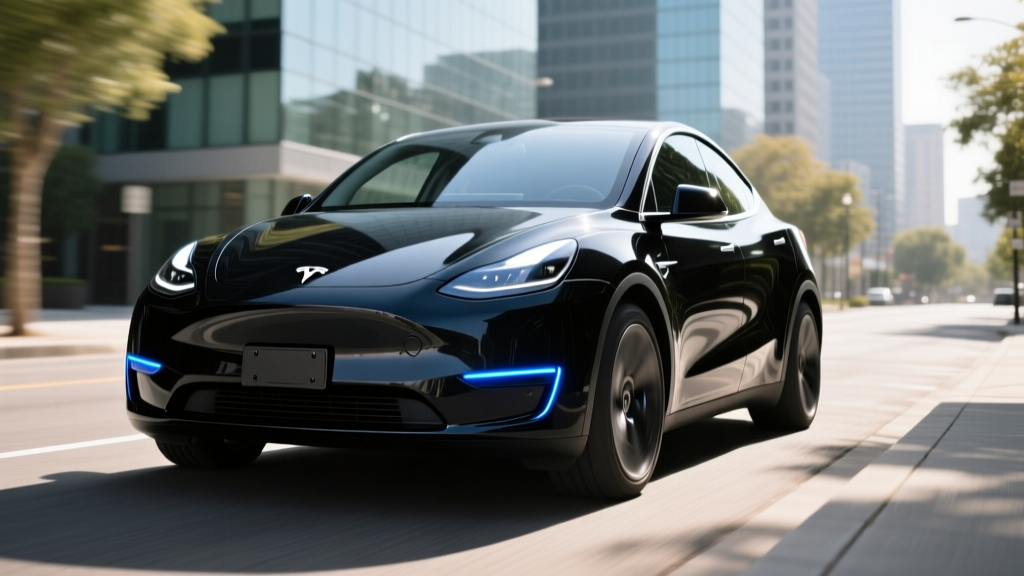
The Tesla Model Y Acceleration Boost is a $2,000 over-the-air software upgrade available on the Long Range AWD trim that drops the 0-60 mph time from 5.0 seconds to 4.3 seconds. It doesn't add battery capacity, increase range, or change the physical drivetrain — it simply unlocks more aggressive torque delivery from the existing dual-motor setup. For daily driving, the difference is immediately noticeable in highway merging, passing maneuvers, and stoplight launches. But is shaving 0.7 seconds worth $2,000? That depends entirely on how you drive and what you value.
In this review, we break down the full 2026 Model Y Long Range AWD platform — the vehicle you're actually buying — and then evaluate whether the Acceleration Boost add-on earns its place on your build sheet.
Full Spec Sheet: 2026 Tesla Model Y Long Range AWD
| Specification | Long Range AWD (Stock) | With Acceleration Boost |
|---|---|---|
| 0-60 mph | 5.0 seconds | 4.3 seconds |
| Horsepower | ~384 hp (combined) | ~456 hp (combined, estimated) |
| Drivetrain | Dual-motor AWD | Dual-motor AWD |
| EPA Range | 310 miles | 310 miles (unchanged) |
| Battery Capacity | ~75 kWh usable (NMC) | ~75 kWh usable (NMC) |
| MPGe (combined) | 111 MPGe | 111 MPGe |
| Efficiency | 28 kWh/100 mi | 28 kWh/100 mi |
| Peak DC Fast Charge | 250 kW | 250 kW |
| 10-80% DC Charge Time | ~27 minutes | ~27 minutes |
| Level 2 Home Charging | 11.5 kW (~44 mi/hr) | 11.5 kW (~44 mi/hr) |
| Cargo Volume | 30.2 cu ft (rear seats up) / 72.1 cu ft (folded) | Same |
| Base MSRP | $48,990 | $50,990 (with Boost) |
| Battery Warranty | 8 years / 120,000 miles | 8 years / 120,000 miles |
Source: Tesla Model Y Design Studio and fueleconomy.gov. Specs reflect 2026 model year. Acceleration Boost horsepower is estimated based on Tesla's published 0-60 improvement; Tesla does not publish official HP figures.
What the Acceleration Boost Actually Does
The Acceleration Boost is not a hardware modification. It's a software unlock purchased through your Tesla account after delivery (or at the time of order). Once activated, the car recalibrates the inverter mapping to allow higher instantaneous current delivery to both the front and rear permanent-magnet synchronous motors. The result is more aggressive torque from a standstill and through the mid-range.
Here's what changes and what doesn't:
- Changes: 0-60 mph time (5.0s → 4.3s), throttle response sharpness, Sport mode aggression
- Doesn't change: Top speed (135 mph), EPA range (310 mi), battery capacity, charging speed, suspension tuning, braking hardware, efficiency rating
In real-world driving, the most noticeable difference isn't the 0-60 number itself — it's the mid-range punch. Merging onto a 70-mph highway or passing on a two-lane road feels decisively quicker. The Model Y Long Range already has strong torque; the Boost makes it feel closer to the Performance trim without the stiffer ride and higher price.
Range, Battery, and Real-World Efficiency
EPA Estimated Range: 310 miles (Long Range AWD, with or without Acceleration Boost)
Real-World Expectation: Expect 265-285 miles on mixed highway driving at 70-75 mph. In cold weather (below 32°F), plan for 220-250 miles due to battery resistance and cabin heating load. City driving with regenerative braking can match or slightly exceed the EPA sticker.
The 2026 Model Y Long Range AWD uses an NMC (nickel manganese cobalt) battery pack with approximately 75 kWh of usable capacity. NMC chemistry offers higher energy density than LFP (lithium iron phosphate), which is why the Long Range achieves 310 miles in a relatively compact pack. The trade-off is that Tesla recommends daily charging to 80% for NMC batteries to maximize longevity — reserving 100% charges for road trips.
The Acceleration Boost does not alter range or efficiency. Tesla's software simply allows more aggressive power delivery; it doesn't change the energy content of the pack or the vehicle's aerodynamic profile. If you drive aggressively after enabling the Boost, you'll consume more energy — but that's a driver choice, not a software consequence.
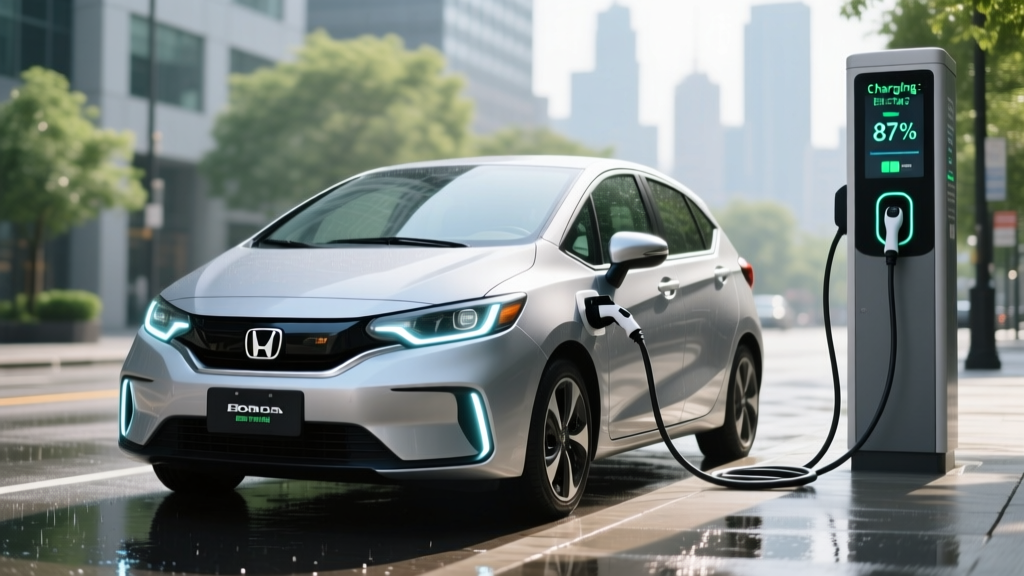
According to fueleconomy.gov, the Model Y Long Range AWD achieves 111 MPGe combined (28 kWh per 100 miles). That translates to roughly $0.04-$0.06 per mile when charging at home on a national average electricity rate of $0.17/kWh — significantly cheaper than a comparable gas-powered compact SUV at $0.14-$0.18 per mile.
Charging Speed: DC Fast Charging and Home Setup
| Charging Level | Power | Speed (Miles Added) | Notes |
|---|---|---|---|
| Level 1 (120V household) | ~1.4 kW | ~4-5 miles/hour | Emergency/trickle only |
| Level 2 (240V home) | 11.5 kW | ~44 miles/hour | Full overnight charge in ~7 hrs |
| DC Fast (Tesla Supercharger V3) | 250 kW peak | ~162 miles in 15 min | 10-80% in ~27 min |
| DC Fast (CCS adapter on non-Tesla networks) | Up to 250 kW | Varies by station | CCS adapter included with 2026 models |
The Model Y Long Range AWD peaks at 250 kW on a V3 Supercharger, but like all EVs, it doesn't sustain that rate across the entire session. The charge curve is aggressive from 10-40% SoC, where you'll see close to peak rates. From 40-65%, it tapers to roughly 150-170 kW. Above 80%, it drops significantly to protect battery health — which is why Tesla quotes 10-80% times rather than 0-100%.
For home charging, a Level 2 wall connector on a 60-amp circuit delivers 11.5 kW (48 amps continuous). That's roughly 44 miles of range per hour of charging, meaning a 20-80% daily charge takes about 4.5 hours — easily accomplished overnight. Installation costs for a home Level 2 setup typically range from $500-$1,800 depending on your electrical panel capacity and the distance from panel to charger location. A 200-amp panel is usually sufficient; older homes with 100-amp service may need a panel upgrade ($1,500-$3,000).
Preconditioning tip: Always navigate to a Supercharger using the car's built-in navigation, even if you know the route. This triggers battery preconditioning — warming the pack to optimal temperature for faster charging. Skipping this step in cold weather can add 10-15 minutes to your charge session.
Pricing, Trims, and Federal Tax Credit Eligibility
| Trim / Configuration | MSRP | Est. Price After §30D Credit |
|---|---|---|
| Model Y Long Range AWD (base) | $48,990 | $41,490* |
| Model Y Long Range AWD + Acceleration Boost | $50,990 | $43,490* |
| Model Y Performance | $53,490 | $45,990* |
*Estimated price assumes full $7,500 federal tax credit under IRS §30D. Actual eligibility depends on multiple factors — see checklist below. The credit can now be transferred to the dealer at point of sale as an instant discount, per 2024-2026 IRS rules.
The 2026 Tesla Model Y Long Range AWD starts at $48,990 (including destination). The Acceleration Boost adds $2,000, bringing the total to $50,990. Other common add-ons include:
- Full Self-Driving (Supervised): $8,000
- Premium paint colors: $1,000-$2,500
- 19" or 20" wheel upgrades: varies
- Tow hitch: $1,000
Federal EV Tax Credit (§30D) Eligibility Checklist
According to IRS.gov, qualifying for the full $7,500 credit requires meeting ALL of the following criteria:
- MSRP Cap: Vehicle MSRP must be ≤ $80,000 for SUVs (Model Y qualifies at ~$49-54K)
- Buyer Income Cap: Modified AGI must be ≤ $150,000 (single), $225,000 (head of household), or $300,000 (married filing jointly)
- Battery Sourcing: Critical minerals and battery components must meet phased-in percentage thresholds from US or FTA-partner countries — Tesla's US-built Model Y has generally qualified, but verify at purchase as sourcing rules tighten annually
- Final Assembly: Must occur in North America (Model Y is assembled in Fremont, CA and Austin, TX — qualifies)
- Point-of-Sale Transfer: You can elect to transfer the credit to the dealer for an instant price reduction, or claim it on your tax return
Important: Battery sourcing requirements become stricter each year. Always confirm current eligibility on IRS.gov or with your tax professional before finalizing your purchase. Tesla's website also displays credit eligibility on each vehicle's build page.
Interior, Tech, and Daily Livability
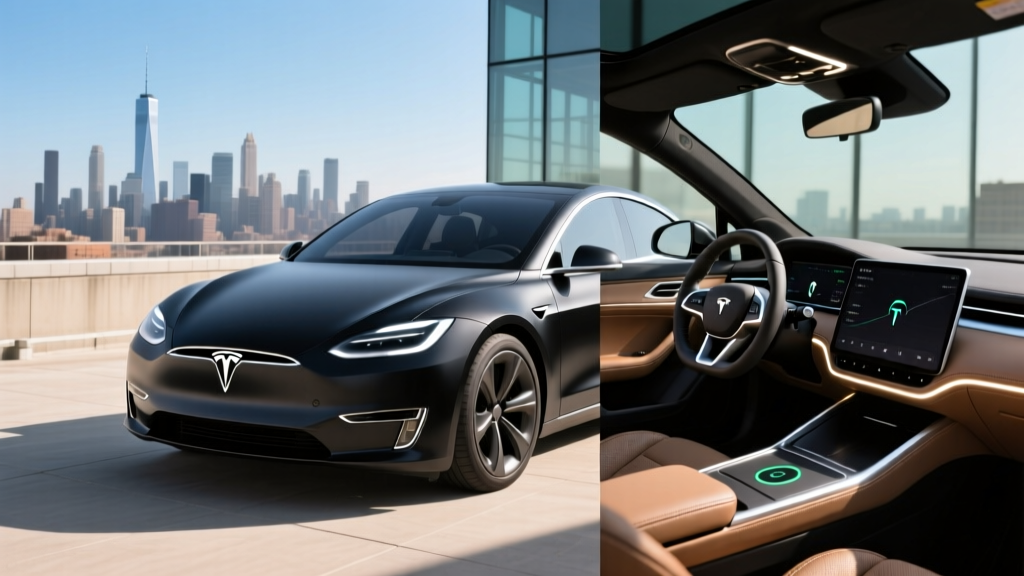
The Model Y's interior is defined by Tesla's minimalist approach: a single 15.4-inch center touchscreen handles navigation, media, climate, vehicle settings, and even the speedometer (there's no traditional instrument cluster). The 2026 refresh (codenamed "Juniper") improved cabin materials with softer-touch surfaces, ventilated front seats, a rear-seat entertainment screen, and acoustic glass for a noticeably quieter ride than pre-2025 models.
Passenger and cargo dimensions:
- Front legroom: 41.8 inches
- Rear legroom: 40.9 inches
- Cargo (rear seats up): 30.2 cubic feet
- Cargo (rear seats folded): 72.1 cubic feet
- Front trunk (frunk): 4.1 cubic feet
The cargo area is one of the Model Y's strongest selling points — it swallows luggage, groceries, and child seats with room to spare. The power-folding rear seats and low load floor make it practical for bulky items.
Driver assistance: Every Model Y includes Tesla's Basic Autopilot (adaptive cruise control, lane centering, automatic emergency braking). This is an SAE Level 2 system — it assists with steering and speed, but the driver must remain fully attentive and keep hands on the wheel. Full Self-Driving (Supervised) adds automated lane changes, traffic light recognition, and city street navigation, but it remains SAE Level 2 and requires constant driver supervision. It is not a self-driving system.
Pros and Cons
Pros
- Acceleration Boost delivers Performance-level punch for $2,000 less than the Performance trim
- Class-leading Supercharger network access with reliable 250 kW charging
- 310-mile EPA range covers most road trips with one brief stop
- Spacious cargo area (72.1 cu ft) and practical frunk
- Over-the-air updates continuously add features
- Low running costs: ~$0.05/mile on home electricity
- Qualifies for $7,500 federal tax credit (verify eligibility)
Cons
- No traditional instrument cluster — all info on center screen
- NMC battery requires 80% daily charge limit for longevity
- Ride quality is firm, especially with 20" wheels
- Acceleration Boost is a software-only unlock — no hardware upgrades to brakes or suspension
- Insurance premiums run 15-25% higher than comparable gas SUVs
- FSD (Supervised) costs $8,000 and still requires full driver attention
- Panel gaps and minor build-quality inconsistencies still reported by some owners
Who Should Buy the Model Y with Acceleration Boost?
Choose the Long Range AWD with Acceleration Boost if:
- You want quick highway merging and passing performance without paying for the Performance trim's stiffer suspension and higher $53,490 price
- You prioritize range (310 mi) over outright track performance
- You value access to the Supercharger network for road trips
- You have home Level 2 charging and drive fewer than 250 miles per day
Choose the standard Long Range AWD (without Boost) if:
- Your commute is mostly city/suburban where 5.0-second 0-60 is already plenty quick
- You'd rather put that $2,000 toward a home charger installation or FSD
- You rarely carry heavy loads or drive in situations requiring rapid acceleration
Consider a competitor (Hyundai Ioniq 5, Ford Mustang Mach-E, Kia EV6) if:
- You prefer a more traditional interior layout with physical buttons and a dedicated instrument display
- You want 800V architecture for faster DC charging curves (Ioniq 5/EV6 peak higher and sustain longer)
- You're concerned about Tesla service center wait times in your area
Warranty and Long-Term Ownership
Tesla covers the Model Y's battery and drive units for 8 years or 120,000 miles (whichever comes first), with a guaranteed minimum 70% capacity retention over that period. The limited vehicle warranty is 4 years / 50,000 miles. These terms are competitive with the EV segment, though some rivals like Hyundai offer 10-year/100,000-mile battery coverage.
Real-world battery degradation data from Tesla's fleet shows the average Model Y pack retains approximately 88-92% of original capacity after 100,000 miles. The NMC chemistry in the Long Range is proven but does benefit from the 80% daily charge limit — owners who routinely charge to 100% and let the car sit at full SoC may see accelerated degradation.
Ownership costs beyond the purchase price include:
- Insurance: Expect $1,800-$2,800/year depending on your profile — higher than gas equivalents due to repair costs and parts pricing
- Maintenance: Minimal — cabin air filter ($50-$80 every 2 years), tire rotation, windshield washer fluid. No oil changes, no spark plugs
- Tires: EV-specific tires wear faster due to instant torque and heavier vehicle weight; budget $800-$1,200 for a set every 30,000-40,000 miles
Frequently Asked Questions
Can I add the Acceleration Boost after purchasing the Model Y?
Yes. The Acceleration Boost is an over-the-air software purchase available through your Tesla account at any time after delivery. You don't need to select it at the time of order. The activation is instant once purchased.
Does the Acceleration Boost reduce range or battery life?
No. The Boost does not change the battery capacity, efficiency rating, or EPA range. However, if you drive more aggressively because of the increased performance, you will consume more energy per mile — that's a driver behavior effect, not a software effect.
Is the Model Y with Acceleration Boost faster than the Performance trim?
No. The Performance trim still posts a quicker 0-60 time of approximately 3.5 seconds. The Acceleration Boost brings the Long Range AWD to 4.3 seconds — noticeably quicker than stock, but not Performance-level. The Performance also includes upgraded brakes, a lowered sport suspension, and 21" wheels.
How much does it cost to charge a Model Y at home?
At the national average electricity rate of ~$0.17/kWh, fully charging the ~75 kWh usable battery costs roughly $12.75. A typical daily charge from 30-80% (about 37.5 kWh) costs around $6.40 and adds roughly 185 miles of range. Compare that to $45-$60 to fill a gas tank on a comparable SUV.
Does the 2026 Model Y qualify for the $7,500 federal tax credit?
The Model Y Long Range AWD generally qualifies for the full $7,500 credit under IRS §30D, as it is assembled in the US, priced under the $80,000 SUV cap, and meets current battery sourcing requirements. However, eligibility depends on your income (AGI caps apply), and sourcing rules tighten annually. Verify current status on IRS.gov before purchasing.
What's the real-world range in winter?
In sustained temperatures below 32°F, expect 220-250 miles of usable range from a full charge. Cold weather increases battery internal resistance and requires energy for cabin and battery heating. Preconditioning the battery while plugged in (using scheduled departure) recovers some of this loss. The Model Y's standard heat pump is significantly more efficient than resistive heating used in older EVs.
Is Autopilot included, and is it self-driving?
Basic Autopilot is included standard and provides adaptive cruise control and lane centering. This is an SAE Level 2 driver-assist system — you must remain attentive and keep your hands on the wheel at all times. Full Self-Driving (Supervised) is an optional $8,000 upgrade that adds more automated features, but it remains SAE Level 2 and is not a self-driving system.