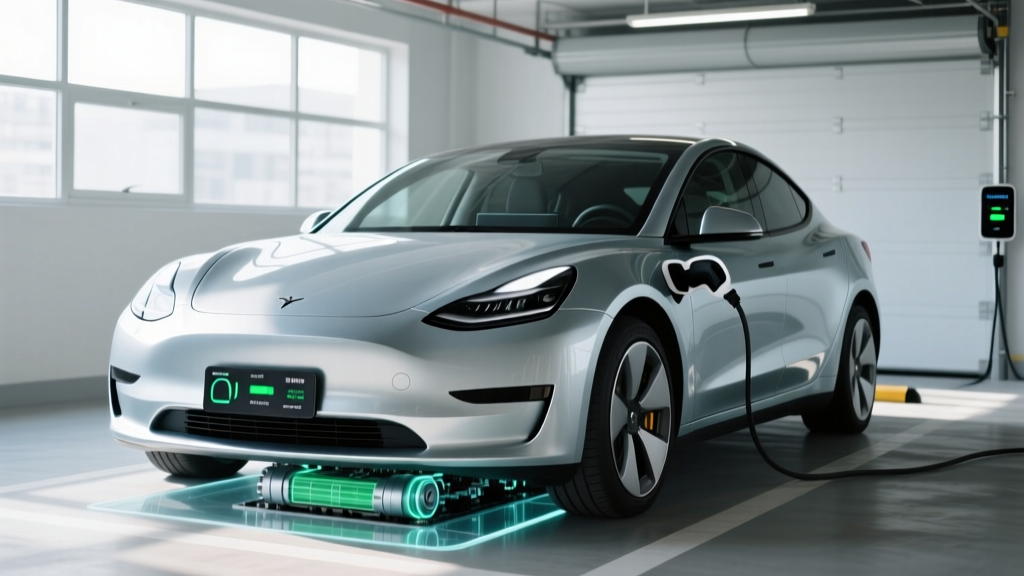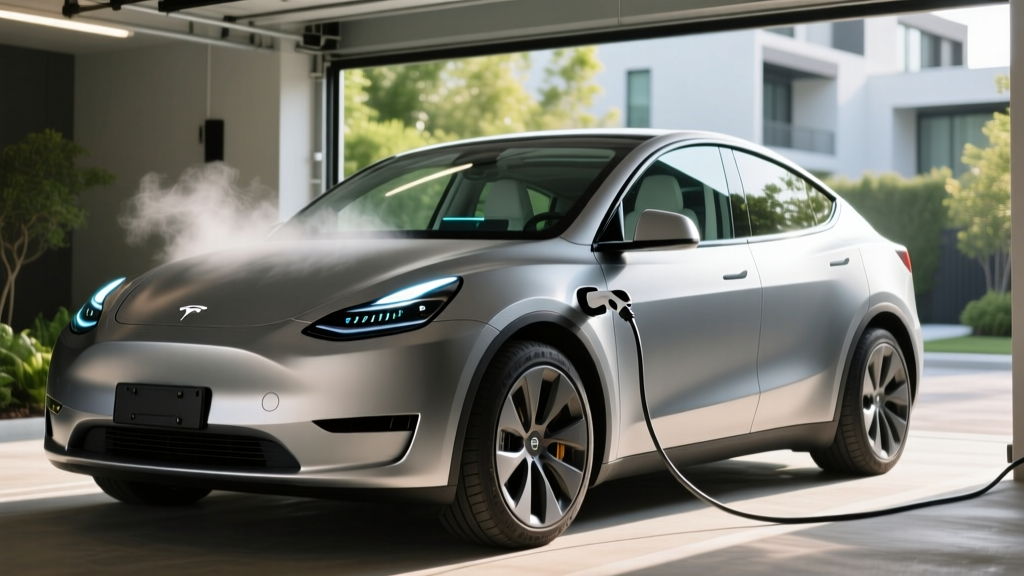
If you've searched "Tesla AC smells" at 2 a.m., you're not alone. A musty, vinegar-like, or damp-sock odor from the climate control vents is one of the most frequently reported quirks among Tesla owners — particularly in the Model Y and Model 3. But before you let a cabin air issue overshadow one of the most capable electric SUVs on the market, here's the full picture: what causes the smell, how to fix it, and whether the 2026 Tesla Model Y still deserves a spot on your shortlist.
This review covers the 2026 Model Y Long Range AWD and Performance trims with exact EPA data, charging speeds, real-world range expectations, pricing after federal tax credits, and the cabin air quality fixes Tesla has implemented in recent model years.
2026 Tesla Model Y: Core Specifications at a Glance
| Spec | Long Range AWD | Performance |
|---|---|---|
| EPA Range | 320 miles | 295 miles |
| Battery (usable) | ~75 kWh, NMC | ~75 kWh, NMC |
| MPGe (city/hwy/combined) | 127 / 110 / 119 MPGe | 115 / 100 / 108 MPGe |
| Efficiency | 28 kWh/100 mi | 31 kWh/100 mi |
| Peak DC Fast Charge | 250 kW (Supercharger V3) | 250 kW (Supercharger V3) |
| 10–80% DC Charge Time | ~27 minutes | ~27 minutes |
| Level 2 Home Charging | 11.5 kW (~44 mi/hr) | 11.5 kW (~44 mi/hr) |
| 0–60 mph | 4.8 seconds | 3.5 seconds |
| Horsepower | 384 hp (dual motor) | 456 hp (dual motor) |
| Drivetrain | AWD (dual motor) | AWD (dual motor) |
| Cargo Volume | 30.2 cu ft (rear seats up) / 72.1 cu ft (folded) | 30.2 / 72.1 cu ft |
| Rear Legroom | 40.5 inches | 40.5 inches |
| Battery/Drive Unit Warranty | 8 yr / 120,000 mi | 8 yr / 120,000 mi |
| Base MSRP | $48,990 | $53,990 |
Source: fueleconomy.gov and Tesla Model Y official specs. Specs reflect 2025–2026 model year data.
Real-World Range: What the EPA Sticker Doesn't Tell You
Real-World Expectation: ~260–285 miles on highway road trips at 70–75 mph; ~210–240 miles in sub-30°F winter conditions with cabin heat active. City driving with regenerative braking can match or slightly exceed the EPA figure.
The 320-mile EPA figure for the Long Range AWD is competitive among midsize electric SUVs. But as with every EV, your actual range depends heavily on driving style, ambient temperature, and terrain. On a flat 70°F day at 65 mph, owners consistently report 290–310 miles before needing to charge. Push highway speeds to 75–80 mph and you'll see that drop to 250–270 miles.
Cold weather is the larger variable. The Model Y uses a heat pump (standard since the 2021 refresh), which significantly reduces the winter range penalty compared to resistive heating. In testing at 20°F, expect a 20–25% range reduction — putting real-world winter range around 240–255 miles. That's still enough for most commutes, but plan road trips with charging stops every 180–200 miles in deep cold to maintain a comfort buffer.
The ~75 kWh usable NMC (nickel manganese cobalt) battery pack provides solid energy density. Tesla's NMC chemistry prioritizes range and performance over the longer cycle life of LFP (lithium iron phosphate), which Tesla reserves for the Standard Range/RWD trims. If maximum longevity matters more than peak range, the RWD trim with its LFP pack is worth considering — though range drops to approximately 260 miles EPA.
Charging Speed: Supercharger Network and Home Setup
Charging is where Tesla still holds a tangible advantage, primarily due to the Supercharger network's reliability and density. The 2026 Model Y retains the NACS (North American Charging Standard) connector natively — no adapter needed at Tesla Superchargers, and with the industry-wide NACS adoption now in full swing, access to third-party networks like Electrify America's NACS-equipped stations is expanding.
| Charging Level | Power | Speed (Approx.) | Use Case |
|---|---|---|---|
| Level 1 (120V) | ~1.4 kW | ~4–5 mi/hr | Emergency / overnight trickle |
| Level 2 (240V, 48A) | 11.5 kW | ~44 mi/hr | Home daily charging (Wall Connector) |
| DC Fast (Supercharger V3) | 250 kW peak | 10–80% in ~27 min | Road trips |
| DC Fast (Supercharger V4) | Up to 350 kW* | 10–80% in ~20 min* | Newer stations (vehicle-limited) |
*V4 Supercharger stalls can deliver higher power, but the current Model Y's onboard architecture caps at approximately 250 kW. Future hardware revisions may unlock higher rates.
Charging curve reality: The 250 kW peak only holds between roughly 10–30% state of charge. By 50% SoC, the rate tapers to approximately 150 kW, and above 80% it drops sharply to protect the NMC battery. This is why Tesla's navigation system typically targets 80% for road-trip charging stops — the last 20% can take as long as the first 70%.
For home charging, Tesla's Wall Connector on a 60-amp circuit delivers the full 11.5 kW / 48 amps, adding roughly 44 miles of range per hour. A full overnight charge from 20% to 80% takes about 4.5 hours. Installation typically costs $500–$1,500 depending on your panel capacity and run distance — budget an additional $1,000–$2,500 if your home needs a 200-amp panel upgrade.
Why Does the Tesla AC Smell? Causes and Fixes
The musty or sour AC odor reported by Tesla owners is almost universally caused by moisture accumulation on the evaporator coil inside the HVAC system. When the AC runs, condensation forms on the cold evaporator. If that moisture doesn't fully drain or dry between drives, mold and mildew develop — producing the characteristic "dirty sock" or vinegar smell when you next turn on the climate system.
This isn't unique to Tesla — it's a known issue across many automotive brands — but Tesla's minimalist cabin design means there are fewer physical controls to mask the problem, and owners tend to notice it more acutely.
What Tesla has done: Beginning with the 2023 "Project Highland" Model 3 refresh and carrying into the 2025–2026 Model Y "Juniper" update, Tesla upgraded the cabin air filtration system with an improved HEPA-grade filter and better evaporator drainage design. The larger "Bioweapon Defense Mode" HEPA filter (standard on all trims since the refresh) captures particulates down to 0.3 microns and has helped reduce odor complaints in newer vehicles.
What you can do on any Model Y:
- Replace the cabin air filter every 12–18 months (Tesla's official interval is 2 years, but humid climates may need more frequent swaps). OEM HEPA filters cost ~$30–$45 and are a straightforward DIY behind the glovebox.
- Run the fan on high with AC off for 2–3 minutes before shutting down — this dries the evaporator coil. Some owners set a departure routine in the Tesla app to automate this.
- Use an EPA-grade cabin sanitizer spray (like Kool-It or Nu-Calgon) through the exterior air intake annually to kill microbial growth on the evaporator.
- Enable "Cabin Overheat Protection" in hot climates — the system runs the AC intermittently when parked, which also helps dry the system.
If you're buying a 2026 Model Y new, the updated HVAC design means you're far less likely to encounter this issue than owners of 2020–2022 models. But the maintenance habits above are still good practice in humid environments.
Pricing, Trims, and Federal Tax Credit Eligibility
| Trim | Base MSRP | Est. Federal Credit (§30D) | Effective Price |
|---|---|---|---|
| Long Range AWD | $48,990 | Up to $7,500* | ~$41,490* |
| Performance | $53,990 | Up to $7,500* | ~$46,490* |
*Federal tax credit eligibility under IRS §30D is NOT automatic. You must meet ALL of the following requirements:
- MSRP Cap: SUVs/vans must be ≤ $80,000 (both Model Y trims qualify comfortably).
- Buyer Income Cap: Modified AGI ≤ $300,000 (joint) / $225,000 (head of household) / $150,000 (single).
- Battery Sourcing: A percentage of critical minerals and battery components must be sourced from the US or free-trade-agreement countries. These percentages increase annually. Tesla's US-built battery packs have generally met these thresholds, but verify current-year compliance at the point of sale.
- Point-of-Sale Transfer: As of 2024, you can transfer the credit to the dealer at purchase for an immediate price reduction — you don't need to wait until tax filing. The dealer must be IRS-registered.
Important: Battery sourcing requirements tighten every year under the Inflation Reduction Act. Always confirm the specific vehicle's VIN qualifies using the IRS's official tool at fueleconomy.gov before finalizing a purchase. State-level incentives (California, Colorado, New York, etc.) may stack on top — check your local DMV or energy office.
Performance, Tech, and Daily Livability
The Model Y Long Range AWD's 4.8-second 0–60 time is brisk by any SUV standard, and the dual-motor AWD system provides confident traction in rain and light snow. The Performance trim drops that to 3.5 seconds — supercar territory from a family crossover — with track-mode tuning and larger brakes.
Infotainment: The 15.4-inch center touchscreen handles everything — navigation, media, climate, vehicle settings. The Juniper-refreshed Model Y adds rear-seat entertainment screens and ventilated front seats as standard. There are no physical buttons for climate or volume (a persistent complaint among some buyers), though the steering wheel now includes haptic sliders.
Driver Assistance: Basic Autopilot (lane centering + adaptive cruise) is standard. Full Self-Driving (Supervised) remains a $8,000 add-on or $99/month subscription.
Cargo and passenger space remain a Model Y strong suit: 30.2 cubic feet behind the second row expands to 72.1 with seats folded — enough for a week's camping gear or a Costco haul. The front trunk (frunk) adds another 4.1 cubic feet. Rear legroom at 40.5 inches accommodates adults comfortably, though the sloping roofline limits headroom for passengers over 6'2".
Pros, Cons, and the Verdict
Pros
- Best-in-class Supercharger network access (NACS native)
- 320-mile EPA range covers most road trips with one stop
- Heat pump standard — strong cold-weather efficiency
- Spacious cargo area (72.1 cu ft) with flat load floor
- Over-the-air updates continuously add features
- Strong resale value relative to EV segment average
Cons
- AC evaporator odor can recur without maintenance discipline
- No physical climate or volume controls — touchscreen-only
- FSD (Supervised) remains Level 2 despite the name and $8,000 cost
- Ride quality firm on 20" wheels; road noise noticeable at highway speed
- 250 kW peak charge rate trails Hyundai/Kia's 800V architecture (~350 kW)
- Panel gaps and interior trim still inconsistent vs. legacy luxury brands
Who the Model Y suits best: Daily commuters with home charging access, families needing cargo flexibility, and road-trippers who value Supercharger reliability. If you regularly drive in extreme cold (below 0°F) or need to tow more than 3,500 lbs, consider the Rivian R1S or Ford Explorer EV as alternatives. If AC odor is a dealbreaker and you live in a very humid climate, the Hyundai Ioniq 5's conventional HVAC design avoids this issue entirely.
Frequently Asked Questions
What is the real-world range of the 2026 Tesla Model Y?
The EPA rates the Long Range AWD at 320 miles. In real-world highway driving at 70–75 mph, expect 260–285 miles. In cold weather (below 30°F), plan for 210–255 miles depending on cabin heat usage and whether you precondition the battery.
How fast does the Model Y charge at home and on the road?
At home on a Level 2 Tesla Wall Connector (11.5 kW / 48A), you gain about 44 miles of range per hour — a full overnight charge covers any daily commute. On a V3 Supercharger, 10–80% takes approximately 27 minutes, though the charge curve tapers significantly above 50% state of charge.
How much does the Model Y cost after the federal tax credit?
The Long Range AWD starts at $48,990 and may qualify for up to $7,500 under IRS §30D, bringing the effective price to ~$41,490. Eligibility depends on your income, the vehicle's battery sourcing compliance, and the MSRP cap — always verify before purchase.
Does the 2026 Model Y qualify for the $7,500 federal EV tax credit?
It has historically qualified, but §30D battery-sourcing requirements tighten annually. The Model Y is built in Austin, Texas, with US-assembled battery packs, which has kept it compliant. Verify your specific VIN at fueleconomy.gov and confirm your AGI is within the IRS income caps ($300K joint / $150K single).
Is the Tesla Model Y worth buying vs. the Hyundai Ioniq 5 or Ford Mustang Mach-E?
The Model Y wins on Supercharger network reliability, cargo space, and software ecosystem. The Ioniq 5 charges faster on compatible 350 kW chargers (800V architecture, 10–80% in ~18 min) and avoids the AC odor issue. The Mach-E offers a more traditional interior with physical controls. If charging convenience and range are your top priorities, the Model Y remains the segment benchmark.
How do I fix the musty AC smell in my Tesla?
Replace the cabin HEPA filter every 12–18 months, run the fan without AC for 2–3 minutes before parking to dry the evaporator, and use an HVAC evaporator cleaner spray annually through the exterior air intake. The 2025–2026 Juniper refresh improved drainage and filtration, reducing recurrence in newer models.
What is the battery warranty on the Model Y?
Tesla covers the battery and drive unit for 8 years or 120,000 miles (whichever comes first) with a minimum 70% capacity retention guarantee. If degradation drops below 70% within the warranty period, Tesla will replace or refurbish the battery at no cost.