Quick Verdict: The Model Y 7-Seater Is a Compromise Worth Making
If you need three rows in an electric crossover without stepping up to the Model X or a full-size electric SUV, the 2026 Tesla Model Y 7-seater remains one of the only options at its price point. The optional third row ($3,000 add-on) transforms the Long Range AWD into a family hauler, but it's not without trade-offs. Cargo space shrinks, the rearmost seats are best reserved for children, and the added weight trims a few miles off the EPA range compared to the five-seat variant. Still, for families who need occasional extra seating without the $80,000+ hit of a Model X or Rivian R1S, the Model Y 7-seater delivers Tesla's charging network, strong efficiency, and practical daily drivability at a relatively accessible price.
This review covers the 2026 Model Y Long Range AWD equipped with the optional third-row seat package — the only trim currently offered with seven-passenger seating.
2026 Tesla Model Y 7-Seater Specifications
| Spec | Value |
|---|---|
| EPA Estimated Range | 308 miles |
| Battery Capacity (Usable) | ~75 kWh (NMC chemistry) |
| Drivetrain | Dual-Motor AWD |
| Horsepower | 384 hp (combined) |
| 0-60 mph | 4.8 seconds |
| Max DC Fast Charge | 250 kW (peak) |
| 10-80% DC Fast Charge | ~27 minutes |
| Level 2 Home Charging | 11.5 kW / ~44 mi/hr |
| EPA Efficiency | 117 MPGe combined (29 kWh/100 mi) |
| Cargo (behind 3rd row) | 12.4 cu ft |
| Cargo (3rd row folded) | 34.2 cu ft |
| Cargo (all rear rows folded) | 72.1 cu ft |
| Base MSRP (7-Seat) | $52,490 (incl. destination) |
| Battery/Drive Unit Warranty | 8 years / 120,000 miles |
| Federal Tax Credit (§30D) | Up to $7,500 (eligibility varies) |
Real-World Range: What to Actually Expect
Real-World Highway (70-80 mph, mild weather): ~260-280 miles
Real-World Highway (cold weather, below 32°F): ~210-240 miles
City / Commuter Driving (with regen): ~290-310 miles
The 308-mile EPA rating for the 7-seat Model Y Long Range AWD represents a slight reduction from the five-seat variant (rated at 320 miles), primarily due to the added weight of the third-row structure and hardware. On paper, 12 miles doesn't sound dramatic. In practice, the real-world gap matters more when you're planning road trips.
Tesla's NMC (nickel-manganese-cobalt) battery chemistry in the Long Range pack delivers strong energy density, but like all EVs, the Model Y is sensitive to driving style, temperature, and terrain. Highway driving at sustained 75-80 mph pushes consumption to roughly 32-34 kWh/100 mi, cutting effective range to around 260-280 miles in temperate conditions. In sub-freezing winter weather, expect a 20-30% reduction from the EPA figure due to cabin heating demands and reduced battery efficiency — bringing real-world range down to approximately 210-240 miles on a full charge.
City driving with frequent regenerative braking opportunities is where the Model Y shines, often matching or slightly exceeding its EPA rating. Tesla's heat pump, standard on all 2026 Model Y trims, significantly mitigates cold-weather range loss compared to older EVs using resistive heating. If you precondition the battery while plugged in (a feature built into the Tesla app and scheduled departure settings), you'll reclaim some of that winter range by warming the pack before you drive.
One important caveat: the 7-seat configuration adds roughly 150-180 lbs over the five-seat model. That mass penalty is felt most at highway speeds and on elevation changes. If you frequently drive mountain passes or sustained high-speed corridors, budget your charging stops conservatively.
Charging Speed: DC Fast, Level 2, and the Supercharger Advantage
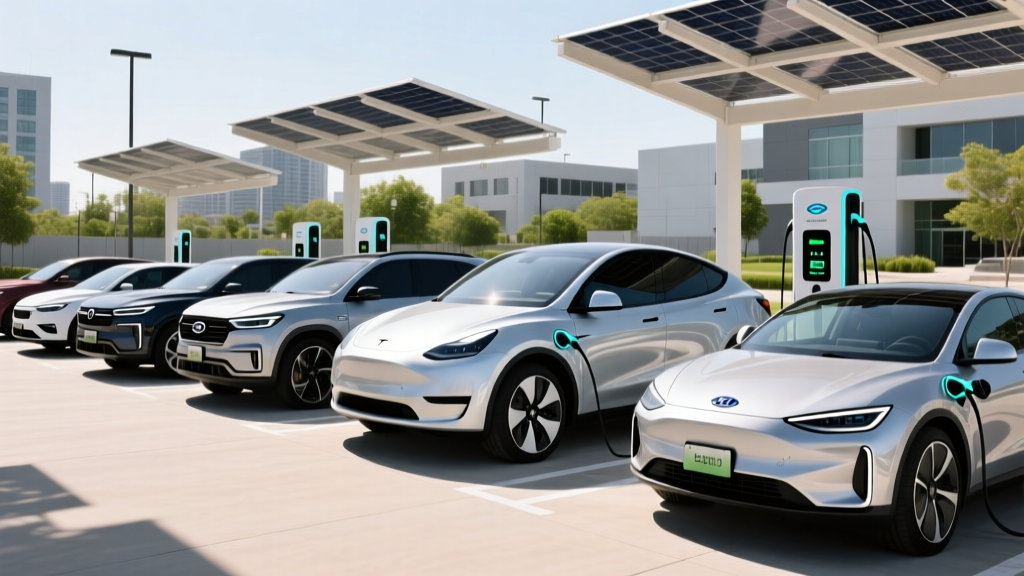
The 2026 Model Y 7-seater supports up to 250 kW peak DC fast charging on V3 Tesla Superchargers and compatible CCS/NACS stations. Tesla's transition to the NACS (North American Charging Standard) connector means the Model Y natively accesses the growing Supercharger network plus an expanding list of third-party stations from Electrify America, EVgo, and others that have adopted NACS compatibility.
| Charging Method | Power (kW) | Rate | Notes |
|---|---|---|---|
| DC Fast (V3 Supercharger) | Up to 250 kW peak | ~175 mi in 15 min | Peak rate only below ~35% SoC; tapers significantly above 80% |
| DC Fast (10-80%) | Avg ~130 kW sustained | ~27 minutes | Real-world average accounting for charge curve taper |
| Level 2 (Tesla Wall Connector) | 11.5 kW | ~44 mi/hr | Requires 60A circuit; full charge in ~7 hours |
| Level 2 (Public/48A) | ~9.6 kW | ~37 mi/hr | Common at workplace and public Level 2 stations |
| Level 1 (120V outlet) | ~1.4 kW | ~3-4 mi/hr | Emergency/trickle only; ~4 days for full charge |
The charge curve is where real-world charging differs from marketing claims. At 250 kW peak, the Model Y can add roughly 175 miles of range in 15 minutes — but only when starting from a low state of charge (below 20-35% SoC) and with the battery properly preconditioned. As the battery fills past 50%, charge speed drops to approximately 150 kW, and above 80% SoC, it tapers sharply to protect cell longevity. A 10-80% session typically averages around 130 kW sustained, completing in roughly 27 minutes.
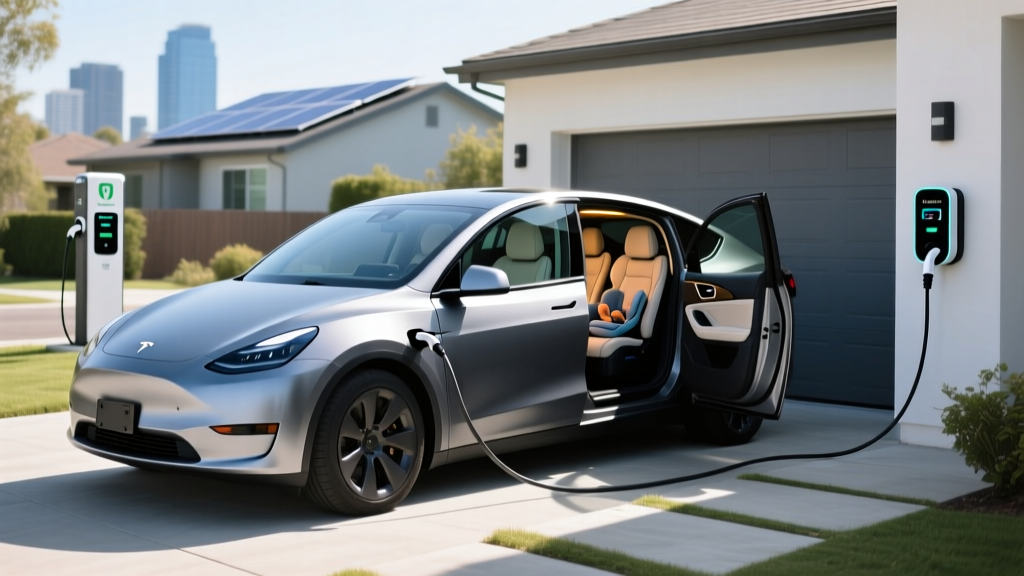
For home charging, Tesla's Wall Connector at 11.5 kW (requiring a dedicated 60-amp circuit) delivers about 44 miles of range per hour. Most 7-seat Model Y owners report plugging in overnight and waking to a full or near-full battery every morning. Installation costs for a Level 2 home setup typically range from $800 to $2,500 depending on your electrical panel capacity and run distance — factor in a potential $1,500-$3,000 panel upgrade if you're running a 200-amp service at capacity. Always consult a licensed electrician for your specific installation requirements.
The Supercharger network remains Tesla's strongest ownership advantage. As of 2026, there are over 6,500 Supercharger stations across North America, and reliability consistently outpaces third-party networks in J.D. Power EV charging satisfaction studies.
Performance and Drivetrain
The 7-seat Model Y is exclusively available in the Long Range AWD configuration, featuring a dual-motor setup with 384 combined horsepower. The 0-60 mph sprint clocks in at 4.8 seconds — not quite Performance-trim territory, but more than adequate for highway merging and confident passing with a full load of passengers and cargo.
Tesla's dual-motor AWD system provides excellent traction in rain and snow, distributing torque between the front and rear axles in milliseconds. The low center of gravity from the floor-mounted battery pack gives the Model Y surprisingly composed handling for a crossover, though the added weight of the 7-seat configuration is noticeable during aggressive cornering. Ride quality is firm but well-damped; some owners note it transmits more road imperfections than competitors like the Hyundai Ioniq 5 or Kia EV6.
Regenerative braking in the Model Y is strong enough for genuine one-pedal driving in most city conditions. The 2026 model retains Tesla's single-pedal mode (which was briefly removed and then reinstated following customer feedback in earlier model years), allowing the vehicle to come to a complete stop without touching the brake pedal in normal traffic.
Interior, Third-Row Space, and Cargo Practicality
This is where the 7-seat Model Y demands honest evaluation. The third row is best described as a child-sized space. Tesla lists it as suitable for passengers up to approximately 5'4" in height, but in real-world use, legroom in the third row is extremely tight — roughly 26-28 inches — making it viable primarily for children aged 4-10 or very short adults on brief trips.
Second-row legroom remains reasonable at around 38 inches when the second row is in its standard position, but sliding the second row forward to give third-row passengers any additional space compresses the second row significantly. With all three rows occupied, cargo space behind the third row shrinks to just 12.4 cubic feet — enough for a couple of grocery bags or a small stroller, but not much else.
Fold the third row flat, and you regain 34.2 cubic feet, which is practical for daily family logistics. Fold both rear rows and the Model Y opens up to 72.1 cubic feet of cargo volume — competitive with midsize SUVs and sufficient for furniture moves or camping gear. The front trunk (frunk) adds an additional 4.1 cubic feet for charging cables or small bags.
The interior design follows Tesla's minimalist approach: a single 15.4-inch touchscreen controls virtually all vehicle functions, with no physical buttons for climate, media, or navigation. Some families appreciate the clean aesthetic; others find it frustrating to adjust fan speed or temperature while driving. The 2026 Model Y refresh (codenamed "Juniper") introduced ventilated front seats, ambient lighting, rear-seat entertainment screens, and improved sound insulation — all welcome upgrades for a family vehicle.
Pricing, Tax Credits, and Total Cost
| Item | Cost |
|---|---|
| Model Y Long Range AWD (base) | $49,490 |
| 7-Seat Package | +$3,000 |
| Destination Fee | Included |
| Base MSRP (7-Seat) | $52,490 |
| Federal §30D Tax Credit (if eligible) | -$7,500 |
| Effective Price (with max credit) | ~$44,990 |
The 2026 Model Y Long Range AWD with the 7-seat option starts at $52,490 including destination. Popular add-ons include Full Self-Driving (Supervised) at $8,000, premium paint colors at $1,000-$2,500, and 20-inch wheels at $2,000. A well-equipped 7-seat Model Y can reach $58,000-$62,000 before incentives.
- MSRP Cap: SUVs/vans/pickups must be under $80,000 — Model Y qualifies.
- Buyer Income Cap: AGI must not exceed $150,000 (single), $225,000 (head of household), or $300,000 (joint). Check IRS §30D guidelines for current thresholds.
- Battery Sourcing: The $7,500 credit requires meeting both critical-mineral ($3,750) and battery-component ($3,750) sourcing requirements. Tesla's supply chain sourcing determines eligibility — verify current compliance status on the DOE/FuelEconomy.gov credit tracker.
- Point-of-Sale Transfer: As of 2024+, buyers can transfer the credit to the dealer for an immediate price reduction at purchase, rather than waiting to claim it on their tax return.
Disclaimer: Tax credit eligibility depends on individual circumstances, current IRS rules, and manufacturer sourcing compliance. Consult a tax professional before making purchase decisions based on credit assumptions.
On the ownership-cost side, the Model Y 7-seater benefits from low fueling costs (approximately $0.10-$0.15 per mile on home electricity vs. $0.15-$0.20 for a comparable gas SUV), minimal maintenance (no oil changes, fewer brake replacements due to regen), and strong residual values. However, EV insurance premiums tend to run 15-25% higher than equivalent gas vehicles — budget accordingly.
Technology, Driver Assistance, and Safety
The 2026 Model Y comes standard with Tesla's Autopilot suite, which includes Traffic-Aware Cruise Control, Autosteer (lane centering), automatic emergency braking, blind-spot monitoring, and lane-departure warning. These features constitute SAE Level 2 driver assistance — meaning the driver must remain fully attentive with hands on the wheel at all times.
Tesla's Autopilot and optional Full Self-Driving (Supervised) are classified as SAE Level 2 systems. The driver is legally and practically responsible for all vehicle operation. Do not treat these systems as autonomous — continuous supervision is required. Only Level 4 services (like Waymo robotaxis operating in geofenced areas) qualify as truly driverless.
The optional Full Self-Driving (Supervised) package adds automated lane changes, navigation-guided on/off-ramp transitions, traffic light and stop sign recognition, and Tesla's city-street driving capability. While FSD has improved substantially through iterative neural-network updates, it remains a supervised system that occasionally requires driver intervention — particularly in complex construction zones, unusual road configurations, and adverse weather.
The 2026 Model Y earned a 5-star overall safety rating from NHTSA and was named an IIHS Top Safety Pick+ by the Insurance Institute for Highway Safety. The structural battery pack contributes to a very low rollover risk, and the large crumple zones provide strong crash protection across all seating positions, including the third row.
Infotainment runs on Tesla's proprietary system with over-the-air updates, built-in navigation with real-time Supercharger routing, streaming media (Netflix, YouTube, Spotify), and a mobile app for remote climate control, charging monitoring, and vehicle location. The 2026 Juniper refresh added a rear-seat entertainment screen for second-row passengers — a meaningful upgrade for family road trips.
Pros, Cons, and the Verdict
Pros
- Access to Tesla's Supercharger network — the most reliable DC fast-charging infrastructure in North America
- 308-mile EPA range is practical for road trips with 2-3 short charging stops
- Strong efficiency at 117 MPGe / 29 kWh/100 mi keeps home-charging costs low
- 5-star NHTSA safety rating and IIHS Top Safety Pick+
- Over-the-air updates continuously add features and improve systems
- Relatively affordable entry into 3-row electric SUV territory
- Dual-motor AWD provides confident all-weather traction
Cons
- Third row is very tight — only practical for small children
- Cargo space behind the third row is just 12.4 cu ft
- Minimalist interior lacks physical controls; everything through the touchscreen
- Firm ride quality compared to Hyundai Ioniq 5 or Kia EV6
- FSD (Supervised) costs $8,000 extra and still requires full driver attention
- No Apple CarPlay or Android Auto integration
- Insurance premiums run higher than comparable gas SUVs
Should You Buy the Model Y 7-Seater?
Choose the Model Y 7-seater if: You need occasional third-row seating for children, value Supercharger network access for road trips, want a relatively affordable electric 3-row SUV, and are comfortable with Tesla's touchscreen-centric interface.
Look elsewhere if: You regularly transport adults in the third row (consider the Rivian R1S, Kia EV9, or wait for larger electric SUVs), you need substantial cargo room with all seats occupied, or you prefer physical controls and Apple CarPlay/Android Auto.
Frequently Asked Questions
What is the real-world range of the Tesla Model Y 7-seater?
The EPA rates the 2026 Model Y Long Range AWD 7-seater at 308 miles. In real-world highway driving at 70-80 mph, expect approximately 260-280 miles. In cold weather (below freezing), range drops to roughly 210-240 miles. City driving with regenerative braking can match or slightly exceed the EPA figure.
How fast does the Model Y 7-seater charge?
On a V3 Supercharger (250 kW peak), the Model Y adds about 175 miles in 15 minutes when starting from a low state of charge. A 10-80% session takes approximately 27 minutes, accounting for the charge-curve taper above 50% SoC. At home on a Level 2 Wall Connector (11.5 kW), you'll add about 44 miles per hour, reaching a full charge overnight in roughly 7 hours.
How much does the Model Y 7-seater cost after tax credits?
The base MSRP is $52,490. If you qualify for the full $7,500 federal §30D tax credit (meeting income, MSRP, and battery-sourcing requirements), the effective price drops to approximately $44,990. State and local incentives may reduce the cost further — check your jurisdiction's programs. The credit can now be transferred at point of sale for an immediate price reduction.
Does the Model Y 7-seater qualify for the federal EV tax credit?
The Model Y qualifies on MSRP grounds (under the $80,000 SUV cap). However, full $7,500 credit eligibility depends on the buyer's adjusted gross income falling below IRS thresholds and Tesla's battery component and critical-mineral sourcing meeting current-year §30D requirements. Sourcing compliance can change — verify current status on FuelEconomy.gov and consult a tax professional for your specific situation.
Is the Model Y 7-seater worth buying vs. competitors?
Against the Kia EV9 (3-row, 304-mile range, starting ~$56,000), the Model Y offers better efficiency, Supercharger access, and lower pricing, but the EV9 provides a genuinely usable adult-sized third row and more cargo space. The Rivian R1S offers far superior third-row comfort and off-road capability but starts above $75,000. If your third-row needs are occasional and child-focused, the Model Y 7-seater is the value pick. If you need regular full-size passenger capacity, the EV9 or R1S are stronger choices.
Can adults fit in the Model Y third row?
Technically, yes — but only adults under about 5'4" and only for short trips. Legroom is approximately 26-28 inches, and headroom is tight due to the sloping roofline. Tesla officially recommends the third row for children. For adult-friendly third-row seating, you'll need a larger vehicle like the Kia EV9 or Rivian R1S.
What is the battery warranty on the Model Y 7-seater?
Tesla covers the Model Y Long Range battery and drive units for 8 years or 120,000 miles, whichever comes first, with a minimum 70% capacity retention guarantee over that period. The basic vehicle limited warranty covers 4 years or 50,000 miles.