Quick Verdict: Who Should Add the Third Row?
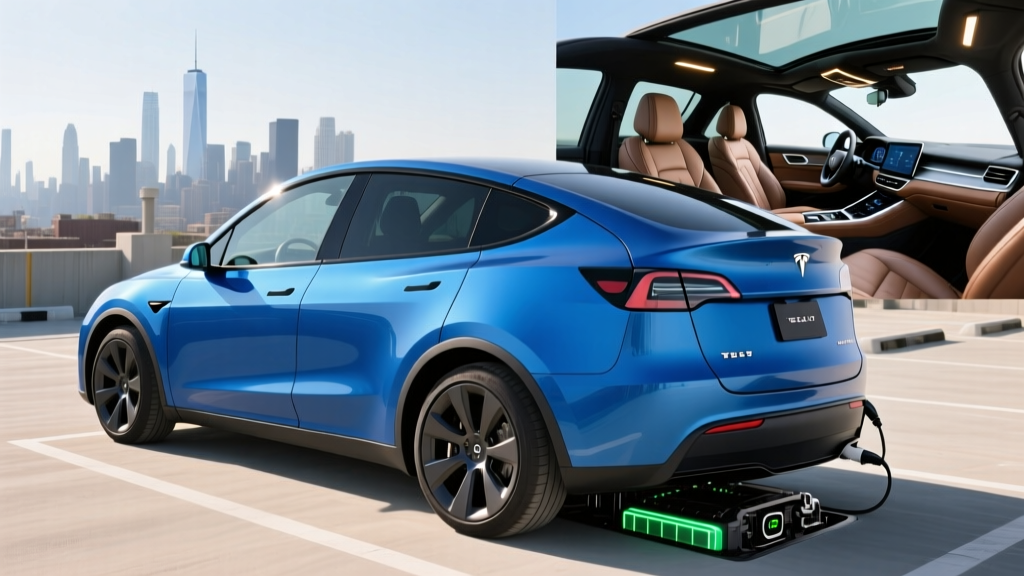
The Tesla Model Y 7-seater option transforms a five-passenger crossover into a compact family hauler with two rear-facing jump seats. For 2026, Tesla continues to offer the optional third row exclusively on the Long Range AWD trim for approximately $2,000. It's a pragmatic solution for families who occasionally need extra seating but don't want to step up to the larger, pricier Model X. The trade-off is real: third-row occupants get tight quarters, and deploying those seats nearly eliminates rear cargo space. But if your use case involves school runs, short carpools, or occasional extra passengers, the 7-seater Model Y delivers a compelling package — provided you understand its limits.
Full Spec Sheet: 2026 Model Y Long Range AWD (7-Seat)
| Specification | 2026 Model Y Long Range AWD |
|---|---|
| EPA Range | ~320 miles |
| Battery Capacity | ~75 kWh usable (NMC chemistry) |
| Drivetrain | Dual-motor AWD |
| Horsepower | ~384 hp combined |
| 0–60 mph | 4.8 seconds |
| Max DC Fast Charge | 250 kW peak |
| 10–80% DC Charge Time | ~25 minutes |
| Level 2 Charge Rate | 11.5 kW (48A) — ~44 miles/hr |
| MPGe (combined) | 122 MPGe |
| Efficiency | 28 kWh/100 mi |
| Third-Row Option Cost | ~$2,000 |
| Base MSRP (Long Range AWD) | ~$48,990 |
| Battery Warranty | 8 years / 120,000 miles |
| Vehicle Warranty | 4 years / 50,000 miles |
Sources: fueleconomy.gov, Tesla Model Y specs. Figures reflect 2026 model-year estimates and may vary by configuration.
Range, Efficiency, and Real-World Driving
The Model Y Long Range AWD uses an NMC (nickel-manganese-cobalt) battery pack with approximately 75 kWh of usable capacity. Tesla's thermal management system is among the best in the industry, using a heat pump as standard equipment to minimize cold-weather range loss and precondition the battery for fast charging.
According to the EPA, the combined rating sits around 122 MPGe (28 kWh per 100 miles). That's highly efficient for an all-wheel-drive crossover. In practice, efficiency varies significantly by driving condition:
- City driving (stop-and-go with regen): 24–26 kWh/100 mi — range can exceed the EPA estimate
- Highway cruising (70–75 mph): 30–33 kWh/100 mi — expect 265–285 miles
- Cold weather (below freezing, highway): 34–38 kWh/100 mi — range drops to 220–250 miles
- With 6–7 passengers and cargo: Add 1–2 kWh/100 mi due to weight
The third-row seats themselves don't dramatically change efficiency. The added weight is minimal. The bigger factor is how you drive and the conditions you drive in. Preconditioning the battery via the Tesla app or navigation to a Supercharger is essential for getting peak charge speeds.
Charging: DC Fast, Level 2, and Home Setup
| Charging Level | Power | Speed (miles/hr) | Notes |
|---|---|---|---|
| Level 1 (120V) | ~1.4 kW | ~5 mi/hr | Emergency/trickle only |
| Level 2 (240V, 48A) | 11.5 kW | ~44 mi/hr | Home Wall Connector ideal |
| Level 2 (240V, 32A) | 7.7 kW | ~30 mi/hr | Mobile Connector on NEMA 14-50 |
| DC Fast (Tesla Supercharger V3) | 250 kW peak | Up to ~1,000 mi/hr at peak | 10–80% in ~25 min |
| DC Fast (CCS adapter, non-Tesla) | ~150–250 kW | Varies by station | Adapter included with newer vehicles |
The Model Y's onboard charger accepts up to 11.5 kW on Level 2, which means a full charge from empty takes roughly 7–8 hours on a Tesla Wall Connector. For most owners, plugging in overnight delivers a full battery every morning.
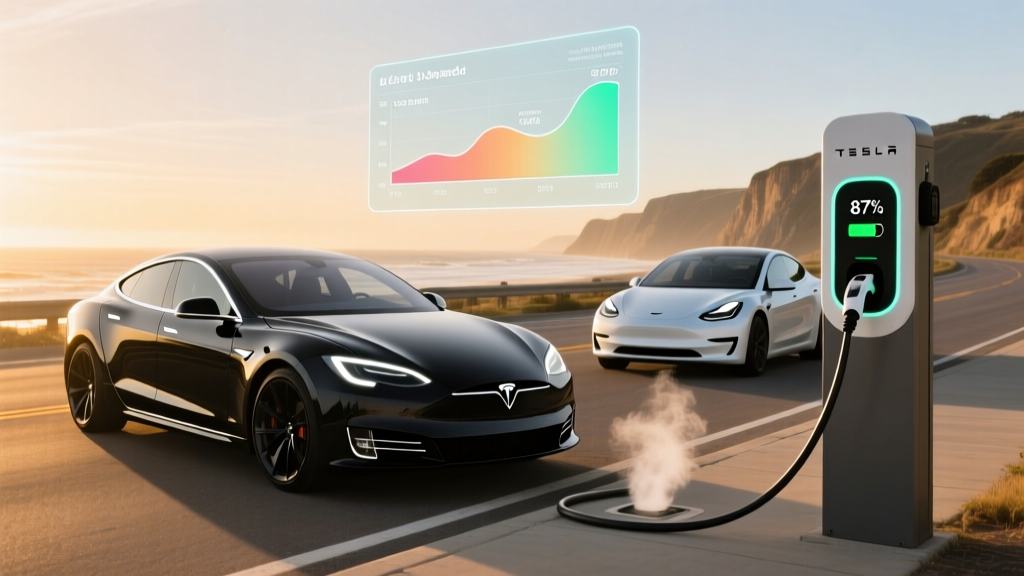
On DC fast charging, the Model Y peaks at 250 kW at Tesla V3 Superchargers. However — and this is critical — peak rate is not sustained rate. The charge curve tapers significantly above 50% state of charge. You'll see 250 kW only briefly between roughly 10–25% SoC. By 60%, you're closer to 100 kW, and by 80%, it drops to around 50 kW. The 10–80% time of approximately 25 minutes assumes you arrive at a low state of charge and the battery is preconditioned (navigate to the Supercharger in the car's nav system to trigger this automatically).
Tesla's NACS (North American Charging Standard) connector is now the industry standard, and most major automakers are adopting it. This means Model Y owners have the broadest access to both Tesla Superchargers and, via adapter, third-party CCS networks like Electrify America and EVgo.
Interior Space: The 7-Seater Reality
Here's where the third-row option demands honest scrutiny. The Model Y was engineered as a five-passenger crossover. The third row is an addition, not a foundational design element.
With the third row deployed (7-passenger mode):
- Third-row legroom: ~26.5 inches — suitable for children under approximately 5'2"
- Third-row headroom: ~37 inches — adequate for younger passengers
- Behind third row cargo: ~12 cu ft — enough for a couple of grocery bags or small backpacks
With the third row folded (5-passenger mode):
- Second-row legroom: ~41.6 inches
- Behind second row cargo: ~30.2 cu ft
- Max cargo (both rear rows folded): ~72 cu ft
The third-row seats are rear-facing jump seats that fold flat into the cargo floor. They lack dedicated climate vents, USB-C ports, or cupholders. For children on short trips (school, activities, a 20-minute drive), they work fine. For adults or longer journeys, they're uncomfortable and cramped.
Compare this to a dedicated three-row SUV like the Kia EV9 (which offers 30+ inches of third-row legroom and ~20 cu ft of cargo behind the third row), and the Model Y's third row is clearly a compromise. But the Model Y starts roughly $20,000 less than the EV9, and that price gap matters.
Pricing, Trims, and Federal Tax Credit Eligibility
| Configuration | MSRP | Potential §30D Credit | Effective Price |
|---|---|---|---|
| Model Y Long Range AWD (5-seat) | ~$48,990 | Up to $7,500* | ~$41,490* |
| Model Y Long Range AWD (7-seat) | ~$50,990 | Up to $7,500* | ~$43,490* |
| Model Y Performance (5-seat only) | ~$53,990 | Up to $7,500* | ~$46,490* |
*Federal tax credit eligibility under IRS §30D is subject to multiple requirements. Consult a tax professional.
The 7-seater option is available exclusively on the Long Range AWD trim for approximately $2,000. The Performance trim does not offer the third row.
Federal tax credit rules for 2026 (IRS §30D):
- MSRP cap: The vehicle must have an MSRP at or below $80,000 for SUVs (the Model Y qualifies)
- Buyer income cap: Adjusted gross income must not exceed $150,000 (single), $225,000 (head of household), or $300,000 (joint filers)
- Battery sourcing: A percentage of critical minerals and battery components must be sourced from the US or free-trade-agreement countries — Tesla's supply chain has been evolving, and eligibility can change by production batch
- Point-of-sale transfer: As of 2024+, buyers can transfer the credit to the dealer at purchase, reducing the purchase price directly rather than waiting to claim it on their tax return
- One credit per buyer: You can claim the new EV credit once per calendar year
The Model Y has historically qualified for the full $7,500 credit, but battery-sourcing requirements shift as supply chains evolve. Always verify current eligibility on IRS.gov's eligible vehicle list before purchasing.
Technology, Safety, and Driver Assistance
The Model Y's 15.4-inch center touchscreen handles virtually all vehicle controls — there's no traditional instrument cluster. The interface remains responsive and feature-rich, with built-in navigation, streaming, and over-the-air updates that continuously add features.
Driver assistance (Autopilot and FSD Supervised):
Standard Autopilot includes traffic-aware cruise control and autosteer. FSD Supervised adds automatic lane changes, navigation-guided on/off-ramp transitions, and traffic light/stop sign recognition. In practice, FSD has improved significantly but still requires active monitoring, especially in construction zones, complex intersections, and adverse weather.
Safety: The Model Y earns top marks from both NHTSA (5-star overall) and the IIHS (Top Safety Pick+ when equipped with qualifying headlights). Standard safety features include automatic emergency braking, blind-spot monitoring, lane departure warning, and eight airbags.
Pros, Cons, and How It Compares
Pros
- 320-mile EPA range with best-in-class efficiency
- Access to the Tesla Supercharger network (most reliable DC fast-charging infrastructure)
- Strong performance (4.8-sec 0–60) even in the Long Range trim
- Over-the-air updates keep the vehicle current
- Eligible for up to $7,500 federal tax credit (subject to §30D rules)
- Heat pump standard for better cold-weather range
- Low total cost of ownership — no oil changes, minimal brake wear with regen
Cons
- Third row fits only small children — unusable for adults
- Cargo space drops to ~12 cu ft with third row deployed
- No third-row climate vents, USB ports, or cupholders
- Touchscreen-only controls can be distracting while driving
- FSD Supervised is expensive and still requires full driver attention
- No Apple CarPlay or Android Auto
- Insurance costs tend to be higher than comparable non-Tesla EVs
Key Competitor Comparison
| Attribute | Tesla Model Y LR AWD (7-seat) | Kia EV9 GT-Line AWD (7-seat) |
|---|---|---|
| EPA Range | ~320 mi | ~270 mi |
| Starting MSRP | ~$50,990 | ~$63,900 |
| 3rd-Row Legroom | ~26.5 in | ~32.0 in |
| Cargo (behind 3rd row) | ~12 cu ft | ~20.2 cu ft |
| DC Fast Charge Peak | 250 kW | ~236 kW |
| 0–60 mph | 4.8 sec | 5.0 sec |
| Federal Tax Credit | Up to $7,500* | Up to $7,500* |
If you need a genuinely usable third row for older children or adults, the Kia EV9 is the better vehicle — but it costs roughly $13,000 more before credits and sacrifices about 50 miles of range. The Model Y's third row is a niche solution for families who need extra seats occasionally, not daily.
Decision Framework
Choose the 7-seat Model Y if: You need a third row fewer than 3 times per month, mostly for small children on short trips; you value range and charging infrastructure above all; and you want to stay under $52,000 MSRP.
Choose the Kia EV9 (or another dedicated 3-row EV) if: You regularly carry 6–7 passengers; third-row occupants include teenagers or adults; you need meaningful cargo space even with all seats deployed.
Skip the third-row option if: You never carry more than 5 passengers — the $2,000 is better spent on accessories, a home charger installation, or simply saved.
Ownership Costs and Warranty
Tesla covers the Model Y's battery and drive unit for 8 years or 120,000 miles (whichever comes first), with a minimum 70% capacity retention guarantee over that period. The limited vehicle warranty is 4 years or 50,000 miles. These terms are competitive with the EV market at large.
Real-world ownership economics remain a Model Y strength. Charging at home on a national average electricity rate of ~$0.16/kWh costs roughly $4.50 per 100 miles — compared to approximately $12–14 per 100 miles for a 25-mpg gas crossover at $3.50/gallon. Over 5 years and 75,000 miles, that's a fuel savings of approximately $6,000–$7,000, partially offset by typically higher EV insurance premiums (expect 15–30% more than an equivalent gas vehicle).
Maintenance is minimal: no oil changes, no spark plugs, cabin air filter replacement every 2–3 years, tire rotation every 6,250 miles, and brake fluid checks. Regenerative braking dramatically extends brake pad life — many Tesla owners report original brake pads at 80,000+ miles.
Frequently Asked Questions
What is the real-world range of the 7-seat Model Y?
The EPA estimates approximately 320 miles for the Long Range AWD. Real-world highway range at 70 mph is typically 265–285 miles. In cold weather (below 30°F), expect 220–250 miles. The third-row option adds minimal weight and has negligible impact on range.
How fast does the Model Y charge at home and on the road?
On a Level 2 Tesla Wall Connector (11.5 kW / 48A), you'll add roughly 44 miles of range per hour, with a full charge taking 7–8 hours. On a Tesla V3 Supercharger, the Model Y peaks at 250 kW and charges from 10–80% in approximately 25 minutes, assuming the battery is preconditioned.
How much does the 7-seat Model Y cost after tax credits?
The 2026 Model Y Long Range AWD with the 7-seat option starts around $50,990. If you qualify for the full $7,500 federal tax credit under §30D (subject to income caps, MSRP limits, and battery-sourcing requirements), the effective price drops to approximately $43,490. You can transfer the credit to the dealer at point of sale to reduce your purchase price directly.
Is the Model Y 7-seater worth buying vs competitors?
It depends on your third-row needs. For occasional child passengers on short trips, the Model Y offers unmatched range, efficiency, and charging infrastructure at a lower price than dedicated three-row EVs. For regular 6–7 passenger use with older kids or adults, the Kia EV9 or a plug-in hybrid like the Toyota Grand Highlander Hybrid offers far more third-row comfort and cargo flexibility.
What are the biggest pros and cons?
Top pros: class-leading range and efficiency, Supercharger network access, strong performance, eligible for $7,500 tax credit, low running costs. Top cons: third row is children-only, minimal cargo with third row up, touchscreen-only controls, no CarPlay/Android Auto, higher insurance costs.
Does the Model Y qualify for the federal EV tax credit?
The Model Y has historically qualified for the full $7,500 credit under IRS §30D, as it meets the $80,000 MSRP cap for SUVs. However, buyer income limits ($150K single / $300K joint), battery critical-mineral sourcing, and component manufacturing requirements all apply. Eligibility can shift by production batch and model year. Always check the IRS eligible vehicles page for the latest information before purchasing.