Quick Verdict: The Model Y Finally Fits Seven
For years, Tesla owners with growing families faced an either/or choice: the compact Model Y or the significantly larger, pricier Model X. The 2026 Tesla Model Y with 3 rows closes that gap. Tesla's optional third-row seat transforms the crossover into a seven-passenger EV, though the rearmost seats remain best suited for children. With an EPA-estimated 300 miles of range (Long Range AWD), a usable 75 kWh NMC battery, and peak DC fast-charging at 250 kW, the three-row Model Y retains the efficiency and charging infrastructure advantages that made it America's best-selling EV — while adding practicality that competitors like the Kia EV9 and Hyundai Ioniq 9 now challenge directly.
This review breaks down real-world range expectations, charging speeds across all three levels, third-row usability, and the precise federal tax credit math under current IRS §30D rules.
Range, Battery & Efficiency: What the EPA Sticker Doesn't Tell You
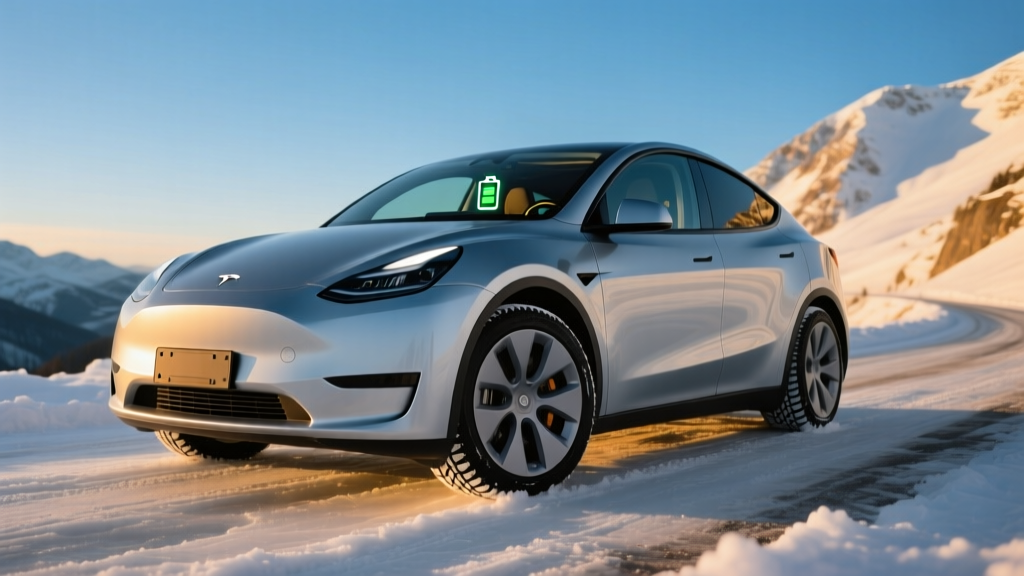
Real-World Expectation: 250–270 miles on highway-heavy trips at 70+ mph; 220–240 miles in sub-30°F winter conditions. The added weight and drag of the third-row configuration costs roughly 15 miles vs. the five-seat variant.
The 2026 Model Y Long Range AWD packs a 75 kWh usable battery (approximately 82 kWh gross) using nickel-manganese-cobalt (NMC) chemistry. NMC offers higher energy density than the lithium iron phosphate (LFP) cells in the RWD Standard Range trim, which is why Tesla reserves it for the Long Range and Performance variants. The trade-off: NMC cells degrade slightly faster over time and prefer daily charging limits around 80%, whereas LFP tolerates regular 100% charges.
Efficiency lands at 122 MPGe combined (28 kWh/100 mi) per fueleconomy.gov. That efficiency figure is among the best in the three-row electric SUV segment — the Kia EV9, for comparison, achieves roughly 2.0–2.2 kWh/mi depending on trim.
| Spec | Long Range AWD (7-seat) | Performance (5-seat) |
|---|---|---|
| EPA Range | 285 mi | 277 mi |
| Battery (usable) | 75 kWh NMC | 75 kWh NMC |
| Efficiency | 122 MPGe / 28 kWh/100mi | 115 MPGe / 30 kWh/100mi |
| Drivetrain | Dual-motor AWD | Dual-motor AWD |
| Horsepower | 384 hp | 456 hp |
| 0–60 mph | 5.0 sec | 3.5 sec |
Charging Speed: DC Fast, Level 2 & Level 1 Breakdown
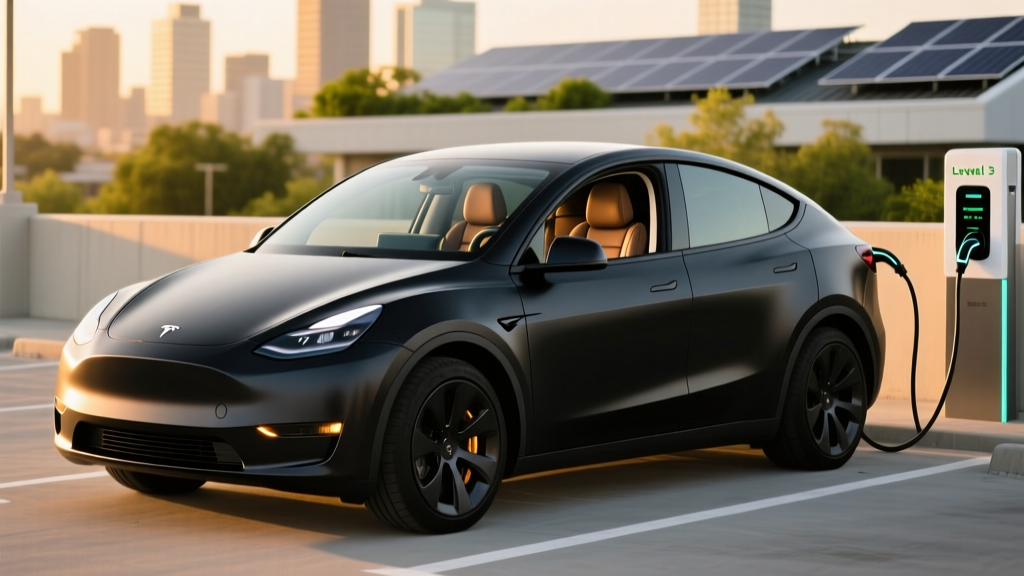
The Model Y Long Range AWD supports a peak DC fast-charge rate of 250 kW on V3 Superchargers and compatible CCS/NACS stations. In practice, the charge curve peaks around 250 kW only between roughly 10–30% state of charge, then tapers progressively. Expect a 10–80% session in approximately 22–25 minutes under ideal battery-preconditioned conditions. Above 80%, charging slows dramatically — 80–100% can add another 25+ minutes. Always plan road-trip stops around the 10–80% window.
| Charging Level | Power | Speed (approx.) | Use Case |
|---|---|---|---|
| Level 1 (120V) | 1.4 kW | ~4 mi/hr | Emergency / overnight trickle |
| Level 2 (240V, 48A) | 11.5 kW | ~37 mi/hr | Home daily charging |
| DC Fast (V3 Supercharger) | 250 kW peak | 10–80% in ~22 min | Road trips |
At home on a Tesla Wall Connector (hardwired, 60A circuit), the onboard charger accepts up to 11.5 kW, adding roughly 37 miles of range per hour. A full charge from 10% to 100% takes about 8–9 hours overnight. Installation costs for a 240V/60A circuit typically range from $800–$2,500 depending on panel proximity and local permitting — factor in a possible $1,500–$3,000 panel upgrade if your home still runs a 100A service.
Interior, Third-Row Space & Cargo: The Real Family Test
The optional third row ($3,000 add-on on the Long Range AWD) adds two rear-facing seats best suited for children or smaller teens. Third-row legroom measures approximately 26.5 inches — tight for adults on anything beyond a short school-run commute. By comparison, the purpose-built three-row Kia EV9 offers roughly 32 inches in its third row.
With all three rows upright, cargo space behind the third row shrinks to roughly 12 cu ft — enough for a few grocery bags or a compact stroller. Fold the third row flat and cargo expands to approximately 30 cu ft; fold both the second and third rows for up to 72 cu ft. The front trunk (frunk) adds 4.1 cu ft for charging cables or a small bag.
Second-row passengers get 40.5 inches of legroom and dedicated USB-C ports. The 15.4-inch center touchscreen handles all infotainment, climate, and vehicle controls — no physical instrument cluster. Rear passengers in the second row get a small 8-inch touchscreen for climate and media on 2026 models, a meaningful improvement over prior years.
Pricing, Trims & Federal Tax Credit Eligibility
The 2026 Model Y lineup includes three trims. Here's how pricing stacks up before and after the potential federal credit:
| Trim | Base MSRP | 7-Seat Option | Est. After §30D Credit* |
|---|---|---|---|
| Long Range RWD | $44,990 | N/A | ~$37,490 |
| Long Range AWD | $47,990 | +$3,000 | ~$40,490 (7-seat: ~$43,490) |
| Performance AWD | $52,490 | N/A | ~$44,990 |
*Federal tax credit amounts shown assume full eligibility under IRS §30D rules. Actual credit depends on buyer income, battery sourcing, and MSRP caps. Consult irs.gov or a tax professional before purchasing.
- MSRP cap: SUVs/vans must have an MSRP at or below $80,000 — all Model Y trims qualify.
- Income cap: Modified AGI must not exceed $150,000 (single), $225,000 (head of household), or $300,000 (joint filers).
- Battery sourcing: Critical minerals and battery components must meet phased-in percentage thresholds from U.S. free-trade partners. Tesla's supply chain has largely complied for 2026, but verify the specific VIN's eligibility at the point of sale.
- Point-of-sale transfer: Buyers can transfer the credit to the dealer at purchase, reducing the out-of-pocket price immediately rather than waiting for a tax refund.
Driver Assistance & Technology: Autopilot Is Level 2, Not Self-Driving
Standard Autopilot includes adaptive cruise control and lane-centering on highways. The $8,000 FSD (Supervised) upgrade adds automatic lane changes, traffic-light recognition, and city-street navigation — but real-world performance remains inconsistent in construction zones, heavy rain, and unprotected left turns. Tesla's camera-only vision approach (no LiDAR or radar) means performance can degrade in low-visibility conditions where sensor-fusion competitors maintain capability.
The 2026 infotainment system runs on Tesla's Ryzen-based hardware with responsive navigation, Netflix/YouTube streaming while parked, and over-the-air updates that periodically add features. Wireless phone mirroring is not supported — Tesla insists on its native interface.
Ownership Costs, Warranty & Long-Term Battery Outlook
Tesla covers the Model Y's battery and drive unit with an 8-year/120,000-mile warranty (Long Range/Performance), guaranteeing a minimum 70% capacity retention over that period. The limited vehicle warranty runs 4 years/50,000 miles. Based on fleet data from Tesla's Impact Report and third-party analyses, NMC batteries in the Model Y typically show 10–12% degradation at 100,000 miles — within the warranty threshold but worth monitoring via the car's State of Health (SoH) readout.
Insurance premiums for the Model Y average 15–25% higher than comparable gas-powered crossovers, driven by high repair costs for aluminum body panels and sensor recalibration after collisions. Shop quotes before purchasing.
Charging at home on a national-average electricity rate of $0.16/kWh, a full 75 kWh charge costs approximately $12. At 28 kWh/100 mi, fueling cost runs about $0.045 per mile — roughly a third of what a 25-MPG gas SUV costs at $3.50/gallon.
Competitors: How the 3-Row Model Y Stacks Up
The three-row electric SUV segment has matured significantly. The Kia EV9 (EPA 270–304 mi, starting ~$54,900) offers a genuinely usable third row for adults, 800V architecture enabling 10–80% in ~18 minutes at 350 kW chargers, and a more traditional interior layout. The Hyundai Ioniq 9 (announced, expected mid-2026) promises similar 800V capability with a larger battery. The Rivian R1S starts significantly higher (~$75,000+) but delivers true off-road capability and a more spacious third row.
The Model Y's advantages remain the Supercharger network (now open to other brands via NACS but still most seamless for Tesla owners), segment-leading efficiency, and strong resale value. Its disadvantages: the tightest third row in the segment, camera-only driver assist, and panel-gap build-quality concerns that persist despite Fremont and Austin factory improvements.
Look at the Kia EV9 or Rivian R1S if: You regularly carry adults in the third row, need 800V ultra-fast charging (EV9), or want off-road capability (R1S).
- 285-mile EPA range with class-leading efficiency (28 kWh/100 mi)
- 250 kW DC fast-charging; Supercharger network reliability
- Strong performance (5.0 sec 0–60 AWD)
- OTA updates and robust infotainment
- Federal §30D credit eligible (up to $7,500)
- Third row fits children only — 26.5" legroom
- Cargo space tight with all rows up (12 cu ft)
- Camera-only Autopilot/FSD struggles in poor weather
- Insurance premiums 15–25% above segment average
- No Apple CarPlay / Android Auto support
Frequently Asked Questions
What is the real-world range of the Tesla Model Y with 3 rows?
The EPA rates the 2026 Model Y Long Range AWD (7-seat) at 285 miles. In real-world highway driving at 70+ mph, expect 250–270 miles. In cold weather (below 30°F), range drops to roughly 220–240 miles due to battery resistance and cabin heating load. Preconditioning the battery before departure recovers some of this loss.
How fast does the Model Y charge at home and on road trips?
At home on a Level 2 Tesla Wall Connector (11.5 kW), you add roughly 37 miles per hour — a full overnight charge takes 8–9 hours. On DC fast chargers, the Model Y peaks at 250 kW, reaching 10–80% in about 22–25 minutes when the battery is preconditioned. Above 80%, charging slows significantly.
How much does the 7-seat Model Y cost after the federal tax credit?
The Long Range AWD with the $3,000 third-row option stickers at $50,990. If you qualify for the full $7,500 §30D credit (income, MSRP, and battery-sourcing requirements all met), the effective price drops to approximately $43,490. Eligibility varies — verify at irs.gov and confirm with your tax advisor.
Does the Tesla Model Y qualify for the federal EV tax credit?
Yes, the Model Y qualifies for up to $7,500 under IRS §30D, provided the buyer's modified AGI falls within limits ($150K single / $300K joint), the MSRP is under $80,000 (all trims comply), and the battery meets critical-mineral and component sourcing thresholds. The credit can be transferred to the dealer at point of sale for an immediate price reduction.
Is the third row worth it vs. the Kia EV9?
If your third row is for children on school runs or short trips, the Model Y's 26.5-inch legroom is workable and you gain Tesla's efficiency and Supercharger access. If you regularly carry teens or adults in the back, the EV9's ~32-inch third-row legroom and larger cargo area make it the more practical family hauler, though at a higher starting price.
What is the battery warranty on the Model Y?
Tesla covers the Long Range AWD battery and drive unit for 8 years or 120,000 miles, whichever comes first, with a guaranteed minimum 70% capacity retention. Real-world fleet data suggests approximately 10–12% degradation at 100,000 miles for NMC cells under normal use patterns.