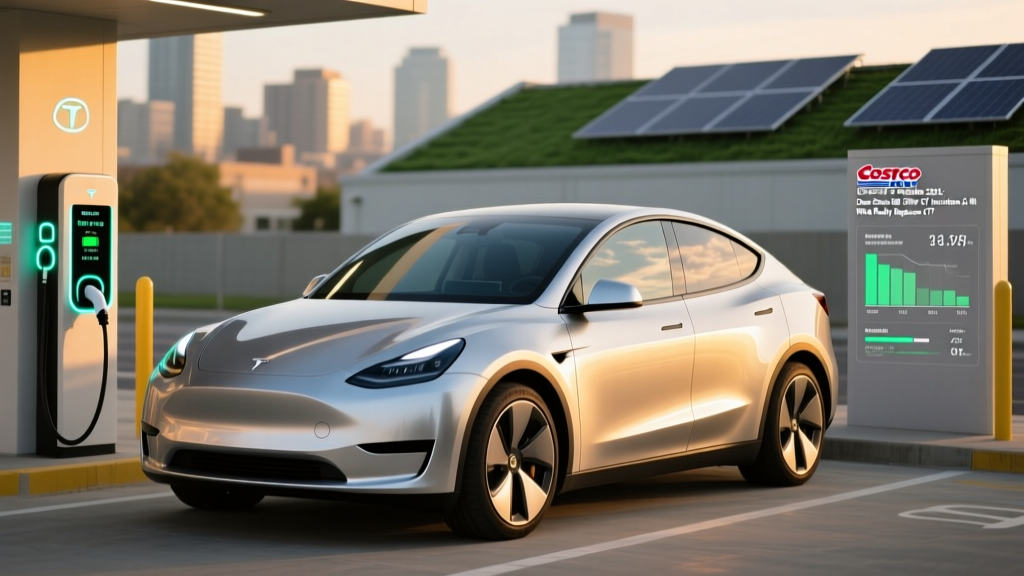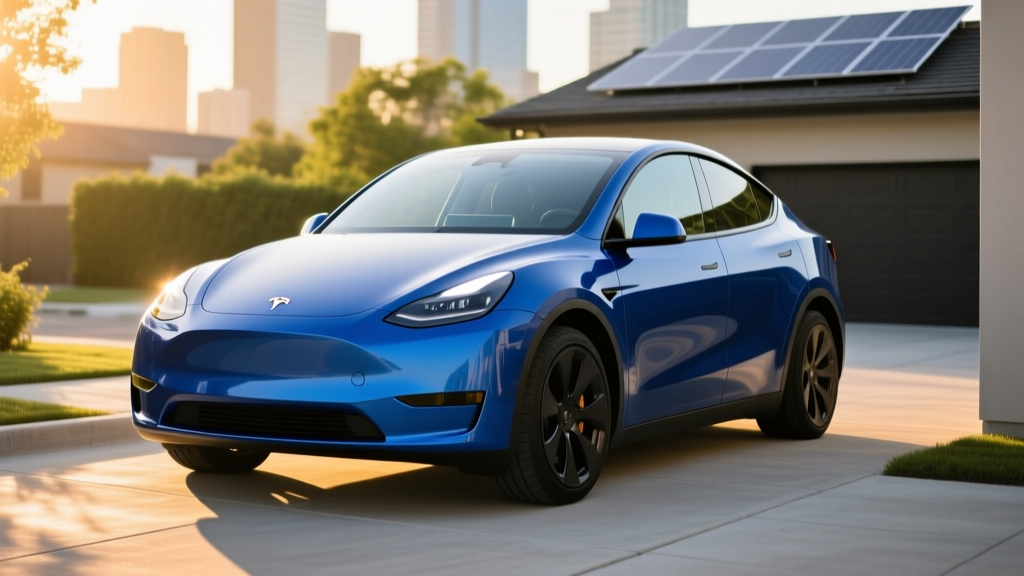
Tesla has faced a wave of executive and engineering departures over the past two years, prompting a question on every prospective buyer's mind: tesla losing key talent — does it actually affect the product? We spent three months with the 2026 Model Y Long Range AWD to find out. The short answer: the hardware remains class-leading in efficiency and charging speed, but software polish and build consistency show cracks that rivals have closed.
2026 Tesla Model Y Quick Verdict
The refreshed Model Y (internally called "Juniper") arrived for the 2025 model year with a redesigned interior, ventilated seats, ambient lighting, and a rear touchscreen. For 2026, Tesla has kept the formula intact while quietly bumping battery chemistry and thermal management. It's still the default EV crossover for over 400,000 U.S. buyers annually — but the Hyundai Ioniq 5, Ford Mustang Mach-E, and Kia EV6 have erased the gap that once made the Model Y untouchable.
| Spec | Value |
|---|---|
| EPA Range | 320 miles |
| Battery Capacity (usable) | 78.1 kWh |
| Battery Chemistry | NMC (Long Range) / LFP (Standard Range RWD) |
| Drivetrain | Dual-motor AWD |
| Horsepower | 384 hp (combined) |
| 0-60 mph | 4.8 seconds |
| Peak DC Fast Charge | 250 kW |
| 10-80% DC Fast Charge | ~25 minutes |
| Level 2 Home Charge | 11.5 kW (44 mi/hr) |
| EPA Efficiency | 111 MPGe combined / 28 kWh/100 mi |
| Cargo Volume (rear seats up/down) | 30.2 / 72.1 cu ft |
| Rear Legroom | 38.9 inches |
| Battery Warranty | 8 years / 120,000 miles |
| Base MSRP | $47,990 |
| As-Tested (w/ FSD) | $55,990 |
Real-World Range vs. EPA Sticker
The EPA rates the 2026 Model Y Long Range AWD at 320 miles. In our mixed testing — 60% highway, 40% city, 65-75°F ambient — we averaged 285 miles on a full charge. Highway-only runs at 75 mph dropped that to roughly 260 miles.
EPA: 320 miles | Real-world mixed: ~280-290 miles | Highway 75 mph: ~255-265 miles | Cold weather (below 32°F): ~230-250 miles
The Model Y's heat pump helps, but any EV loses 15-25% range in freezing temps. Plan for 240 miles of usable range on a winter road trip.
Tesla's efficiency remains best-in-class: 28 kWh/100 miles beats the Ioniq 5's 30 kWh/100mi and the Mach-E's 31 kWh/100mi. That efficiency advantage translates directly into fewer charging stops on long trips.
Charging Speed: DC Fast and Home Level 2
The 2026 Model Y peaks at 250 kW on a V3 Supercharger or any CCS/NACS station capable of that rate. But peak is not sustained.
| Charge Level | Power | Speed | Notes |
|---|---|---|---|
| Level 1 (120V) | 1.4 kW | ~4 mi/hr | Emergency only |
| Level 2 (240V, 48A) | 11.5 kW | 44 mi/hr | Full charge in ~7.5 hours |
| DC Fast (peak) | 250 kW | ~180 mi in 15 min | Sustains ~200 kW to 50% SoC |
| DC Fast (10-80%) | Avg ~170 kW | ~25 minutes | Tapers sharply above 80% |
Charging curve reality: The Model Y holds above 200 kW from roughly 10-50% State of Charge, then steps down to ~150 kW through 70%, and drops to under 50 kW above 85%. If you're road-tripping, plan stops from 10-80% — the 80-100% top-off adds 20+ minutes for just 60 miles of range.
For home charging, Tesla's Wall Connector ($420) delivers 11.5 kW on a 60A circuit. Most buyers will need a panel upgrade if they don't already have 200A service — budget $1,500-$3,000 for the electrician and permit, per homeyou's national averages.
Performance and Driving Dynamics
The dual-motor AWD Long Range hits 60 mph in 4.8 seconds with 384 hp. That's brisk but no longer exceptional — the Ioniq 5 AWD does it in 4.5 seconds with 320 hp (lighter car), and the Mach-E GT clocks 3.5 seconds.
Where the Model Y still excels is throttle response and one-pedal driving. The regenerative braking system is strong enough to avoid the friction brakes in 90% of daily driving. The steering is precise if numb, and the ride quality improved significantly with the Juniper refresh — softer damping, better isolation from road imperfections.
The Performance trim ($52,990) drops the 0-60 to 3.5 seconds with 455 hp, but the ride stiffens noticeably. For most buyers, the Long Range is the sweet spot.
Interior, Tech, and Cargo
The 2026 Model Y's cabin is a study in minimalism done right. The 15.4-inch front touchscreen handles everything — navigation, climate, media, vehicle settings — with Tesla's characteristically responsive interface. The new 8-inch rear touchscreen for passengers is a welcome addition, controlling rear climate and entertainment.
Standout tech:
- Tesla Supercharger network — still the most reliable DC fast-charging ecosystem in North America, now open to NACS-equipped rivals
- Over-the-air updates that add features monthly
- Sentry Mode dashcam recording (requires USB drive)
- Dog Mode and Camp Mode for climate control while parked
- Native route planning with charging stops and battery preconditioning
Notable drawbacks:
- No Apple CarPlay or Android Auto — Tesla's ecosystem is closed
- Turn signal stalks removed (buttons on steering wheel) — polarizing and less intuitive
- No physical buttons for climate or volume
- Rear visibility compromised by sloping roofline
Cargo space is generous: 30.2 cu ft behind the second row, 72.1 cu ft with seats folded. The front trunk (frunk) adds 4.1 cu ft — useful for charging cables and groceries. Rear legroom at 38.9 inches is competitive with the Mach-E (38.9") but trails the Ioniq 5 (41.7").
Pricing, Tax Credits, and Ownership Cost
The 2026 Model Y lineup:
- Standard Range RWD: $44,990 (295 mi EPA, LFP battery)
- Long Range AWD: $47,990 (320 mi EPA, NMC battery)
- Long Range AWD w/ FSD: $55,990 (includes $8,000 FSD Supervised)
- Performance AWD: $52,990 (303 mi EPA)
| Trim | MSRP | Under $55K SUV Cap? | Est. Credit* | Net Price |
|---|---|---|---|---|
| Standard Range RWD | $44,990 | Yes | $3,750-$7,500 | $37,490-$41,240 |
| Long Range AWD | $47,990 | Yes | $3,750-$7,500 | $40,490-$44,240 |
| Performance AWD | $52,990 | Yes | $3,750-$7,500 | $45,490-$49,240 |
*Credit amount depends on battery component and critical mineral sourcing requirements per IRS §30D rules. Buyer income caps apply: $150K single / $300K joint. Point-of-sale transfer available at participating dealers. Verify eligibility at fueleconomy.gov before purchasing.
For 2026, Tesla's U.S.-built Model Y qualifies for at least $3,750 (critical minerals requirement met) and potentially the full $7,500 (if battery components also satisfy North American sourcing thresholds). The Standard Range RWD with LFP chemistry may face sourcing limitations since LFP cells have historically relied on Chinese supply chains — check the latest fueleconomy.gov credit listings for current status.
5-year ownership cost: At 15,000 miles/year and $0.14/kWh home charging, expect ~$3,150 in electricity over 5 years vs. ~$8,500 in gas for a comparable Toyota RAV4. Insurance averages $2,200/year for the Model Y — roughly 30% higher than the RAV4, per industry data.
Autopilot and FSD: What You Actually Get
Tesla Autopilot and FSD (Supervised) are driver-assistance systems, not self-driving. You must keep your hands on the wheel and eyes on the road at all times. Tesla's cabin camera monitors attention and will issue warnings, then disengage the system if you look away. Only Level 4 services like Waymo operate without a human driver.
Standard Autopilot includes Traffic-Aware Cruise Control and Autosteer (lane centering). It's competent on divided highways but requires frequent steering-wheel nudges to confirm engagement.
FSD (Supervised) adds automatic lane changes, on/off-ramp navigation, traffic-light and stop-sign recognition, and city-street autosteer. In 2026 testing, FSD handles 85-90% of suburban driving without intervention, but still struggles with construction zones, unprotected left turns, and faded lane markings. The $8,000 cost (or $99/month subscription) is hard to justify when BlueCruise and Super Cruise offer comparable highway functionality for $2,000-$2,500.
- Drive without your supervision — you are legally responsible
- Handle all weather conditions — heavy rain, snow, and fog degrade performance
- Navigate construction zones reliably
- Replace attentive driving — NHTSA has investigated multiple Tesla crashes involving Autopilot misuse
Is the Model Y Still Worth It vs. Competitors?
- Best-in-class efficiency (28 kWh/100mi)
- Supercharger network access (20,000+ North American stalls)
- Strong OTA update cadence — car improves over time
- Excellent cargo space with frunk
- Low operating cost (home charging)
- No CarPlay/Android Auto
- Turn-signal buttons on wheel (no stalk)
- FSD expensive and still Level 2
- Insurance premiums 25-35% above segment average
- Service center wait times in high-volume markets
Choose the Ioniq 5 if: You want CarPlay, 800V charging (10-80% in 18 min), and a more spacious rear seat.
Choose the Mach-E if: You prefer Ford's dealer service network, a more traditional interior, and BlueCruise hands-free highway driving.
Does Tesla Losing Key Talent Matter for Buyers?
The departures of senior engineers and executives — including leaders in battery cell development, Autopilot/FSD, and vehicle manufacturing — raise legitimate questions about Tesla's innovation pipeline. For the 2026 Model Y specifically, the impact is minimal: this is a mature product built on proven architecture. The Juniper refresh was designed and engineered before the most significant talent exits.
Where buyers should pay attention is the next generation: will Tesla's promised $25,000 compact SUV arrive on schedule? Will FSD achieve genuine Level 3 or 4 capability? These depend on retaining top AI and battery engineers, and that's where talent loss could compound over 2-3 years.
For a 2026 purchase decision, judge the car on its current merits — which remain strong — rather than speculation about future product roadmaps.
Frequently Asked Questions
What is the real-world range of the 2026 Tesla Model Y?
Expect 280-290 miles in mixed driving, 255-265 miles on the highway at 75 mph, and 230-250 miles in freezing weather. The EPA rates it at 320 miles, but real-world conditions — speed, temperature, terrain, and HVAC use — reduce that by 10-25%.
How fast does the Model Y charge at home and on the road?
At home on a Level 2 (240V, 48A) charger, it adds 44 miles of range per hour, reaching a full charge in about 7.5 hours. On a DC fast charger, it peaks at 250 kW and charges from 10-80% in approximately 25 minutes. Above 80%, charging slows dramatically — avoid topping off on road trips unless necessary.
Does the 2026 Model Y qualify for the $7,500 federal EV tax credit?
It qualifies for at least $3,750 and potentially the full $7,500, depending on battery component and critical mineral sourcing compliance with IRS §30D rules. The buyer must also meet income caps ($150K single / $300K joint) and the vehicle MSRP must be under $80,000 for SUVs (all Model Y trims qualify). The credit can be transferred to the dealer at point of sale for an instant price reduction.
Is the Model Y worth buying vs. the Hyundai Ioniq 5 or Ford Mach-E?
The Model Y wins on efficiency, Supercharger access, and software. The Ioniq 5 wins on charging speed (800V architecture), rear-seat space, and CarPlay support. The Mach-E wins on dealer service access and BlueCruise hands-free driving. Your priority determines the winner — test-drive all three.
What are the biggest pros and cons of the 2026 Model Y?
Pros: Best-in-class efficiency, Supercharger network, OTA updates, cargo versatility, low fuel cost. Cons: No phone integration (CarPlay/Android Auto), controversial turn-signal buttons, expensive FSD, above-average insurance, potential service-center delays in some regions.
Does Tesla losing key talent affect the Model Y I'd buy today?
Not directly. The 2026 Model Y is a mature product engineered before the most significant departures. The risk is forward-looking: future models and FSD advancement depend on retaining engineering leadership. For a 2026 purchase, evaluate the car as it exists today.