Quick Verdict: The Best-Selling EV Keeps Evolving
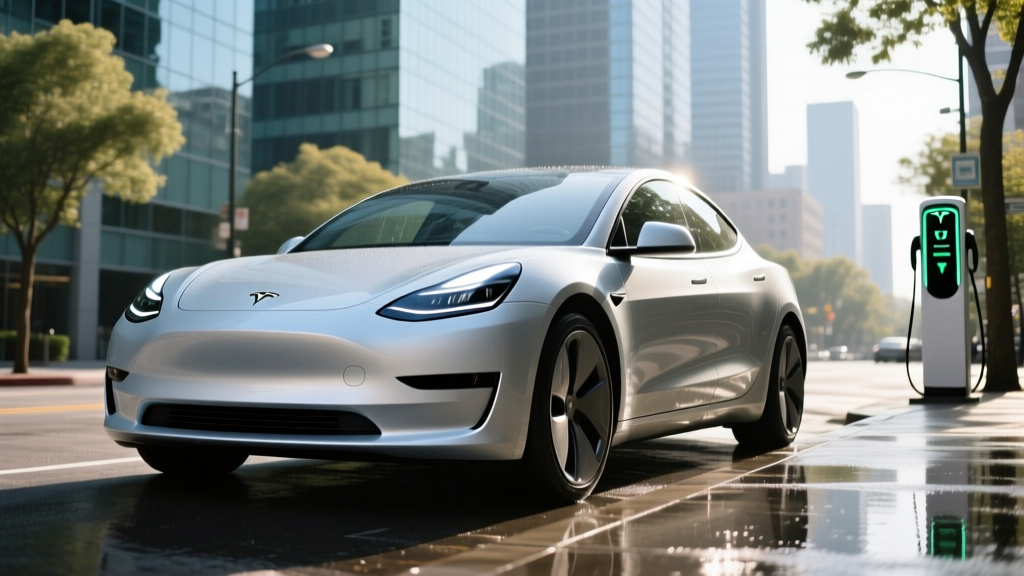
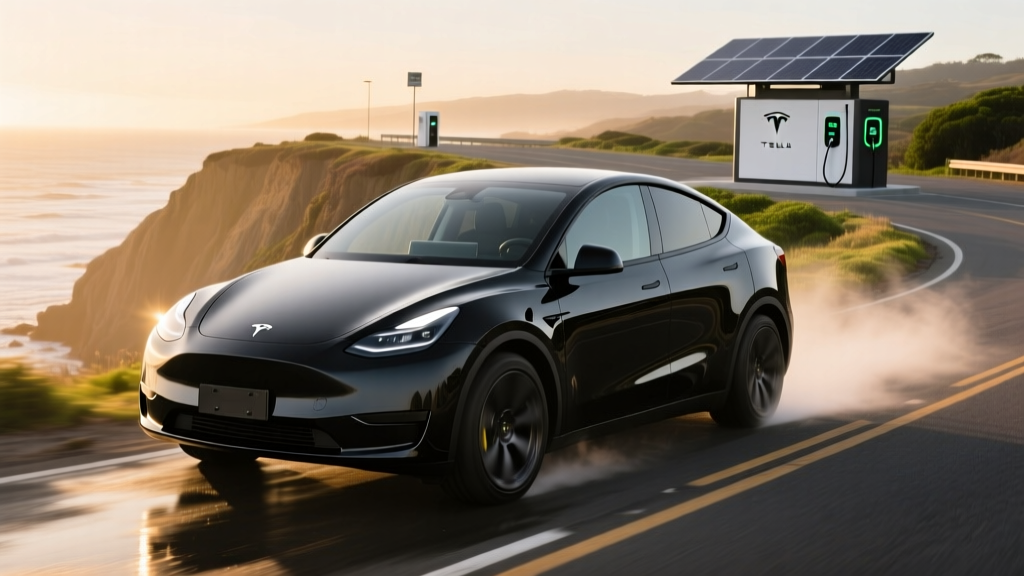
If you've been searching for Tesla Model Y pics to decide whether the 2026 refresh lives up to the hype, you're not alone. The Model Y remains the best-selling electric vehicle globally, and the current "Juniper" generation — introduced in early 2025 and carried into the 2026 model year — brought meaningful updates to styling, cabin materials, ride quality, and efficiency. But beyond the sleek new light bars and ventilated seats, the real story is in the numbers: up to 320 miles of EPA-estimated range, DC fast charging that peaks at 250 kW, and a starting price that undercuts several key rivals before federal tax credits.
This review breaks down everything you need to know — from battery chemistry and real-world range to charging speeds, interior dimensions, and whether you actually qualify for the $7,500 federal tax credit. We've driven it, charged it on Superchargers and third-party networks, and compared it head-to-head against the Hyundai Ioniq 5, Ford Mustang Mach-E, and Nissan Ariya.
2026 Tesla Model Y Specs at a Glance
| Specification | Long Range RWD | Long Range AWD | Performance |
|---|---|---|---|
| EPA Range | 320 mi | 308 mi | 285 mi |
| Battery (usable) | ~75 kWh (LFP) | ~75 kWh (NMC) | ~75 kWh (NMC) |
| Drivetrain | Rear-Wheel Drive | Dual-Motor AWD | Dual-Motor AWD |
| Horsepower | 295 hp | 384 hp | 456 hp |
| 0–60 mph | 6.2 sec | 4.6 sec | 3.5 sec |
| Peak DC Fast Charge | 250 kW | 250 kW | 250 kW |
| 10–80% DC Time | ~25 min | ~25 min | ~25 min |
| Level 2 Home Charge | 11.5 kW (~44 mi/hr) | 11.5 kW (~44 mi/hr) | 11.5 kW (~44 mi/hr) |
| MPGe (combined) | 123 MPGe | 117 MPGe | 111 MPGe |
| Efficiency | 27 kWh/100 mi | 29 kWh/100 mi | 30 kWh/100 mi |
| Base MSRP | $44,990 | $47,990 | $52,990 |
| Battery Warranty | 8 yr / 120,000 mi | 8 yr / 120,000 mi | 8 yr / 120,000 mi |
Sources: EPA / fueleconomy.gov, Tesla spec sheets. Prices reflect 2026 model year and exclude destination fees.
Range and Efficiency: What the EPA Number Doesn't Tell You
EPA Estimate: 320 mi (Long Range RWD) / 308 mi (Long Range AWD) / 285 mi (Performance)
Real-World Highway (70 mph, moderate temps): ~265–285 mi (Long Range AWD)
Real-World Cold Weather (below 32°F, mixed driving): ~220–250 mi (Long Range AWD)
City/Commute Driving (mild weather): Close to EPA or slightly above thanks to regenerative braking
The 2026 Model Y Long Range AWD carries an EPA rating of 308 miles, which is competitive with the segment. But as any experienced EV owner knows, the sticker number is a starting point, not a guarantee. On highway road trips at 70–75 mph in 60–80°F weather, expect to use roughly 280–290 miles of range on a full charge. Push speeds to 80+ mph or drive into headwinds and mountain grades, and that drops to 250–260 miles.
Cold weather is the bigger equalizer. In sub-freezing temperatures, the lithium-ion battery's internal resistance increases and the cabin heater draws significant energy (the Juniper refresh uses a heat pump, which helps but doesn't eliminate the penalty). Plan for 20–25% range loss in sustained winter driving. If your commute is 60 miles round-trip in a Minnesota January, you'll still have plenty of buffer — but a 250-mile winter road trip will require a charge stop.
The Long Range RWD trim achieves the highest EPA figure at 320 miles, partly because it's lighter (single motor) and partly because Tesla pairs it with an LFP (lithium iron phosphate) battery. LFP cells are slightly heavier per kWh than NMC, but Tesla has optimized the pack and the RWD powertrain for efficiency, yielding the best MPGe in the lineup at 123 MPGe combined (27 kWh/100 mi).
Battery Chemistry: LFP vs. NMC — Which Model Y Gets Which?
For 2026, Tesla continues to differentiate battery chemistry by trim:
- Long Range RWD: LFP (lithium iron phosphate) — heavier but more durable, tolerates regular 100% charging, lower energy density
- Long Range AWD & Performance: NMC (nickel manganese cobalt) — higher energy density, better cold-weather performance, recommended daily charge limit of 80%
| Factor | LFP (RWD) | NMC (AWD / Performance) |
|---|---|---|
| Energy Density | Lower | Higher |
| Cycle Life | 3,000+ cycles | 1,500–2,000 cycles |
| Daily Charge Recommendation | 100% OK | 80% recommended |
| Cold-Weather Performance | Moderate penalty | Better low-temp output |
| Cost to Manufacture | Lower | Higher |
| Cobalt Content | None | Contains cobalt |
For daily commuters who can charge at home every night, the LFP-equipped RWD model is arguably the more practical choice: you can charge to 100% without accelerating degradation, and the cycle life is substantially longer. If you need AWD traction, tow frequently, or regularly drive in cold climates, the NMC-equipped AWD trims are the better fit — just set your daily charge limit to 80% and save 100% for road trips.
Charging Speed: Supercharger Network and Beyond
| Charging Level | Power | Speed (approx.) | Use Case |
|---|---|---|---|
| Level 1 (120V outlet) | ~1.4 kW | ~4–5 mi/hr | Emergency / overnight trickle |
| Level 2 (240V home) | 11.5 kW max | ~44 mi/hr | Daily home charging |
| DC Fast (Tesla Supercharger V3/V4) | Up to 250 kW peak | 10–80% in ~25 min | Road trips |
| DC Fast (CCS adapter on non-Tesla networks) | Up to 250 kW peak (varies by station) | 10–80% in ~25–30 min | Electrify America, EVgo, etc. |
The 2026 Model Y uses the NACS (North American Charging Standard) connector natively — no adapter needed at any of Tesla's 6,000+ Supercharger stalls in North America. At a V3 or V4 Supercharger, the Model Y peaks at approximately 250 kW. However, like all EVs, it doesn't sustain peak rate for the entire session. The charge curve is strong from 10–50% SoC, then tapers progressively. Expect a 10–80% session to take roughly 25 minutes under ideal conditions (battery preconditioned via onboard navigation to a Supercharger).
At home on a Level 2 wall connector connected to a 60-amp circuit, the Model Y accepts up to 11.5 kW, adding about 44 miles of range per hour. A full overnight charge from 20% to 80% takes roughly 4–5 hours — more than adequate for daily use. If your home has a standard 14-50 outlet (50 amps), you'll see about 32–36 mi/hr of charging, which is still sufficient for most commuters.
Preconditioning matters. When you navigate to a Supercharger using the car's built-in routing, the battery thermal management system begins warming or cooling the pack to optimize charge acceptance. Arriving without preconditioning — for example, at a non-Tesla DC fast charger you found manually — can add 5–10 minutes to your session, especially in cold weather.
Performance and Driving Dynamics
The 2026 Model Y lineup covers a wide performance envelope:
- Long Range RWD: 295 hp, 0–60 in 6.2 seconds — adequate for commuting and merging, not thrilling
- Long Range AWD: 384 hp, 0–60 in 4.6 seconds — genuinely quick, confident in rain and snow
- Performance: 456 hp, 0–60 in 3.5 seconds — sports-car territory, with track mode and lowered suspension
The Juniper refresh brought a notably improved ride. Tesla retuned the suspension, added acoustic glass, and refined the bushings. The result is a crossover that's appreciably quieter and more compliant over rough pavement than the pre-2025 Model Y. It's still firm — Tesla's tuning philosophy leans sporty — but it no longer feels harsh on broken urban roads.
Regenerative braking remains one-pedal-driving capable, though Tesla removed the user-adjustable regen setting several years ago. Lift off the accelerator and the car decelerates assertively. Most owners adapt within a week and rarely touch the brake pedal in normal driving.
Interior, Cargo, and Technology
The 2026 Model Y interior is a study in minimalism. The Juniper update added ambient lighting, ventilated front seats, a rear-seat touchscreen for passengers, and improved materials (soft-touch surfaces replace some of the older hard plastics). But the fundamental layout remains: one 15.4-inch central touchscreen controls virtually everything, including climate, mirrors, and glovebox.
Dimensions and Space:
- Cargo (behind 2nd row): 30.2 cu ft
- Cargo (2nd row folded): 72.1 cu ft
- Front headroom: 41.0 in
- Rear legroom: 41.6 in
- Frunk (front trunk): 4.1 cu ft — useful for charging cables or a small bag
- Towing capacity: 3,500 lbs (AWD trims, with tow hitch)
The rear seat is genuinely comfortable for adults on longer trips, a notable improvement over earlier Model Y generations where the seat cushion was too low and flat. The panoramic glass roof creates an airy feel but does let in heat — the Juniper update uses a slightly more reflective glass, but a sunshade accessory is still worthwhile in hot climates.
Standout Tech:
- Tesla's infotainment remains the industry benchmark for responsiveness, OTA updates, and integrated navigation with Supercharger routing
- Autopilot (standard): SAE Level 2 driver assist — adaptive cruise + lane centering, requires hands on wheel
- Full Self-Driving (Supervised): optional at $8,000 — still SAE Level 2, adds automatic lane changes, traffic light recognition, and parking assist; driver must remain fully engaged
- Sentry Mode dashcam recording, Dog Mode climate control, and built-in streaming (Netflix, YouTube while parked)
Tesla Autopilot and FSD (Supervised) are SAE Level 2 driver-assistance systems. The driver must remain attentive, keep hands on the steering wheel, and be prepared to take over at any moment. These are not self-driving systems. Only Level 4 services like Waymo operate without a human driver — and those are limited to specific geofenced areas.
Pricing, Trims, and Federal Tax Credit Eligibility
| Trim | Base MSRP | Est. After $7,500 Credit* | Destination |
|---|---|---|---|
| Long Range RWD | $44,990 | ~$37,490 | +$1,390 |
| Long Range AWD | $47,990 | ~$40,490 | +$1,390 |
| Performance | $52,990 | ~$45,490 | +$1,390 |
*Federal tax credit estimates assume full eligibility. See below for requirements.
All 2026 Model Y trims fall under the $80,000 MSRP cap for SUVs under IRS §30D rules. However, qualifying for the full $7,500 credit depends on several factors that change periodically:
- Buyer income caps: Modified AGI must not exceed $150,000 (single), $225,000 (head of household), or $300,000 (joint filers)
- Battery component sourcing: A percentage of battery components must be manufactured or assembled in North America, and critical minerals must meet sourcing thresholds — Tesla's Fremont and Austin-built Model Y has generally qualified, but IRS updates the eligible vehicle list periodically
- Point-of-sale transfer: As of 2024+, you can transfer the credit to the dealer at purchase, reducing your out-of-pocket cost immediately rather than waiting for tax filing
Always verify current eligibility on IRS.gov and fueleconomy.gov before purchasing, as battery-sourcing rules have tightened and vehicle eligibility can shift between model years. Consult a tax professional for your specific situation.
How Does the 2026 Model Y Compare?
- You want the most mature Supercharger network for road trips
- Software, OTA updates, and infotainment are top priorities
- You value cargo space (72 cu ft) and towing (3,500 lbs)
- You prefer one-pedal driving and minimal control interfaces
- You want physical buttons and a traditional instrument cluster (Hyundai Ioniq 5, Ford Mach-E)
- Maximum DC charge speed matters more than network size (Ioniq 5 peaks at 350 kW with 800V architecture)
- You prefer a more plush, quiet ride (Mach-E and Ariya tune softer)
- You need a third row (Kia EV9, though it's larger and pricier)
The Hyundai Ioniq 5 charges faster on paper (350 kW peak, 10–80% in ~18 min) but has slightly less range (305 mi EPA for the Long Range AWD) and a smaller cargo area. The Ford Mustang Mach-E offers a more engaging chassis and a physical gauge cluster but trails in efficiency and Supercharger-equivalent network access. The Nissan Ariya is comfortable and well-equipped but limited to 130 kW DC fast charging.
The Model Y's decisive advantage remains Tesla's vertically integrated ecosystem: Supercharger reliability, software polish, and the ability to plan a 500-mile road trip with automatic charge stops routed through the navigation. For first-time EV buyers who are nervous about public charging, this integration meaningfully reduces friction.
Warranty and Long-Term Ownership
- Basic Vehicle Warranty: 4 years / 50,000 miles
- Battery & Drive Unit Warranty: 8 years / 120,000 miles (Long Range & Performance) with minimum 70% capacity retention
- RWD Battery Warranty: 8 years / 100,000 miles with minimum 70% retention
Tesla's battery warranty is competitive but not class-leading — Hyundai/Kia offers 10 years / 100,000 miles on the battery pack. In practice, Tesla's NMC and LFP packs have shown modest degradation in real-world data: typically 8–12% capacity loss over the first 100,000 miles, with the steepest drop occurring in the first 15,000–20,000 miles before leveling off. LFP packs in the RWD model are expected to degrade more slowly over the long term, though they start with slightly lower energy density.
Insurance costs for the Model Y tend to run 15–25% higher than comparable gas-powered crossovers, reflecting repair costs and Tesla's direct-body-shop model. Get quotes before purchasing — in some states, Model Y insurance can exceed $2,500/year for a clean-record driver in their 30s.
Frequently Asked Questions
What is the real-world range of the 2026 Tesla Model Y?
The Long Range AWD delivers approximately 265–285 miles on a highway road trip in mild weather, and 220–250 miles in cold conditions. The Long Range RWD can stretch to ~290 miles highway in ideal conditions. City driving with regenerative braking can match or slightly exceed the EPA estimate.
How fast does the Model Y charge at home and on the road?
At home on a Level 2 (240V) Wall Connector, the Model Y charges at up to 11.5 kW, adding about 44 miles of range per hour. On a Tesla Supercharger, it peaks at 250 kW and charges from 10–80% in approximately 25 minutes with battery preconditioning.
Does the 2026 Model Y qualify for the $7,500 federal tax credit?
It has generally qualified, but eligibility depends on your income (AGI caps apply), the battery's critical-mineral and component sourcing (which the IRS updates periodically), and the vehicle's MSRP (all trims are under the $80,000 SUV cap). Always check IRS.gov for the current eligible vehicle list before purchasing.
Is the Model Y worth buying over the Hyundai Ioniq 5 or Ford Mach-E?
The Model Y wins on Supercharger network access, software integration, cargo space, and overall efficiency. The Ioniq 5 charges faster and offers a more distinctive design with physical controls. The Mach-E delivers a more engaging drive and traditional cockpit layout. If road-trip charging ease and software are your top priorities, the Model Y is the strongest choice.
What are the biggest drawbacks of the 2026 Model Y?
The all-touchscreen interface frustrates some drivers who prefer physical buttons. Road noise is improved but still present at highway speeds. Insurance costs run higher than average. The glass roof admits significant heat in summer. And Tesla's build quality, while improved, still shows occasional panel-gap inconsistencies that legacy automakers typically avoid.
Is Tesla Autopilot or FSD actually self-driving?
No. Both are SAE Level 2 driver-assistance systems. You must keep your hands on the wheel and your attention on the road at all times. FSD (Supervised) adds features like automatic lane changes and intersection handling, but it makes mistakes and requires active supervision. It is not autonomous driving.