Why Is Tesla Going Down? The 2026 Model Y Under the Microscope
If you've searched "why is Tesla going down" in recent months, you're not alone. Tesla's U.S. EV market share has slipped from its pandemic-era highs as legacy automakers flood the market with compelling electric crossovers. The 2026 Tesla Model Y remains one of the best-selling EVs globally, but the competitive landscape has shifted dramatically. Hyundai's Ioniq 5, Ford's Mustang Mach-E, and a wave of Chinese-market competitors have narrowed the gap in range, charging speed, and interior quality.
This review dissects the 2026 Model Y Long Range AWD — the volume trim most buyers consider — to determine whether Tesla's flagship crossover still justifies its price and reputation, or whether the brand's declining share reflects real product-level vulnerabilities.
Range, Battery, and Real-World Efficiency
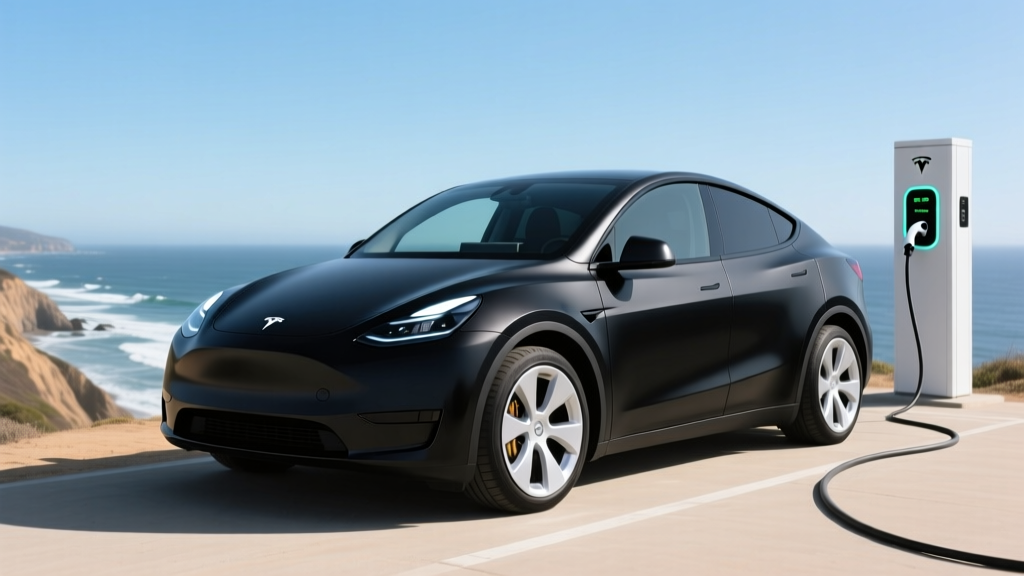
The 2026 Model Y Long Range AWD carries an EPA-estimated range of 320 miles on a full charge, powered by a 78.1 kWh usable battery pack using NMC (nickel manganese cobalt) chemistry. The base Rear-Wheel-Drive model uses a 60 kWh LFP (lithium iron phosphate) pack rated at 260 miles EPA.
EPA Estimate: 320 miles (Long Range AWD) | 260 miles (RWD LFP)
Highway (70-80 mph, moderate temps): Expect ~265–285 miles in the Long Range. Tesla's aerodynamic efficiency helps, but sustained highway speeds drain any EV faster than the EPA combined cycle suggests.
Cold Weather (below 30°F): Range drops 15–25%. Plan for ~240–270 miles in the Long Range during winter commutes. The heat pump helps, but battery chemistry limits are physics, not software.
City/Stop-and-Go: Regen-heavy driving can push the Long Range past 330 miles in mild weather — the rare scenario where real-world beats EPA.
Efficiency lands at 122 MPGe combined, or roughly 27 kWh/100 miles for the Long Range AWD — competitive but no longer class-leading. The Hyundai Ioniq 5 Long Range achieves 114 MPGe with a larger 84 kWh pack but offers similar real-world miles per kWh in mixed driving. According to fueleconomy.gov, the Model Y still edges most rivals in efficiency per pound of vehicle weight.
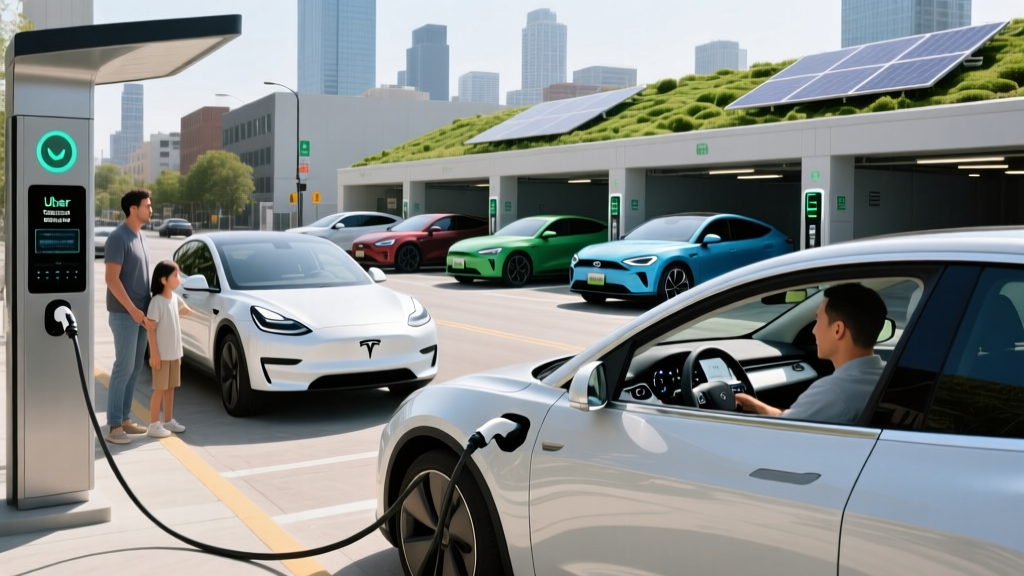
Charging Speed: DC Fast and Home Level 2
Tesla's Supercharger network remains a core ownership advantage, but the charging hardware on the Model Y itself deserves scrutiny.
| Charging Level | Max Rate | Speed / Time |
|---|---|---|
| DC Fast Charge (NACS) | 250 kW peak | 10–80% in ~25 minutes (V3 Supercharger) |
| DC Fast Charge (CCS via adapter) | ~150 kW peak | 10–80% in ~35 minutes (Electrify America, EVgo) |
| Level 2 Home (240V, 48A Wall Connector) | 11.5 kW | ~37 miles of range per hour |
| Level 2 Home (240V, 32A mobile connector) | 7.7 kW | ~25 miles of range per hour |
| Level 1 (120V standard outlet) | ~1.4 kW | ~4 miles of range per hour |
The 250 kW peak is impressive on paper, but sustained rates tell the real story. The Model Y's charge curve tapers significantly above 60% state of charge. In practice, you'll see 250 kW only between roughly 10–30% SoC on a preconditioned battery at a V3 Supercharger. By 50%, you're closer to 120 kW; by 80%, around 50 kW. This is normal for NMC packs, but competitors like the Hyundai Ioniq 5 (with its 800V architecture) sustain higher rates deeper into the curve, achieving 10–80% in ~18 minutes at a 350 kW charger.
For home charging, the Tesla Wall Connector at 48 amps is among the best OEM-provided Level 2 solutions. A full overnight charge from 20% takes roughly 7 hours — more than adequate for daily use. If your home has a 200-amp electrical panel with spare capacity, installation typically runs $800–$1,500 including the unit and electrician labor. Older panels may require a $2,000–$4,000 service upgrade.
Performance and Drivetrain
| Spec | RWD (Base) | Long Range AWD | Performance |
|---|---|---|---|
| 0–60 mph | 6.6 sec | 4.8 sec | 3.5 sec |
| Horsepower | 295 hp | 384 hp | 456 hp |
| Drivetrain | Rear-Wheel Drive | Dual-Motor AWD | Dual-Motor AWD |
| Top Speed | 135 mph | 135 mph | 155 mph |
The Long Range AWD's 4.8-second 0–60 time is more than sufficient for highway merging and passing. The dual-motor AWD system provides confident traction in rain and light snow, with torque vectoring that feels natural rather than intrusive. The Performance trim's 3.5-second sprint is genuinely thrilling, but the firmer suspension and 21-inch wheels compromise ride quality on rough pavement.
Regenerative braking is aggressive in the default setting, enabling near one-pedal driving in city traffic. Tesla removed the user-adjustable regen setting several model years ago, which remains a polarizing choice — some drivers prefer the ability to coast.
Pricing, Tax Credits, and Total Cost
| Trim | Base MSRP | As-Tested (Typical) | §30D Credit Eligible? |
|---|---|---|---|
| RWD (LFP) | $44,990 | $46,500 | Yes — up to $7,500 (see caveats) |
| Long Range AWD | $48,990 | $52,500 | Yes — up to $7,500 (see caveats) |
| Performance | $53,990 | $57,000 | Yes — up to $7,500 (see caveats) |
All 2026 Model Y trims fall under the IRS §30D MSRP cap of $80,000 for SUVs/crossovers, making them potentially eligible for the up to $7,500 federal tax credit. However, eligibility is not automatic. Per IRS guidelines, buyers must meet:
- Income caps: Modified AGI ≤ $150,000 (single), ≤ $225,000 (head of household), ≤ $300,000 (joint)
- Battery sourcing: Critical minerals and battery components must meet escalating domestic-content thresholds — Tesla's U.S.-built packs generally qualify, but verify at point of sale
- Point-of-sale transfer: As of 2024+, you can transfer the credit to the dealer for an immediate price reduction rather than waiting for tax filing
With the full $7,500 credit applied, the Long Range AWD effectively starts around $41,490 — competitive with the Hyundai Ioniq 5 Limited ($47,500 MSRP, credit-dependent) and the Ford Mach-E Premium ($48,995). Always confirm credit eligibility with your tax professional before purchase, as rules tighten annually.
Interior, Cargo, and Technology
The Model Y's minimalist interior continues to draw both praise and frustration. The 15.4-inch center touchscreen handles virtually all vehicle controls — there are no physical buttons for climate, mirrors, or glovebox. For 2026, Tesla has added ventilated front seats and ambient lighting as standard on Long Range and above, addressing longstanding comfort complaints.
Cargo volume: 30.2 cubic feet behind the second row, expanding to 72.1 cubic feet with seats folded. The front trunk (frunk) adds 4.1 cubic feet. Rear legroom measures 41.6 inches — generous for adults on long trips. The power-folding second row and flat load floor make the Model Y one of the most practical EVs for family hauling.
Standout tech:
- Tesla's navigation with real-time Supercharger routing and preconditioning
- Over-the-air updates that add features post-purchase
- Sentry Mode (360° parking surveillance)
- Dashcam with four-camera recording
- Phone-as-key with Bluetooth proximity unlock
Notable drawbacks:
- No Apple CarPlay or Android Auto — Tesla's native infotainment only
- No physical buttons or stalks (turn signals are on the steering wheel face)
- Rear visibility is compromised by the sloping roofline — the backup camera is essential
- Panel gap inconsistency remains a build-quality talking point, though 2025+ improvements are visible
Driver Assistance: Autopilot and FSD Supervised
Tesla Autopilot and Full Self-Driving (Supervised) are SAE Level 2 driver-assistance systems. The driver must remain fully engaged, hands on the wheel, and eyes on the road at all times. These systems do NOT make the vehicle self-driving. Only Level 4 services like Waymo operate without a human driver in geofenced areas.
Standard Autopilot includes Traffic-Aware Cruise Control and Autosteer (lane-centering on marked highways). The optional FSD (Supervised) package — currently $8,000 to purchase or $99/month — adds automatic lane changes, traffic light and stop sign recognition, and Navigate on Autopilot for highway on-ramp-to-off-ramp driving.
FSD's real-world performance is impressive on divided highways but inconsistent on surface streets. Construction zones, faded lane markings, and unprotected left turns still require frequent driver intervention. According to NHTSA, Tesla's Autopilot-related incident data is tracked under the Standing General Order for ADS-equipped vehicles. The system's safety record remains debated — Tesla reports lower crash rates with Autopilot engaged, but selection bias (highway vs. city miles) complicates direct comparison.
Warranty and Long-Term Ownership
| Component | Coverage |
|---|---|
| Basic Vehicle | 4 years / 50,000 miles |
| Battery & Drive Unit (Long Range/Performance) | 8 years / 120,000 miles (min 70% retention) |
| Battery & Drive Unit (RWD LFP) | 8 years / 100,000 miles (min 70% retention) |
The 70% capacity retention threshold is the warranty trigger — if your battery drops below 70% of original capacity within the warranty period, Tesla will repair or replace it. Real-world degradation data from fleet operators suggests NMC Model Y packs lose roughly 8–12% capacity over the first 100,000 miles, meaning most owners won't approach the warranty floor. LFP packs in the RWD model show slower degradation curves but start with lower energy density.
Insurance costs remain a consideration. Tesla's own insurance product (available in most states) uses real-time driving data and can be 10–20% cheaper than third-party quotes, but comparison-shop before committing.
Pros, Cons, and Who Should Buy
- Supercharger network reliability (17,000+ U.S. stalls)
- Class-leading cargo volume and frunk utility
- Strong OTA update cadence adds features over time
- Competitive efficiency (kWh/100mi) for the segment
- FSD (Supervised) is the most widely deployed L2+ system
- $7,500 federal tax credit eligible (with caveats)
- No Apple CarPlay / Android Auto
- Turn signals on steering wheel face are unintuitive
- DC charge curve tapers earlier than 800V rivals
- Build quality improving but still inconsistent
- FSD purchase price ($8,000) is steep for Level 2
- Brand perception headwinds affecting resale values
- You road-trip frequently and want the most reliable DC fast-charging network
- You need maximum cargo space in an electric crossover
- You prefer OTA updates that genuinely add capability over time
- You want a proven, high-volume EV with abundant service centers
- You want faster DC charging (Hyundai Ioniq 5 / Kia EV6 with 800V)
- You need Apple CarPlay or physical buttons (Ford Mach-E, Hyundai)
- You want a more traditional luxury interior (BMW iX, Genesis GV60)
- Brand perception matters for your professional or personal image
Frequently Asked Questions
What is the real-world range of the 2026 Tesla Model Y?
The EPA rates the Long Range AWD at 320 miles. In real-world highway driving at 70–80 mph, expect 265–285 miles. In cold weather (below 30°F), plan for 240–270 miles. City driving with regenerative braking can exceed the EPA estimate in mild temperatures.
How fast does the Model Y charge at home and on the road?
On a Tesla V3 Supercharger (250 kW), the Model Y charges 10–80% in about 25 minutes. At home on a 48-amp Level 2 Wall Connector (11.5 kW), you gain roughly 37 miles of range per hour, fully replenishing overnight. CCS charging via adapter peaks around 150 kW.
How much does the 2026 Model Y cost after tax credits?
The Long Range AWD starts at $48,990 MSRP. With the full $7,500 §30D federal credit (subject to income, sourcing, and MSRP caps), the effective price drops to ~$41,490. The base RWD at $44,990 falls to ~$37,490. Always verify eligibility with a tax professional.
Is the Model Y worth buying vs. the Ioniq 5 or Mach-E?
The Model Y wins on Supercharger network access, cargo space, and software. The Ioniq 5 charges faster on non-Tesla DC networks (800V architecture). The Mach-E offers Apple CarPlay and a more conventional interior. Test-drive all three — the right choice depends on your charging access and interface preferences.
Does the 2026 Model Y qualify for the federal EV tax credit?
Yes, all trims are eligible for up to $7,500 under IRS §30D, provided the buyer meets income caps ($150K single / $300K joint) and the vehicle's battery meets critical-mineral sourcing thresholds. Tesla's U.S. production generally qualifies, but confirm at point of sale. The credit can be transferred to the dealer for an immediate price reduction.
Why is Tesla going down in market share?
Tesla's U.S. EV market share has declined from ~65% in 2022 to an estimated ~45% in 2025–2026, driven by increased competition (Hyundai, Ford, BMW, GM), brand perception challenges, slower refresh cycles compared to rivals, and the elimination of the EV waitlist era. The Model Y remains a strong product, but buyers now have credible alternatives at every price point.