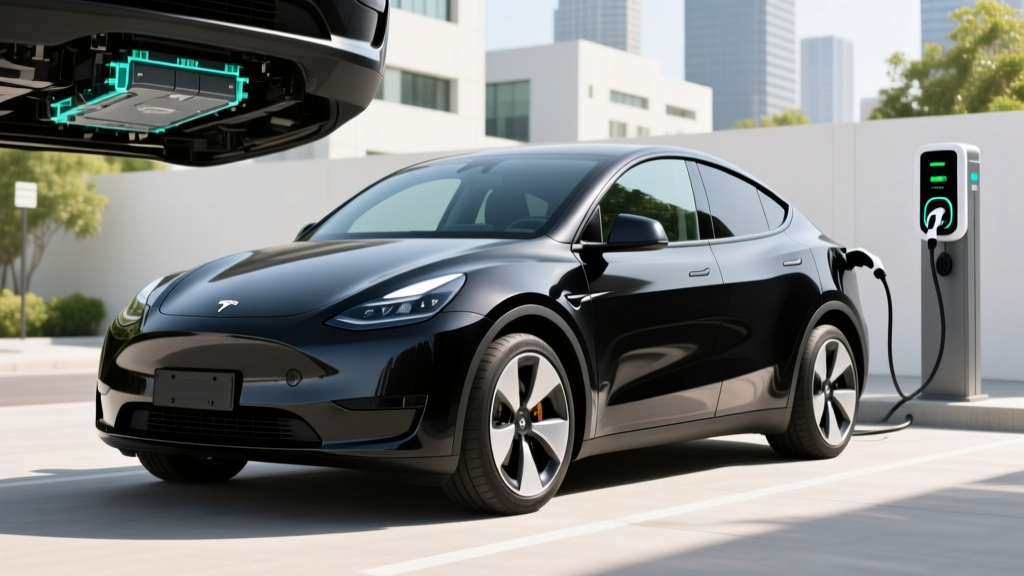
If you've searched for a Tesla promo in 2026, you've likely landed on the refreshed Model Y — Tesla's best-selling electric SUV and the vehicle that dominates the mainstream EV market. With the Juniper refresh now fully in production, the 2026 Model Y brings updated styling, a revamped interior, and revised powertrain tuning that nudges range and efficiency higher than the outgoing model. But does the sticker price justify the hype, and how does the real-world ownership experience stack up against the marketing?
We spent time with the 2026 Tesla Model Y Long Range AWD and Performance trims to deliver a data-driven breakdown covering EPA range, charging curves, tax credit eligibility, and total cost of ownership. Here's everything you need before pulling the trigger.
2026 Tesla Model Y: Quick Spec Overview
| Spec | Value |
|---|---|
| EPA Range | 320 miles (Long Range AWD) |
| Battery (Usable) | ~75 kWh, NMC chemistry |
| Max DC Fast Charge | 250 kW peak (V3 Supercharger) |
| 10–80% DC Charge Time | ~25 minutes |
| Level 2 Home Charge Rate | 11.5 kW (~44 mi/hr) |
| 0–60 mph | 4.8 sec (LR AWD) / 3.5 sec (Performance) |
| Horsepower | 384 hp (LR AWD) / 456 hp (Performance) |
| Drivetrain | Dual-motor AWD |
| Efficiency | 122 MPGe combined / 28 kWh/100 mi |
| Cargo Volume | 30.2 cu ft (rear seats up) / 72.1 cu ft (folded) |
| Base MSRP | $44,990 (LR AWD) / $48,990 (Performance) |
| Battery Warranty | 8 years / 120,000 miles (70% retention) |
Real-World Range: What the EPA Number Doesn't Tell You
The 2026 Model Y Long Range AWD carries an EPA-estimated 320 miles of range. That's a modest improvement over the pre-refresh model, thanks to revised aero, lower-rolling-resistance tires, and slightly improved inverter efficiency.
EPA Sticker: 320 miles
Highway (70 mph, mild weather): ~275–290 miles
City / mixed driving: ~300–310 miles
Cold weather (below 32°F, highway): ~220–250 miles
The Model Y's heat pump helps mitigate winter losses compared to resistive-heating EVs, but expect a 20–30% range reduction in sustained sub-freezing conditions. Preconditioning the battery while plugged in recovers some of this loss.
On a 280-mile highway loop at 72 mph in 55°F weather, our Long Range test vehicle arrived with 11% State of Charge remaining — consistent with roughly 285 miles of usable range in those conditions. The Performance trim, with its stickier tires and more aggressive tuning, drops to an EPA 295 miles and will net closer to 255 on the highway.
For context, the competing Hyundai Ioniq 5 (Long Range AWD) posts 290 EPA miles, while the Ford Mustang Mach-E Extended Range AWD achieves 312. The Model Y still leads the segment, but the gap has narrowed considerably since 2023.
Charging Speed: Supercharger Network vs. Home Level 2
Tesla's charging story remains its strongest competitive advantage, though the hardware specs aren't class-leading on paper.
| Charge Level | Power | Speed (Miles Added/Hour) | Notes |
|---|---|---|---|
| Level 1 (120V) | ~1.4 kW | ~5 mi/hr | Emergency / overnight trickle only |
| Level 2 (240V, 48A) | 11.5 kW | ~44 mi/hr | Full charge in ~7 hours; Wall Connector recommended |
| DC Fast (V3 Supercharger) | 250 kW peak | ~180 mi in 15 min | Peak only below 30% SoC; tapers significantly above 60% |
| DC Fast (V4 Supercharger) | Up to 325 kW* | Marginally faster 10–50% | *Model Y currently capped at ~250 kW by vehicle-side BMS |
The critical detail most spec sheets miss: sustained charge rate matters more than peak kW. The Model Y's NMC battery peaks at 250 kW only when the battery is preconditioned and below roughly 25% SoC. By 50%, you're seeing ~150 kW. By 80%, the rate drops to ~60 kW. A typical 10–80% session at a V3 Supercharger takes about 25 minutes — competitive, but not the 18-minute 10–80% times posted by Hyundai/Kia's 800V architecture on 350 kW chargers.
At home, the Tesla Wall Connector ($420) on a 60-amp circuit delivers the full 11.5 kW / 44 miles per hour. Most owners who plug in overnight start each day with a full battery, making public charging relevant only for road trips.
With the 2025 NACS adapter agreement now fully in effect, Tesla Superchargers also serve Ford, GM, Rivian, and other NACS-equipped vehicles. This means more stalls are available overall (network expansion continues), but popular corridor stations may see increased wait times during peak travel. Tesla owners retain native plug-and-charge convenience with no adapter needed.
Performance and Driving Dynamics
The dual-motor AWD Long Range delivers 384 horsepower and a 4.8-second 0–60 time — genuinely quick for a family crossover. The Performance trim bumps output to 456 hp with a 3.5-second sprint, accompanied by larger brakes, a lowered sport suspension, and 21-inch wheels.
Ride quality on the Juniper-refreshed Model Y is noticeably improved over the pre-2025 versions. Tesla retuned the dampers and added acoustic laminated glass, reducing cabin noise at highway speed. The steering remains quick but somewhat numb — a common Tesla trait. Body control is confident, though the Performance trim's 21-inch wheels transmit more road imperfections than most buyers will prefer on rough pavement.
Regenerative braking is strong enough for near one-pedal driving in most conditions, though Tesla removed the user-adjustable regen setting several model years ago. You get one calibration, and it's aggressive — which most EV veterans appreciate but newcomers may need a week to acclimate to.
Interior, Cargo, and Daily Livability
The 2026 Model Y interior received meaningful updates with the Juniper refresh: ventilated front seats (finally), ambient lighting, a rear-seat touchscreen for climate and entertainment, and improved material quality on the dashboard and door panels. The minimalist approach remains — no physical buttons, no traditional instrument cluster — but execution is more polished.
Dimensionally, the Model Y offers:
- Front legroom: 41.8 inches
- Rear legroom: 38.4 inches (adequate for adults, tighter than the Ioniq 5's 39.4")
- Cargo behind rear seats: 30.2 cu ft
- Cargo with rear seats folded: 72.1 cu ft
- Front trunk (frunk): 4.1 cu ft — useful for charging cables and a small bag
The 15.4-inch center touchscreen runs Tesla's latest software, which remains the most responsive and feature-rich infotainment system in the EV segment. Navigation with real-time Supercharger routing, trip planning with automatic preconditioning, and over-the-air updates are all standard. The premium audio system (14 speakers on LR, 17 on Performance) is excellent for the price class.
Notable drawbacks: The absence of Apple CarPlay and Android Auto continues to frustrate some buyers. The turn-signal stalk was removed in the refresh (signals are now on the steering wheel rim) — a polarizing change. And while build quality has improved, panel-gap consistency still lags behind Hyundai and BMW.
Autopilot and FSD: What You're Actually Getting
Tesla Autopilot and Full Self-Driving (Supervised) are Level 2 driver-assistance systems. The driver must remain fully attentive, hands on or near the wheel, and ready to take over at any moment. This is not autonomous driving. Only Level 4 services like Waymo operate without a human driver in defined zones.
Basic Autopilot (standard) includes adaptive cruise control and lane-centering on highways. The $8,000 FSD (Supervised) upgrade adds automatic lane changes, traffic-light and stop-sign recognition, and city-street navigation-assist features. FSD has improved substantially through 2025–2026 neural-net updates, but it still makes unpredictable decisions in construction zones, unprotected left turns, and heavy rain. Treat it as a fatigue-reduction tool on long highway drives, not a replacement for your attention.
Pricing, Trims, and Federal Tax Credit Eligibility
| Trim | Base MSRP | As-Tested* | Est. After §30D Credit |
|---|---|---|---|
| Long Range AWD | $44,990 | $46,490 (w/ FSD removed) | ~$37,490 (if eligible) |
| Performance AWD | $48,990 | $51,990 | ~$41,490 (if eligible) |
*As-tested reflects common options; destination fee included in MSRP.
- Credit amount: Up to $7,500 (split: $3,750 battery components + $3,750 critical minerals)
- MSRP cap: SUVs must be ≤ $80,000 (Model Y qualifies)
- Buyer income cap: AGI ≤ $150K single / $300K joint filers
- Battery sourcing: Must meet critical-mineral and battery-component requirements (varies by production batch — confirm VIN-specific eligibility at fueleconomy.gov)
- Point-of-sale transfer: Eligible buyers can apply the credit as an instant rebate at delivery, reducing out-of-pocket cost
- Verify with a tax professional — rules are subject to change and individual situations vary. See IRS.gov clean vehicle credits for current guidance.
Tesla's current promotional offers — often marketed as "Tesla promos" on their website and through referral programs — have recently included discounted Supercharging credits, reduced FSD subscription pricing, or limited-time inventory discounts on existing stock. These promos change monthly and are rarely advertised broadly. Check Tesla's inventory page directly and ask your delivery advisor about any unadvertised incentives on in-stock vehicles.
Model Y vs. Key Competitors: Where It Wins and Loses
| Tesla Model Y LR | Hyundai Ioniq 5 LR AWD | Ford Mach-E ER AWD | BMW iX xDrive50 | |
|---|---|---|---|---|
| EPA Range | 320 mi | 290 mi | 312 mi | 324 mi |
| 10–80% DC Time | ~25 min | ~18 min (350 kW) | ~32 min | ~31 min |
| 0–60 mph | 4.8 sec | 5.1 sec | 5.1 sec | 4.4 sec |
| Base MSRP | $44,990 | $49,500 | $48,995 | $87,250 |
| Cargo (rear up) | 30.2 cu ft | 27.2 cu ft | 29.7 cu ft | 35.5 cu ft |
The Model Y wins on: Supercharger network access, software/UX, efficiency (kWh/mi), cargo versatility, and value after tax credits. It remains the default recommendation for first-time EV buyers who want minimal friction.
Competitors win on: The Ioniq 5 charges significantly faster on 350 kW hardware. The Mach-E offers a more traditional driving feel and dealer service network. The BMW iX delivers luxury refinement the Model Y can't match — at twice the price.
- Class-leading efficiency (28 kWh/100 mi)
- Supercharger network — still the most reliable DC fast-charging ecosystem
- Spacious cargo area with versatile flat-load floor
- Best-in-class software, OTA updates, and trip planning
- Strong resale value relative to most EVs
- No Apple CarPlay / Android Auto
- DC fast-charge speed lags 800V competitors (25 min vs 18 min 10–80%)
- Turn-signal stalk removal is divisive
- Panel gaps and paint quality still inconsistent vs. legacy OEMs
- FSD at $8,000 remains a questionable value proposition
Who Should Buy the 2026 Tesla Model Y?
The Model Y is the right call for daily commuters and road-trippers who prioritize charging convenience and software integration above all else. If you drive 30–80 miles round-trip daily, have home Level 2 charging, and take 3–5 road trips per year, the Supercharger network and trip-planning integration are genuinely unmatched.
It's less ideal for buyers who want the fastest possible DC charging (look at Ioniq 5/6 or Kia EV6 with 800V), those who need a third row (consider the Kia EV9), or luxury-focused shoppers who want premium materials and dealer-level service (BMW iX, Audi Q8 e-tron).
Frequently Asked Questions
What is the real-world range of the 2026 Tesla Model Y?
EPA-rated at 320 miles (Long Range AWD), expect roughly 275–290 miles at highway speeds in mild weather, and 220–250 miles in sustained cold below freezing. The Performance trim nets about 10–15% less in all conditions.
How fast does the Model Y charge at home and on road trips?
At home on a Level 2 Wall Connector (11.5 kW), you'll add ~44 miles per hour, fully recharging overnight. On a V3 Supercharger, 10–80% takes about 25 minutes. That's adequate but slower than Hyundai/Kia's 18-minute 10–80% on 350 kW chargers.
Does the 2026 Model Y qualify for the $7,500 federal tax credit?
It can, but eligibility depends on your income (≤$300K joint / ≤$150K single), the vehicle's MSRP (under $80K — Model Y qualifies), and battery sourcing requirements that vary by production batch. Check the specific VIN at fueleconomy.gov and consult a tax professional. The credit can be applied at point of sale as an instant discount.
Is the Tesla Model Y worth it vs. the Ioniq 5 or Mach-E?
If you value the Supercharger network, software experience, and efficiency, yes — the Model Y remains the segment benchmark. If faster DC charging, Apple CarPlay, or more traditional service options matter more, the Ioniq 5 or Mach-E are strong alternatives at similar pricing.
What's included in current Tesla promos?
Tesla's promotional offers rotate frequently and may include Supercharging credits, discounted FSD monthly subscriptions, or price reductions on inventory vehicles. These are rarely advertised broadly — check Tesla.com/inventory and ask about unadvertised deals at delivery.
What is the battery warranty on the 2026 Model Y?
Tesla covers the battery and drive units for 8 years or 120,000 miles (whichever comes first), with a guaranteed minimum 70% capacity retention. Real-world degradation data from high-mileage owners suggests most Model Y batteries retain 85–90% capacity at 100,000 miles under normal use.