Quick Verdict: The Best-Selling EV Still Sets the Benchmark
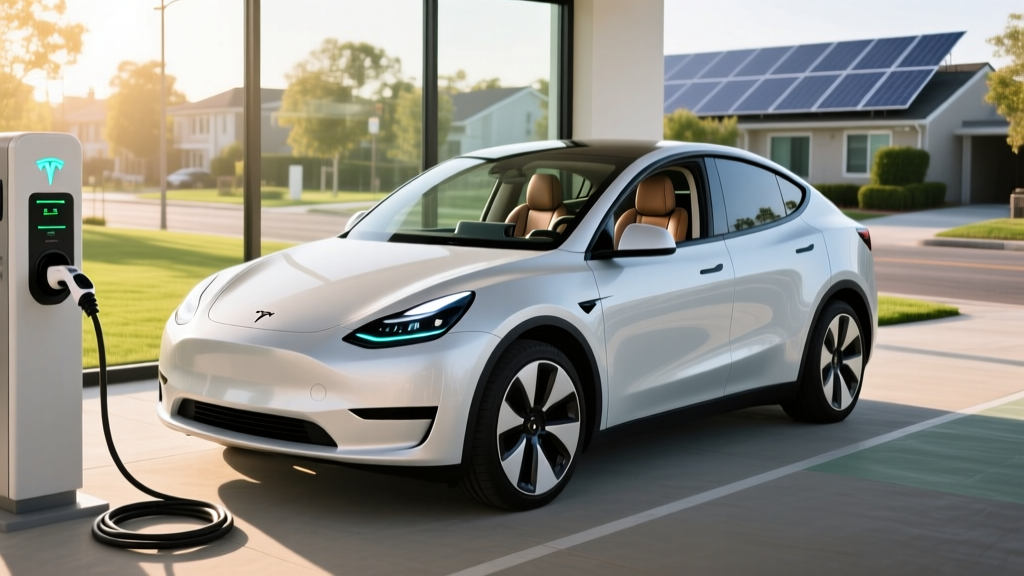
The 2026 Tesla Model Y remains the global best-selling electric vehicle for good reason: class-leading efficiency, access to the most reliable DC fast-charging network in North America, and continuous over-the-air improvements. But buying a Tesla isn't just about the hardware — it's about buying into a company whose Tesla corporate governance structure concentrates extraordinary decision-making power in a single individual. For EV shoppers, understanding how Tesla is governed matters because it directly affects product roadmap stability, service infrastructure investment, and long-term brand reliability. This review covers the 2026 Model Y's real-world specs while examining what Tesla's governance model means for your purchase decision.
| Spec | Long Range RWD | Long Range AWD | Performance |
|---|---|---|---|
| EPA Range | 320 mi | 300 mi | 277 mi |
| Battery (usable) | ~75 kWh (NMC) | ~75 kWh (NMC) | ~75 kWh (NMC) |
| Peak DC Fast Charge | 250 kW | 250 kW | 250 kW |
| 10–80% DC Time | ~25 min | ~25 min | ~25 min |
| Level 2 Home Charge | 11.5 kW (~37 mi/hr) | 11.5 kW (~37 mi/hr) | 11.5 kW (~37 mi/hr) |
| 0–60 mph | 5.8 sec | 4.8 sec | 3.5 sec |
| Horsepower | 346 hp | 384 hp | 456 hp |
| Drivetrain | RWD (single motor) | AWD (dual motor) | AWD (dual motor) |
| MPGe (combined) | 122 MPGe | 115 MPGe | 111 MPGe |
| Base MSRP | $44,990 | $47,990 | $53,990 |
Range, Efficiency & Real-World Expectations
The 2026 Model Y Long Range RWD carries an EPA-estimated 320 miles of range — a strong figure for a compact luxury crossover. The dual-motor AWD variant drops to 300 miles, while the Performance trim sits at 277 miles. Efficiency across the lineup is exceptional, with the Long Range RWD achieving roughly 26 kWh per 100 miles, making it one of the most energy-efficient vehicles in its class according to fueleconomy.gov.
EPA 320 mi (Long Range RWD) is a combined-cycle estimate. Expect ~260–280 mi on sustained highway driving at 70+ mph, and ~220–250 mi in cold weather (below 32°F) due to battery resistance and cabin heating demands. The Model Y's heat pump mitigates some cold-weather loss compared to older EVs without one, but physics still applies. On a 300-mile road trip in winter, plan one DC fast-charge stop.
The 75 kWh (usable) NMC (nickel manganese cobalt) battery pack provides strong energy density, though it requires careful state-of-charge management for longevity — Tesla recommends daily charging to 80–90% and reserving 100% for trips. This contrasts with LFP (lithium iron phosphate) packs found in the Standard Range variant, which tolerate regular 100% charges without accelerated degradation.
Charging Speed: DC Fast & Home Level 2
The Model Y peaks at 250 kW on DC fast chargers via its native NACS connector — no adapter needed at Tesla Superchargers. At a V3 or V4 Supercharger, you'll see 10–80% in approximately 25 minutes under ideal thermal conditions. The charging curve is aggressive early (sustaining 200+ kW up to ~40% SoC) before tapering significantly above 60%, which is why Tesla's navigation system routes you to chargers and preconditions the battery en route.
| Charging Level | Power / Rate | Miles Added per Hour | Notes |
|---|---|---|---|
| Level 1 (120V) | 1.4 kW | ~4 mi/hr | Emergency/trickle only |
| Level 2 (240V, 48A) | 11.5 kW | ~37 mi/hr | Home Wall Connector; full overnight charge in ~8 hrs |
| DC Fast (Supercharger V3/V4) | 250 kW peak | ~1,000 mi/hr (peak) | 10–80% in ~25 min; tapers above 60% |
| DC Fast (CCS adapter) | ~150–250 kW | Varies | Requires NACS-to-CCS adapter at non-Tesla networks |
For home charging, the Tesla Wall Connector at 48 amps delivers 11.5 kW, adding roughly 37 miles of range per hour. Most owners with a 240V/60A circuit installation ($500–$1,500 depending on panel proximity and local permit costs) wake up to a full battery every morning. This remains the single biggest ownership advantage over public-charging-dependent EV lifestyles.
Performance & Driving Dynamics
The Model Y Performance delivers a 3.5-second 0–60 mph time with 456 horsepower from its dual-motor AWD setup — sports-car acceleration in a practical crossover. The Long Range AWD manages 4.8 seconds, while the RWD variant hits 60 in 5.8 seconds, still quicker than most gas-powered competitors in this segment.
Ride quality in the refreshed Model Y (introduced for the 2025 model year and carried into 2026) is noticeably improved over the pre-refresh version, with retuned suspension, acoustic glass, and better isolation from road noise. Handling remains confident but not sporty — the Model Y prioritizes comfort and efficiency over corner-carving. Regenerative braking is strong and adjustable, enabling one-pedal driving in most conditions.
Interior, Cargo & Technology
The minimalist interior centers on a 15.4-inch touchscreen that controls virtually every vehicle function — climate, mirrors, glovebox, and drive modes. There is no traditional instrument cluster; a secondary 8-inch rear touchscreen serves back-seat passengers. Build quality has improved meaningfully since the Fremont factory's early days, with tighter panel gaps, premium materials, and ventilated front seats now standard on Long Range and Performance trims.
Cargo space: 30.2 cubic feet behind the second row, expanding to 72.1 cu ft with seats folded. The front trunk (frunk) adds 4.1 cu ft — useful for charging cables and groceries. Rear legroom measures 40.5 inches, adequate for adults on longer trips.
Tech highlights include Tesla's infotainment system with native streaming (Netflix, YouTube, Spotify while parked), a robust mobile app with remote climate control and Sentry Mode cameras, and continuous OTA updates that add features post-purchase. The available FSD (Supervised) system remains a SAE Level 2 driver-assist — it requires active driver supervision at all times and is not autonomous driving, despite its marketing name.
Tesla's Full Self-Driving (Supervised) is an SAE Level 2 system. The driver must keep hands near the wheel, eyes on the road, and remain ready to intervene instantly. It does not make the Model Y a self-driving car. Only Level 4 services like Waymo operate without driver supervision in geofenced areas. Do not rely on FSD for inattentive driving.
Pricing, Tax Credits & Ownership Cost
The 2026 Model Y lineup starts at $44,990 for the Long Range RWD, $47,990 for Long Range AWD, and $53,990 for Performance (all prices exclude the $1,390 destination fee). Tesla periodically adjusts pricing, so check the configurator for current figures.
| Trim | Base MSRP | Est. After §30D Credit | Credit Eligibility Notes |
|---|---|---|---|
| Long Range RWD | $44,990 | ~$37,490 | Qualifies if buyer income, battery sourcing, and MSRP caps are met |
| Long Range AWD | $47,990 | ~$40,490 | Same sourcing/income requirements apply |
| Performance | $53,990 | ~$46,490 | Under $80,000 SUV MSRP cap; sourcing rules apply |
Federal tax credit eligibility under IRS §30D is complex and subject to change. Key requirements for 2026 include:
- MSRP cap: Vehicle must be under $80,000 for SUVs (Model Y qualifies)
- Buyer income cap: Modified AGI ≤ $150,000 (single), $225,000 (head of household), $300,000 (joint)
- Battery sourcing: Critical minerals and battery components must meet escalating domestic-content thresholds — verify current-year compliance on Tesla's website and IRS guidance
- Point-of-sale transfer: Eligible buyers can apply the credit as a discount at purchase rather than waiting for tax filing
- VIN registration: Dealer must report the sale and VIN to the IRS before the credit is finalized
Always confirm eligibility with a tax professional before purchase. Sourcing requirements tighten annually, and a trim that qualifies in January may face different rules by December.
Tesla Corporate Governance Structure: Why It Matters to EV Buyers
The Tesla corporate governance structure is unusual among major automakers and worth understanding before committing to the brand. CEO Elon Musk holds significant voting power through his equity stake and a board that has historically aligned closely with his vision. This concentrated governance model enables rapid, decisive product pivots — Tesla can retool a factory or push an OTA update faster than legacy OEMs navigating committee-heavy decision chains.
However, concentrated governance also introduces risks for buyers:
- Leadership dependency: Tesla's product roadmap, brand perception, and stock performance are tightly coupled to one individual's decisions and public statements. Controversies or attention diverted to Musk's other ventures (SpaceX, xAI, X/Twitter) can affect Tesla's focus and consumer sentiment.
- Board independence: Governance analysts and proxy advisory firms have periodically flagged Tesla's board composition for limited independence relative to peers. For long-term owners, board oversight quality affects warranty honoring, service infrastructure investment, and recall responsiveness.
- Service and support consistency: Tesla's governance prioritizes manufacturing scale and software development. Service center capacity has sometimes lagged vehicle sales growth, leading to extended wait times for collision repair and warranty work in some markets — a direct consequence of capital-allocation decisions made at the top.
- Strategic unpredictability: Tesla has abruptly discontinued trims, changed pricing mid-year, and shifted product timelines in ways that can frustrate recent buyers. A more distributed governance structure at legacy automakers tends to produce more predictable product and pricing cycles.
For buyers, the takeaway is pragmatic: Tesla's governance enables industry-leading innovation speed and vertical integration (Superchargers, insurance, FSD data loop), but also means your ownership experience is more tightly bound to the company's leadership stability than with a diversified automaker like Toyota or Hyundai. If you plan to own your Model Y for 5–8 years, consider whether you're comfortable with that concentration of risk.
Warranty, Safety & Long-Term Ownership
Tesla covers the Model Y with a 4-year/50,000-mile basic warranty and an 8-year/120,000-mile battery and drive unit warranty (Long Range/Performance). The battery warranty guarantees retention above 70% of original capacity during the coverage period. NMC chemistry in the Long Range and Performance trims typically shows 5–10% degradation in the first 30,000 miles before stabilizing — consistent with industry norms.
Safety ratings are strong: the Model Y earns top marks from NHTSA (5-star overall) and the IIHS Top Safety Pick+ designation when equipped with acceptable headlights. Standard active safety includes automatic emergency braking, blind-spot monitoring, lane-departure warning, and Tesla's Autopilot (basic adaptive cruise and lane-centering).
- Class-leading efficiency (122 MPGe combined on Long Range RWD)
- Supercharger network access — most reliable DC charging in North America
- Rapid OTA updates add features and refine driving post-purchase
- Strong resale value relative to non-Tesla EVs
- Excellent cargo versatility (30.2 cu ft + frunk)
- Performance trim delivers 3.5-sec 0–60 in a practical crossover
- Service center wait times remain an issue in some regions
- Touchscreen-dependent controls (no physical buttons for climate, mirrors)
- FSD (Supervised) is Level 2 — not autonomous despite the name
- NMC battery requires SoC management (no daily 100% recommended)
- Governance concentration adds brand/strategy risk vs. diversified OEMs
- Rear visibility is limited; relies heavily on cameras
Who Should Buy the 2026 Tesla Model Y?
Choose the Model Y Long Range RWD if: You prioritize maximum range and efficiency, commute under 60 miles round-trip, and can charge at home. The $44,990 entry point and ~$37,490 after the federal credit (if eligible) make it the value pick.
Choose the Long Range AWD if: You live in a climate with snow or rain, need dual-motor traction, and want the security of 300 miles EPA range with all-weather capability.
Choose the Performance if: Acceleration thrills matter, you want adaptive suspension dampers, and 277 miles of range covers your daily needs with margin.
Look elsewhere if: You need physical buttons and knobs, prefer a dealer service network with walk-in availability, or want a brand with more distributed corporate governance and predictable product cycles. Consider the Hyundai Ioniq 5, Ford Mustang Mach-E, or BMW iX as alternatives.
Frequently Asked Questions
What is the real-world range of the 2026 Tesla Model Y?
The EPA rates the Long Range RWD at 320 miles combined. Real-world highway driving at 70+ mph yields approximately 260–280 miles, while cold weather (below freezing) can reduce range to 220–250 miles. The heat pump helps, but cabin heating and battery resistance still take a toll. Plan road trips assuming ~80% of EPA range for comfortable margins.
How fast does the Model Y charge at home and on the road?
At home on a Level 2 Wall Connector (11.5 kW / 48A), the Model Y adds about 37 miles per hour, fully charging overnight in roughly 8 hours. On DC fast chargers (Supercharger V3/V4), it peaks at 250 kW and charges 10–80% in about 25 minutes. The charge curve tapers above 60% SoC, so the last 20% takes significantly longer — preconditioning via navigation routing is essential for optimal speed.
How much does the 2026 Model Y cost after federal tax credits?
The Long Range RWD starts at $44,990 and could drop to approximately $37,490 if you qualify for the full $7,500 §30D federal tax credit. Eligibility depends on your income (AGI caps), battery sourcing compliance, and the $80,000 SUV MSRP cap. The point-of-sale transfer option lets you apply the credit as an upfront discount. Always verify current rules with a tax professional and IRS guidance.
Does the 2026 Model Y qualify for the federal EV tax credit?
It can, but eligibility is not guaranteed for every buyer. The Model Y is under the $80,000 SUV MSRP cap. You must also meet income limits ($150K single / $300K joint), and the battery must satisfy escalating critical-mineral and component sourcing thresholds that tighten each year. Check Tesla's current sourcing disclosures and IRS rules before assuming the credit applies to your purchase.
Is the Model Y worth buying vs. the Hyundai Ioniq 5 or Ford Mach-E?
The Model Y wins on charging network access (Superchargers), efficiency (MPGe), and software integration. The Ioniq 5 offers 800V architecture for faster peak charging (~350 kW on capable chargers), a more traditional interior with physical controls, and strong dealer service availability. The Mach-E provides a more engaging driving feel and Ford's dealer network for service. If Supercharger reliability and Tesla's software ecosystem are priorities, the Model Y holds the edge. If you prefer dealer service, physical buttons, or want to diversify away from Tesla's governance concentration risk, the Ioniq 5 and Mach-E are compelling alternatives.
How does Tesla's corporate governance structure affect my ownership?
Tesla's concentrated governance enables fast innovation — OTA updates, factory retooling, and Supercharger expansion happen quickly. However, it also means brand reputation, pricing stability, and service investment are closely tied to CEO Elon Musk's decisions and public profile. Service center availability, recall responsiveness, and long-term support quality can fluctuate based on leadership priorities. Buyers should weigh the innovation upside against the governance concentration risk compared to more diversified automakers.
What is the battery warranty, and how long will the Model Y battery last?
Tesla covers the battery and drive unit for 8 years or 120,000 miles (whichever comes first), guaranteeing at least 70% capacity retention. Real-world data from Tesla's fleet suggests NMC packs retain roughly 90% capacity at 50,000 miles and ~85% at 100,000 miles under normal use. Avoid frequent 100% charges, minimize DC fast-charging exclusively, and use scheduled charging to reduce time spent at high SoC for best longevity.