Quick Verdict: The Benchmark Compact Electric SUV
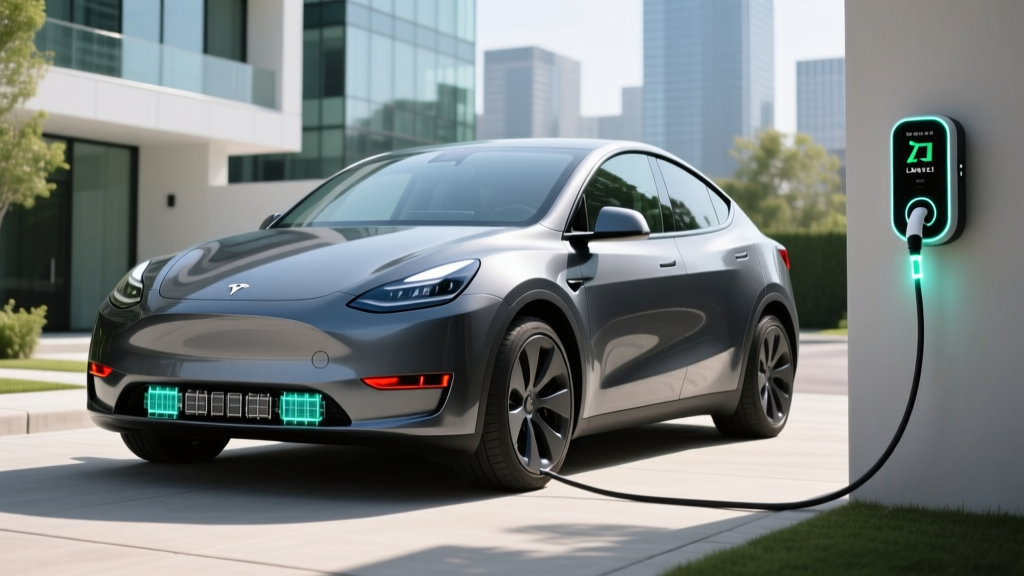
The 2026 Tesla Model Y remains the most-purchased electric vehicle in the United States for good reason. It delivers a compelling mix of 320 miles of EPA-estimated range, access to the largest fast-charging network in North America, and a starting price that — after the federal tax credit — undercuts many gas-powered SUVs on total cost of ownership. The 2026 refresh tightens the interior with a redesigned cabin, quieter ride, and ambient lighting, while retaining the powertrain efficiency that made it a segment leader.
But the Model Y is not without trade-offs. Its ride quality on larger wheels can be firm, the minimalist interior lacks physical controls some buyers want, and competitors like the Hyundai Ioniq 5 and Ford Mustang Mach-E have closed the gap on range and charging speed. This review breaks down the exact numbers — range, charging curves, tax credit math, and real-world ownership costs — so you can decide whether the Model Y is the right electric SUV for your driveway.
2026 Tesla Model Y Spec Sheet
| Specification | Long Range RWD | Long Range AWD | Performance |
|---|---|---|---|
| EPA Range | 320 mi | 303 mi | 277 mi |
| Battery (usable) | ~75 kWh | ~75 kWh | ~75 kWh |
| Chemistry | NMC (nickel manganese cobalt) | NMC | NMC |
| Motor / Drivetrain | Single motor / RWD | Dual motor / AWD | Dual motor / AWD |
| Horsepower | 346 hp | 384 hp | 456 hp |
| 0-60 mph | 5.8 s | 4.8 s | 3.5 s |
| Top Speed | 125 mph | 125 mph | 155 mph |
| MPGe (combined) | 122 MPGe | 117 MPGe | 111 MPGe |
| Efficiency (kWh/100mi) | 28 kWh/100mi | 29 kWh/100mi | 30 kWh/100mi |
| Max DC Fast Charge | 250 kW | 250 kW | 250 kW |
| 10-80% DCFC Time | ~25 min | ~25 min | ~25 min |
| Level 2 Charge Rate | 11.5 kW (44 mi/hr) | 11.5 kW (44 mi/hr) | 11.5 kW (44 mi/hr) |
| Cargo (rear seats up) | 30.2 cu ft | ||
| Cargo (rear seats folded) | 72.1 cu ft | ||
| Frunk | 4.1 cu ft | ||
| Rear Legroom | 40.5 in | ||
| Battery Warranty | 8 years / 120,000 miles | ||
| Base MSRP | $44,990 | $47,990 | $52,490 |
Source: Tesla spec sheets and EPA / fueleconomy.gov. Specs reflect 2026 model year at time of publication.
Range and Efficiency: EPA vs. Real World
EPA sticker (Long Range RWD): 320 miles
Real-world highway (70-75 mph, mild weather): ~270-290 miles
Real-world highway (cold, below 32°F): ~220-250 miles
City/suburban mixed driving: ~300-315 miles
Range decreases 10-15% at sustained highway speeds and up to 30% in extreme cold due to battery heating demands and increased cabin HVAC load.
The Model Y Long Range RWD achieves its 320-mile EPA rating partly through a relatively low curb weight for the segment (~4,100 lbs) and a drag coefficient around 0.23 Cd. In mixed suburban and city driving with regenerative braking active, owners routinely report matching or slightly exceeding the EPA number.
On sustained highway trips at 75 mph, however, expect to see roughly 270-290 miles in moderate temperatures. The NMC battery chemistry provides strong energy density but does not escape the physics of cold-weather lithium-ion performance. In sub-freezing conditions, preconditioning the battery (a feature the Model Y performs automatically when a Supercharger is set as your navigation destination) helps recover some lost range, but plan for 220-250 miles of usable range on winter road trips.
Efficiency of 117-122 MPGe combined (28-29 kWh/100mi) places the Model Y near the top of the compact electric SUV segment. For comparison, the Hyundai Ioniq 5 AWD achieves 110 MPGe combined, while the Ford Mustang Mach-E Extended Range AWD lands at 101 MPGe.
Charging: Speed, Networks, and Home Setup
The 2026 Model Y charges via the NACS (North American Charging Standard) connector natively — no adapter needed at Tesla Superchargers. With other networks opening to NACS in 2025-2026, your charging options have expanded considerably, though Tesla's own Supercharger network remains the most reliable option for DC fast charging.
| Charging Level | Power | Speed (miles added) | Use Case |
|---|---|---|---|
| Level 1 (120V household) | ~1.4 kW | ~4-5 mi/hr | Emergency / overnight trickle |
| Level 2 (240V home) | 11.5 kW (48A) | ~44 mi/hr | Daily home charging |
| DC Fast Charge (Supercharger V3/V4) | Up to 250 kW peak | ~162 mi in 15 min | Road trips |
DC Fast Charging Curve Reality
Tesla advertises a peak charge rate of 250 kW, and the Model Y can sustain near-peak rates from roughly 10-30% state of charge. Above 50%, the charge curve tapers progressively — a characteristic of NMC chemistry managed by the vehicle's thermal system. A 10-80% charge takes approximately 25 minutes at a V3 or V4 Supercharger. Charging from 80-100% adds another 20-25 minutes; Tesla recommends charging to 80% for daily use to preserve long-term battery health.
Preconditioning is essential for achieving peak charge speeds. If you arrive at a Supercharger without preconditioning (for example, if you didn't navigate to it via the car's built-in maps), expect charge rates 20-40% below peak for the first 5-10 minutes while the battery warms to optimal temperature.
Home Level 2 Charging
The Model Y's onboard charger accepts up to 11.5 kW on Level 2 (48 amps on a 60-amp circuit). At this rate, a full charge from 10% to 90% takes roughly 7 hours — easily accomplished overnight. Tesla's Wall Connector costs approximately $475 for the unit; professional installation on a 60-amp dedicated circuit typically runs $500-$2,000 depending on your panel's proximity to the garage and whether a panel upgrade is needed.
Performance and Driving Dynamics
The Model Y lineup offers three distinct powertrain configurations:
- Long Range RWD: 346 hp, single rear motor, 0-60 in 5.8 seconds. Adequate for most drivers and maximizes range.
- Long Range AWD: 384 hp, dual motor, 0-60 in 4.8 seconds. The sweet spot for all-weather confidence and passing power.
- Performance: 456 hp, dual motor with track-oriented tuning, 0-60 in 3.5 seconds. Sports-car acceleration in a family SUV package.
All trims feature a single-speed reduction gear, instant torque delivery from 0 RPM, and a low center of gravity from the under-floor battery pack. The result is composed handling for a tall crossover, though the steering is numb by enthusiast standards and the ride — particularly on the Performance trim's 21-inch wheels — transmits more road imperfections than competitors like the Ioniq 5.
One-pedal driving with strong regenerative braking is standard, and the Model Y's regen system is among the smoothest in the segment, making stop-and-go commuting nearly effortless.
Interior, Tech, and Cargo
The 2026 Model Y interior received its most significant refresh since the vehicle's 2020 launch. Ambient lighting, ventilated front seats, a rear-seat touchscreen for climate and media control, and improved sound insulation make the cabin feel a half-step more premium than prior model years.
However, Tesla's commitment to minimalism means nearly every control — climate, mirrors, glovebox, wiper speed — lives on the 15.4-inch center touchscreen. There is no traditional instrument cluster; speed and range information appear in a slim strip at the top of the center display. Some buyers love the clean aesthetic; others find it distracting.
Cargo space measures 30.2 cubic feet behind the second row and 72.1 cubic feet with the 60/40 split rear seats folded. The 4.1-cubic-foot front trunk (frunk) accommodates a charging cable bag or small grocery bags. Rear legroom of 40.5 inches is competitive with the segment, though the sloping roofline cuts into headroom for passengers over 6 feet.
Driver Assistance: Autopilot and FSD
Tesla Autopilot and Full Self-Driving (Supervised) are SAE Level 2 driver-assistance systems. The driver must remain attentive, keep hands on the wheel (or demonstrate engagement via camera monitoring), and be prepared to take over at any moment. These systems do not make the Model Y a self-driving vehicle. Only Level 4 services like Waymo operate without a human driver.
Autopilot (included standard) provides adaptive cruise control and lane-centering on highways. Full Self-Driving (Supervised), a $8,000 option or $99/month subscription, adds automated lane changes, navigation-based on/off-ramp handling, and city-street traffic-light recognition. FSD has improved substantially but still requires active supervision and occasionally makes unpredictable decisions in construction zones or complex intersections.
Pricing, Tax Credits, and Ownership Cost
| Trim | Base MSRP | Est. Federal Credit (§30D) | Effective Price (if eligible) |
|---|---|---|---|
| Long Range RWD | $44,990 | Up to $7,500 | ~$37,490 |
| Long Range AWD | $47,990 | Up to $7,500 | ~$40,490 |
| Performance | $52,490 | Up to $7,500 | ~$44,990 |
Prices exclude $1,390 destination fee. Tax credit eligibility is subject to IRS §30D rules — see checklist below.
Federal Tax Credit Eligibility Checklist (§30D)
- MSRP cap: SUVs must be ≤ $80,000 — all Model Y trims qualify.
- Buyer income cap: AGI ≤ $150,000 (single), $225,000 (head of household), $300,000 (joint).
- Battery sourcing: Critical minerals and battery components must meet phased-in domestic/free-trade-partner thresholds that increase each year. Tesla's North American supply chain has generally met these requirements, but verify current-year compliance at IRS.gov before purchasing.
- Point-of-sale transfer: As of 2024, the credit can be transferred to the dealer at purchase, reducing your out-of-pocket cost immediately rather than waiting for tax filing.
- Final assembly: Must occur in North America — the Model Y is assembled in Fremont, CA, and Austin, TX.
Consult a tax professional to confirm your personal eligibility. State and utility incentives may stack on top of the federal credit; check your local jurisdiction for additional rebates.
Five-Year Ownership Cost Snapshot
Based on 15,000 miles/year, $0.13/kWh home electricity, and $3.50/gallon gas for a comparable SUV averaging 28 MPG:
- Model Y annual fuel cost: ~$680 (home charging)
- Comparable gas SUV annual fuel cost: ~$1,875
- Annual fuel savings: ~$1,195
- 5-year fuel savings: ~$5,975
Factor in lower maintenance (no oil changes, fewer brake replacements due to regen) and the Model Y's total cost of ownership often undercuts a similarly priced gas SUV within 3-4 years, even before tax credits. Insurance premiums, however, tend to run 15-25% higher than segment averages — obtain quotes before purchasing.
Warranty Coverage
Tesla provides the following warranty coverage for the 2026 Model Y:
- Basic vehicle: 4 years / 50,000 miles
- Battery and drive unit: 8 years / 120,000 miles (Long Range); 8 years / 120,000 miles (Performance)
- Battery retention guarantee: Tesla warrants a minimum of 70% capacity retention over the warranty period
The 70% retention threshold is standard for the industry. Real-world data from high-mileage Model Y owners suggests NMC packs typically retain 85-90% capacity at 100,000 miles when charged primarily to 80% and DC fast-charged moderately. For buyers concerned about long-term battery health, Tesla's mobile service and Supercharger-adjacent service centers provide broad coverage, though wait times for non-critical repairs can stretch in some markets.
Pros and Cons
- 320-mile EPA range tops the compact EV SUV segment
- Access to Tesla Supercharger network — the most reliable DC fast-charging system in the US
- 250 kW peak charging adds ~162 miles in 15 minutes
- Strong performance across all trims (3.5s 0-60 on Performance)
- Over-the-air updates continuously add features
- Eligible for up to $7,500 federal tax credit (verify eligibility)
- Spacious cargo area (72.1 cu ft seats folded) with frunk
- Touchscreen-only controls require looking away from the road
- Ride quality firm, especially on Performance 21-inch wheels
- Rear headroom limited by sloping roofline for tall passengers
- FSD (Supervised) still requires active driver supervision despite the name
- Insurance premiums 15-25% above segment average
- Competitors (Ioniq 5, Mach-E) have closed the gap on range and charging
- No Apple CarPlay or Android Auto support
Who Should Buy the 2026 Tesla Model Y?
Choose the Model Y if:
- You take regular road trips and want the most reliable public charging network available
- You need 300+ miles of range with AWD capability for all-weather climates
- You value strong acceleration and one-pedal driving for daily commuting
- You want a family SUV with generous cargo space and eligible for the full $7,500 federal credit
Look elsewhere if:
- You prefer physical buttons and a traditional instrument cluster (consider the Hyundai Ioniq 5)
- Ride comfort is your top priority (the Kia EV6 or Ioniq 5 are more compliant)
- You need Apple CarPlay/Android Auto integration
- You want a longer wheelbase for maximum rear-seat space (the Ioniq 5 offers 43.0 inches of rear legroom)
Frequently Asked Questions
What is the real-world range of the 2026 Tesla Model Y?
The Long Range RWD carries a 320-mile EPA rating. In real-world highway driving at 70-75 mph in mild weather, expect 270-290 miles. In sub-freezing temperatures, plan for 220-250 miles. City and suburban driving with regenerative braking can approach or match the EPA figure.
How fast does the Model Y charge at home and on the road?
At home on a 240V Level 2 charger (48A), the Model Y charges at up to 11.5 kW, adding approximately 44 miles of range per hour — a full overnight charge from 10-90% takes about 7 hours. On DC fast chargers, it peaks at 250 kW and charges from 10-80% in approximately 25 minutes at a Tesla V3/V4 Supercharger.
How much does the 2026 Model Y cost after the federal tax credit?
The Long Range RWD starts at $44,990. If you meet all IRS §30D requirements (income caps, battery sourcing, North American assembly), the credit can reduce the effective price to approximately $37,490 via point-of-sale transfer. Verify current-year eligibility at IRS.gov or with your tax professional.
Does the 2026 Tesla Model Y qualify for the $7,500 federal EV tax credit?
The Model Y meets the MSRP cap (under $80,000 for SUVs) and is assembled in North America. Battery-sourcing requirements under §30D tighten annually; Tesla's supply chain has generally complied, but always verify the current model year's eligibility on the IRS website before finalizing a purchase. Buyer income must also fall below the AGI thresholds ($150K single / $300K joint).
Is the Model Y worth buying over the Hyundai Ioniq 5 or Ford Mustang Mach-E?
The Model Y wins on range (320 vs. 303 miles for Ioniq 5 AWD), charging network access (Supercharger reliability), and cargo volume. The Ioniq 5 offers faster 10-80% charging on 350 kW-capable chargers (~18 minutes), a more comfortable ride, Apple CarPlay, and physical buttons. The Mach-E provides a more engaging driving experience and traditional SUV styling. If Supercharger access matters to you for road trips, the Model Y retains an edge; if daily comfort and interface usability are priorities, test-drive the Ioniq 5 before committing.
What is the battery warranty on the 2026 Model Y?
Tesla covers the battery and drive unit for 8 years or 120,000 miles, whichever comes first, with a minimum 70% capacity retention guarantee over that period. The basic vehicle warranty covers 4 years or 50,000 miles.
For the latest EPA ratings, visit fueleconomy.gov. For safety ratings, check NHTSA.gov. All prices and specifications reflect the 2026 model year at time of publication and are subject to change.