Quick Verdict: The 2026 Model Y After the Juniper Refresh
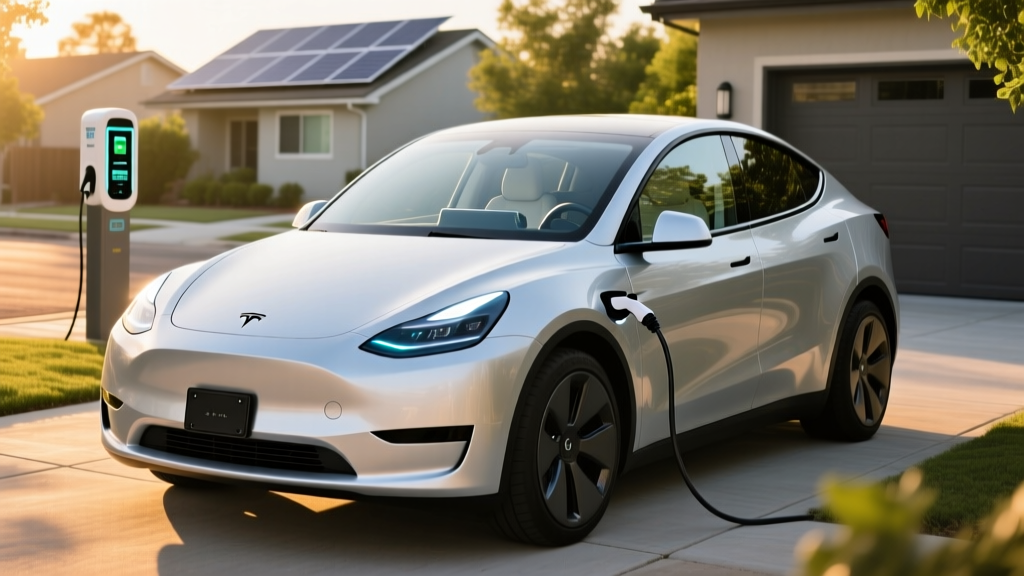
The 2026 Tesla Model Y enters its second year after the major Juniper redesign with updated styling, a quieter cabin, ventilated front seats, and a rear touchscreen. It remains the best-selling EV in the United States for good reason: strong efficiency, access to the Supercharger network, and competitive pricing. But a recurring Tesla NHTSA investigation into Autopilot-related incidents and updated steering-system scrutiny means buyers should go in with eyes wide open about what this vehicle does well — and where its limitations lie.
This review covers the 2026 Model Y Long Range AWD and Performance trims with exact range, charging, pricing, and ownership data you need before signing a purchase agreement.
Range, Efficiency, and Real-World Expectations
Long Range AWD: EPA-estimated 320 miles. Real-world highway driving at 70-75 mph yields approximately 270-290 miles. In freezing temperatures (below 32°F), expect 230-260 miles without preconditioning.
Performance: EPA-estimated 293 miles. Real-world highway: ~250-270 miles.
The 2026 Model Y Long Range AWD carries a 75 kWh usable battery (approximately 79 kWh gross) using NMC (nickel manganese cobalt) chemistry. Tesla's heat pump, standard across all trims, recovers waste heat from the drivetrain to warm the cabin and battery, reducing cold-weather range loss compared to older EVs without thermal management.
Efficiency on the Long Range AWD is rated at 122 MPGe combined (city 127 / highway 117) according to fueleconomy.gov, translating to roughly 28 kWh per 100 miles. That's among the most efficient all-wheel-drive electric SUVs in its class, trailing only the Hyundai Ioniq 5 RWD in raw efficiency numbers.
One note: the base RWD trim (if available in your market) uses an LFP (lithium iron phosphate) battery with lower energy density but a longer cycle life and the ability to charge to 100% daily without degradation concerns. Tesla recommends charging NMC packs to 80% for daily use.
Charging Speed: DC Fast, Level 2, and Level 1
| Charging Level | Power (kW) | Speed | Notes |
|---|---|---|---|
| DC Fast Charge (V4 Supercharger) | Up to 250 kW peak | 10-80% in ~25 minutes | Sustained rate tapers above 60%; peak only at low SoC with preconditioning |
| DC Fast Charge (V3 Supercharger) | Up to 250 kW peak | 10-80% in ~27 minutes | Most common Supercharger type |
| Level 2 (Tesla Wall Connector, 48A) | 11.5 kW | ~44 miles per hour | Requires 60A circuit; 0-100% in ~7.5 hours |
| Level 2 (32A mobile connector) | 7.7 kW | ~30 miles per hour | Works on 40A circuit (dryer outlet adapter available) |
| Level 1 (120V household) | ~1.4 kW | ~3-4 miles per hour | Emergency/trickle only; full charge takes 50+ hours |
Tesla's NACS connector is native, meaning no adapter is needed at any of the 6,500+ Supercharger stalls across North America. For non-Tesla CCS chargers (Electrify America, EVgo), Tesla includes a CCS adapter in the glovebox or sells one for $175.
Charge curve reality: The Model Y peaks near 250 kW only when the battery is below 30% state of charge and properly preconditioned (the car does this automatically when you navigate to a Supercharger). From 50-80%, the rate drops to roughly 80-100 kW. Plan your road-trip stops to charge from 10-80% rather than topping off — the last 20% takes nearly as long as the first 60%.
Performance and Driving Dynamics
| Specification | Long Range AWD | Performance |
|---|---|---|
| Drivetrain | Dual-motor AWD | Dual-motor AWD |
| Horsepower | ~384 hp | ~456 hp |
| 0-60 mph | 4.8 seconds | 3.5 seconds |
| Top Speed | 125 mph | 155 mph |
| Curb Weight | ~4,398 lbs | ~4,416 lbs |
The Juniper update brought a retuned suspension with frequency-selective dampers that noticeably improves ride quality over the pre-2025 Model Y. Road noise is lower thanks to acoustic glass and additional insulation. The Performance trim adds a lowered sport suspension, 21-inch wheels, and larger brakes — but the trade-off is a firmer ride and roughly 27 fewer miles of EPA range.
Regenerative braking remains one-pedal-capable. Tesla removed the user-adjustable regen setting years ago; the car applies strong regen by default, which most owners adapt to within a week.
Interior, Cargo, and Technology
The 2026 Model Y's cabin is minimalist by design. The Juniper refresh added ambient lighting, ventilated front seats, a power-folding second row, and an 8-inch rear touchscreen for passengers. All vehicle controls route through the 15.4-inch center display — there are no physical buttons for climate, mirrors, or glovebox.
Cargo and passenger space:
- Rear cargo (behind second row): 30.2 cu ft
- Total cargo (second row folded): 72.1 cu ft
- Front trunk (frunk): 4.1 cu ft
- Rear legroom: 41.6 inches
- Front headroom: 40.3 inches
The Model Y offers optional third-row seating for a total of seven passengers, but the third row is best suited for small children. Adults will find it cramped, and it cuts cargo space significantly.
Standout tech: Over-the-air updates continuously add features. The infotainment system includes Netflix, YouTube, and arcade games while parked. Tesla's app provides remote climate control, location tracking, Sentry Mode camera access, and scheduled charging.
Notable drawbacks: The all-touchscreen interface frustrates some drivers, especially for windshield wiper and mirror adjustments. There is no Apple CarPlay or Android Auto — Tesla's native system is the only option. Panel gap quality, while improved, still varies from vehicle to vehicle.
Pricing, Tax Credits, and Ownership Cost
| Trim | Base MSRP | §30D Credit | Effective Price |
|---|---|---|---|
| Long Range AWD | $46,630 | Up to $7,500 (if eligible) | ~$39,130 |
| Performance | $51,630 | Up to $7,500 (if eligible) | ~$44,130 |
Federal tax credit eligibility (IRS §30D): The 2026 Model Y qualifies for up to $7,500 under current rules, but eligibility is not automatic. Per irs.gov, you must meet all of the following:
- Income caps: Modified AGI ≤ $150,000 (single), $225,000 (head of household), $300,000 (joint)
- MSRP cap: Vehicle MSRP must not exceed $80,000 (SUVs/vans — Model Y qualifies as an SUV)
- Battery sourcing: Critical minerals and battery components must meet phased percentage thresholds that tighten annually through 2030. Tesla's US-built battery packs have largely met these requirements, but verify the current year's compliance on the IRS qualified vehicle list before purchasing
- Point-of-sale transfer: You can transfer the credit to Tesla at purchase to reduce the upfront cost, rather than waiting to claim it on your tax return
Warranty coverage:
- Basic vehicle: 4 years / 50,000 miles
- Battery and drive unit: 8 years / 120,000 miles (Long Range/Performance) with a minimum 70% capacity retention threshold
5-year ownership cost estimate: Electricity at $0.14/kWh yields roughly $2,100 in fuel cost over 5 years and 75,000 miles — compared to approximately $7,500 in gasoline for a comparable AWD gas SUV at 25 MPG and $3.50/gallon. Insurance averages 15-25% higher than a comparable gas-powered SUV, varying significantly by state and driving record.
The Tesla NHTSA Investigation: What Buyers Need to Know
Multiple Tesla NHTSA investigations have been opened and updated over the past several years, primarily focused on two areas:
1. Autopilot and FSD crash investigations: NHTSA has investigated numerous incidents involving Tesla vehicles operating with Autopilot or Full Self-Driving (Supervised) engaged, particularly collisions with stationary emergency vehicles and infrastructure. These investigations examine whether Tesla's driver-monitoring system (a steering-wheel torque sensor and cabin camera) adequately ensures driver attention. As of early 2026, some investigations have closed with Tesla issuing software recalls (OTA updates), while others remain open. You can track active investigations at nhtsa.gov/investigations-defects.
2. Steering system scrutiny: Some investigations have examined reports of sudden loss of power steering assist in certain Model Y and Model 3 vehicles. Tesla addressed many of these through OTA firmware updates and service campaigns.
Tesla's Autopilot and Full Self-Driving (Supervised) are SAE Level 2 driver-assistance systems. The driver must keep hands on the wheel, eyes on the road, and remain prepared to take over at any moment. These systems can manage highway lane-keeping and adaptive cruise control effectively, but they do not handle all driving scenarios and have caused serious collisions when drivers became inattentive. Only Level 4 services like Waymo operate without a human driver — and those are geofenced robotaxis, not consumer vehicles.
For buyers, the practical takeaway is that the Model Y is a well-built, efficient EV with advanced driver-assist features that require active supervision. The NHTSA investigations have not resulted in vehicle recalls that would prevent sale, but they underscore that Tesla's marketing around "full self-driving" has outpaced regulatory reality.
Pros, Cons, and Who Should Buy the 2026 Model Y
- Class-leading efficiency (122 MPGe combined)
- Supercharger network access — most reliable public charging in the US
- Strong performance; 0-60 in 3.5s (Performance)
- Over-the-air updates add features post-purchase
- Spacious cargo area (72.1 cu ft max)
- Federal tax credit eligibility reduces effective price significantly
- All-touchscreen controls frustrate some drivers
- No Apple CarPlay or Android Auto
- FSD costs $8,000 extra and remains Level 2 (not autonomous)
- Insurance premiums run higher than segment average
- NHTSA investigations into Autopilot create reputational uncertainty
- Third-row seat is impractical for adults
Who the 2026 Model Y suits best:
- Commuters and daily drivers who can charge at home and want minimal running costs
- Tech-forward families who value OTA updates, app integration, and Supercharger road-trip capability
- Performance-oriented buyers who want sports-car acceleration in a practical SUV shape
Consider alternatives if: you need physical buttons (Hyundai Ioniq 5), maximum towing capacity (Rivian R1S), or a proven Level 3 hands-off system for specific highway corridors (Mercedes EQS with Drive Pilot in Nevada/California).
Frequently Asked Questions
What is the real-world range of the 2026 Tesla Model Y?
The Long Range AWD is EPA-rated at 320 miles. In real-world highway driving at 70-75 mph, expect 270-290 miles. In freezing weather without preconditioning, that drops to roughly 230-260 miles. City driving with regenerative braking often matches or slightly exceeds the EPA number.
How fast does the Model Y charge on DC fast chargers and at home?
On a V3 or V4 Supercharger, the Model Y peaks at 250 kW and charges from 10-80% in approximately 25 minutes with battery preconditioning. At home on a Level 2 Tesla Wall Connector (48 amps / 11.5 kW), you'll add about 44 miles of range per hour, fully charging overnight in roughly 7.5 hours.
How much does the 2026 Model Y cost after the federal tax credit?
The Long Range AWD starts at $46,630 MSRP. If you meet the IRS §30D income caps ($150K single / $300K joint), MSRP limits, and battery-sourcing requirements, the effective price drops to approximately $39,130 with the full $7,500 credit applied at point of sale. Always verify current eligibility on the IRS qualified vehicles list before purchasing.
Is the 2026 Model Y worth buying vs. the Hyundai Ioniq 5 or Ford Mustang Mach-E?
The Model Y wins on Supercharger network access, efficiency, and cargo space. The Ioniq 5 offers faster 800V charging (~18 min 10-80% on a 350 kW charger), physical buttons, and CarPlay. The Mach-E provides a more traditional driving feel and competitive range. If reliable public charging matters most, the Tesla ecosystem is hard to beat. If you prefer a conventional interior and faster peak charging, test-drive the Ioniq 5.
Does the Tesla NHTSA investigation affect my ability to buy or insure a Model Y?
No. Active NHTSA investigations have not resulted in stop-sale orders for the 2026 Model Y. Tesla has addressed many findings through over-the-air software recalls. However, the investigations may influence insurance premiums in some states and are worth monitoring at nhtsa.gov. The core takeaway is that Autopilot/FSD require active driver supervision — treat them as convenience features, not autonomous systems.
What battery warranty does Tesla provide?
The Model Y Long Range and Performance include an 8-year / 120,000-mile battery and drive unit warranty. Tesla guarantees the battery will retain at least 70% of its original capacity during the warranty period. Real-world data from high-mileage Teslas suggests NMC packs typically retain 85-90% capacity at 100,000 miles when charged to 80% daily.