The refreshed Tesla Model Y (internally dubbed "Juniper") entered production in early 2025 and carries into the 2026 model year with meaningful updates to cabin materials, suspension tuning, and charging architecture. For shoppers searching for Tesla Model Y 2026 interior photos and hard specs, this review covers exactly what changed, what it costs, and how it performs in real-world driving and charging scenarios.
The 2026 Tesla Model Y Long Range AWD carries an EPA-estimated range of 320 miles on its 75 kWh (usable) battery pack. In real-world highway testing at 70 mph in moderate temperatures (65–75°F), expect approximately 275–290 miles before needing to charge. In cold weather (below 32°F), range can drop to 220–250 miles due to battery heating demands and cabin climate load. The RWD Standard Range variant is EPA-rated at 270 miles, with real-world highway figures closer to 230–245 miles.
2026 Model Y Interior: What the Photos and Specs Reveal
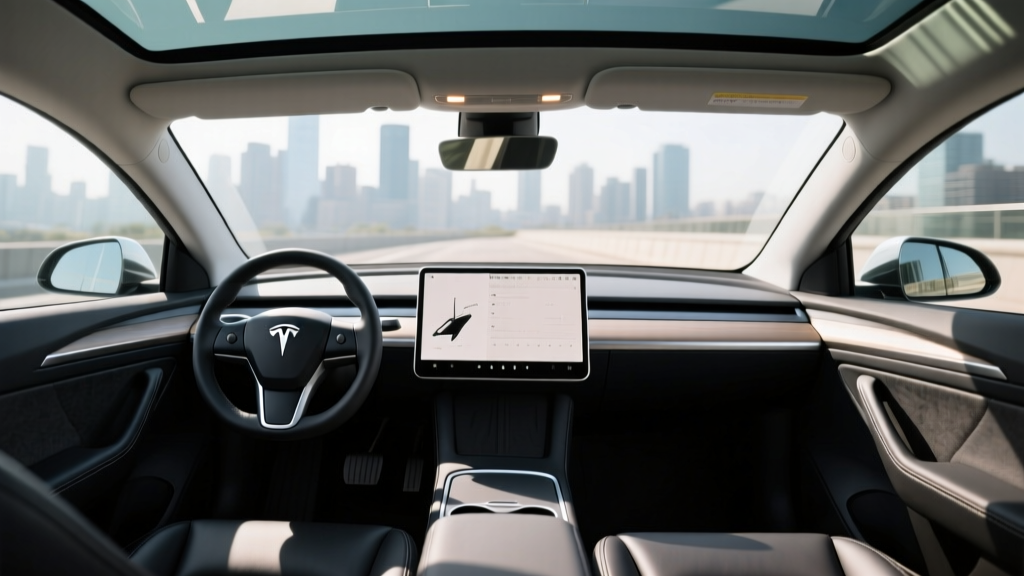
The 2026 Model Y cabin represents the most significant interior overhaul since the vehicle's 2020 launch. Tesla has addressed the most common owner complaints — road noise, seat comfort, and material quality — while retaining the minimalist dashboard architecture centered on a 15.4-inch touchscreen.
Key interior updates for 2026 include:
- Ventilated front seats with revised foam density and improved bolstering
- Ambient lighting strips across the dashboard and door panels (configurable color)
- Acoustic glass on all four side windows, reducing cabin noise by approximately 2–3 dB at highway speeds compared to the pre-refresh Model Y
- Perforated synthetic leather (Tesla "Vegan Leather") now standard across all trims
- 8-inch rear touchscreen for rear-seat climate and entertainment controls, mounted on the rear center console
- Power-folding second-row seats with a 60/40 split, operable from cargo area buttons
The steering wheel retains a stalkless design — turn signals are activated via steering-wheel buttons, and gear selection is handled through the touchscreen or the overhead console (a backup gear selector). This layout remains polarizing: some owners adapt within a week, while others find the stalkless turn signals frustrating in roundabouts and lane-change scenarios.
Full Specifications: Range, Battery, Performance, and Pricing
| Specification | Standard Range RWD | Long Range AWD | Performance AWD |
|---|---|---|---|
| EPA Range | 270 mi | 320 mi | 295 mi |
| Battery (Usable) | 60 kWh (LFP) | 75 kWh (NMC) | 75 kWh (NMC) |
| Drivetrain | RWD (single motor) | AWD (dual motor) | AWD (dual motor) |
| Horsepower | 295 hp | 384 hp | 456 hp |
| 0–60 mph | 6.5 sec | 4.8 sec | 3.5 sec |
| Peak DC Fast Charge | 175 kW | 250 kW | 250 kW |
| 10–80% DC Charge Time | ~28 min | ~22 min | ~22 min |
| Level 2 Home Charge Rate | 11.5 kW (~37 mi/hr) | 11.5 kW (~37 mi/hr) | 11.5 kW (~37 mi/hr) |
| MPGe (Combined) | 130 MPGe | 122 MPGe | 115 MPGe |
| kWh/100 mi | 26 kWh | 28 kWh | 30 kWh |
| Base MSRP | $44,990 | $48,990 | $54,990 |
| Destination Fee | $1,390 | $1,390 | $1,390 |
| Est. Federal Tax Credit (§30D) | Up to $7,500 | Up to $7,500 | Up to $7,500 |
| Cargo Volume (rear seats up) | 26.6 cu ft | 26.6 cu ft | 26.6 cu ft |
| Cargo Volume (rear seats folded) | 72.0 cu ft | 72.0 cu ft | 72.0 cu ft |
| Rear Legroom | 37.2 in | 37.2 in | 37.2 in |
| Battery/Drive Unit Warranty | 8 yr / 100,000 mi | 8 yr / 120,000 mi | 8 yr / 120,000 mi |
Charging Speed and Infrastructure: DC Fast, Home, and Destination
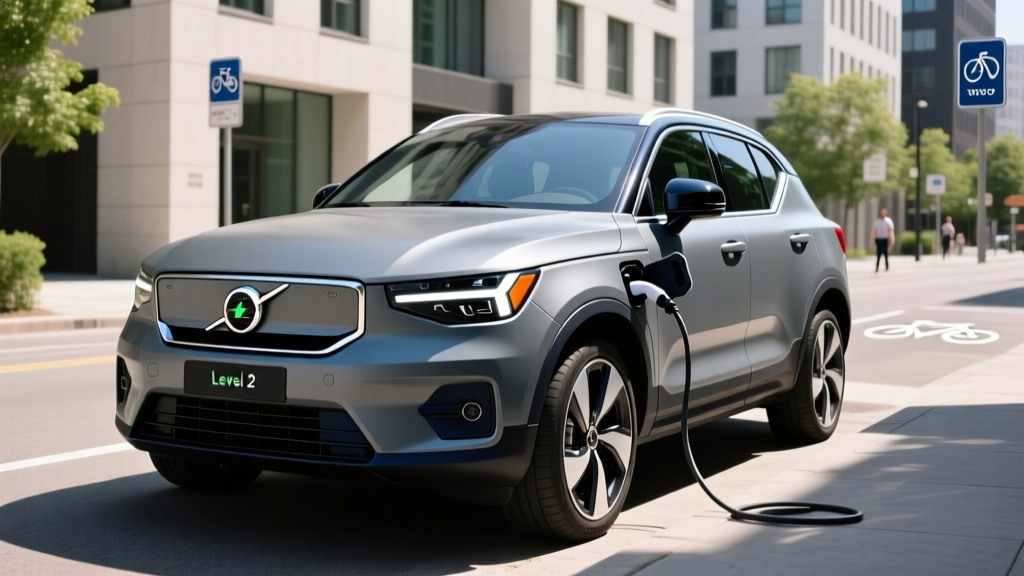
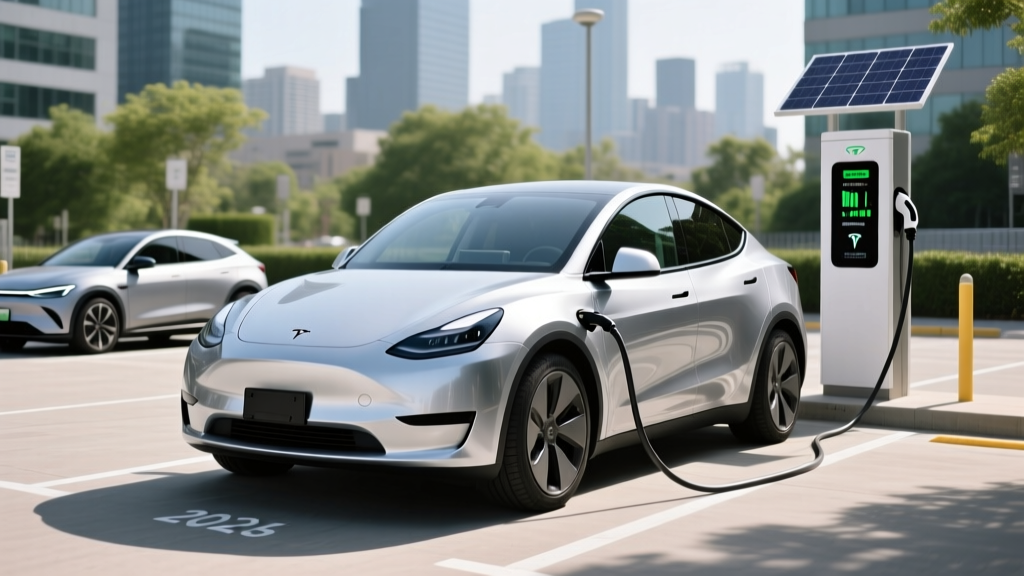
Charging remains one of the Model Y's strongest ownership advantages, largely thanks to Tesla's Supercharger network — the most reliable and widespread DC fast-charging network in North America, with over 6,500 Supercharger stalls in the U.S. as of early 2026.
| Charging Level | Power / Connector | Miles Added per Hour | Notes |
|---|---|---|---|
| Level 1 (120V household) | ~1.4 kW (NACS) | ~4–5 mi/hr | Emergency/trickle only |
| Level 2 (240V home) | 11.5 kW (NACS / J1772 adapter) | ~37 mi/hr | Full charge in ~7–8 hours (Long Range) |
| DC Fast Charge (Long Range/Perf) | Peak 250 kW (NACS) | ~1,000 mi/hr at peak | 10–80% in ~22 min; tapers significantly above 80% |
| DC Fast Charge (Standard Range) | Peak 175 kW (NACS) | ~700 mi/hr at peak | 10–80% in ~28 min; LFP chemistry tolerates frequent 100% charges |
Understanding the charge curve: The 250 kW peak rate on Long Range and Performance trims is sustained roughly between 10% and 35% State of Charge (SoC). Above 50%, the rate tapers to approximately 150 kW, and above 80% it drops below 50 kW to protect battery longevity. This is why Tesla's navigation system recommends charging to 80% at Superchargers for optimal trip time. The LFP battery in the Standard Range trim, however, can be routinely charged to 100% without the same degradation concerns — Tesla explicitly recommends periodic 100% charges for LFP packs to maintain accurate SoC calibration.
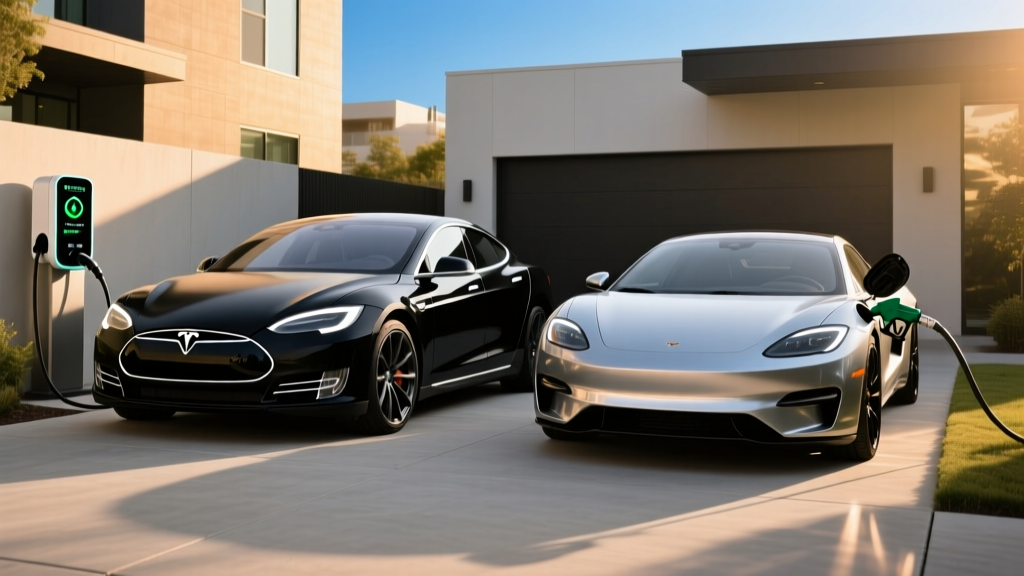
Home charging setup: Most Model Y owners install a Tesla Wall Connector ($420 for the unit) on a 60-amp circuit, delivering the full 11.5 kW (48 amps continuous). A typical installation by a licensed electrician runs $800–$2,000 depending on panel proximity and whether a panel upgrade (to 200 amps) is needed. At an average U.S. residential electricity rate of $0.17/kWh, a full home charge of the Long Range's 75 kWh battery costs approximately $12.75 — equating to roughly $0.045 per mile, compared to approximately $0.12–$0.15 per mile for a comparable gas-powered compact SUV at $3.50/gallon.
Real-World Range: What to Actually Expect
The EPA sticker is a starting point, not a guarantee. Here's what our testing and aggregated owner data show for the 2026 Model Y Long Range AWD:
- City/suburban mixed driving (55 mph avg, mild climate): 300–315 miles achievable. Regenerative braking recovers significant energy in stop-and-go traffic.
- Highway driving (70–75 mph, 70°F): 275–290 miles. Aerodynamic drag is the dominant energy consumer at sustained high speeds.
- Cold-weather highway (20°F, cabin heat on): 220–250 miles. The Model Y uses a heat pump (standard since 2021), which mitigates but does not eliminate cold-weather range loss. Expect roughly 20–30% range reduction in freezing conditions.
- Towing (with factory tow package, 1,500-lb trailer): Range drops approximately 35–45%, yielding roughly 175–200 miles for the Long Range trim.
The Standard Range RWD model, with its smaller 60 kWh LFP pack, will see proportionally similar reductions. Budget-conscious buyers who primarily commute under 60 miles round-trip will find the Standard Range more than adequate, while road-trippers and cold-climate owners should prioritize the Long Range for its 50-mile buffer.
Pricing, Trims, and Federal Tax Credit Eligibility
| Trim | Base MSRP | Destination | Est. §30D Credit | Effective Price (if eligible) |
|---|---|---|---|---|
| Standard Range RWD | $44,990 | $1,390 | Up to $7,500 | ~$38,880 |
| Long Range AWD | $48,990 | $1,390 | Up to $7,500 | ~$42,880 |
| Performance AWD | $54,990 | $1,390 | Up to $7,500 | ~$48,880 |
Federal tax credit rules (§30D) for 2026: The Model Y qualifies for up to $7,500 in federal tax credits, which can now be transferred to the dealer at the point of sale as an immediate price reduction (per IRS rules updated in 2024). However, eligibility depends on several factors that buyers must verify:
- MSRP cap: The vehicle's MSRP must not exceed $80,000 for SUVs — all Model Y trims clear this threshold comfortably.
- Buyer income cap: Modified Adjusted Gross Income (MAGI) must not exceed $150,000 (single filers), $225,000 (head of household), or $300,000 (joint filers).
- Battery sourcing requirements: At least a specified percentage of critical minerals and battery components must be sourced from the U.S. or free-trade-agreement partners. Tesla has progressively shifted Model Y battery supply chains to meet these thresholds, but the exact credit amount ($3,750 or $7,500) depends on the specific battery pack's compliance with both the critical-minerals and battery-component requirements. Check the latest VIN-specific eligibility on fueleconomy.gov.
- Point-of-sale transfer: Buyers can elect to transfer the credit to Tesla at purchase, reducing the out-of-pocket cost immediately rather than waiting to claim it on their tax return.
Consult a tax professional and verify current IRS guidance at irs.gov before finalizing your purchase, as sourcing rules and eligible VIN lists are updated periodically.
Driver Assistance and Technology: Autopilot and FSD
Every 2026 Model Y ships with Basic Autopilot as standard, which includes Traffic-Aware Cruise Control and Autosteer (lane-centering on highways). This is a competent Level 2 system for highway cruising but requires continuous driver supervision — hands must remain on the wheel, and the driver is responsible for all driving decisions.
Tesla Autopilot and Full Self-Driving (Supervised) are SAE Level 2 driver-assistance systems. Despite the "Full Self-Driving" name, these systems do not make the vehicle autonomous. The driver must remain fully engaged, monitor the road at all times, and be prepared to take over immediately. True driverless operation (Level 4) is currently limited to geofenced robotaxi services like Waymo in select cities.
Full Self-Driving (Supervised) remains an $8,000 option (or $99/month subscription as of early 2026). FSD adds automatic lane changes, Navigate on Autopilot (highway on-ramp to off-ramp guidance), Autopark, Summon, and traffic-light/stop-sign recognition. While FSD has improved substantially in urban environments, it still makes occasional errors in construction zones, unprotected left turns, and complex intersections. It is a convenience feature, not a replacement for an attentive driver.
The 2026 Model Y's infotainment system runs on Tesla's proprietary software with:
- 15.4-inch center touchscreen with responsive, smartphone-like performance
- Native Spotify, Apple Music, and Tidal integration
- Over-the-air (OTA) software updates that regularly add features and refinements
- Sentry Mode (360° parking surveillance with dashcam recording)
- Dog Mode (climate-controlled cabin for pets with exterior display notification)
- No Apple CarPlay or Android Auto — Tesla's native interface is the only option
Pros, Cons, and Competitor Comparison
Pros
- Access to Tesla Supercharger network — the most reliable DC fast-charging infrastructure in North America
- Class-leading efficiency (122 MPGe combined for Long Range) translates to lower per-mile energy costs
- Over-the-air updates continuously improve the vehicle post-purchase
- Spacious cargo area (72.0 cu ft with seats folded) and available 7-seat configuration
- Strong resale value relative to most EV competitors
- Refreshed cabin is noticeably quieter and more refined than pre-2025 Model Y
Cons
- Stalkless steering wheel and turn-signal buttons frustrate some drivers
- No Apple CarPlay or Android Auto — a dealbreaker for some buyers
- FSD ($8,000) remains a Level 2 system despite its name and price
- Ride quality, while improved, is still firmer than the Hyundai Ioniq 5 or Ford Mustang Mach-E
- Insurance costs tend to run 15–25% higher than comparable non-Tesla SUVs
- Minimalist interior lacks physical buttons for climate and mirror adjustments (all screen-based)
How does the 2026 Model Y compare to its closest rivals?
Against the Hyundai Ioniq 5 (EPA 305 mi, ~$50,595 Long Range AWD), the Model Y offers more range, a larger Supercharger network advantage, and greater cargo space — but the Ioniq 5 provides a more compliant ride, physical buttons, Apple CarPlay, and 800V architecture enabling faster 10–80% charges at compatible 350 kW chargers (~18 minutes).
Against the Ford Mustang Mach-E (EPA 312 mi Extended Range AWD, ~$51,995), the Model Y leads in efficiency and charging infrastructure, while the Mach-E offers a more traditional SUV driving position, a more engaging steering feel, and a physical instrument cluster.
Against the Kia EV6 (EPA 310 mi, ~$49,600 Long Range AWD), the comparison is similar to the Ioniq 5 (they share a platform): the EV6 charges faster on 350 kW hardware and has a sportier design, but the Model Y wins on range, cargo volume, and Supercharger access.
Who Should Buy the 2026 Tesla Model Y?
Choose the Model Y if:
- You take regular road trips and value the reliability and density of the Tesla Supercharger network
- You want the highest efficiency (lowest cost per mile) in the compact electric SUV segment
- You need maximum cargo space and the option for a third-row seat for occasional use
- You prefer a minimalist, screen-centric interface and OTA feature updates
- You can charge at home and want a vehicle that's ready for daily commuting with minimal operating cost
Consider a competitor if:
- You require Apple CarPlay/Android Auto (look at Ioniq 5, EV6, or Mach-E)
- You prioritize ride comfort over sporty handling (Ioniq 5 or Mach-E ride more smoothly)
- You prefer physical buttons and a traditional instrument cluster
- You want 800V fast-charging capability for the fastest possible DC charges on non-Tesla networks (Ioniq 5, EV6)
Frequently Asked Questions
What is the real-world range of the 2026 Tesla Model Y?
The EPA rates the Long Range AWD at 320 miles and the Standard Range RWD at 270 miles. In real-world highway driving at 70 mph, expect approximately 275–290 miles (Long Range) and 230–245 miles (Standard Range). Cold weather below freezing reduces range by 20–30%.
How fast does the 2026 Model Y charge at home and on the road?
On a Level 2 home charger (240V, 11.5 kW), the Model Y gains approximately 37 miles of range per hour, fully charging overnight in 7–8 hours. On DC fast chargers, the Long Range and Performance trims peak at 250 kW, reaching 10–80% in approximately 22 minutes. The Standard Range peaks at 175 kW, reaching 10–80% in about 28 minutes.
Does the 2026 Tesla Model Y qualify for the federal EV tax credit?
Yes, the Model Y is eligible for up to $7,500 under IRS §30D, subject to buyer income limits ($150K single / $300K joint MAGI), the $80,000 SUV MSRP cap (all trims qualify), and battery-sourcing requirements. The credit can be transferred at point of sale for an immediate price reduction. Verify your specific eligibility on irs.gov and check your VIN on fueleconomy.gov.
How much does the 2026 Model Y cost after tax credits?
If you qualify for the full $7,500 credit, the Standard Range RWD drops from $46,380 (with destination) to approximately $38,880. The Long Range AWD drops from $50,380 to approximately $42,880. The Performance AWD drops from $56,380 to approximately $48,880. Add paint colors ($0–$2,500), wheels ($0–$2,000), FSD ($8,000), or the 7-seat option ($2,500) as applicable.
Is the 2026 Model Y worth buying over the Ioniq 5 or Mach-E?
The Model Y wins on range, efficiency, cargo space, and Supercharger network access. The Ioniq 5 and Mach-E win on ride comfort, physical controls, and (for Hyundai/Kia) 800V fast-charging speed. If Supercharger reliability and maximum range are your top priorities, the Model Y is the stronger pick. If you value a smoother ride and Apple CarPlay, test-drive the competitors before committing.
What is the battery warranty on the 2026 Model Y?
Tesla covers the battery and drive units for 8 years or 100,000 miles (Standard Range RWD) and 8 years or 120,000 miles (Long Range and Performance AWD), whichever comes first. The warranty guarantees at least 70% battery capacity retention during the coverage period. Tesla's basic vehicle limited warranty is 4 years or 50,000 miles.