Quick Verdict: The Benchmark Electric SUV Gets a Major Refresh
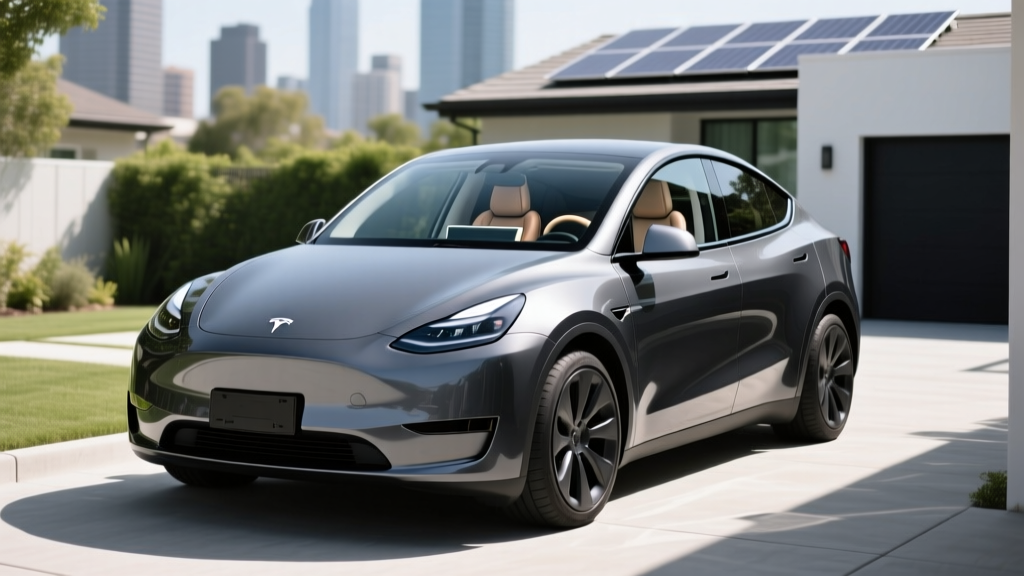
The Tesla Model Y remains the world's best-selling electric vehicle for good reason. For 2026, the refreshed "Juniper" Model Y brings a redesigned interior, improved ride quality, and updated styling while retaining the core strengths that made it a segment leader: class-leading efficiency, access to the Supercharger network, and practical crossover packaging. But with rivals like the Hyundai Ioniq 5, Ford Mustang Mach-E, and Chevrolet Equinox EV closing the gap, the question isn't whether the Model Y is good — it's whether it's still the best choice for your money.
This review takes you deep inside the 2026 Tesla Model Y, covering real-world range, charging speeds, interior quality, cargo space, pricing, and whether it qualifies for the federal EV tax credit under current IRS §30D rules.
Range, Battery, and Efficiency: What the EPA Says vs. Reality
The 2026 Tesla Model Y Long Range AWD carries an EPA-estimated range of 320 miles on a full charge. The Rear-Wheel Drive (Standard Range) variant is rated at approximately 280 miles. Both models use a ~75 kWh usable battery pack with NMC (nickel manganese cobalt) chemistry on Long Range trims, while the Standard Range variant has historically used LFP (lithium iron phosphate) cells, which trade energy density for longevity and the ability to charge routinely to 100% without degradation concerns.
EPA Estimate: 320 miles (Long Range AWD) / 280 miles (RWD)
Highway driving (70-80 mph): Expect ~260-280 miles in moderate temperatures. The Model Y's crossover profile creates more aerodynamic drag than the Model 3 sedan, reducing highway efficiency.
Cold weather (below 30°F): Range can drop 20-30%, yielding roughly 220-250 miles on the Long Range model. Tesla's heat pump helps mitigate cabin heating losses, but battery chemistry still suffers in freezing conditions.
City/commuter driving: You'll meet or slightly exceed the EPA estimate thanks to aggressive regenerative braking and lower average speeds.
Efficiency is where Tesla still leads the industry. The Long Range AWD achieves an EPA-rated 111 MPGe combined, translating to roughly 28 kWh per 100 miles — among the most efficient vehicles in its class. That efficiency directly reduces your charging costs and makes every kWh of battery go further than competitors.
| Spec | Long Range AWD | Rear-Wheel Drive | Performance |
|---|---|---|---|
| EPA Range | 320 miles | 280 miles | 295 miles |
| Battery (usable) | ~75 kWh (NMC) | ~60 kWh (LFP) | ~75 kWh (NMC) |
| Efficiency | 111 MPGe / 28 kWh/100mi | 115 MPGe / 27 kWh/100mi | 105 MPGe / 30 kWh/100mi |
| 0-60 mph | 4.8 sec | 5.8 sec | 3.5 sec |
| Horsepower | 384 hp | 295 hp | 456 hp |
| Drivetrain | Dual-Motor AWD | Single-Motor RWD | Dual-Motor AWD |
| Top Speed | 125 mph | 135 mph | 155 mph |
Charging Speed: DC Fast Charging and Home Level 2
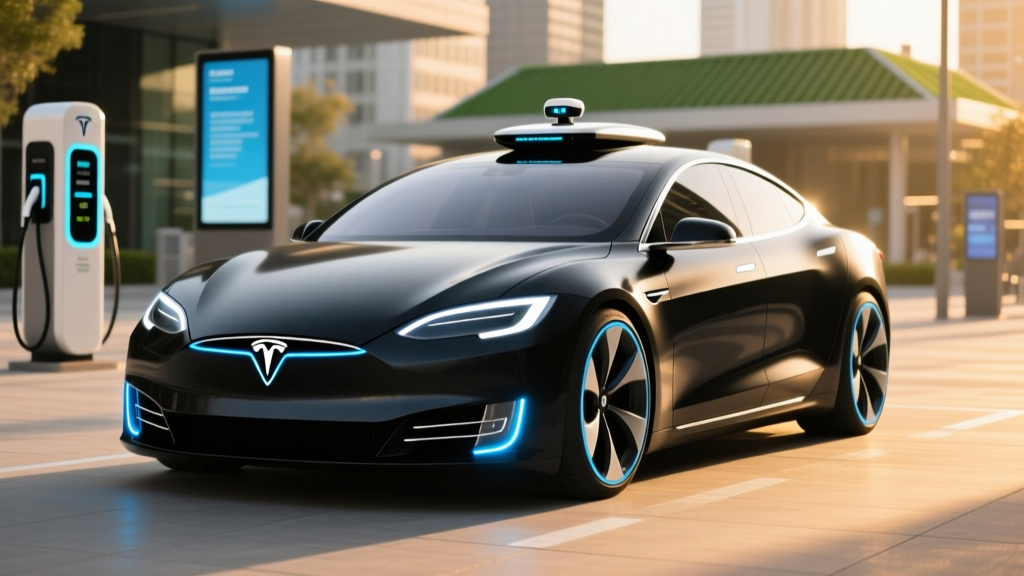
Charging speed is a top concern for EV buyers, and the 2026 Model Y delivers competitive — though not class-leading — numbers. On a DC fast charger, the Long Range AWD can peak at approximately 250 kW, enabling a 10-80% charge in roughly 25 minutes at a V3 or V4 Tesla Supercharger. Note that peak rate is not sustained: the charge curve tapers significantly above 60% State of Charge, so the last 20% takes considerably longer.
| Charging Level | Max Power | Rate / Time | Notes |
|---|---|---|---|
| Level 1 (120V household) | ~1.4 kW | ~3-4 miles per hour | Emergency/trickle only |
| Level 2 (240V home) | 11.5 kW | ~44 miles per hour | Full charge overnight (~8 hrs) |
| DC Fast Charge | 250 kW peak | 10-80% in ~25 min | Tapers above 60% SoC |
At home on a Level 2 wall connector (48-amp circuit, 60-amp breaker), the Model Y accepts up to 11.5 kW, adding roughly 44 miles of range per hour of charging. A full overnight session easily replenishes a depleted battery. Tesla's Wall Connector costs around $425, with professional installation typically running $500-$1,500 depending on your electrical panel's capacity and the distance from panel to charger location.
Important charging context: The 2026 Model Y uses the NACS (North American Charging Standard) connector natively — the same plug used across the entire Supercharger network. With Ford, GM, Rivian, and others now adopting NACS, Supercharger congestion may increase at popular corridors over time. However, Tesla's network remains the most reliable DC fast-charging infrastructure in the U.S., with over 25,000 Supercharger stalls nationwide. According to fueleconomy.gov, the Model Y's efficiency gives it an edge in cost-per-mile over less efficient competitors even at identical electricity rates.
Inside the 2026 Model Y: Interior, Cargo, and Tech
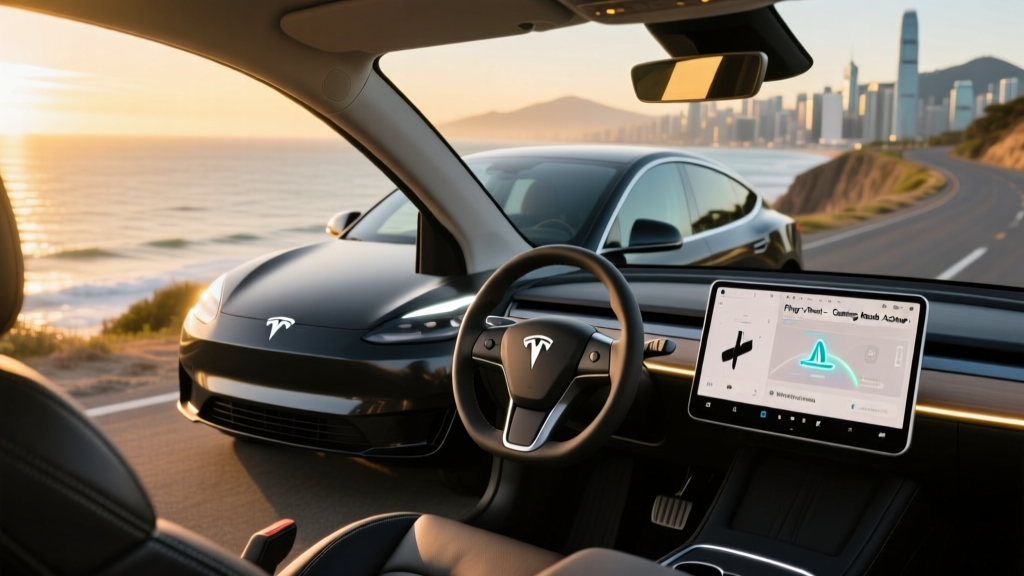
The "Juniper" refresh transforms the Model Y's interior from spartan to genuinely premium. Ambient lighting strips, ventilated front seats, a rear-seat touchscreen, and improved sound deadening address the most common criticisms of the pre-refresh cabin. Materials quality has moved upmarket with soft-touch surfaces and tighter panel gaps, though some hard plastics remain on lower door panels and the center console base.
The 15.4-inch center touchscreen remains the command center for nearly all vehicle functions — climate, navigation, media, and vehicle settings. There is still no traditional instrument cluster; speed and navigation info appear in the upper-left corner of the main display. The rear passengers now get their own 8-inch screen for climate control and entertainment, a welcome addition for family duty.
Cargo and passenger dimensions:
- Cargo volume (rear seats up): 30.2 cu ft
- Cargo volume (rear seats folded): 72.1 cu ft
- Front trunk (frunk): 4.1 cu ft
- Front legroom: 41.8 inches
- Rear legroom: 38.4 inches (improved slightly with Juniper seat redesign)
- Seating: 5-passenger standard; optional 7-seat third row available (best suited for small children)
The optional third row is a differentiator vs. rivals like the Ioniq 5 and Mach-E, but the 26.5 inches of third-row legroom makes it practical only for children on short trips. If you regularly need three rows, the Kia EV9 or Rivian R1S are substantially more capable choices.
Tech highlights:
- Tesla Autopilot (standard): Adaptive cruise control, lane-keeping, automatic emergency braking
- Full Self-Driving (Supervised) — $8,000 add-on or $99/month: Adds automatic lane changes, traffic light/stop sign recognition, and Navigate on Autopilot. This is an SAE Level 2 system requiring constant driver supervision, not autonomous driving.
- Over-the-air updates continuously add features and refinements
- Sentry Mode dashcam recording, Dog Mode climate, and Tesla app integration
Tesla Autopilot and FSD (Supervised) are SAE Level 2 driver-assistance systems. The driver must remain fully engaged, hands on or near the wheel, and eyes on the road at all times. These systems do not make the Model Y self-driving. Performance degrades in construction zones, heavy rain, faded lane markings, and unmapped areas. NHTSA continues to investigate Autopilot-related incidents — use these features as aids, not replacements for attentive driving.
Pricing, Trims, and Federal Tax Credit Eligibility
The 2026 Model Y lineup starts at $44,990 for the Rear-Wheel Drive trim, $48,990 for the Long Range AWD, and $53,990 for the Performance variant (all prices include destination). Adding FSD (Supervised), premium colors, 20-inch wheels, or the third-row seat can push an as-tested Long Range model to $58,000-$62,000.
| Trim | Base MSRP | Federal Credit (§30D) | Effective Price |
|---|---|---|---|
| Rear-Wheel Drive | $44,990 | Up to $7,500* | ~$37,490* |
| Long Range AWD | $48,990 | Up to $7,500* | ~$41,490* |
| Performance | $53,990 | Up to $7,500* | ~$46,490* |
*Critical tax credit caveats: The IRS §30D Clean Vehicle Credit provides up to $7,500, but eligibility depends on multiple requirements that change periodically. As of 2026, key rules include:
- MSRP cap: SUVs must be priced at or below $80,000 (all Model Y trims qualify)
- Buyer income cap: AGI must not exceed $150,000 (single), $225,000 (head of household), or $300,000 (joint filers)
- Battery sourcing: The credit splits into two halves ($3,750 each) tied to critical-mineral sourcing and battery-component manufacturing requirements. Vehicles that meet only one requirement receive $3,750; both yields the full $7,500. Sourcing rules tighten annually — verify current eligibility on irs.gov before purchasing.
- Point-of-sale transfer: You can transfer the credit to the dealer at purchase, reducing your upfront cost rather than waiting for a tax refund.
Always consult a tax professional and check the latest IRS guidance, as battery-sourcing requirements have shifted multiple times since the Inflation Reduction Act took effect.
Warranty, Ownership Costs, and Long-Term Value
Tesla covers the Model Y with the following warranty:
- Basic vehicle: 4 years / 50,000 miles
- Battery and drive unit: 8 years / 120,000 miles (Long Range/Performance) with a guaranteed minimum 70% capacity retention
- Battery (RWD/LFP): 8 years / 100,000 miles, 70% retention threshold
The 70% retention threshold means Tesla will replace or repair the battery if it degrades below 70% of original capacity within the warranty period. Industry data from Recurrent Auto and Tesla's own fleet data suggest average degradation of approximately 10-15% over 100,000 miles for NMC packs, with LFP packs showing even slower fade thanks to their inherently stable chemistry.
Insurance costs remain a Model Y pain point. Average annual premiums run $2,200-$3,000 depending on state, driving record, and coverage level — roughly 25-40% higher than comparable gas-powered crossovers. Tesla has expanded its own insurance program to more states, which can sometimes undercut traditional carriers, but availability varies. Factor insurance into your total cost of ownership before committing.
Maintenance costs are minimal: no oil changes, no transmission fluid, and brake pads last far longer thanks to regenerative braking. Cabin air filter replacement (~$50-100 every 2 years) and tire rotation are the primary recurring expenses. Expect tire costs to be higher than average — the Model Y's weight and instant torque wear tires faster than lighter vehicles.
How the Model Y Compares: Ioniq 5, Mach-E, and Equinox EV
The Model Y no longer competes in a vacuum. Here's how it stacks up against three key rivals:
- Hyundai Ioniq 5: Offers 800V architecture for faster DC charging (10-80% in ~18 min at 350 kW chargers), a more distinctive design, and similar pricing. However, it trails the Model Y in range (305 mi max) and cargo volume, and lacks access to the Supercharger network without a NACS adapter (now standard on 2026 models).
- Ford Mustang Mach-E: Competitive range (312 mi Extended Range), engaging driving dynamics, and a more traditional interior layout with physical controls. The Mach-E's charging speed (peak ~150 kW on most trims) lags significantly behind the Model Y.
- Chevrolet Equinox EV: Undercuts the Model Y on price (starting ~$33,000) and offers 319 miles of range on the top trim. It's a strong value play but can't match Tesla's performance, tech ecosystem, or Supercharger convenience.
- You prioritize Supercharger access for frequent road trips
- You want the most efficient kWh-per-mile in the crossover segment
- You value over-the-air updates and a robust app/tech ecosystem
- You need optional third-row seating for occasional use
- You want the fastest possible DC charging (Ioniq 5's 800V system)
- You prefer physical buttons and a traditional instrument cluster (Mach-E)
- Budget is the primary concern and you can accept slower charging (Equinox EV)
- You want a more distinctive exterior design (Ioniq 5, Mach-E)
Pros, Cons, and Who Should Buy the 2026 Model Y
- Class-leading efficiency (111+ MPGe) reduces charging costs
- Supercharger network remains the most reliable fast-charging ecosystem
- Spacious cargo area (72.1 cu ft) with practical frunk
- Juniper refresh significantly improves interior quality and ride comfort
- Strong performance across all trims (3.5-5.8 sec 0-60)
- Continuous over-the-air updates add features post-purchase
- Federal tax credit eligibility reduces effective price significantly
- High insurance premiums ($2,200-$3,000+ annually)
- No physical controls — all functions routed through touchscreen
- DC charging speed (250 kW peak) trails 800V competitors
- Third-row seat is cramped and only suitable for children
- FSD (Supervised) is expensive ($8,000) and still requires full driver attention
- Tesla service center availability can be limited in rural areas
- Panel gap consistency, while improved, still trails legacy automakers
Who the 2026 Model Y suits best:
- Daily commuters: Excellent efficiency and home-charging convenience make it ideal for 30-80 mile daily drives.
- Families: Generous cargo space, optional third row, strong safety ratings from NHTSA, and the rear entertainment screen make it a strong family hauler.
- Road trippers: The Supercharger network and 320-mile range enable confident long-distance travel with minimal planning.
- Tech enthusiasts: Tesla's software ecosystem, OTA updates, and Autopilot/FSD features appeal to buyers who want a connected, evolving vehicle.
Who should look elsewhere: Buyers in areas with limited Tesla service infrastructure, those who prefer physical controls, or anyone who needs genuine three-row seating for adults should consider alternatives.
Frequently Asked Questions
What is the real-world range of the 2026 Tesla Model Y?
The EPA rates the Long Range AWD at 320 miles. In real-world highway driving at 70-80 mph, expect 260-280 miles in moderate weather. In freezing temperatures, range can drop to 220-250 miles. City commuters will typically meet or slightly exceed the EPA estimate thanks to regenerative braking.
How fast does the Model Y charge at home and on the road?
On a home Level 2 charger (11.5 kW), the Model Y adds about 44 miles of range per hour, fully charging overnight in roughly 8 hours. On a DC fast charger, it peaks at 250 kW and charges from 10-80% in approximately 25 minutes, though the charge rate tapers significantly above 60% State of Charge.
Does the 2026 Tesla Model Y qualify for the $7,500 federal tax credit?
All Model Y trims fall under the $80,000 SUV MSRP cap, making them potentially eligible. However, the full $7,500 credit depends on meeting both critical-mineral sourcing and battery-component manufacturing requirements under IRS §30D, as well as buyer income limits ($300,000 joint / $150,000 single). The credit can be transferred to the dealer at point of sale. Always verify current eligibility at irs.gov before purchasing.
Is the Model Y worth buying over the Hyundai Ioniq 5 or Ford Mach-E?
The Model Y wins on efficiency, Supercharger access, and cargo space. The Ioniq 5 charges faster on 350 kW stations (18 min vs. 25 min for 10-80%) and offers a bolder design. The Mach-E provides a more traditional driving experience with physical controls. Your priority — charging speed, network access, or interior layout — should guide the decision.
How long will the Model Y battery last?
Tesla warranties the battery for 8 years / 100,000-120,000 miles (depending on trim) with a 70% minimum capacity retention guarantee. Real-world fleet data suggests NMC packs degrade roughly 10-15% over 100,000 miles, meaning most owners will retain 85%+ capacity well beyond the warranty period. LFP packs in the Standard Range model show even slower degradation and can be routinely charged to 100%.
Is Tesla Autopilot or FSD actually self-driving?
No. Both Autopilot and Full Self-Driving (Supervised) are SAE Level 2 driver-assistance systems. The driver must remain fully engaged and ready to take over at any moment. These systems assist with steering, acceleration, and braking on highways but cannot handle all driving scenarios autonomously.