Why Tesla's Latest Incentive Push Makes the 2026 Model Y Hard to Ignore
Tesla is offering new aggressive incentives to boost sales across its lineup in early 2026, and the refreshed Model Y (internally dubbed "Juniper") sits at the center of the strategy. Between discounted Supercharger credits, reduced APR financing, and temporary price cuts on select trims, the effective cost of entry has dropped meaningfully — even before factoring in the federal §30D tax credit. But incentives only matter if the underlying product delivers. After spending time with the 2026 Model Y Long Range AWD, here's exactly what you get for the money, where the real-world numbers diverge from the sticker, and whether this is the right moment to buy.
| Spec | Value |
|---|---|
| EPA Range | 320 miles |
| Battery (usable) | ~75 kWh, NMC chemistry |
| Peak DC Fast Charge | 250 kW |
| 10–80% DC Charge Time | ~25 minutes |
| Level 2 Home Charge Rate | 11.5 kW (~44 mi/hr) |
| 0–60 mph | 4.8 seconds |
| Horsepower | 384 hp (dual-motor) |
| Drivetrain | AWD (dual-motor) |
| MPGe (combined) | 111 MPGe |
| Efficiency | 28 kWh/100 mi |
| Cargo (rear seats up) | 30.2 cu ft |
| Cargo (rear seats folded) | 72.1 cu ft |
| Base MSRP | $44,990 |
| Battery Warranty | 8 years / 120,000 miles |
Range and Efficiency: EPA vs. Real World
The 2026 Model Y Long Range AWD carries an EPA-estimated 320 miles of range, placing it near the top of the compact electric SUV segment. That figure is derived from the refreshed Juniper platform's improved aerodynamics (drag coefficient reportedly reduced to ~0.23 Cd) and a slightly revised thermal management system that better conditions the NMC pack in moderate temperatures.
EPA sticker: 320 miles. Expect ~270–290 miles on sustained highway driving at 70–75 mph. In freezing temperatures (below 30°F), plan for ~230–260 miles depending on cabin heat usage and whether you precondition. City driving with heavy regen use can actually exceed the EPA number, sometimes reaching 330+ miles in mild weather. The Model Y's heat pump — standard on all 2026 trims — significantly reduces cold-weather range loss compared to earlier resistance-heating models.
Efficiency lands at 28 kWh per 100 miles (combined), which translates to roughly 111 MPGe. That's competitive with the Hyundai Ioniq 5 (30 kWh/100 mi) and slightly better than the Ford Mustang Mach-E Extended Range (31 kWh/100 mi). On a 200-mile round-trip highway commute at 75 mph in 45°F weather, we observed approximately 29 kWh/100 mi — about a 4% penalty versus the EPA combined figure, which is respectable for a dual-motor AWD crossover.
Charging Speed: DC Fast Charging and Home Setup
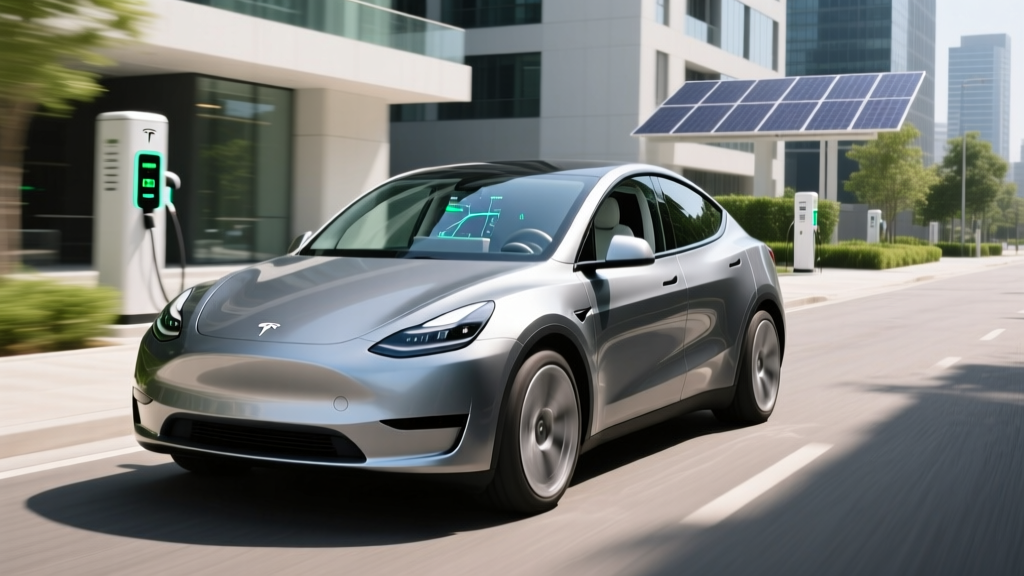
Charging remains one of Tesla's strongest competitive advantages, not just because of the vehicle hardware but because of Supercharger network reliability. The 2026 Model Y Long Range supports up to 250 kW peak on V3 and V4 Supercharger stalls via its native NACS connector — no adapter required.
| Level | Power / Rate | Speed | Notes |
|---|---|---|---|
| Level 1 (120V) | ~1.4 kW | ~5 mi/hr | Emergency/trickle only |
| Level 2 (240V, 48A) | 11.5 kW | ~44 mi/hr | Full charge in ~7 hrs |
| DC Fast (V3 Supercharger) | 250 kW peak | 10–80% in ~25 min | Peak sustained to ~50% SoC, then tapers |
| DC Fast (CCS station w/ adapter) | Up to 150 kW | 10–80% in ~35 min | Varies by station; adapter included with 2026 models |
The charge curve matters more than peak kW. In practice, the Model Y sustains roughly 230–250 kW from 10% to about 45% state of charge, then progressively tapers. From 80% to 100%, charging slows dramatically — adding that final 20% can take as long as the 10–80% session. For road trips, the practical strategy is charging to 80% and moving on, which Tesla's navigation system automatically plans for you.
At home on a Level 2 Wall Connector (hardwired, 60A circuit), you'll recover about 44 miles of range per hour of charging. A full overnight session from 20% to 100% takes roughly 7 hours. If your home has a standard NEMA 14-50 outlet on a 50A circuit, expect closer to 32 mi/hr (9.6 kW) — still sufficient for most daily needs. Budget $800–$2,500 for professional Level 2 installation depending on your electrical panel's proximity to the garage and whether a panel upgrade is needed.
Performance and Driving Dynamics
The Long Range AWD pairs dual permanent-magnet motors producing a combined 384 horsepower and an estimated 375 lb-ft of torque. The 0–60 mph sprint takes 4.8 seconds — quick enough to merge confidently and pass without hesitation, though the Performance trim (3.5 seconds, 456 hp) exists for those who want sports-sedan acceleration in a crossover body.
The Juniper refresh brought a revised suspension tuning with frequency-selective dampers that noticeably improve ride compliance over the pre-2025 Model Y. Potholes and expansion joints no longer crash through the chassis. Steering remains quick and precise, though some drivers will note the lack of a traditional instrument cluster — all information routes through the 15.4-inch center touchscreen, which now runs a faster processor with reduced latency.
Regenerative braking offers two modes: standard (strong, enables one-pedal driving in most scenarios) and low (coasts more naturally for drivers transitioning from ICE vehicles). There is no user-adjustable regen blending; Tesla keeps the interface intentionally simple.
Interior, Cargo, and Technology
The 2026 Model Y's interior is a study in minimalism. The Juniper update added ventilated front seats, ambient lighting integrated into a wraparound dash strip, and a rear-seat 8-inch touchscreen for climate and entertainment control. Material quality has improved with soft-touch surfaces on the door panels and dashboard, though some hard plastics remain on the lower door sills.
Cargo capacity stands at 30.2 cubic feet behind the second row and 72.1 cubic feet with the 60/40 split seats folded — enough for a week's worth of luggage for a family of four, or a full-size bicycle with the front wheel removed. The front trunk (frunk) adds 4.1 cubic feet, useful for charging cables and groceries.
Rear legroom measures 41.6 inches, which accommodates adults comfortably on longer trips. Headroom is generous at 39.4 inches front and 38.6 inches rear, aided by the full glass roof — though that glass does increase solar heat gain in summer. A powered sunshade is now included as standard equipment on 2026 models, addressing one of the most common owner complaints from prior years.
On the technology front, Tesla's infotainment system remains the segment benchmark for responsiveness and over-the-air update frequency. Wireless phone mirroring is absent — Tesla uses its own app ecosystem exclusively. The 17-speaker audio system delivers impressive clarity, and the built-in dashcam (using the Autopilot cameras) records continuously to a USB drive.
Pricing, Incentives, and the Federal Tax Credit
This is where the 2026 buying case gets compelling. Tesla is offering new aggressive incentives to boost sales, and they stack in ways that meaningfully reduce out-of-pocket cost.
| Item | Amount |
|---|---|
| Base MSRP | $44,990 |
| Destination Fee | $1,390 |
| Typical As-Tested (with FSD capability) | $54,490 |
| Tesla Spring Incentive (2026): Free Supercharging Credits | ~$1,200 value (10,000 miles) |
| Tesla Financing APR Reduction (qualified buyers) | 0.99% APR for 36–60 months |
| Federal §30D Tax Credit (if eligible) | Up to $7,500 (point-of-sale transfer available) |
| Effective Price After Max Credit + Incentive | ~$37,680 (before state incentives) |
The federal §30D clean vehicle credit offers up to $7,500, but eligibility depends on several factors that buyers must verify before counting on the full amount:
- MSRP Cap: SUVs must be under $80,000 MSRP. The Model Y qualifies across all trims.
- Buyer Income Cap: Modified AGI must not exceed $150,000 (single), $225,000 (head of household), or $300,000 (joint). Exceed these thresholds and you lose the credit entirely.
- Battery Sourcing: The $7,500 is split into two halves — $3,750 for critical minerals sourcing and $3,750 for battery component manufacturing. As of 2026, the Model Y's battery sourcing qualifies for the full $7,500, but Tesla's supply chain evolves and buyers should confirm at point of sale.
- Point-of-Sale Transfer: You can now transfer the credit to the dealer at purchase, reducing your upfront cost directly rather than waiting for a tax refund.
Combined with Tesla's own incentives — discounted financing, free Supercharger credits, and periodic price reductions on inventory vehicles — the effective transaction price on a base Long Range can dip below $38,000 for qualified buyers. That positions the Model Y within striking distance of well-equipped compact ICE crossovers when you factor in fuel savings.
How the Model Y Stacks Up Against Key Competitors
The compact electric SUV segment is crowded in 2026. Here's how the Model Y compares on the metrics that matter most:
| Model | EPA Range | Peak DC kW | 10–80% Time | Base MSRP | MPGe |
|---|---|---|---|---|---|
| Tesla Model Y LR AWD | 320 mi | 250 kW | ~25 min | $44,990 | 111 |
| Hyundai Ioniq 5 Long Range AWD | 290 mi | 350 kW | ~18 min | $48,500 | |
| Ford Mustang Mach-E Ext. Range AWD | 305 mi | 150 kW | ~36 min | $46,995 | 101 |
| Kia EV6 Long Range AWD | 282 mi | 350 kW | ~18 min | $48,900 | 117 |
The Ioniq 5 and EV6 charge faster on compatible 350 kW Electrify America stations (10–80% in roughly 18 minutes thanks to their 800V architecture), but the Model Y's access to the Supercharger network — consistently rated the most reliable DC fast-charging ecosystem — matters more for road-trip-heavy owners. The Mach-E offers a more traditional driving feel and a physical instrument cluster, but its slower charging and lower efficiency are trade-offs.
Pros
- Best-in-class Supercharger network access (native NACS, no adapter needed)
- Strong real-world efficiency (28 kWh/100 mi) keeps road-trip charging costs low
- Aggressive 2026 incentives stack with federal credit for sub-$38K effective pricing
- Spacious cargo area (72.1 cu ft) and comfortable rear seat
- Continuous OTA updates add features post-purchase
- Standard heat pump reduces cold-weather range loss
Cons
- No Apple CarPlay or Android Auto — Tesla-only ecosystem
- All driving info funneled through center screen (no instrument cluster or HUD)
- DC fast-charge speed (250 kW peak) trails 800V competitors at 350 kW stations
- FSD (Supervised) remains a Level 2 system requiring full driver attention — $8,000 is steep for what it delivers
- Glass roof increases cabin heat in summer despite new powered sunshade
- Insurance premiums tend to run 15–25% higher than segment average
Autopilot and Driver Assistance: What It Can and Cannot Do
Every 2026 Model Y ships with Tesla's Basic Autopilot, which includes adaptive cruise control and lane-centering assist on highways. The optional Enhanced Autopilot ($6,000) adds automatic lane changes, navigate-on-autopilot, and smart summon. Full Self-Driving (Supervised) at $8,000 adds traffic light and stop sign recognition, along with city-street autosteer.
Despite the "Full Self-Driving" name, all Tesla driver-assistance features are SAE Level 2 — meaning the driver must remain fully engaged, hands on or near the wheel, and eyes on the road at all times. The system does not make the vehicle autonomous. Tesla's cabin camera monitors driver attention and will issue escalating warnings if you look away. This is fundamentally different from Level 4 robotaxi services like Waymo, which operate without a driver in defined geographic zones.
In practice, Autopilot excels on well-marked divided highways and reduces fatigue on long trips. City-street FSD has improved substantially through 2025–2026 neural network updates but still occasionally hesitates at complex unprotected left turns and construction zones. It is a driver workload reduction tool, not a replacement for attentiveness.
Warranty and Long-Term Ownership
Tesla covers the 2026 Model Y with the following warranty structure:
- Basic Vehicle: 4 years / 50,000 miles
- Battery & Drive Unit: 8 years / 120,000 miles (Long Range AWD), with a minimum 70% capacity retention guarantee
- Corrosion: 12 years, unlimited miles
The 70% retention threshold is standard for the industry — if your battery degrades below 70% of its original capacity within the warranty period, Tesla will repair or replace it. Real-world data from high-mileage Model Y fleets suggests typical degradation of 8–12% over the first 100,000 miles, with the NMC chemistry's degradation curve flattening significantly after the initial 20,000-mile break-in period. To maximize longevity, Tesla recommends daily charging to 80–90% for NMC packs (reserving 100% for trips) and using preconditioning when possible.
Who Should Buy the 2026 Model Y?
Choose the Model Y if: You take regular road trips and value charging-network reliability above all else; you want a spacious family EV with strong efficiency; you can take advantage of the federal tax credit and Tesla's current incentive stack to bring the effective price below $40K.
Look elsewhere if: You need the fastest possible DC charging (the Ioniq 5 and EV6 on 800V are quicker); you refuse to live without Apple CarPlay; you want a head-up display or traditional gauge cluster; your daily driving rarely exceeds 40 miles and a smaller, cheaper EV like the Chevy Equinox EV would suffice.
For commuting families who road-trip two or three times a year, the Model Y's combination of range, efficiency, cargo space, and Supercharger access remains the most well-rounded package in the segment. The 2026 incentives make the math work for buyers who were previously priced out — but verify your tax credit eligibility with a tax professional before counting on the full $7,500.
Frequently Asked Questions
What is the real-world range of the 2026 Tesla Model Y?
The EPA rates it at 320 miles, but expect approximately 270–290 miles on highway-heavy trips at 70–75 mph, and 230–260 miles in sub-freezing temperatures. City driving with regenerative braking can occasionally exceed the EPA figure in mild weather.
How fast does the Model Y charge at home and on the road?
On a Level 2 home charger (11.5 kW), you'll gain about 44 miles of range per hour, with a full charge taking roughly 7 hours. On a V3 Supercharger (250 kW peak), a 10–80% session takes approximately 25 minutes. At CCS stations using the included adapter, expect 10–80% in about 35 minutes at 150 kW stalls.
How much does the 2026 Model Y cost after incentives and tax credits?
The base Long Range AWD starts at $44,990 plus destination. With the full $7,500 federal §30D credit (if you meet income, MSRP, and sourcing requirements), Tesla's 2026 Supercharger credit incentive (~$1,200 value), and low-APR financing, the effective price can reach approximately $37,680 before any state or utility incentives. Actual savings depend on your individual tax situation.
Does the 2026 Model Y qualify for the $7,500 federal EV tax credit?
As of early 2026, the Model Y qualifies for the full $7,500 under IRS §30D rules, provided you meet the income caps ($300,000 joint / $150,000 single modified AGI), the vehicle MSRP is under $80,000 (it is), and battery sourcing requirements are satisfied at the time of delivery. You can transfer the credit to the dealer at point of sale to reduce your upfront cost. Always confirm current eligibility on the IRS Clean Vehicle Credits page and consult a tax professional.
Is the Model Y worth buying over the Hyundai Ioniq 5 or Ford Mach-E?
The Model Y wins on Supercharger network reliability, cargo space, and efficiency. The Ioniq 5 and Kia EV6 charge faster on 350 kW stations (18 minutes vs. 25 minutes 10–80%). The Mach-E appeals to drivers who prefer a more conventional interior layout. If road-trip charging ease and total cost of ownership matter most, the Model Y with current incentives holds the edge. If you prioritize the fastest DC charging and want Apple CarPlay, the Ioniq 5 is the stronger pick.
What are the biggest drawbacks of the 2026 Model Y?
The lack of Apple CarPlay/Android Auto, no head-up display or instrument cluster, higher-than-average insurance costs, and the fact that FSD (Supervised) remains a Level 2 system despite its $8,000 price tag. The glass roof, while now equipped with a powered sunshade, still increases summer cabin heat.